
Geometry Underfoot: Learning Shapes, Symmetry and Angles on an Autumn Walk in the Park
Autumn leaves aren't just craft-project material. With three questions and a bag of leaves, a 7- to 9-year-old can discover symmetry, angles and the difference between a circle and an oval — no worksheet, no screen.
A child picks up a big maple leaf from the path, holds it up to their mum and says, "It looks like a star." She nods and they walk on. That's exactly where the maths slips away. Because the leaf really does look like a star, but what's actually sitting in the child's hand is something far more useful — a shape with a clear midline, five points, and five angles that differ in size. All it takes is one more question.
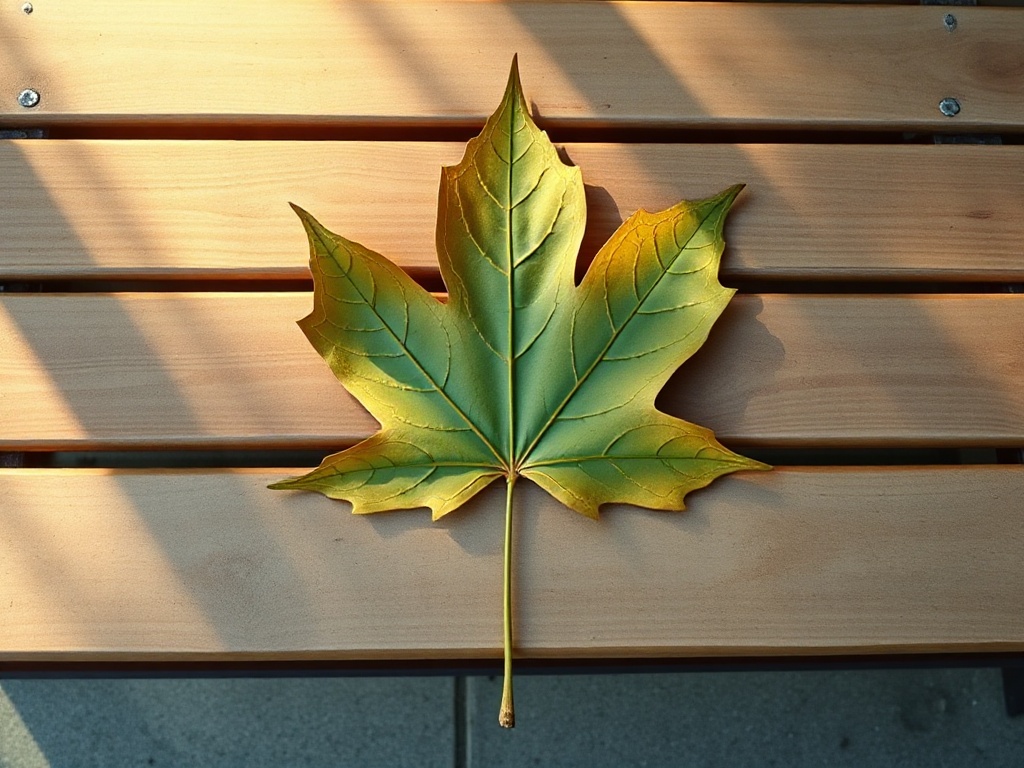
This piece is for children aged 7 to 9 — kids who can already count confidently to a hundred, hold a pencil steadily, and fold a sheet of paper right down the middle. Younger children will enjoy it but won't yet hold onto the idea of symmetry. Older ones are already learning angles with a protractor at school and will want more precise measurements.

Why "what does it look like?" is a dead end
That question sounds like maths, but it's really just an exercise in free association. The child says "heart", "fan", "hand" — and the conversation ends there, because there's no way to argue with an association. There's no next move.
Geometry begins the moment you bring in a check. Not "does it look like" but "is it true". And with leaves, the check is physical: you fold it and you see. Here are three questions that work on any path:
- "If we fold the leaf along its centre vein, will the two halves land exactly on top of each other?" — that's symmetry, and the answer is visible straight away.
- "How many points does it have? Let's count out loud, starting from the left." — counting around an outline is a different skill from counting objects in a pile.
- "Is this point sharp or blunt? Compare it with the corner of a book." — that turns the angle into something measured, rather than just a feeling.
The corner of a book cover or a mobile phone is a right angle. It's the free reference tool everyone carries around with them. A child who has compared the tip of an oak leaf with the corner of their notebook understands what "smaller than a right angle" means long before they hear the word "acute" at school.
Which leaves are best for symmetry, and which for angles
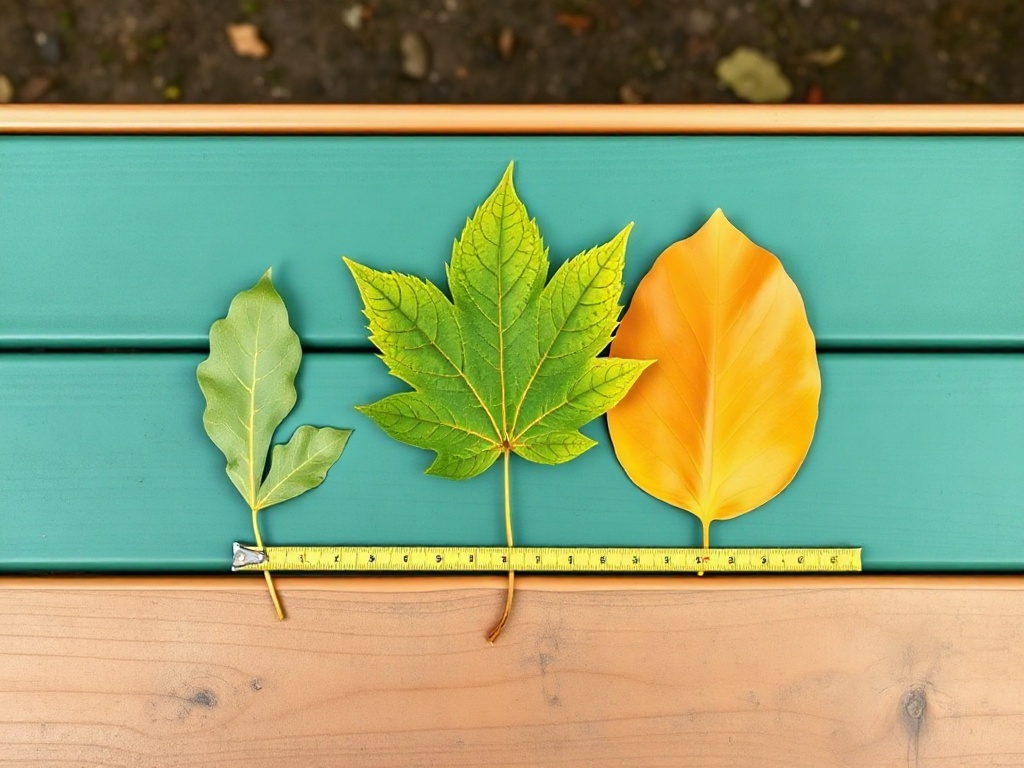
Not all leaves are equally useful, and you don't need to know their names by heart. What matters is their shape.
- Lime — almost heart-shaped, with one clear axis of symmetry. The best starting point for children folding a leaf down the middle for the first time.
- Maple — five lobes, lots of points, angles of every size. Perfect for counting and comparing acute and obtuse angles.
- Oak — a wavy outline with no clear points. Useful precisely because it's confusing: it shows that not every shape has angles.
- Poplar and birch — almost oval. Ideal for clearing up the classic mix-up of "round means circle".
- Horse chestnut — several separate leaflets from one stalk. Each leaflet is symmetrical on its own, and so is the whole shape — just around a different axis.
The fold that doesn't lie
Head out with a plastic bag or an old carrier bag and collect ten to fifteen leaves — they must be different shapes, not just the prettiest ones. At home or on a bench, the child folds each leaf along its centre vein and sorts it into two piles: "lands exactly" and "doesn't land exactly". Small tears at the edges don't count — focus on the outline. Materials: a bag for the leaves, a flat surface, and if you like, a thin marker to trace the fold. Time: about 20 minutes, 10 of them outdoors. Age: 7-9. We count it a success when the child corrects their own sorting — puts a leaf in the "symmetrical" pile, folds it again, spots the mismatch, and moves it. That correction is the maths itself; the piles are just the excuse for it.
Angle hunt with the corner of a book
Bring a hardback book or a piece of card with a right angle from home — that's your measuring tool for the day. On the walk, the child holds the card's corner up to each point of a maple leaf or another jagged leaf and decides: does the point fit inside the right angle (acute), stick out beyond it (obtuse), or match it exactly (right)? Record the results with tally marks on the back of the card itself — three columns. Materials: a card or book with a right-angle corner, a pencil, about ten leaves with points. Time: 15-20 minutes. Age: 7-9, and for nine-year-olds add the question "which is the sharpest point out of everything we've collected today?" It's working when the child starts hunting for right angles in other things around them — on the bench, on a sign, on paving stones — without being prompted.
The most common mistake: turning the walk into a quiz
The temptation is strong. The child picks up a leaf, and the adult jumps straight in: "Go on, how many points does it have? Is it symmetrical? What kind of angle is that?" Three questions in fifteen seconds. By the second path, the child stops picking up leaves at all.
It doesn't work for a simple reason: a question with a known answer isn't a question, it's a test. Children sense the difference instantly and start answering defensively — short words, glancing at the adult, waiting for confirmation. Thinking stops, because the goal is no longer to understand the leaf but to avoid getting it wrong.
The fix is small. Instead of asking, comment out loud yourself: "I think this one's symmetrical, but I'm not sure." Fold it. If you're wrong, say so out loud. A child who has watched an adult get a fold wrong will fold more boldly themselves. One more thing — one walk, one question. Symmetry today. Angles next time.
"I think this leaf is symmetrical. Let's check — if I'm wrong, we'll see together."
Circle, oval, and why the difference matters
Almost no leaf is a true circle. Plenty are oval — poplar, birch, some ornamental shrubs in the park. But children call anything roundish a "circle", and that trips them up later.
The check takes half a minute. Lay the leaf on paper, trace round it, then measure with a piece of string or the edge of a pencil: lengthwise from end to end, then across. If the two measurements differ, it's not a circle. A circle only has one measurement, no matter which way through the middle you go — and that's exactly what makes it a circle. An eight-year-old picks up this check in a single afternoon, and it still serves them right through to geometry in Year 5.
What's left after the walk
There's no need for a pressed-leaf album, unless the child asks for one themselves. Something more useful: stick three leaves on the fridge — one clearly symmetrical, one with sharp points, one oval. Underneath each, write two words describing what it shows. When, a week later, the child walks past the fridge and says, "That one's like the book, just smaller," you'll know the idea of an angle has stuck.
And most practical of all: the whole activity uses material that's just lying on the ground. If you do want to buy something, a plastic protractor costs under €2 at a stationery shop — but honestly, up to age nine, the corner of a book does more of the work, because the child carries it in their own hand and understands it.