
The Multiplication Table Over Summer: 15 Minutes a Day, No Notebook Required
Instead of copying out times tables in a notebook all through July and August — short games with cards, stairs and kitchen objects that keep multiplication fresh until September.
On the beach in Sozopol, a nine-year-old boy is counting his seashells: "six, twelve, eighteen…" He gets to thirty-six and stops. Ask him what six times eight is — silence. It's not that he doesn't know the table. He knows it, but only front to back, like a nursery rhyme. Pull him out of order and he's lost.
That's exactly what happens over the summer with most third- and fourth-graders. They don't forget the numbers — they lose quick access to them. And this is precisely why ten pages of copying out the times table in a notebook in August don't help.
Why copying out the times table doesn't bring multiplication back
When a child writes "7 x 1 = 7, 7 x 2 = 14, 7 x 3 = 21", they're moving along rails. Each next answer comes from the previous one by adding on, not from memory. The hand works, the head sleeps. Then in class the teacher asks "seven times nine?" in the middle of a problem about rectangle areas, and the rails are gone.
Here's the other thing we miss: during the holidays, the child isn't at a desk. They're at the seaside, in the garden at Grandma's, in the car on the way to Veliko Tarnovo. Any form of practice that requires a table, a notebook and a pencil simply won't happen more than twice. So we're talking about exercises done standing up, out loud, with nothing in your hands — or at most a deck of cards.
Which child needs this
This piece is for children between 8 and 10 — that is, ones who have already met the times table at school and need to hold on to it, not learn it from scratch. If your child is only just starting out with multiplication, the order is different: first understand what "three times four" actually means, then work on speed. Here we're talking only about the second part.
Before you start, it helps to work out which tables are actually shaky. Not all of them. Usually the 2, 5 and 10 times tables are solid, and the tricky ones are 6, 7, 8 and sometimes 4. Ask your child twenty questions in random order and note down only the ones where they paused for more than three seconds or counted on their fingers. That list is your entire summer plan.
The tricky-facts deck
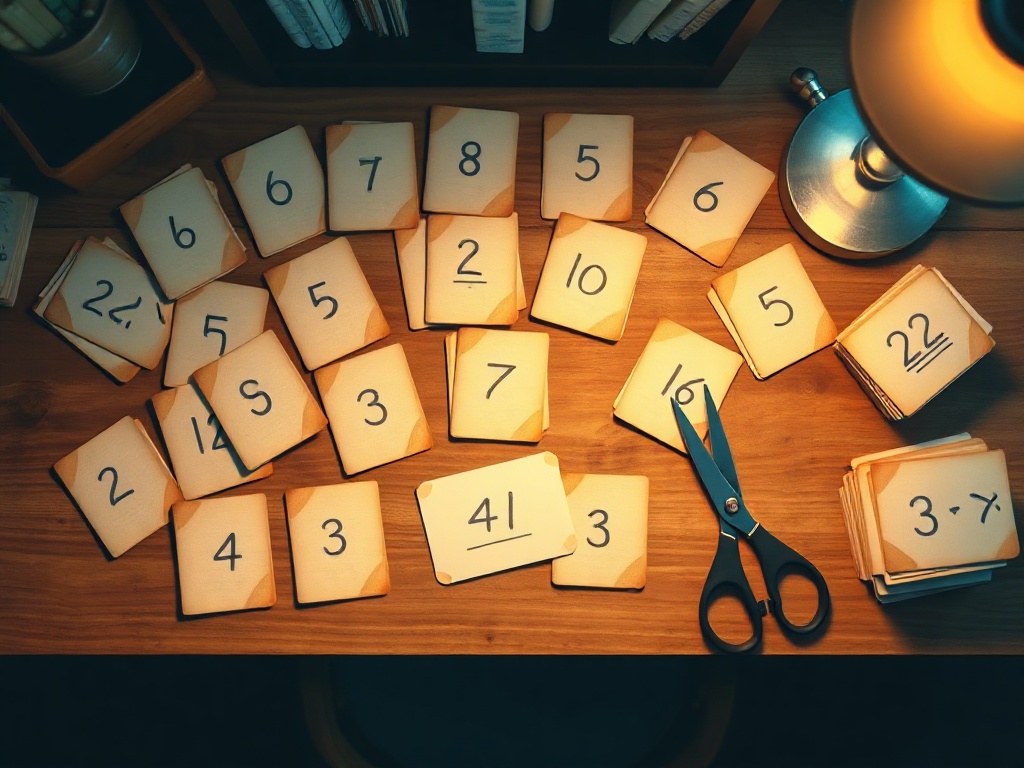
Cut twenty small cards out of cardboard — the problem on the front (for example, 7 x 8), the answer on the back. Only include the facts from your list, not the whole table. Every evening before bed, the child goes through the deck: if they know it instantly, the card goes into the "done" pile; if they hesitate, it goes back to the bottom. Materials: cardboard or old business cards, a pen, scissors. Time: 7-8 minutes. Age: 8-10. Success is when the whole deck comes out in the "done" pile without hesitation for three evenings running — then swap out five of the old cards for five new ones.
How to fit fifteen minutes into a summer day
Don't look for one dedicated slot of time. Spread it across three or four short bursts, attached to things that are already happening anyway:
- In the car or on the bus: "How many seats are six rows of eight?" — one question every few minutes, not a string of them.
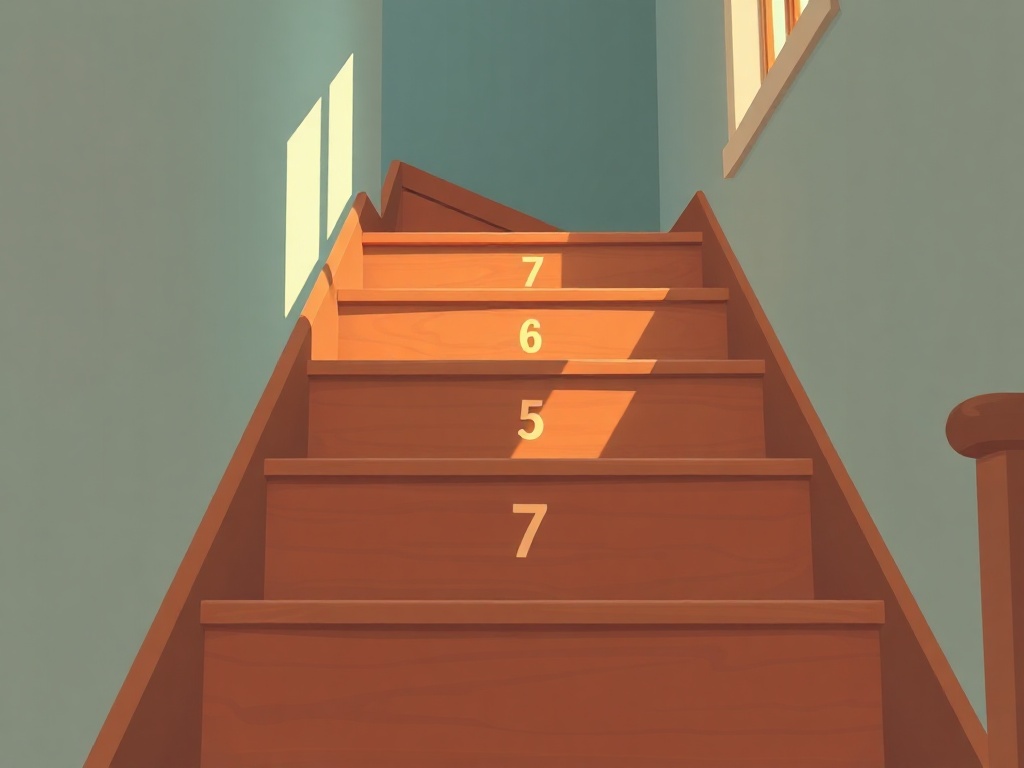
- Going up the stairs: each step is the next multiple of seven. Coming down works backwards — 70, 63, 56…
- Setting the table: six plates with two forks each, four cups with three sips left — whatever's to hand.
- In the evening, the card deck — the one part that actually needs sitting down.
All told it comes to about a quarter of an hour, but none of the pieces feels like a lesson. That's exactly why it lasts six weeks, while the notebook lasts three days.
The "shopping at the market" game
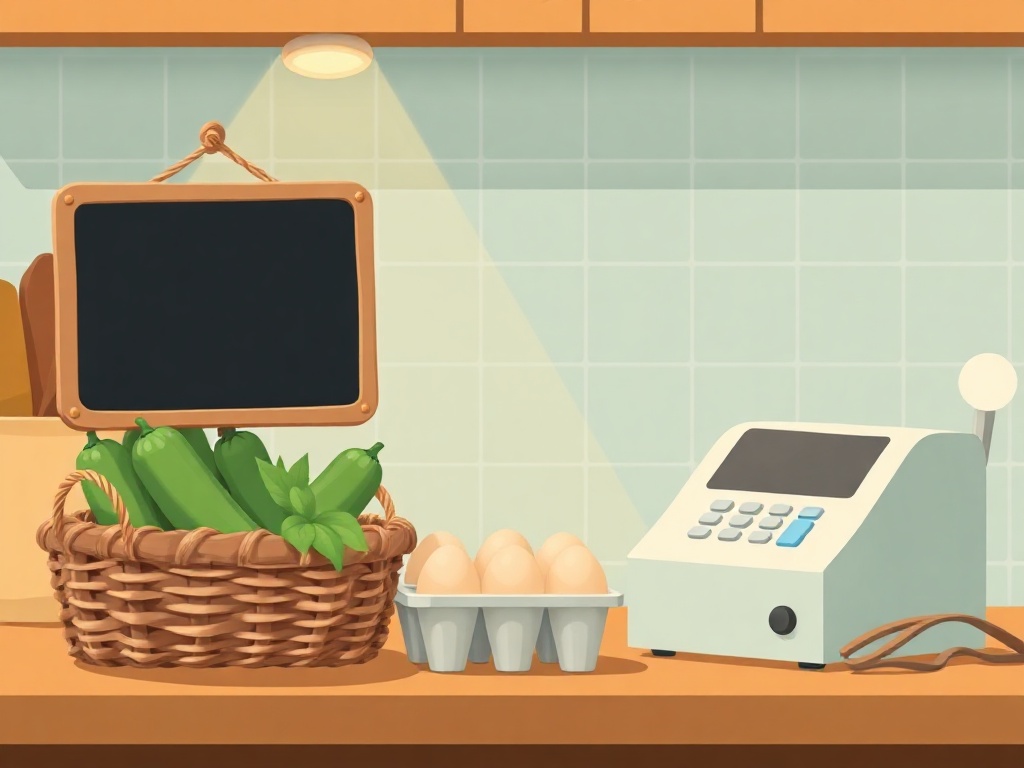
One of you is the seller, the other the customer. The customer asks for "seven cucumbers at €2 each" or "six boxes of 8 eggs," and the seller works out the total out loud; then you swap roles. If they get it wrong, don't correct them straight away — say "check it" and let them count it out. Materials: nothing, or a few real items from the kitchen. Time: 10 minutes. Age: 8-10. Success is when they answer correctly on at least eight out of ten orders without counting on their fingers, and when they start suggesting new orders themselves.
The most common parenting mistake
We ask through the table in order. "All right, now the sevens: seven times one, seven times two…" The child answers flawlessly, we relax, and nothing has actually been tested. They're simply adding seven in their head each time, and it sounds like they know it.
The real test only works shuffled and mixed across different tables: 8 x 4, then 6 x 7, then 9 x 3. If the answers come within two seconds there — they know it. If the eyes drift upward and the lips move — they're counting, not remembering.
A second, quieter mistake: we punish a slow answer with a sigh. After three sighs, the child starts staying silent rather than risking it. It's better to set a rule in advance — on a wrong answer, you simply say the correct answer calmly and ask the same question again after two or three others.
A child hasn't learned the times table when they can recite it. They've learned it when they can answer 6 x 7 in the middle of a conversation about something else.
What to expect by September
If you start with seven or eight problem facts and keep up the rhythm above, the sensible goal isn't "the whole table in no time." The sensible goal is for those seven or eight to become automatic, so the child walks into class without that brief freeze in front of the board. School takes care of the rest.
And one more thing worth trying: around mid-August, switch direction. Instead of "six times seven," ask "forty-two — what times what?" This reverse question lays the groundwork for division, which comes right after the summer holidays, and it usually surprises both child and parent — in a good way.