
Math at the Grocery Store: How Change, Discounts, and Kilograms Teach Kids Real-Life Sums
A practical guide for parents of children aged 8 to 10: how an ordinary grocery run turns into a hands-on lesson in real euros, grams, and discounts.
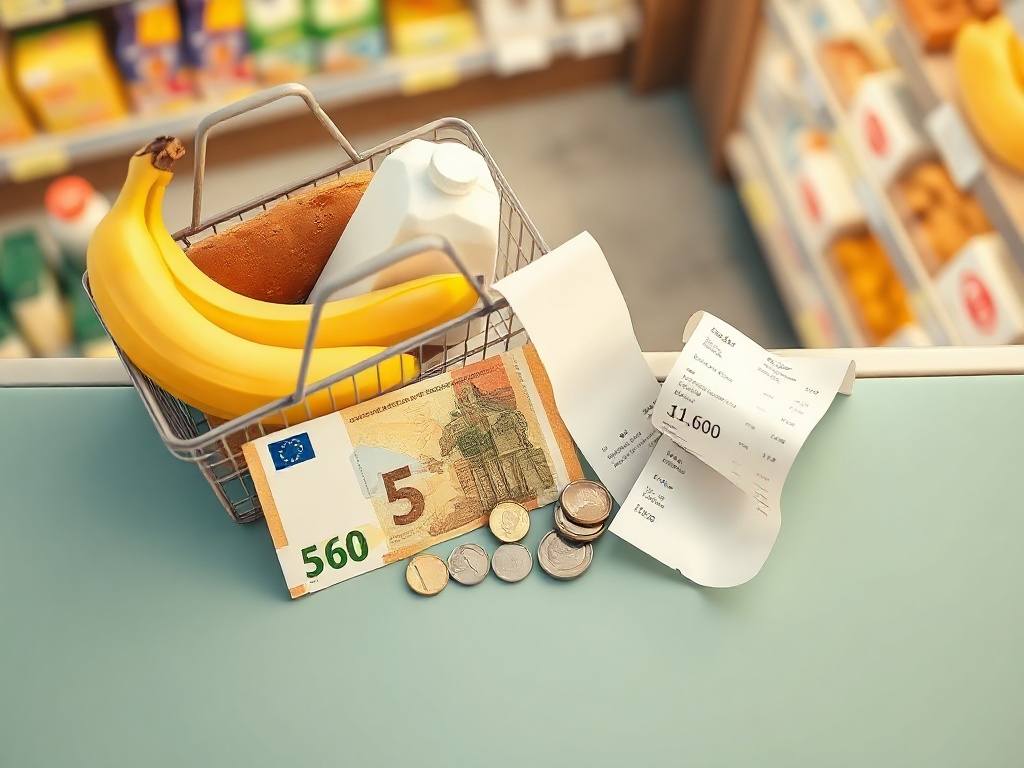
At the till, a child hands over a €5 note for something that costs €3.40. The cashier hands back €1.60, and the child stuffs the coins into their pocket without a glance. That's the exact moment the week's most useful maths lesson slips by — not because the child can't subtract 3.40 from 5, but because nobody has told them that this sum is their job.
The difference between the two situations is huge. In an exercise book, a mistake costs a red mark. At the till, a mistake means there isn't enough left for the second bun. The second one sticks.
Why textbook money problems don't do the job on their own
Textbook problems are neat. The numbers are round, everything adds up cleanly, and there's one correct answer. The shop works differently: the price is €1.89, the deal is "second item half price," the cheese is weighed out in 100-gram portions, and the label shows a price per kilogram. A child who solves "Alex has €10…" flawlessly often freezes at the counter — not from lack of skill, but because they've never seen numbers presented this way.
So don't swap homework for shopping. Add shopping to it. The goal is for the child to recognise that the figure on the label and the one in the exercise book are the same thing.
Three skills that are only learned in the shop
- Estimating in your head before the till: "We got bread for €1.20, milk for €1.50, and bananas for about €1.80 — that's just under €5." This trains rounding, not precision.
- Change as subtraction you can check: the child counts the coins in their hand and says whether the number matches what they expected.
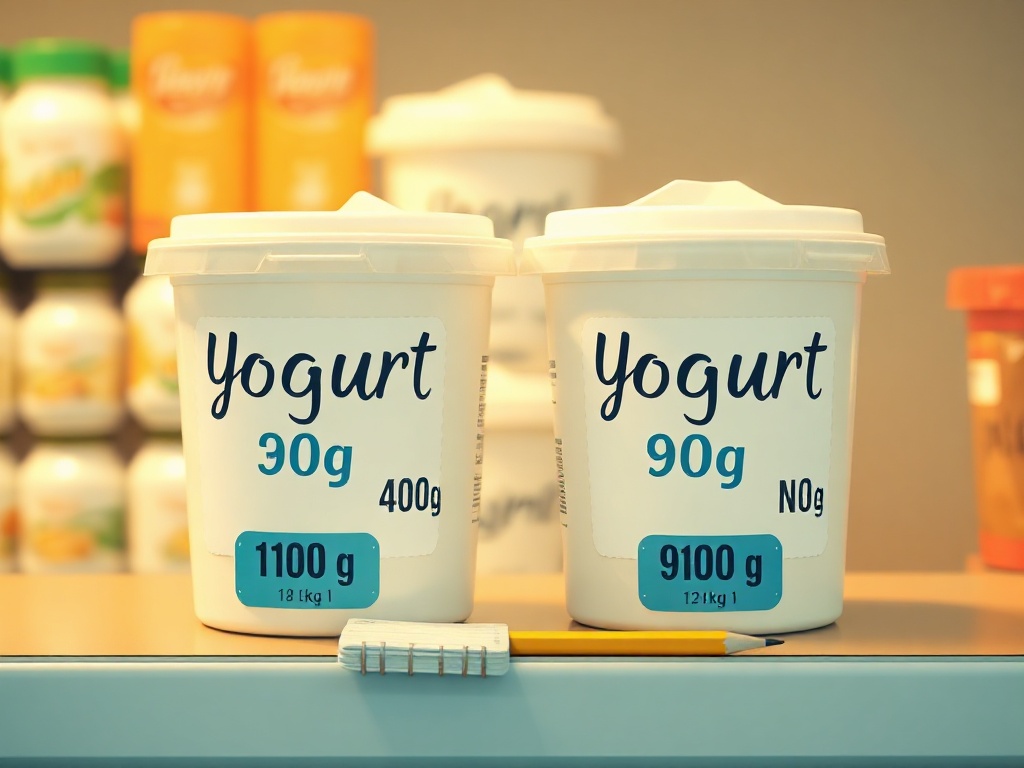
- Comparing price per amount: 400g for €2.40 or 1kg for €5.60 — which works out cheaper per 100g.
The third is the hardest and usually gets skipped. Yet it's exactly what half the shop's promotions rely on.
Five Euros Are Yours — So Is the List
Materials: €5 in coins and small notes (for example, two €2 coins and one €1 coin), a sheet of paper and a pencil, on which the child writes down what needs buying — three specific items. Duration: about 25 minutes in the shop, plus 5 minutes of prep at home. Age: 8-10 years. Before you leave, the child writes next to each item how much they think it costs, and adds up the total. In the shop, they compare their guess with the label and correct the figure. At the till, they pay themselves and count the change before stepping away from the counter. It counts as a success if the child's guess for the total was within €1 of the real amount, and if they said out loud how much change they expected before receiving it — even if the number doesn't match exactly.
The first time, the guess will almost certainly be off by €2-3. Don't correct the figure yourself — show the label and let the child cross it out and write the new one. After the third shopping trip, the gap usually drops sharply, because the prices of familiar items are already in their head.
Promotions: where discounts play tricks
"Second item half price" sounds like half off. It isn't. If the chocolate bar is €2, two of them cost €3 — that's €1.50 each. The discount on the whole purchase is 25%, not 50%. That's a sum a ten-year-old can work out in their head in thirty seconds, and one of the few maths problems whose usefulness is obvious right away.
The other classic trap is quantity. The bigger pack isn't automatically the better deal. Sometimes it is, sometimes the shop is counting on nobody doing the sums.
The Label Detective
Materials: a phone or calculator (to check the answer afterwards, not instead of working it out), a notebook, and three pairs of identical products in different sizes — for example, yoghurt in 400g and 900g tubs, oil in 1L and 2L bottles, rice in 500g and 1kg bags. Duration: 20 minutes. Age: 9-10 years, since it requires dividing decimal numbers. For each pair, the child works out the price per 100g or per litre and notes which pack wins. If it's tricky, start with rounded numbers: €4.80 for 1kg means €0.48 per 100g. It counts as a success if the child explains in words why they picked one pack over the other — "it's cheaper per 100g, so we get the big one" — rather than just pointing at the smaller number on the label.
A common mistake: the parent does the sum out loud, and the child just nods
The temptation is huge, especially with a queue behind you. The parent works it out, says the answer, the child nods along, and everyone's happy. Except that way, the child is training themselves to recognise a correct answer, not to calculate one. Their brain is doing a completely different job — an easier, and far less useful, one.
Instead, stay quiet and wait. If the queue makes you anxious, move this part away from the till: the child works it out while you're browsing the aisles, and at the till they just pay. Another option — you do the sum, but deliberately get it wrong by €1 and ask: "Is that right?" Checking someone else's sum is its own skill, and kids love it, because for once they get to catch the grown-up out.
A second common mistake: handing over a €20 note for a €2 purchase. The change comes back in so many coins that the child gives up counting. Give them an amount close to the price instead — then the subtraction stays within a range they can do in their head.
One sum worked out at the till with real coins in hand outweighs ten worksheet problems done at home — because the child had to answer for the result.
How to carry it on at home without turning it into a lesson
The receipt is a ready-made worksheet. Once home, sit at the table and ask: "What was the most expensive thing? How much did all the fruit come to together? If we bought the same again tomorrow but left out the cheese, how much would we need?" Three questions, four minutes, no extra prep required.
The reverse exercise is useful too: before you set off, the child plans a budget for the week's school snacks — say, €4 for five days. How much is that per day? Is there enough left for something on Friday if they pick the pricier option on Monday? This brings in division, remainders, and forward planning all at once, and the timing is entirely genuine, since the school year starts in early autumn and this conversation matters most right around then.
Don't turn every shopping trip into a test. It's enough for the child to be responsible for one small part of the sum once a week. After two months, you'll notice something concrete: they start commenting on prices unprompted, without being asked. That's the moment the numbers have become their own.