
When a Second Star Rose: A Sibling Jealousy Story for Your Big Kid
A tale about the first star in the sky and the day a second one rose beside it – plus two conversation games that help a big kid put sibling jealousy into words. For children ages 5 to 8.
The first star had stood alone in the sky for so long that she no longer remembered how it had been before. She had work of her own: she counted the lighthouses along the coast, kept the tally of boats still out on the water, and held the night open until the last one came home. She knew everything: which cloud drifted slowly, where the sea ended, which river shone brightest at night. People below would look up and say, "There's our star." And she shone even brighter, because she was the only one.
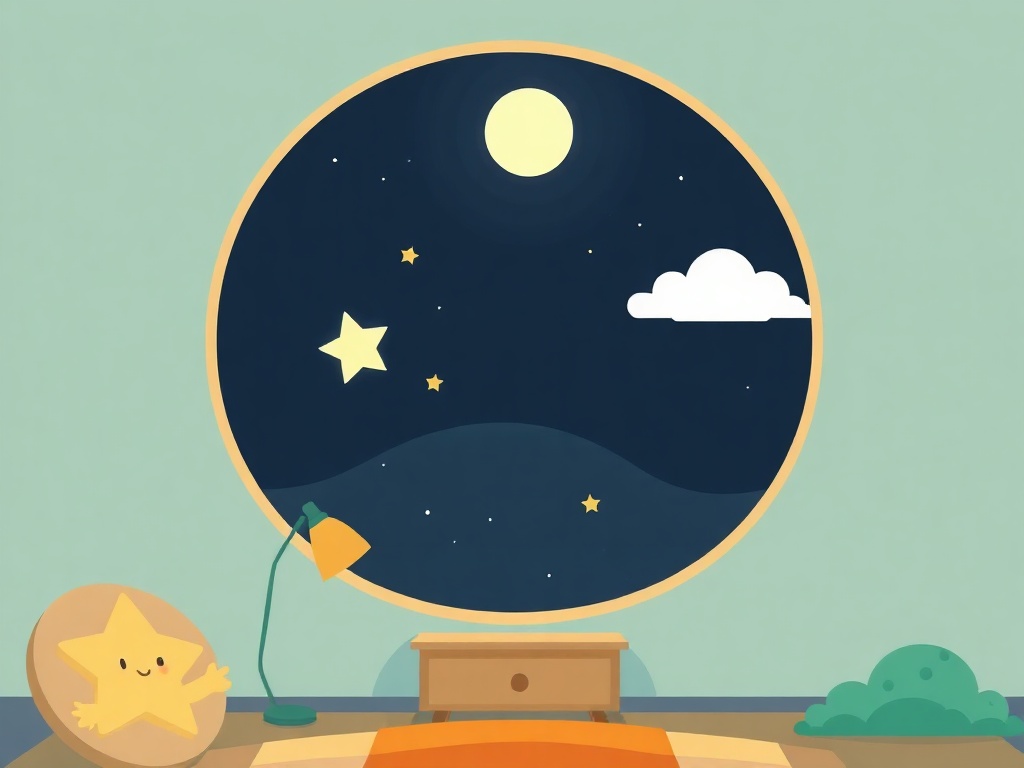
One evening something cracked very softly, like a breaking eggshell. A tiny spark appeared beside her. It barely shone at all – it only flickered, and it flickered out of time, the way a candle does in a draught. But the people below looked up and cried, "Look! A new star!" And this time, no one said a word about the first one.
The first star drew back. She thought something she didn't want to think: "Send it back." Then she felt ashamed, and the shame made her light grow even dimmer – so dim that one boat took the long way around the headland. The sky asked her what was wrong. "Nothing," she said. But the sky sees everything, and it waited patiently in silence.
Nights passed. The little spark flickered on, knowing nothing – not where the sea ended, not which river shone, not one lighthouse by name. One night it got lost behind a cloud and began to blink in fear. And then the first star, without even thinking, blazed brightly to show it the way back. The spark pressed close to her, and for the first time it truly shone – with the light it had borrowed from the big star.
The people below looked up and said, "Look, the two of them are talking." And the sky said to the first star, "You are no less a star. You're the only one who knows where the sea ends, and the only one the lighthouses answer to. No one can ever take that from you." From that night on, there have been two stars in the sky who never set together – one always appears first, so the other need not be afraid.
Why reassurance doesn't touch sibling jealousy
The most common thing we say to a jealous child is reassurance: "We love you too, just as much." The trouble is, the child hasn't lost love – they've lost things they can count. They've lost the lap that's now taken. They've lost the words "my baby," which Grandma used to call them. They've lost the five quiet minutes before bedtime. Reassurance speaks to a feeling, but sibling jealousy grows out of a practical loss – so the two never quite meet.
Flip the approach. Instead of persuading, give something concrete back and name it: "From today, while the baby naps in the afternoon, those twenty minutes are yours alone. I won't pick up my phone." The child isn't checking whether you love them. They're checking whether there's still room for them.
What the big kid says out loud – and what it really means
- "Take it back to the hospital." – It's not cruelty. It means: "I want the life I knew to come back."
- "I'm not a baby anymore, am I?" – They're asking whether growing up fast will make you like them again.
- "I hate you." – Said to you, not the baby. You're the person it's safe to say it to.
- "Can you carry me like him?" – Not spoiling. It's a request for five minutes back in time.
- Silence and sudden obedience – sometimes a more worrying sign of sibling jealousy than tantrums.
Drawing the sky, before and after the second star
The First Star Conversation
All you need is the story above, a sheet of paper, and three crayons – blue, yellow, and one more colour of the child's choosing. It takes about 15 minutes, best done in the evening after the baby's asleep. Suitable for children ages 5 to 8. After the story, ask your child to draw the sky on the night before the second star rose – then the night after. While they draw, ask only three questions, and don't correct the answers: "What did the first star know that the little one didn't?", "What was hardest for her?", and "What did she want the sky to tell her?" The activity succeeds if the child names at least one thing the star lost, and one thing that stayed hers alone – without you supplying the words.
The daily slot that takes the pressure off
The Big Star's Twenty Minutes
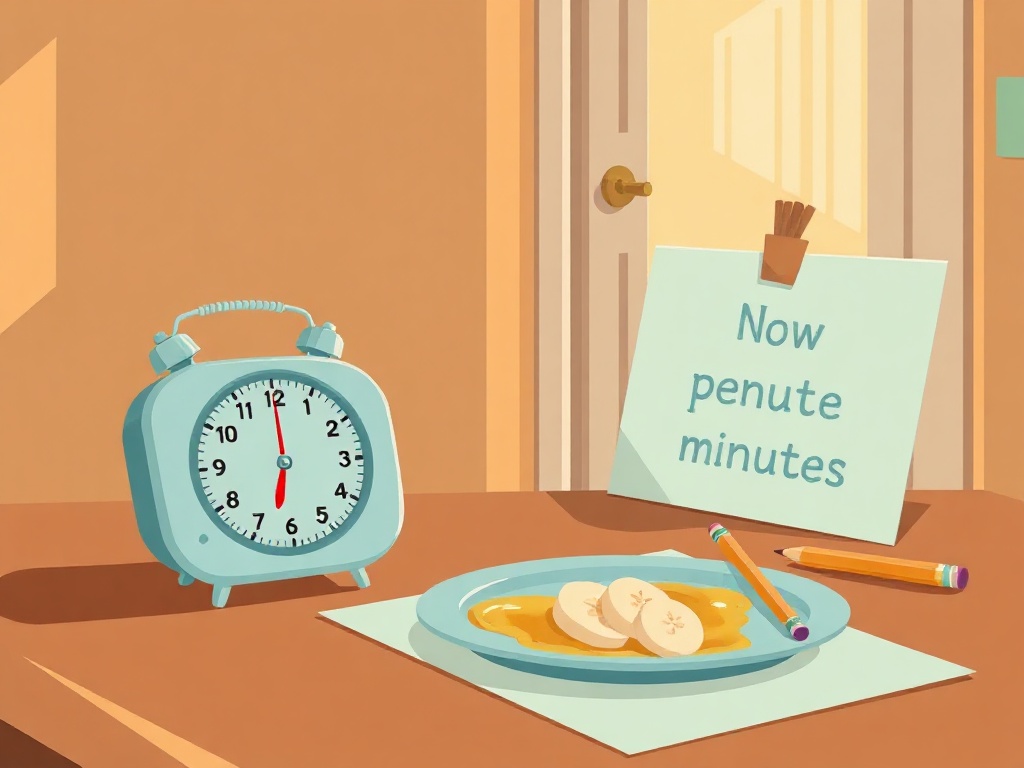
You'll need a kitchen timer or a phone in airplane mode, a sheet of paper, tape, and a plate of something sweet you make together – say, banana with honey, for under €2 worth of ingredients. The time is exactly 20 minutes, every day at the same time, for children ages 5 to 8. Make a sign together that reads "This is my time now" and tape it to the door. The child chooses what you do – you don't suggest anything. There's one rule, and it applies to you: the phone stays in another room, and if the baby cries and someone else is home, they go, not you. If you're alone, say out loud, "I'm pausing the timer, I'll be right back, and then we'll carry on" – and actually carry on. You'll know it's working if, after a week, the child starts asking on their own, "When's my time?" – that means they now believe it truly exists.
Three mistakes that make things harder
The first: "You're the big one, give way." That word – big – becomes a punishment. The child learns that growing up only brings obligations, and starts acting like a baby to win back their old privileges. The second: explaining things to the baby in front of the big kid – "Don't touch that, your brother is working on it." It sounds fine, but it casts the big kid as permanently under threat. The opposite works better: in front of others, mention something the big one can do that the baby can't. The third, and most common: soothing every flash of sibling jealousy with attention right at the moment of the outburst. That teaches the child that the only sure route to you runs through a tantrum. Give attention on a predictable schedule instead – then they won't need to fight for it.
"You are no less a star. You're the only one who knows where the sea ends."
What you're left holding
- A read-aloud story that doesn't preach and doesn't demand the child love the baby right away.
- A list of phrases that will no longer catch you off guard, because now you know what they mean.
- Twenty minutes a day with a clear start and end – the simplest thing that genuinely eases the tension.
- Three phrases to stop saying, starting tomorrow.
Sibling jealousy comes and goes in fits and starts – the child hugs the baby in the morning and pinches them in the afternoon. That's the normal course, not a failure. Don't look for love between them just yet; look for calm within the big one. Love comes later, usually on the day the baby first smiles right at them.