
The Little March Charm That Didn't Want to Be Given Away – A Story to Help Kids Learn to Share
A story for ages 5-7 about a martenitsa – the white and red March charm from the Balkans – that clung to its wrist, and what happened when it finally let go. Plus two games that teach your child to share without being forced into it.
Grandma March – Baba Marta, as she is known in Bulgaria – had been weaving all night. By morning, there were one hundred and one little martenitsi on her table. In the Balkans, a martenitsa is a March charm made of white and red threads that people tie onto each other's wrists on the first of March, wishing one another health and a gentle spring. All one hundred and one were identical, with a white and red thread horse and a tiny tassel. Only one of them had tucked itself right at the bottom and stayed quiet. Her name was Marty, and she was thinking her own thoughts.
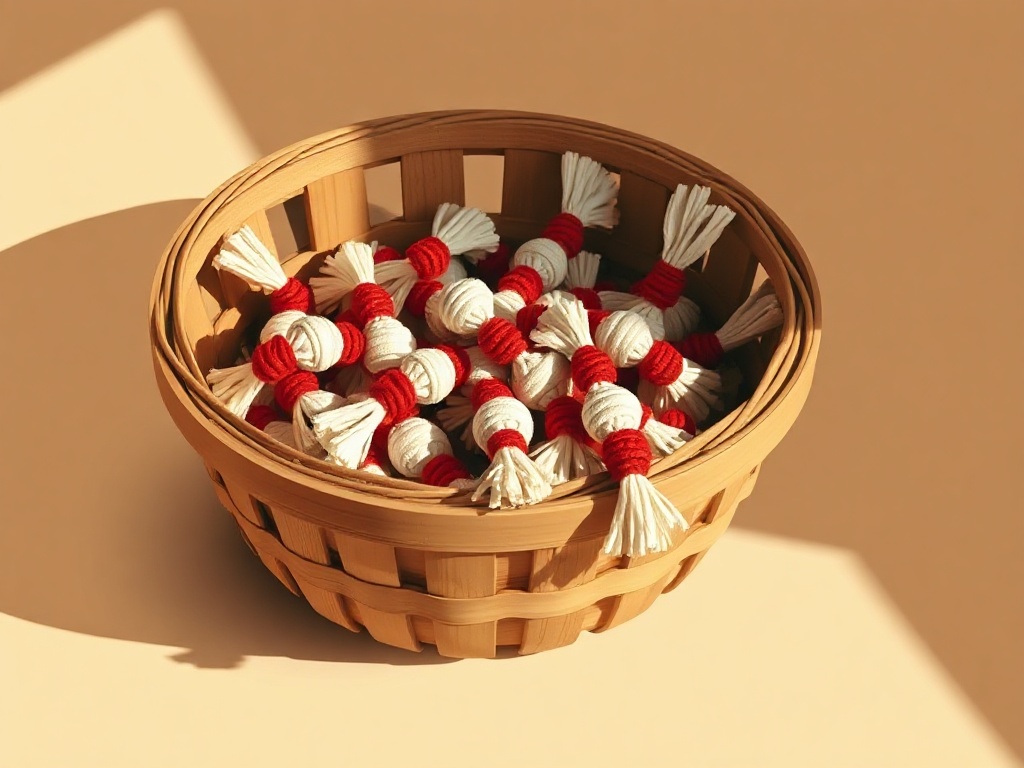
"Come on now, up you get," said Grandma March. "Today you're going to be given to a child." "I don't want to," said Marty. "It's warm in here. If you give me away, I won't be yours anymore." Grandma March laughed the kind of laugh that sounds like wind in a chimney, and said, "It's exactly the opposite. If I give you away, you'll become part of many people."
Marty didn't believe her. She curled up into a tight little ball and squeezed into the darkest corner of the basket. But Grandma March was a stubborn woman. She picked up the basket and set off through town.
What Happened When the Little March Charm Was Tied On After All
On a bench sat a little girl named Dora. Grandma March quietly tied Marty onto her wrist and slipped away. Marty was ready to sulk for a whole month. But something else happened instead.
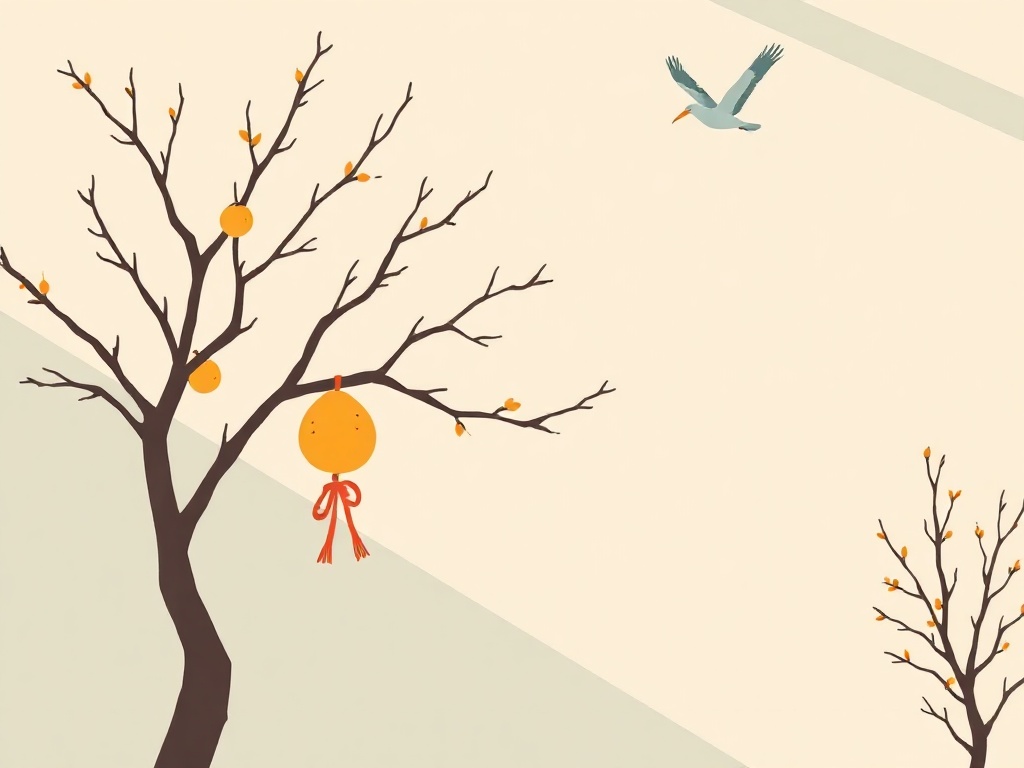
Dora showed her to her brother. Her brother showed her to their grandmother. Their grandmother told them how, when she was little, she used to tie her martenitsa to the handle of the water bucket. A boy from next door asked where it was from and made one just like it. Then the warm day arrived, Dora spotted a stork above the building – and that is exactly the moment the tradition waits for: you wear your March charm until you see the first stork or the first blossoming tree, and then you tie it to a branch and make a wish. So Dora tied Marty to a branch of the quince tree in the yard. The branch was bare, and the little thread horse was white and red. All through the month of April, everyone who walked past looked up.
That evening Marty finally understood what Grandma March had meant. She was now on a girl's wrist, in a brother's questions, in a grandmother's memory of a water bucket, in a boy-next-door's copy, and on an entire quince tree.
Why Kids Cling to Their Toys – and Why "Don't Be Selfish" Doesn't Help
Marty's fear – that being handed to someone else means being lost for good – is often the very same fear our children feel when they clutch a toy to their chest. Somewhere around the ages of four to seven, many children are still working out what ownership actually means – that something can leave their hands for a while and still be theirs. Every child moves at their own pace, and a sense of time can stay fuzzy for a good while, so "five minutes" and "forever" may feel much the same. That's why, when we say "let the other kid play with it," what they often hear is "lose it." More often than not, their reaction isn't naughtiness – it's fear of loss.
Which is where the most common mistake comes from.
Common Mistake: Shaming Them in Front of Others
"Aren't you ashamed of yourself, look how everyone's watching you" – said in front of three other children and two mums. In that moment, the child isn't thinking about sharing at all. They're thinking about their own embarrassment, and about how the toy now matters even more because they had to defend it. Next time, they'll hide it beforehand. In other words, we achieve the exact opposite: we've taught them to hide, not to give.
What actually works is making the return visible. Not "give it here," but "lend it for a bit and you'll get it right back." Not "be generous," but "let's count to twenty, then it's your turn." The child needs to see with their own eyes that what's given comes back. Three or four times. Only then does the word "share" start to mean something.
- Instead of "don't be selfish": "This one's yours. Which of the others can you lend for five minutes?"
- Instead of "give it to him right now": "You count to twenty, then he counts to twenty."
- Instead of "he's a guest, let him have it": "Pick three toys we're not giving out today. The rest are for everyone."
- Instead of "shame on you": "I can see this is hard for you. Let's leave it on the table until you decide."
The Traveling March Charm
Make three or four little martenitsi from white and red cotton yarn – a single skein of each colour will see you through, and leftovers from an old knitting basket work just as well. An adult does the cutting: keep the scissors in a grown-up's hands and let the child hold and twist the threads instead. The child ties the first charm on themselves and leaves the rest in a little dish on the table. Throughout the day, each family member ties one onto someone else and says out loud who it's for. In the evening, count together how many wrists are wearing one. Your child sees that three little horses have turned into five smiles. - You'll need: white and red yarn, scissors (used by an adult), a small dish. - Time: 20 minutes for tying, plus one evening for counting. - Age: 5-7, with an adult twisting the threads alongside them and supervising throughout. - Success looks like: the child suggesting on their own who to give the next one to – without being prompted.
The "Lend-Out" Box and the Sand Timer
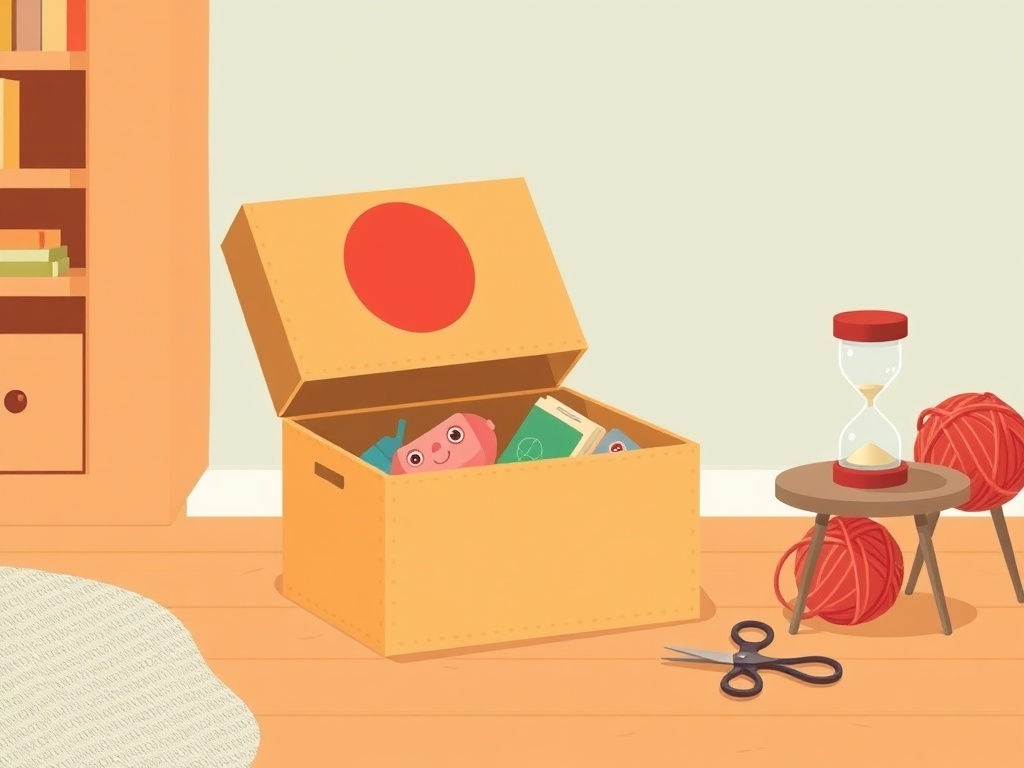
Take a shoebox and stick a big red dot on top. The child chooses for themselves which toys go inside – these are the ones they're happy to lend out. Anything left outside the box is off-limits, and nobody touches it, adults included. When a friend comes to visit, bring out the box and flip the sand timer (or set a timer on your phone): five minutes for the guest, five minutes for the host. - Rummage out: a box, a red sticker or marker pen, a sand timer (or any timer on hand). - How long it takes: about 15 minutes to set up together, then a minute or two each time someone visits. - Best suited to: children aged 5-7, with an adult keeping an eye on the swaps. - You'll know it's working when: by the third visit, the child brings the box to the door on their own, before you've had to remind them.
How to Tell the Story So It Sticks
Pause right at the moment Marty squeezes into the dark corner, and ask: "What would you have said to her?" Your child's answer will show you exactly where their own fear lies. Some will say "let her stay in the basket," others – "I would have taken her." Both answers are good starting points for a conversation. Then carry on with the story.
One more thing – don't end with a moral. If you say "see, that's how you're supposed to share," the story turns into a scolding, and your child will stop wanting to hear it. Better to end with a question instead: "How many people did Marty become part of?" Let them count.
If I give you away, you won't become smaller. You'll become part of many people.
Three Things for Your Child to Take Away
- A sentence they can say on their own: "I'm lending you this for a bit, then I want it back."
- The right to have three things they don't give to anyone – and that this is perfectly normal.
- The idea that a March charm, once given, multiplies – it doesn't disappear.
On the first of March, tie one on yourself too. Children notice what we do far more than what we explain to them.