
A Story for the First Day of School: How to Tell It to a Child Who's Afraid of New Classmates
A ready-made story about a boy named Martin, who walks into an unfamiliar classroom on September 15th, plus two activities for children aged 6-8. The goal isn't to convince the child there's nothing to be scared of, but to give them the first three sentences they can use to talk to someone.
Martin stands in front of the school gate, his sweaty palm in his grandmother's hand. Inside there are twenty-two children he doesn't know. One of them is laughing very loudly. "I don't want to go in," Martin says. His grandmother doesn't say "there's nothing to be scared of" — she crouches down and says, "It is scary. I'll wait for you right here on the bench until ten o'clock. Go in and find one child who is also standing alone."
That's the whole story in one sentence. And it's exactly this version that's missing from most of the tales we read to children the evening before September 15th.
Why most first-day-of-school stories don't help
The usual plot: the little bunny is scared, walks into the classroom, is immediately greeted with smiles, finds a best friend by lunchtime, and goes home happy. The child who will actually walk into an unfamiliar classroom tomorrow hears two things from a story like this. First: fear disappears quickly. Second: if it doesn't disappear quickly, something must be wrong with me.
The next day Martin walks in, no one smiles at him in particular, lunch passes without a new friend — and now he has proof that he's different from the bunny. That's why a good first-day-of-school story leaves its hero scared all the way through. He doesn't defeat his fear. He does one single thing while still being afraid. That's far easier for a six- or seven-year-old to copy.
The story of Martin and the boy with the three pencils
Tell it in your own words — it isn't meant to be memorized. Here's the outline.
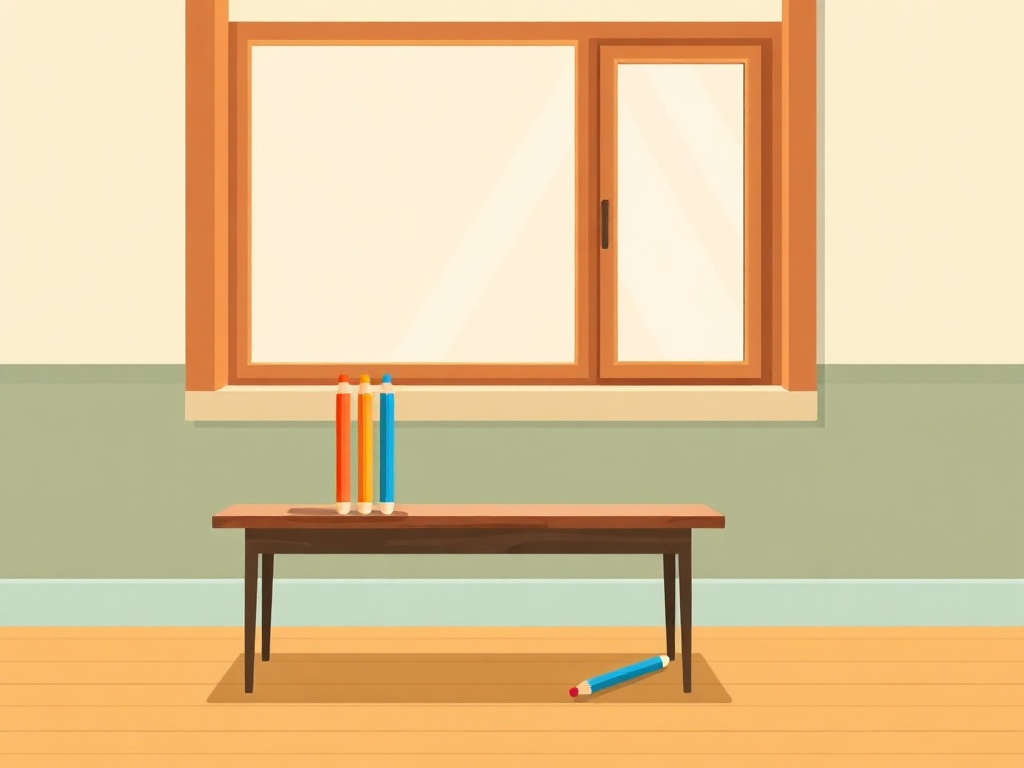
Martin is the last one to walk into the room. Every desk is taken in pairs except one — by the window sits a boy lining up three pencils in a perfectly straight row, not looking at anyone. Martin sits down next to him because there's nowhere else to go. They're silent for eleven minutes. Then Martin's pencil falls to the floor and rolls under the boy's desk. The boy picks it up, hands it back, and says, "Mine falls all the time too. That's why I line them up like this." Martin says, "What's your name?" The boy says, "Chris." And that's it. They don't become best friends. They don't share secrets. At the big break Martin stands alone by the water fountain and it's still hard. But that evening, when his grandmother asks how it went, he says, "I know one name. Chris."
Stop there. Don't add an ending where the whole class surrounds him the next day. Ask instead: "What do you think Martin will say to Chris tomorrow morning?" From here on, let the child talk, and you stay quiet.
Martin didn't stop being scared. He just learned one name.
The three sentences for walking into an unfamiliar classroom
Children this age aren't stumped by the idea of making a friend — they're stumped in the first second, by what exactly comes out of their mouth. So give them ready-made sentences: short, with no questions about anyone's life.
- "Can I sit here?" — always works, because there are only two possible answers.
- "What's your name?" — three words, doesn't require courage for a long conversation.
- "I'm Martin. What floor do you live on?" — only once the other child has already said something back.
And one for the moment everything goes wrong: "Can I play with you?" If the answer is "no," the child needs to know in advance that this isn't a verdict — it just means asking the next group. Rehearse this exact "no," or the first rejection at home will sound like the end of the world.
Rehearsing the doorway
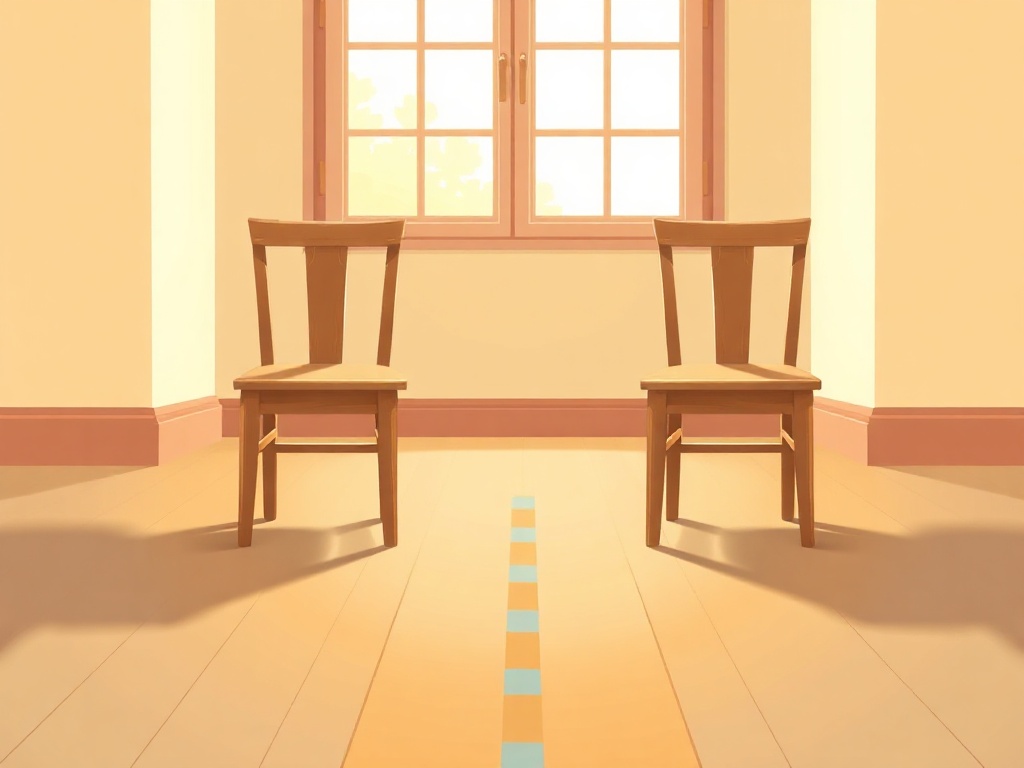
Set up two chairs side by side like school desks, plus a strip of paper or a scarf as the classroom's "threshold." It takes about 15 minutes and suits ages 6-8. You sit in one chair and play the new child — once friendly, once absorbed in your phone, once saying "it's taken." The child steps over the threshold and says one of the three sentences. Be sure to act out the rejection too. The exercise succeeds when the child says "Can I sit here?" out loud and, after hearing "it's taken," turns to the second chair without crying and without looking to you for permission.
Map of the classroom
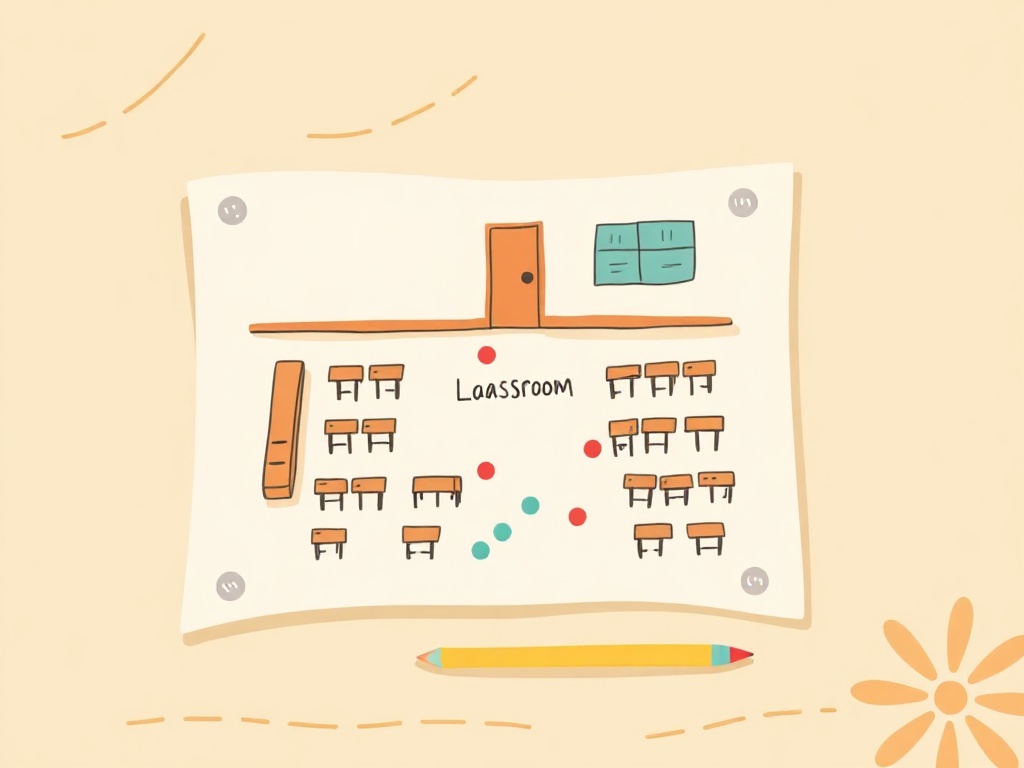
You'll need a sheet of paper, a pencil, and three colored stickers or just colored dots from a marker. It takes 20 minutes and suits ages 7-9. The child draws the room from above, as they imagine it: door, windows, desks, the teacher's table. Then they mark with a dot where they'd sit, where the bathroom is, and where they'll stand if they don't know what to do during break — for example by the water fountain or the window, not in the middle of the hallway. It's done once the child can walk you through the plan out loud in three sentences: "I come in here, I sit there, if it gets hard I go to the window." After the first day of school, take out the sheet and compare it with the real room — the child almost always laughs at what they got wrong, and that release of tension is half the point.
The most common mistake the evening before September 15th
"You'll see, tomorrow you'll have so many friends!" The sentence is said with the best intentions and almost always backfires on the parent. The reason is simple: it's a promise you can't keep. The next day at 1 p.m. the child walks out without a single friend and draws the only logical conclusion — either Mom was wrong, or, worse, I failed.
The second mistake is interrogating the child the moment they leave school: "Did you like it? Who did you play with? Who's your friend?" Three questions in the first ten seconds, aimed at a child worn out from six hours of unfamiliar faces. The answer is almost always "I don't know," and the mood sinks.
Something else works better. Promise something that's actually within your control: "I'll be waiting for you right outside the gate." And instead of an interrogation, ask for one specific thing: "Tell me one name you heard today." There's always a name. Even if it's the cleaner's name, or the classroom hamster's.
If the child cries at the doorway in the morning
Don't drag out the goodbye. Every extra minute of hugging at the entrance raises the tension, because the child reads your hesitation as a sign that this place really is dangerous. State clearly when you'll be back — by the clock, or by an event the child understands: "After lunch." Give them something small for their pocket: a smooth pebble, a button, a photo the size of a stamp. It costs €0 and works better than a new €30 backpack, because it can be squeezed in a fist when things get hard, and no one else even sees it.
And keep the promised time. If you said you'd be waiting by the gate, be there five minutes early. A seven-year-old's trust is built on punctuality, not on words.
When a story is no longer enough
Morning tears are normal during the first two or three weeks of September. But if by mid-October the child still refuses to go in, stops eating breakfast, or starts waking up at night, it's no longer a conversation for a story — it's a conversation with the homeroom teacher, and a specific one: who sits next to them, who they go out with at break, whether something is happening in the hallway. The teacher sees things you simply can't.