
The Boy Who Lied About Brushing His Teeth
A bedtime story for 5-7 year olds, plus two ways to stop a child lying about brushing teeth — no interrogation, no punishment.
The boy's name was Sam, and he had one very speedy skill. He'd walk into the bathroom, turn on the tap, count silently to ten, turn off the tap, and come out with wet hands. "Done!" he'd call from the doorway. The toothbrush stayed as dry as a summer pavement.
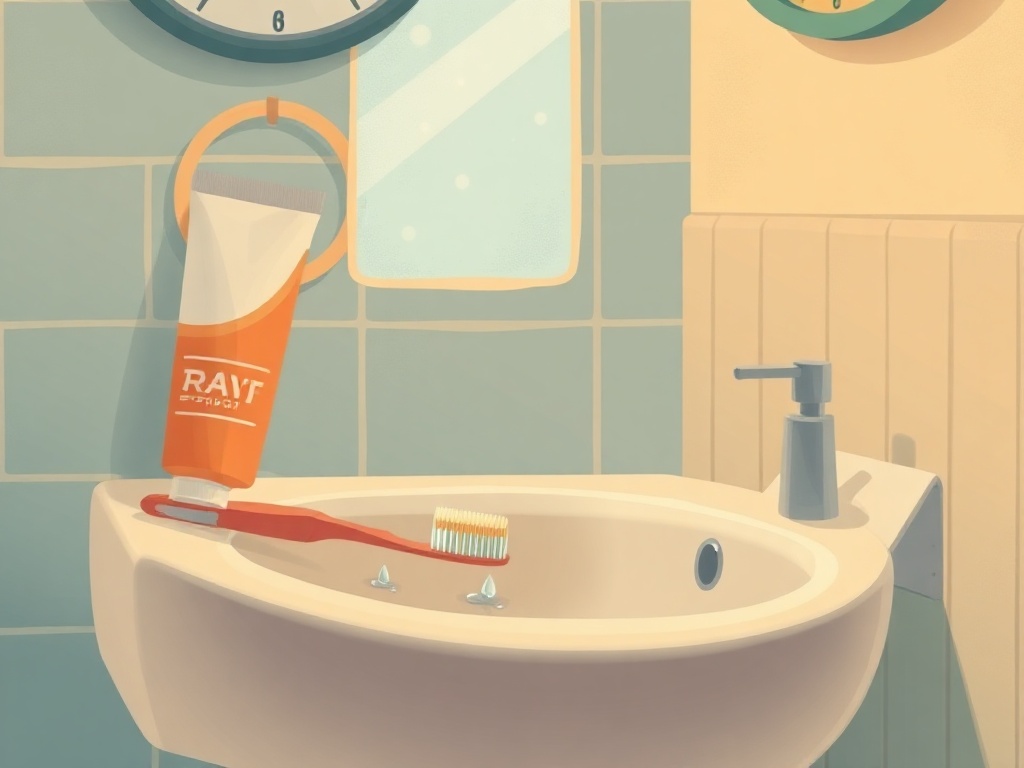
One evening, while Sam was asleep, his toothbrush called out to the toothpaste. "He forgot me again," it said. "He didn't forget me," the toothpaste replied, "but he only pressed me out and smeared me round the sink to make it look like we'd been working." Just then, a very small visitor peeked out from the dark — Cavity, wearing a hat made from a crumb of biscuit. "I love evenings like this," he said, settling in comfortably between two back teeth.
In the morning, Sam noticed something odd. Not pain — just a rough feeling, as if his teeth were wearing little socks. He looked in the mirror and told himself, "I'll brush better tomorrow." But tomorrow was Wednesday, and Wednesday meant football, so once again he called from the doorway: "Done!"
On the third evening, Mum came into the bathroom with him. She didn't ask, "Did you really brush them?" She said something else instead: "I'll help with the bottom ones, you take the top. I'll sing, you count." They sang a silly song about a crocodile with no toothbrush. Cavity didn't like the song one bit — it went on far too long. In the morning, the socks were gone. And best of all, Sam no longer had any reason to lie, because he wasn't alone anymore with a boring job in a cold bathroom.
Why children start lying about brushing teeth
Because it's the one task whose result can't be seen. A messy room shows. Leftover soup shows. But teeth look exactly the same before and after brushing — so "I brushed them" is a sentence with no consequences. A five- or six-year-old doesn't weigh this up as a moral choice; they simply find a loophole, the same way they discover that if they stay quiet, no one asks them to tidy away the building blocks.
That's why the "lying is wrong" talk almost always misses the point. The child nods, agrees, even feels genuinely sorry — and does exactly the same thing the next evening, because the real cause was never a lack of understanding about honesty.
- Brushing takes ages and has no visible finish line — the child doesn't know when it's "enough".
- It happens at exactly the moment they're most tired all day.
- It's done alone, behind a closed door, with nothing interesting around.
- "Done" brings an instant reward — a story, bed, the end of chores.
How to check without interrogating
Quizzing them at the bathroom door is a trap for both of you. Ask "did you really brush them?" and the child will almost automatically say "yes" — and you've already backed them into a corner they can't easily climb out of. Swap the question for one with no right or wrong answer instead: "Show me the back ones on the top right, that's always the trickiest spot." Or simply: "Let me have a sniff." The toothpaste is easy to smell straight away, and the child takes it as a game, not a check-up.
The toothbrush trick works too. A brush that's just been run under the tap looks different from one that's actually been used: the bristles are splayed and there's toothpaste residue caught between them. You don't need to make it a big investigation — it's enough for the child to know the toothbrush can "talk".
The Two-Minute Crocodile
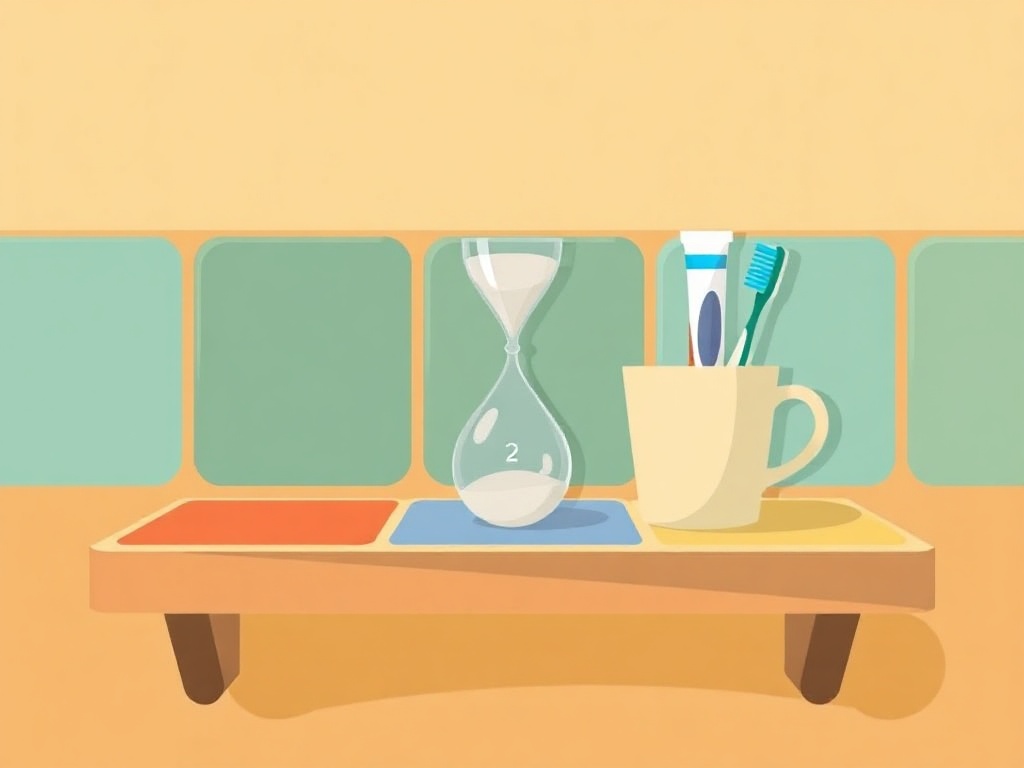
All you need is the toothbrush, the toothpaste, and a phone or timer in the kitchen — or, if you have one, a small two-minute sand timer, which costs around €2-3 and sits right next to the cup. It takes exactly 2 minutes, every evening. Suitable for ages 5-7. Divide the mouth into four squares — top left, top right, bottom left, bottom right — and call out "switch" aloud every 30 seconds. The child can simply count the squares on their fingers. Success is when the child says "switch" before you at least twice in the same evening — that means they're now leading the process, not just putting up with it.
If you'd rather have something that stays up on the wall, try this.
The Two-Box Wall Chart
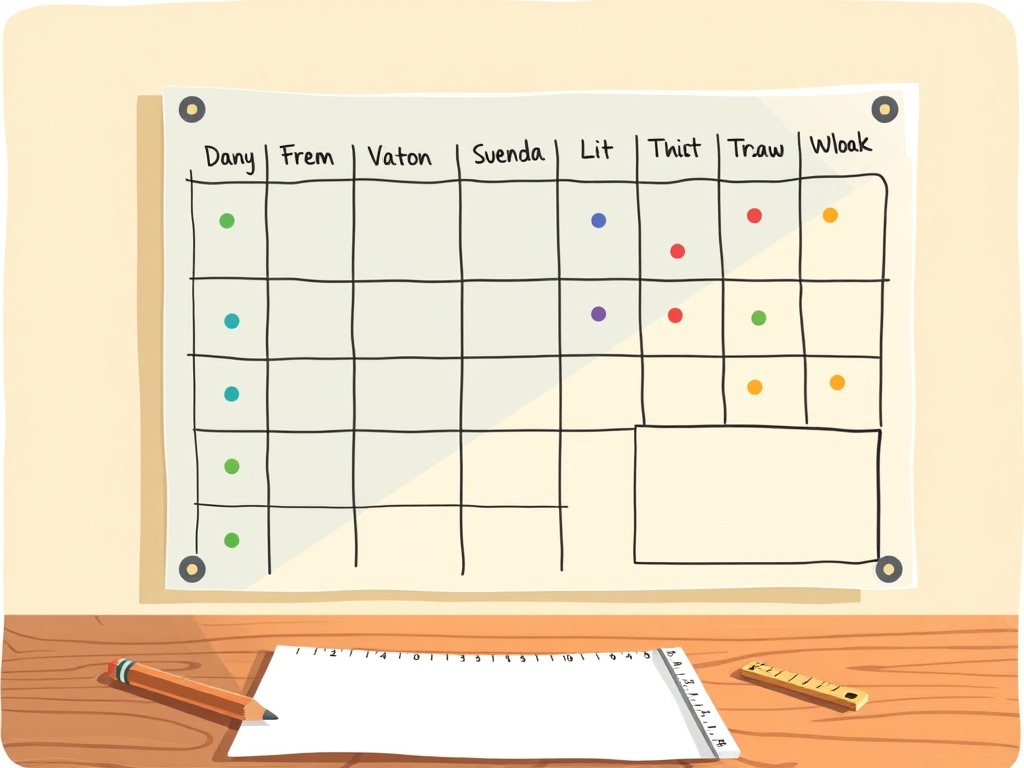
You'll need a sheet of A4 paper, a ruler, a pencil, and stickers or plain coloured felt-tip dots — all things you already have at home, nothing to buy. Setting it up takes 10 minutes, then just 20 seconds an evening. For ages 5-8. Draw a table with 7 columns for the days and two rows: "morning" and "evening". The key rule: a dot only goes on after the teeth are actually brushed, and the child puts it on, not you. If an evening gets missed, the square stays empty and nobody comments on it. Success isn't a full chart — success is when the child leaves a square empty on their own instead of adding a dot "just in case". That's their first real choice not to lie, and it deserves to be named out loud: "I noticed you were honest, even though I wouldn't have known."
The most common mistake: punishing the lie
The reaction is understandable — you've caught the child out, so "no story tonight" follows. The trouble is, the punishment lands on the lie, not on the unbrushed teeth, and that's exactly what the child learns: next time, lie better. Wet the brush. Put a dab of toothpaste on the tongue. Wait until they hear you're in the kitchen.
A second mistake of the same kind is scaring them with talk of drills and pulled teeth. Besides being unpleasant, it backfires: a child who's afraid of the dentist has an even stronger reason to hide that something's wrong in their mouth.
The third is quieter. We brush the child's teeth for them "because it's faster that way", then suddenly, by the start of primary school, expect them to do it alone and do it well. Between "I brush them for you" and "brush them yourself" there needs to be a stretch of months where you do it together — you take the bottom and inner surfaces, the child takes the top front ones, where they can see well.
Don't ask "did you brush your teeth?" Say "let's go check the back ones" — that way the child has nowhere to lie and nothing to feel ashamed of.
What to say after they've been lying about brushing teeth
No need for a scene. Three sentences are enough: "I can see the brush is dry. You didn't feel like it, I get that. Come on, let's do it together — I'll sing." Notice — the word "lie" appears nowhere. Not because we're brushing it under the rug, but because right now the goal is getting the teeth brushed, not getting the child to confess.
The conversation about honesty belongs to another moment — the next day, say, at the table, calmly: "Last night you told me you'd brushed your teeth. Do you know what happened in my head? I believed you. And because of that, I didn't check. That's why it matters to me that I can trust you." A six-year-old understands that far better than the abstract line "lying is a bad habit".
One more thing that helps — admit your own slip-ups out loud. "Today I was in a rush and brushed my teeth in thirty seconds flat. That wasn't good enough — tonight I'll take my time." The child sees that owning up doesn't lead to disaster. After that, it's a good deal easier for them to say "I didn't brush them."