
Analog Clock Hands: How to Teach a Kid Who Only Knows Digital Time
A practical plan for parents of 7-to-9-year-olds who can read 14:35 without blinking but freeze up in front of a round clock face. Two ready-made activities, the most common mistakes, and the signs that tell you the analog clock hands have finally clicked.
There's a round clock on the kitchen wall. You ask your child what time it is, and they glance up, go quiet for three seconds, then reach for the phone on the table. They know it's 3:40 PM because they read it off the screen. But the circle with the two hands is just decoration to them — something grown-ups understand for reasons unclear.
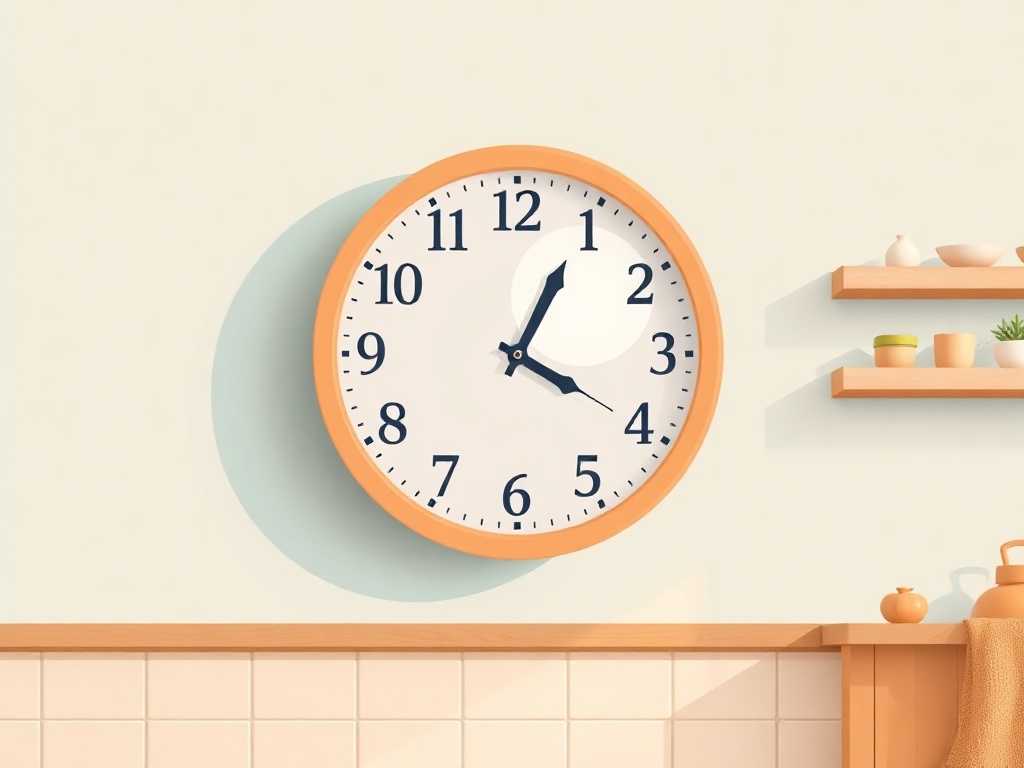
This isn't a gap in maths. A seven-year-old can count to a hundred, knows an hour has 60 minutes, and still can't tell you the time from a pair of analog clock hands. The real reason is something else entirely, and it's quite specific.
Why analog clock hands confuse a kid who's good with numbers
On a digital screen, the numbers say exactly what they say. 3:40 — three forty. Nothing needs translating. On a round clock, though, the same number means two different things depending on which hand is pointing at it. The 8 means "8 o'clock" if the short hand is on it, and "40 minutes" if the long hand is on it. The child sees an 8 and says eight. That's logical. Nobody's explained that this circle has two different counting systems layered on top of each other.
Add to that the fact that the short hand almost never sits exactly on a number. At 3:40, it's between 3 and 4, much closer to the 4. A child used to numbers being precise reads "four" and is off by twenty minutes. That's where my main suggestion comes from: for the first two weeks, drop the long hand from the conversation entirely.

Start with just one of the analog clock hands
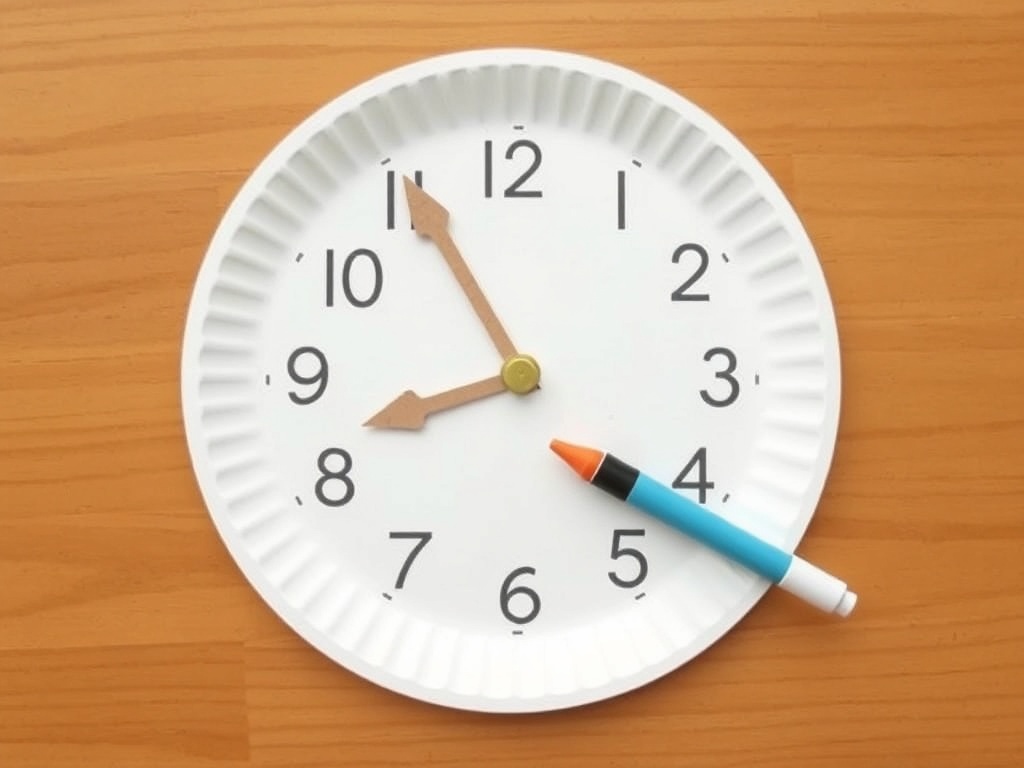
If you have an old clock you don't need, pop off the back cover and remove the minute hand. If you don't have one, make a clock face from a paper plate and cardboard, with a single short hand. Then spend the whole day talking only about that one.
- "The hand's passed the 6 — so it's after six, time to go."
- "It's still between 4 and 5. Not five yet, you've got time."
- "When the hand reaches 8, we're going to bed. Where is it now?"
- "It's exactly halfway between 2 and 3 — so it's half past two."
This is where the most important lesson sinks in: the short hand doesn't show a moment, it shows how far along we are. It creeps. A child who catches on to that finds the minute hand much easier afterwards, because they already grasp the idea of moving around a circle.
Paper Plate Clock
You'll need a paper plate or a cardboard circle, scissors, a paper fastener (or a thumbtack and a cork board), a marker, and two cardboard strips — one short, one long. Set aside about 25 minutes and work together, with the child writing in the numbers themselves. Suitable for ages 7-8. Start by placing 12, 3, 6 and 9 — these are the four anchors, and the rest of the numbers find their own place in between. Attach only the short hand. The task is for the parent to call out a time and the child to turn the hand: seven o'clock, just after seven, almost eight. Consider it a success once the child places the hand between two numbers for "half past" without lining it up exactly on a number — that means they've grasped the creeping motion.
How to introduce minutes on the clock face without counting by ones
Many children get stuck here because they're told: "multiply the number by five." For a second-grader who isn't yet solid on multiplication, that's a second task piled on top of the first. It goes faster with counting in groups of five, out loud, tracing a finger round the circle: five, ten, fifteen, twenty. Three laps and the rhythm sticks.
One small trick helps too — pencil in the small minute numbers on the outside of the clock face, next to the big ones: by the 1 write 5, by the 2 write 10, by the 3 write 15. Within two weeks the child reads it straight off, then the numbers aren't needed any more. It's not cheating, just a crutch that falls away on its own.
The Round-Clock Hunt
All you need is a kitchen timer and a sheet of paper divided into two columns. Set aside 15 minutes in the afternoon, ideally on a Saturday. For ages 8 to 9. Set the timer for a random number of minutes between 2 and 10; when it rings, the child runs to the wall clock and writes down the time in the left column exactly as they read it off the hands, while you write the same time from your phone in the right column. Do five rounds. It's a success if at least four out of five entries match within five minutes — that's the normal accuracy for this age, and there's no need to push for more.
Common mistakes that slow analog clock reading down
The first is taking the round clock off the wall because "the child reads digital anyway." That removes the only reason to practise. The opposite works better: take the digital clock out of the kitchen for a month and leave only the analog clock hands. Not as a punishment — just so there's no shortcut available.
The second mistake is toy clocks with clear plastic hands and no numbers. They look nice, but the child has nothing to anchor to. What's needed is a plain clock face with big, clear digits.
The third is correcting on the fly. The child says "twenty to five" instead of "twenty to four," you say "no, four," and the conversation ends there. It's better to ask: "Has the hand passed the 4, or hasn't it got there yet?" The child looks again and almost always corrects themselves. The difference is that this time they know why.
And the last one — learning only through apps. On screen, the hands jump straight to position; in real life analog clock hands move slowly, and the child needs to catch exactly that movement.
The short hand doesn't tell you what time it is. It tells you how much of it has gone by.
How you know the analog clock hands have clicked
Not when the child reads the time on request, but when they read it unprompted. For example: they glance at the wall clock and say "twenty more minutes till the film." That's when the hands have stopped being a task and become a tool.
It also helps to tie the clock to things the child already tracks anyway. If they're buying something for 1 to 5 euros at the corner shop, say: "The shop closes at seven, the hand's between 6 and 7 — do you have time?" That kind of sum is far more convincing than a worksheet.
One more thing about the school year: from September to June, children have a clear rhythm — lesson, break, end of lessons. Use it. "Big break is 20 minutes, the long hand will move past four numbers" is an exercise that repeats itself every single day without any effort.