
The Lost Bunny in the Park: A Bedtime Story and What to Do When Your Child Loses Their Favourite Toy
A short story about a bunny lost between the swings, plus a few concrete things to say and do with a 5-7 year old in the first hour after the loss.
Millie held Fluffy the bunny by one ear while she ran to the slide. Then she climbed up, then she climbed down, then she spotted a dog and dashed after it. When Mum said "time to go," her hand was empty. She stared at her palm as if someone had snatched something away while she blinked.

This moment happens in almost every park. And almost every adult reaches for the same line: "Don't cry, we'll buy you a new one." That's exactly the line that doesn't work — here's why, plus what actually does.
The Story of the Lost Bunny
Tell it in your own words. It's for children aged 5-7 and takes about four minutes read aloud.
Fluffy the bunny was grey, with one ear softer than the other, because Millie always tugged it from the same side. That afternoon he fell into the grass by the bench and stayed there all alone. The sun sank low. The grass turned cool. Fluffy wasn't scared — bunnies aren't afraid of the dark, they're only afraid of being forgotten.
First a magpie hopped by. "Why are you lying there?" she asked. "I'm waiting," said Fluffy. "Waiting for what?" "For a girl with two pigtails and a plaster on her knee." The magpie shrugged and flew off, because magpies don't understand waiting.
Then along came Mr. Peter, who collected the park's rubbish every evening. He picked Fluffy up, brushed off the dirt, and said out loud, even though no one was around to hear: "You're not rubbish — you're somebody's friend." And he sat him up on the back of the bench, high up, so he could be seen from far away.
Millie came back the next morning, before nursery, with Mum. She ran from the swings to the sandpit, then to the bench. And there, on the backrest, sat Fluffy — a little damp with dew, with grass caught in one ear. Millie didn't say a word. She just pressed him to her cheek and stayed like that, until Mum gently nudged her: "Come on, we'll be late."
And Fluffy thought what every toy thinks when it's found: that the waiting had been worth it.
Why "We'll Buy You a New One" Fails Every Time
To a child, a toy isn't an object — it's a specific being with a history: that ear is soft because they tugged it; that stain is from the ice cream on their birthday. A new £8 bunny from the shop is a different bunny. When you say "we'll buy you a new one," the child hears that their sadness is unwarranted and that the conversation is over. So the crying usually doesn't stop — it gets worse.
The other common mistake is turning the loss into a lesson right away: "See, this is why I tell you to look after your things." The child is already being punished by the situation itself. Adding a lecture just piles shame on top of the sadness, and next time the child will simply hide the fact that they've lost something.
- Instead of "don't cry" — "I know. You miss Fluffy right now."
- Instead of "we'll buy you a new one" — "Let's look for him together, you lead the way."
- Instead of "that's enough now" — "How much time do you need to feel better? I'll wait."
- Instead of silence at home — "Tell me something Fluffy only did with you."
The First 30 Minutes: A Search Plan the Child Takes Part In
Don't search on the child's behalf. A 5-7 year old remembers their route surprisingly well if you ask in the right order — not "where did you leave it" (they don't know), but "where were you last holding it in your hand".
The Retrace-Your-Steps Walk
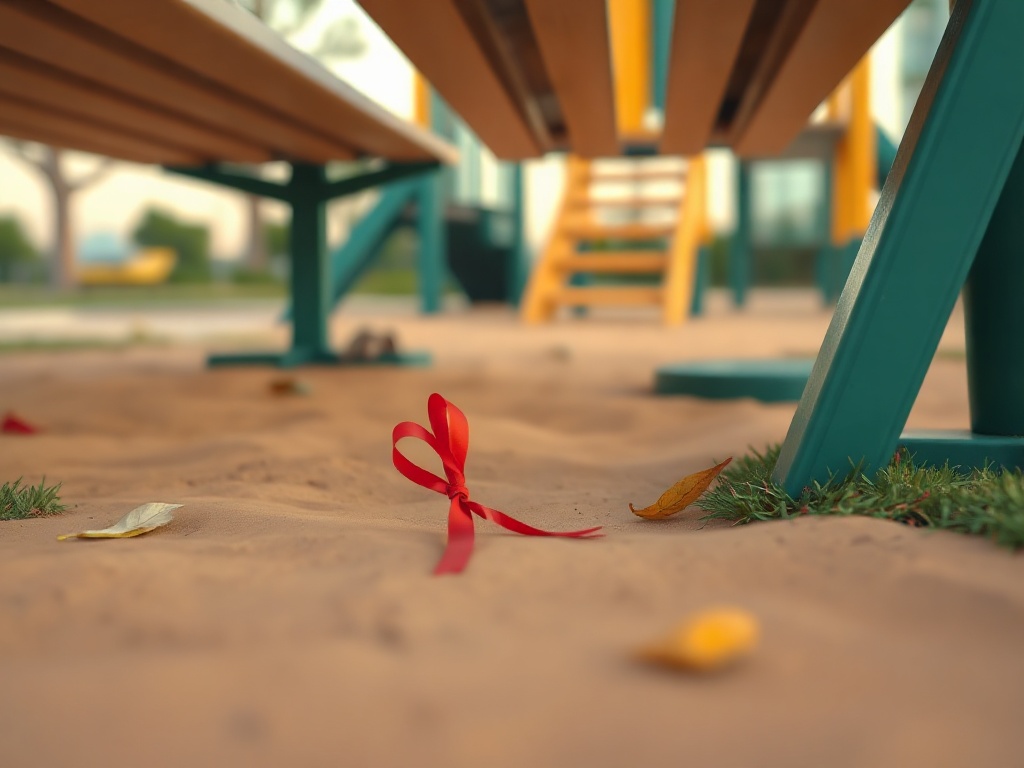
All you need is a phone torch if it's getting dark, and a bag for any damp finds. It takes 15 to 25 minutes and suits children aged 5-7. Start at the park exit and walk backwards through the places the child was — they point, you follow. At each stop, ask one question: "Which hand was the bunny in here?" Check the three spots where toys go missing most often: under benches, between the climbing frame's steps, and along the edge of the sandpit. It's done when the child has pointed out at least three spots themselves and checked under one bench — whether or not you find the toy.
A Lost-Friend Poster
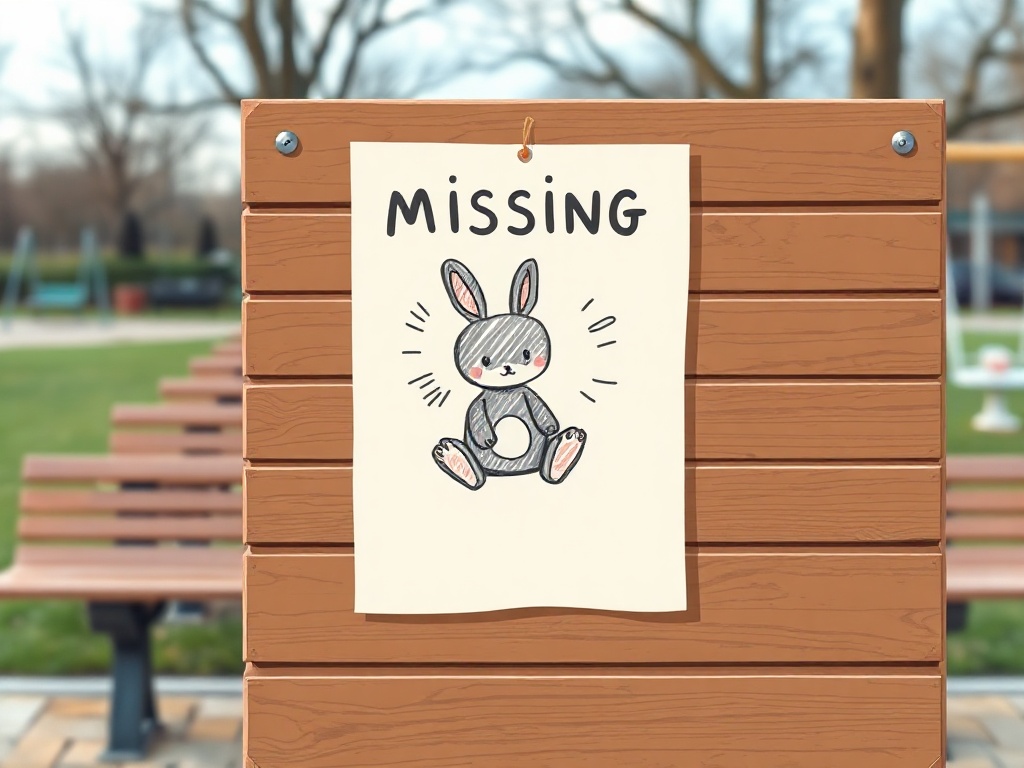
You'll need a sheet of A4 paper, felt-tip pens, and tape or a stapler — and if you have a photo of the toy on your phone, even better. It takes about 20 minutes and suits 6-7 year olds. The child draws the toy and dictates the words while you write: "Lost grey bunny with a soft ear. If found, please leave on the bench by the swings." Don't write the child's name, address or phone number — just the spot in the park. Stick the poster on the noticeboard at the entrance, or leave it with the park warden if there is one. It's a success once the child has come up with the description themselves and decided where to put the poster.
If the Toy Doesn't Turn Up
Sometimes it just doesn't. Don't pretend nothing happened, but don't turn the evening into mourning either. Before bed, ask one thing: "Where do you think Fluffy is now?" Children this age build their own ending to the story — that he's with another child, that he's in Mr. Peter's bin lorry, that he's hopped onto a bus. That ending is enough for them.
After a few days, you might offer a new toy — but not as a replacement. The difference is in the wording. "This is instead of Fluffy" closes the door; "This is a new one, he doesn't have a name yet — you decide" leaves the old bunny's place untouched.
The child isn't grieving for the plush toy. They're grieving because, for the first time, something has vanished without their permission.
How to Prevent It Next Time, Without Banning Anything
- Entrance rule: the favourite toy stays in the backpack while the child is on the climbing frame. It comes out once you're sitting on the bench.
- One bright detail on the toy — a ribbon, a cord, a sticker — turns spotting it in the grass into a matter of seconds.
- Before leaving the park, count out loud: "Hat, water bottle, bunny." Three words, every time, until it becomes a habit.
- If the child insists on carrying the toy everywhere, hand them the responsibility outright: "You carry him, you count him on the way out."
One more thing — children who've been through a loss like this, and who took part in the search alongside an adult, are usually the ones who later pick up a stranger's forgotten toy from the sand and set it on the bench. Just like Mr. Peter.