
When Mom and Dad Fight: A Story to Read Together (Ages 7-9)
When mom and dad fight, a child often decides it is their fault. A short story about a girl who hears an argument behind the door, plus gentle phrases and two hands-on activities — a calm-down box and a three-column map — that help a child around ages 7-9 talk about it. Read it together with a grown-up; the closing sections are written for adults only. General family reading, not medical or psychological advice.
FOR GROWN-UPS: read this story side by side with your child (ages 7-9). It talks about a family argument and about feelings that can sit heavily with a child, so pause whenever your child needs it; the last two sections are written for adults and are not meant to be read aloud. Mia sat on the hallway floor, knees pulled up to her chin. Behind the kitchen door, Mom and Dad's voices were rising like water in a kettle. She couldn't make out the words, but she understood something else: it was loud, and it was bad. The cat, Fluffy, crept up beside her and nudged her with his head. Mia hugged him and thought what many children think in a moment like this: "It's probably my fault. Because of that math test."
That's exactly the thought we want to gently take apart when mom and dad fight. Not with the reassurance "nothing happened" — because the child heard it and knows something did happen. But with the truth, told in a way that fits inside a child's mind. If things at home are difficult right now, read the story yourself first and pick the moment that feels right. Everything here is general family reading and is not a substitute for personal advice from a professional who knows your family.
An evening in the house with the red roof
In the house with the red roof lived Mom, Dad, Mia, and the cat, Fluffy. One evening, a storm gathered over the house. Not the kind you see on TV — this one was inside. It started with dishes, moved on to "always" and "never", and struck the ceiling like thunder.
Mia opened her bedroom door and asked in a small voice: "Can you please stop?" Mom looked at her, startled. Dad stopped mid-word. They both saw a seven-year-old girl holding onto the door handle as tightly as she could.
Then Dad did the most important thing in the whole story. He crouched down so his eyes were level with hers and said: "Mia, you heard us. It's true, we had an argument. We're talking loudly because we're angry with each other — not with you. This is a disagreement between grown-ups, and we'll work it out. It's not your fault, and it's not your job to stop it."
Mia asked, "Will it stop?" Mom said, "It will stop. Arguments usually pass. Sometimes it takes a little while, sometimes a bit longer. But they pass." Then she added the most useful sentence of all: "While it's happening, you can take a book to your room or go to Grandma's. You don't have to stay and listen."
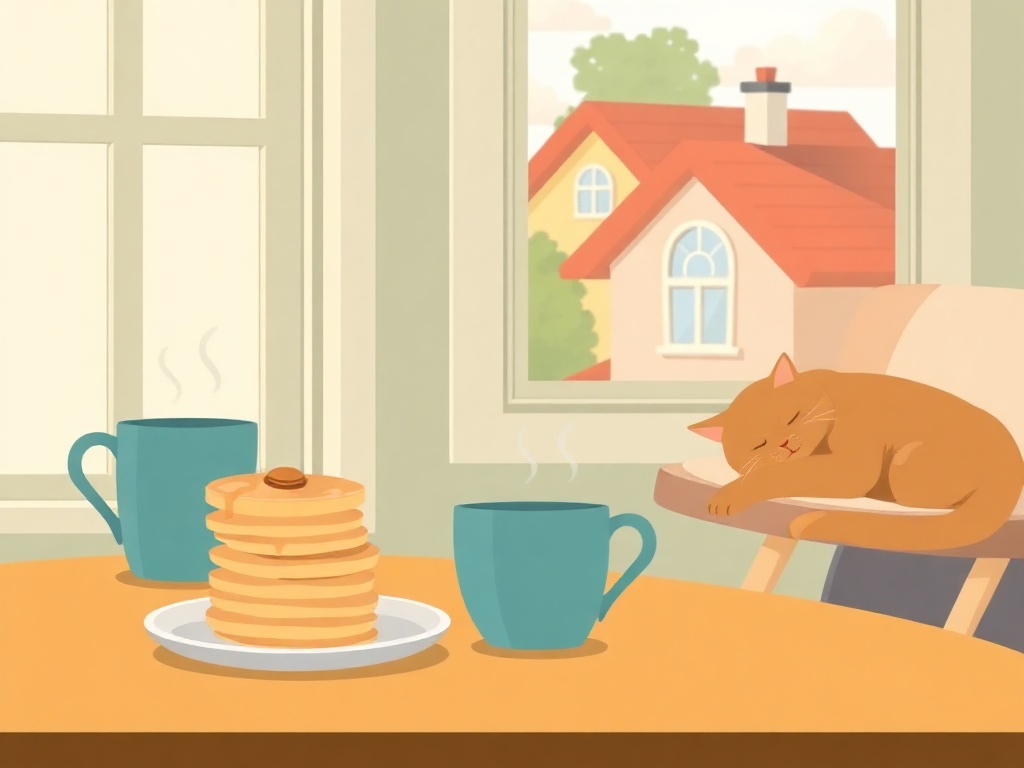
That evening, the quarrel really did pass. In the morning there were pancakes and a kind of quiet that wasn't scary, just tired. Mia understood something she'd need for a long time to come: keeping the peace between grown-ups was never hers to do.
Why "we weren't fighting, everything's fine" doesn't work
When mom and dad fight, the child hears the tone. If we later tell them nothing happened, some children may keep worrying anyway and begin to doubt what their own ears told them. And the next time something's wrong, they may not ask. They'll fill in the gaps themselves, and children's versions often end with "it's because of me."
- "Nothing happened" — the child knows something did happen, and may conclude the truth must be so frightening that no one will tell them.
- "Stay out of it, this is between grown-ups" — true in essence, but said like that it can sound like "go away". Add the second sentence: "...and we'll work it out, you're safe."
- "Look what your father did" — the child gets pulled onto a team. Then loving both parents can feel like betraying one.
- Unnecessary details about the cause (money, relatives, work) — the child can't solve these and may start carrying them around instead.
Phrases a child can say when parents argue
Many children this age cope better with a ready-made phrase than with general advice. Practice it together at a calm moment, like a game — three times out loud.
- "I'm scared when you shout. Can you speak more quietly?"
- "I'm going to my room until you're done. I'll come back after."
- "I don't understand what you're arguing about, but I want to know if it's because of me."
- "Can you tell me when you've made up?"
The Calm-Down Box
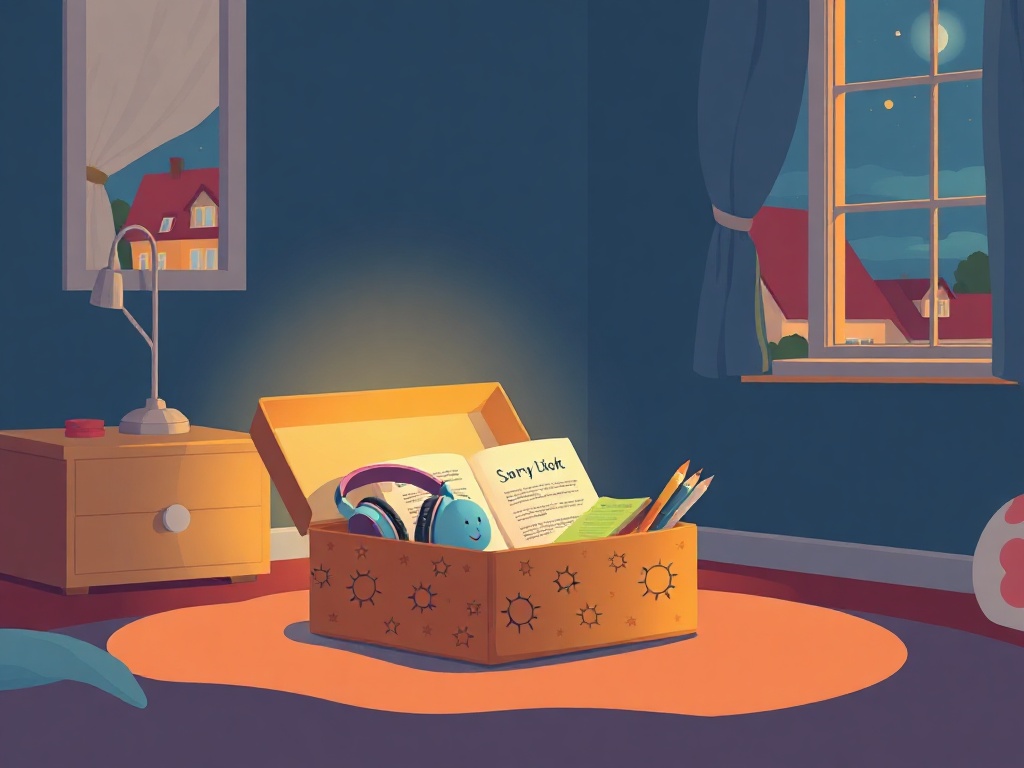
Get a shoebox and put three or four things inside that help ease tension: a favorite book, headphones, paper and pencils, a small stuffed animal. Stick a note on top that says "It's not my job to fix this. It will pass." Making it together takes about twenty minutes — go at your own child's pace. Keep the box somewhere easy to reach in the child's room, and agree that they can take it without asking. The activity often works best when, next time voices rise, the child goes and opens it on their own — without being reminded.
The box gives a child something to do in the moment. The next activity does a different job: it puts the argument on a timeline, so the child can see with their own eyes that it had an ending — and remember real endings that already happened at home.
The Three-Column Map: what comes after the argument
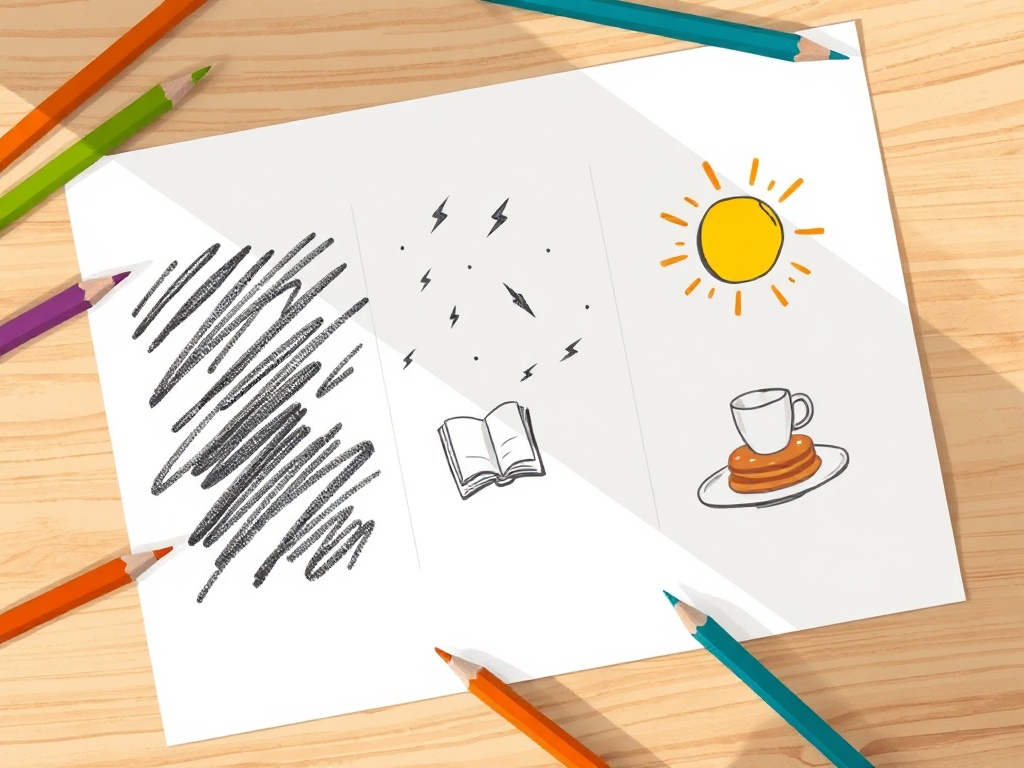
All you need is a sheet of paper divided into three columns and some colored pencils. In the first column, the child draws what the argument looks like to them (dark scribbles, lightning bolts — whatever they like); in the second, what they do while it's happening; and in the third, what the house looks like afterward — sunshine, pancakes, TV. Allow about fifteen minutes, more if your child wants it. Don't judge the drawing — just ask: "Which part of the third column has already happened at home?" You can keep the map and add a small mark each time a real ending happens. It has done its work when the child can point to at least one real time things settled down again — so now they have proof, not just a promise.
You are not the roof. It is not your job to hold the house up.
What the grown-up does the next day
Making up is worth making visible. If the argument happened in front of the child, at least part of the making-up can too. No big scene is needed — it's often enough to say at dinner: "We spoke harshly last night. We said sorry. It's settled." The child files it away: conflict → ending. That's a pattern many children later recognize on the playground and in the classroom, and it is one of the calmest answers a child can be given about what comes after an argument.
One more practical point. If the child starts acting as peacemaker — changing the subject, cracking jokes, bringing everyone tea in the middle of the argument — you can stop them gently but clearly: "Thank you, but it's not your job to make us make up. That's ours to do." Otherwise it can be easy for a child to take on more responsibility for grown-up relationships than belongs to them.
When tension at home lasts longer (for adults)
This section is for the grown-up, not for reading aloud. There's a difference between parents who argue and make up, and a home where a child often seems on edge. If your child is resting less easily than usual, would rather not go to school, says their tummy feels funny in the mornings, or simply says they don't feel comfortable at home, some parents find it useful to talk it over sooner rather than later. It may help to jot down a note or two about what you noticed and roughly how long it lasted, simply because concrete examples are easier to describe than general impressions. Many families also find it worth asking the class teacher for a short conversation about how your child seems in class and at break time; teachers see a side of the day you don't. And if you'd like to talk to someone at school, the office can tell you whether there is a school counselor or psychologist and how to request an appointment — and if there isn't one, your family doctor is a good person to raise it with at the next visit. Everyday ups and downs are common and are not in themselves a sign that something is wrong. Nothing here is a diagnosis, an assessment, or a plan of action; if you are worried, the most useful next step is a conversation with a qualified specialist who knows your family's situation.
Parents' corner: read this part on your own
Also for adults only — this section is not written for children to read. Sometimes the tension at home stops feeling like something that passes, and a child no longer feels at ease in their own house. One thing some families find useful is a short list of trusted grown-ups outside the family the child can talk to — you might write down three by name, with the teacher's school email or the grandparent's phone number, and keep the list on the fridge so it isn't abstract. It also helps to tell the child plainly that turning to one of them is not tattling — it is asking for support. For yourself, two options that some parents find helpful: you can ask the school office whether they can put you in touch with a family counselor, and you can look up your national or city family-support service to see what is available near you, since arrangements and costs differ from place to place. None of this is medical, psychological, or legal advice — for a personal situation, please consult a qualified professional, and in an emergency contact your local emergency services.