
A Parent's Guide to the Silent Child Around Relatives: A Bulgarian Village Summer and What Helped by Day Ten
For parents and grandparents: an invented but familiar story from a Bulgarian village yard about Mila, a silent child around relatives for the first two days of summer, plus what her grandfather did instead of the endless "Say hello, don't be shy!" — and how long it can reasonably take.
Picture a scene many families will recognize. The gate of the village house creaked — the family spends every summer in a Bulgarian village, where the whole extended family gathers — and seven voices rang out from the yard at once. Mila gripped the handle of her suitcase and pressed herself against her mother's leg. "Look how much she's grown!" cried an aunt in a cherry-print dress. "Come let me see you! Go on, say hello to Grandma Donka!" Mila said nothing. She stared at the paving stones in the yard and counted the cracks — one, two, three, four. Her mother gave an awkward little laugh: "She's just shy, she'll get over it." And right then, Mila decided she wouldn't speak for the whole summer.
It didn't take three days. But it did pass. And the way it happened had nothing to do with what everyone in the yard kept telling her.

What Actually Happened on the Second Day
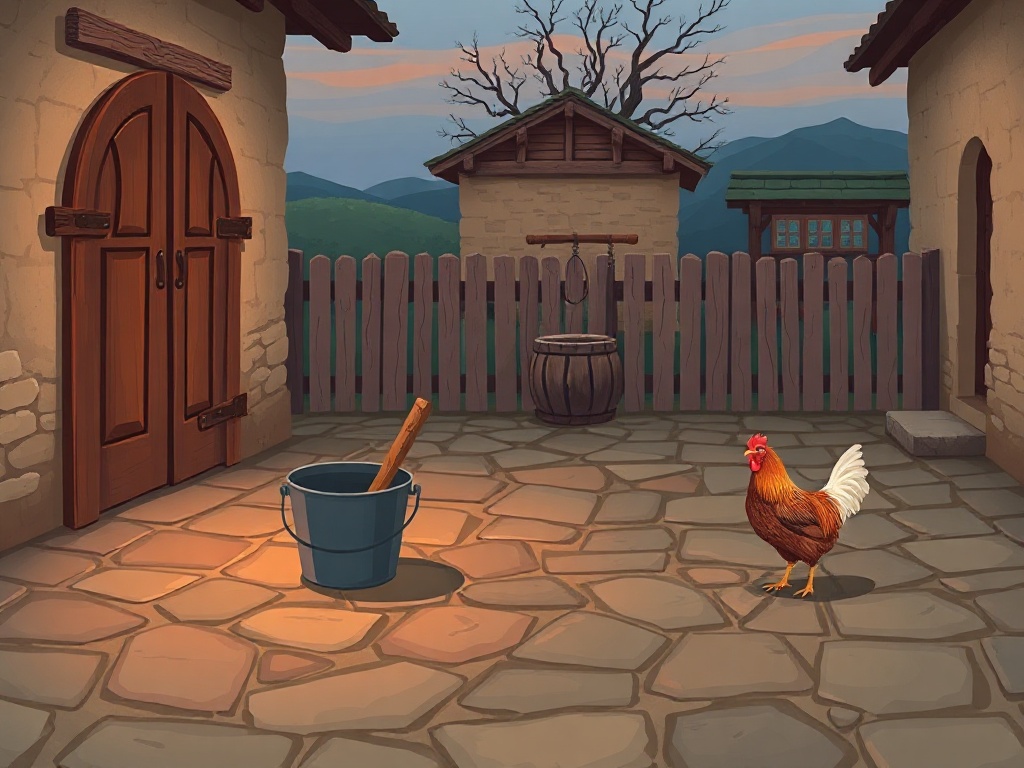
Grandpa Stoyan didn't say "hello" or "why won't you talk." He handed her a bucket: "The hens eat at six. You carry the bucket, I'll open the gate." They walked to the henhouse in silence. Inside, a speckled hen hopped straight onto her foot, and Mila burst out laughing — for the first time in two days. "That one's Penny," said Grandpa. "She bites." "What about that one?" Mila asked. Three words. Her first three words.
That evening, when the aunt in the cherry dress asked again, "Well, will you say something to me?", Mila answered: "Penny bites." The whole table laughed, and Mila blushed — but she didn't run off. By the fifth day, she was leading her cousin to meet Penny. By the tenth, she was carrying the bucket on her own.
A child doesn't stay silent because they have nothing to say. They stay silent because they don't know where to start — and ten grown-ups are watching their mouth.
Why "Say Hello!" Doesn't Work
When we push a child to perform in front of everyone, we do three things at once: we enlarge the audience, we set a deadline, and we turn a single word into an exam. A child who already doesn't know how to begin now has to do it in front of spectators. So they clam up even harder. And the next time they hear the gate creak, their stomach tightens before they even walk in. That is usually what is going on with a silent child around relatives: not rudeness, just too much stage at once.
- "Don't be shy" — the child hears "something's wrong with you" and starts watching themselves even more closely.
- "She's shy," said in front of them — this pins a label on them that they then defend: "I'm shy, I can't do it."
- Bribes ("if you say hello, I'll get you an ice cream") — turn the conversation into a transaction, and failure into a double loss.
- Comparisons to the cousin who "talks to everyone" — the child stops trying, so as not to lose again.
What to Tell Relatives Before the Trip
Call ahead and ask for something specific. Not "don't pester her," but something the person can actually do: "Mila warms up slowly. If you can, no hugs and no questions in front of everyone on the first day — and once you're sitting on the bench together, show her the rabbits." Some relatives will agree at once, others will need the request repeated at the gate, and a few will forget it by dinner — ask anyway, because a concrete instruction is far easier to follow than a vague plea.
The Three Sentences Every Child Should Have Ready
Adults improvise. A seven-year-old can't. Give your child three ready-made sentences, short ones, that will get them through the moments that actually happen in a village yard: the arrival at the gate, the compliment across the table, the hour when the table gets loud and nobody notices they've stopped eating. Rehearse them in the car on the last stretch of road, while the fields are going past — not as a lesson, but as a game of questions and answers, with you playing the aunt in the cherry dress.
- A greeting for the gate: "Hello, I'm Mila." Full stop. Nothing more is required.
- A reply to "Look how big you've gotten!", which will come at least four times before dinner: "Thank you." One word does the job.
- An exit line for when the table gets too loud: "I'm going to help Grandpa." Agree in advance with Grandpa that he'll always have something to hand her — a bucket, a basket, the gate latch. That makes it a permitted escape, not rudeness.
And one more rule that applies to the grown-ups: for the first two days, no one should expect an answer from the child in front of the whole table. Anyone who wants to talk to them should catch them alone, by the well or with the rabbits.
Grandpa's Bucket — A Task Instead of a Conversation
You need almost nothing for this one: a bucket, a basket or a watering can, and one grown-up with real work to do — feeding the hens, watering the tomatoes, collecting the eggs. Fifteen or twenty minutes in the early evening is plenty, when the yard has emptied out a bit; children of about six to nine take to it easily. The adult has only one rule to follow: no questions about the child — not "how are you," not "what grade are you in." Talk only about the task at hand: "Hold this here." "This watering can's heavy, isn't it?" The child's hands are busy, so they don't have to make eye contact with anyone. And name things as you go — the hens, the dog, the crooked apricot tree — because a name gives the child something to ask about later. If the child asks even one question of their own about something in the yard, the evening has done its job: the dog's name, why the tomatoes are tied with string, which hen lays the brown eggs. That question is the opening you were waiting for — the next day, start there instead of at "hello."
The Relatives Map
Where the bucket works outdoors and wordlessly, this one happens at the kitchen table, the evening before you set off or on the first night in the village — an A4 sheet, colored pencils and last summer's photos on your phone are all it takes. The child draws the yard in the middle — the house, the walnut tree, the well — and then draws a circle around it for each relative they'll be meeting, placing it where that person usually sits or works: the aunt by the summer kitchen, the cousins under the walnut tree. In each circle, write the name and one thing that person does, ideally something the child could ask about out loud: "Uncle Ivan — has a motorbike," "Auntie Vanya — makes banitsa, the Bulgarian cheese pastry," "Cousin Danny — 10 years old, plays football." That way strangers become people with a label, not a crowd. When the child recognizes three of them by name the next day without you prompting, the map has paid for itself. Keep the sheet somewhere visible — on the windowsill of the room where they sleep — and add a circle whenever a new neighbor turns up at the gate.
What If Summer Ends and the Child Is Still Silent?
Some children need two weeks to start talking in the yard. That's not a failed summer. But check one thing: does the child speak freely at home, with you and with their friends from the neighborhood? If so, this is just warm-up time, not a problem. If the child stays silent at school, on the playground, and at the shop for months on end, mention it to your family doctor or the school counselor — describe where exactly the silence happens and how long it has lasted. They are the ones who can look at the whole picture and say whether this is simply a slow warm-up or something that deserves a closer look. Whatever the answer turns out to be, it is not stubbornness on the child's part, and help of any kind tends to work better the earlier it begins.
And at the end of summer, when the car pulls away back toward the city and Grandpa Stoyan stays behind at the gate, there's a good chance the child will roll down the window and shout something. Mila shouted: "Don't forget, Penny bites!"