
Why Is the Sky Blue: How to Explain It to a Child Aged 6 to 9
The explanation 'the sky is blue because it reflects the sea' is wrong, and kids catch on to it fast. Here's what actually happens, plus two simple activities that let your child see the effect with their own eyes.
A seven-year-old looks out the car window and asks, "Who painted the sky?" The grown-up answers, "It's reflecting the sea." Two weeks later, the same child is standing in the middle of the country, hundreds of miles from the coast, staring up at a completely blue sky, and says, "But there's no sea here." And they're right.
The sea explanation is convenient, but it doesn't hold up. Neither does "because it's daytime," nor "because someone chose that colour." The problem isn't that these answers are too simple — it's that a child can disprove them, and once they disprove one grown-up answer, they stop asking. The real explanation is just as short, with the added bonus that it can be seen.
What Actually Makes the Sky Blue?
Sunlight looks white, but it's actually a mix of every colour — the same ones that show up in a rainbow. That light travels through the air, and the air isn't empty: it's full of tiny particles, gas molecules. When light bumps into them, it scatters in all directions. But not every colour scatters the same amount. Blue light scatters far more strongly than red or yellow light.
The result: blue light spreads out across the whole sky and reaches our eyes from every direction we look. That's why, no matter where we look up, we see blue. Red and yellow light travels in a straighter line and stays mostly within the beam coming directly from the sun.
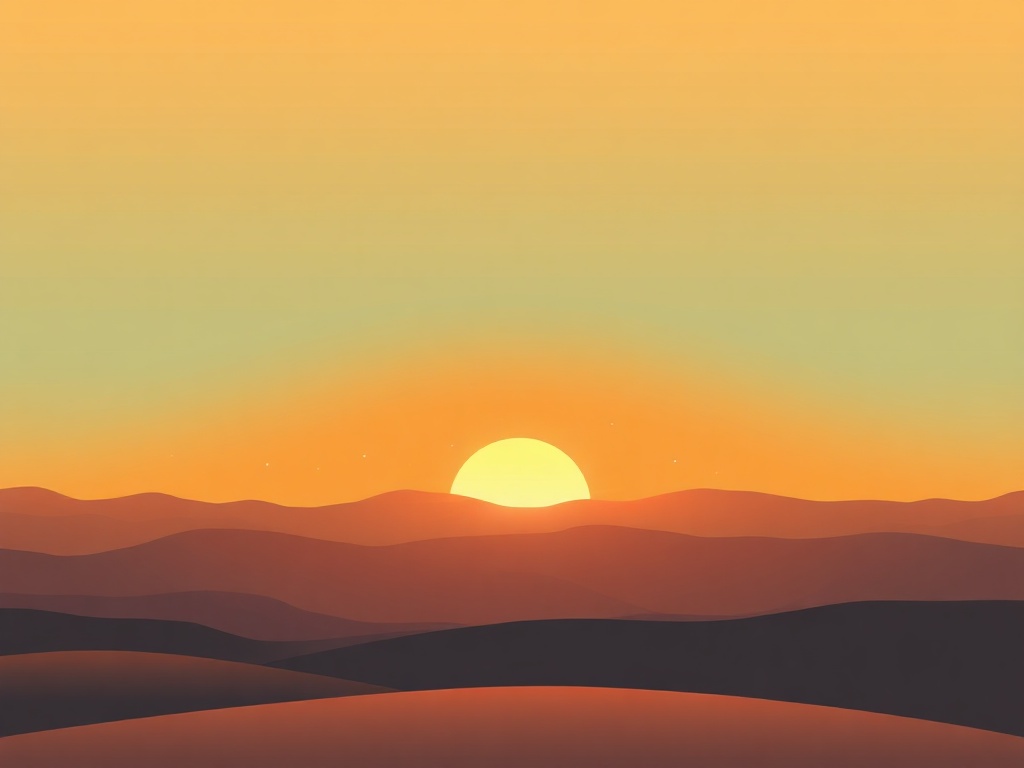
This is also where the explanation for sunsets comes from — the one kids love most. In the evening, the sun sits low, and its light has to pass through much more air before reaching us. Over that long stretch, the blue scatters away so much that it's lost to the sides — and what reaches our eyes is what's left: orange and red. Same mechanism, different angle.
How to Say It So the Child Will Repeat It
Wording matters. Here are three versions, arranged by age — pick one and stick with it.
- Age 6: "Sunlight is like a box with every colour of paint in it. The air stirs up the blue paint the most, and it spreads all over the sky."
- Ages 7-8: "Light hits the air and bounces off. Blue bounces the hardest and flies off in every direction, so we see it everywhere above us."
- Age 9: "Light is a mix of colours. The molecules in the air scatter blue light much more than red light, which is why the sky looks blue and sunsets look red."
- Check: ask the child to explain it to Grandma over the phone. If they can keep going for 20 seconds without your help, the explanation has landed.
The Blue Sky in a Glass of Water
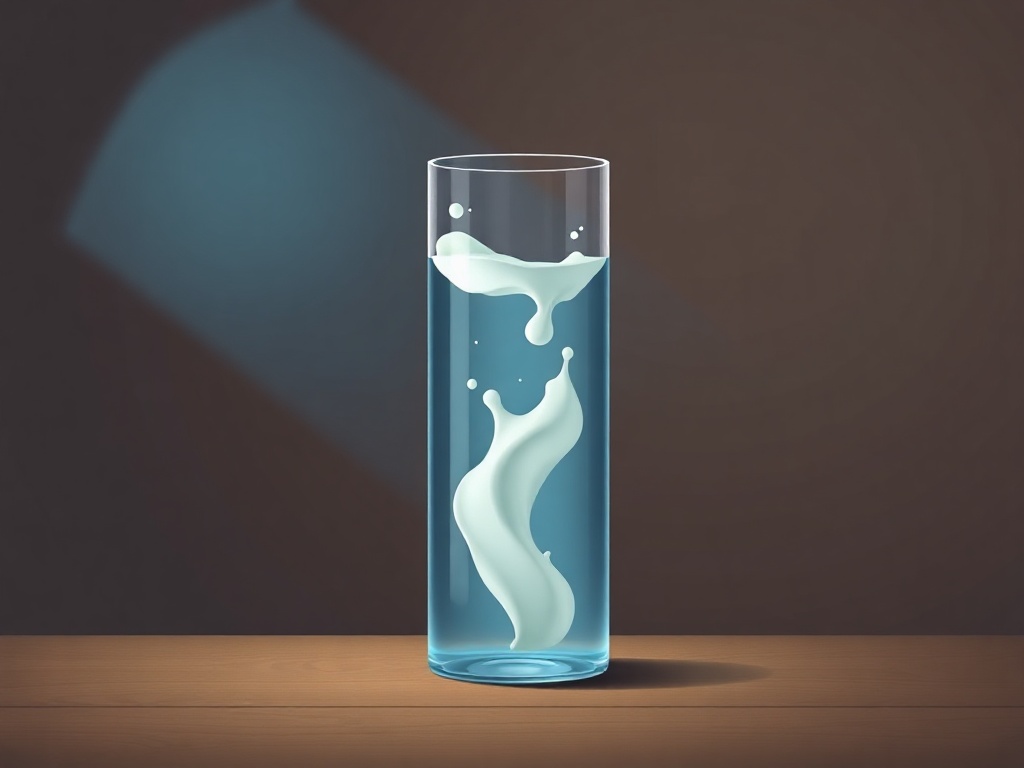
Materials: a tall clear glass or jar, water, half a teaspoon of milk (or a few drops of cream), a torch (a phone flashlight works too), a dark room. Steps: fill the glass with water, stir in the milk, turn off the lights, and shine the torch at the glass from the side. Look at the glass from the side — the water looks bluish. Then stand facing the torch and look at the light through the glass — it looks yellowish or orange. The milk particles act like the air: they scatter the blue light sideways (the sky) and let the orange light pass straight through (the sunset). Tip: start with a small amount of milk; if the water turns cloudy and opaque, the effect disappears. Time: 15 minutes. Age: 6-9. Success looks like: the child points to where in the glass is the "sky" and where is the "sunset" on their own, and explains why the colours differ.
A Seven-Day Sky Diary
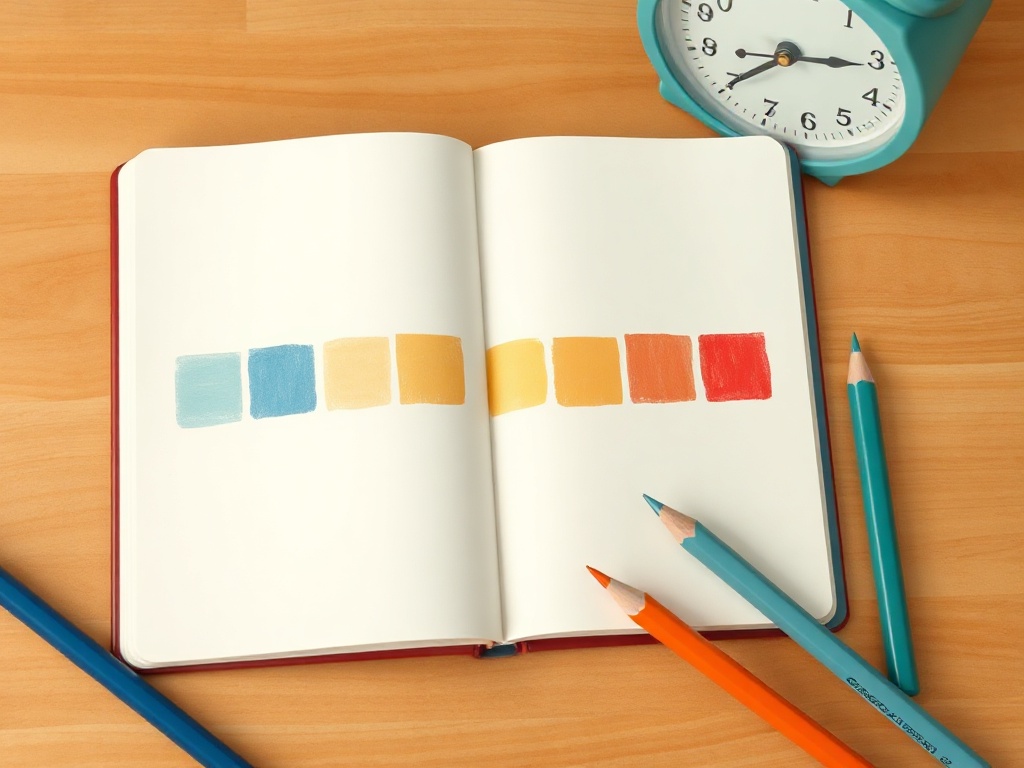
Materials: a notebook, blue, grey, orange and red pencils, a clock. Steps: for seven days in a row, at the same time each afternoon and once around sunset, the child draws a small square in the colour of the sky and jots down the weather in two words (clear, cloudy, misty, after rain). On day seven, look for a pattern together: the deepest blue shows up on clear, dry days, and after rain the air is washed clean of dust, so the sky often looks even brighter. In mist or heavy cloud, the sky turns white-grey, because water droplets are bigger than molecules and scatter every colour at once. Time: 5 minutes a day, 40 minutes total for the week. Age: 7-10. Success looks like: the child links the weather to how deep the colour is on their own — for example, saying, "It's misty today, so the sky is white, not blue."
A Common Mistake: The Sea Explanation, and Why It Backfires
"The sky is blue because it reflects the sea" sounds logical, and it gets passed down from generation to generation. But it fails for three reasons a child can check in a single day.
- The sky is blue over mountains, over cities, and over the desert — places nowhere near any sea.
- Seawater actually looks blue mostly because it reflects the sky, so the cause-and-effect is backwards.
- If it really were a reflection, the sky would stay blue in the evening too, but at sunset it turns orange while the sea doesn't change colour nearly as sharply.
A second common mistake: the grown-up says "Rayleigh scattering" and assumes that counts as an explanation. A term without a picture isn't an explanation — the child memorises a sound but still can't answer the next question, "so why is the sunset red?" Better to do the glass experiment first, and mention the name at the end, as a label for something they've already seen.
A third mistake: answering "you'll understand when you're older." That doesn't postpone the question — it shuts it down. A six-year-old can fully grasp "blue scatters the most"; that's not a simplification, it's the true core of the explanation.
If a child can show you the answer with a glass of water, they've understood it. If they can only recite it, they've just memorised it.
What to Do When the Questions Keep Coming
A good answer always spawns another question. Here are quick pointers for the three that come up most often.
- "Why are clouds white?" — The water droplets in a cloud are much bigger than air molecules, and they scatter every colour equally. All the colours together make white.
- "Why isn't the sky purple, since purple scatters even more?" — It does scatter more, but the sun gives off less purple light to begin with, and our eyes are far more sensitive to blue. The mix our brain sees comes out blue.
- "Is the sky blue on the Moon?" — No. The Moon has no air, so there's nothing to scatter the light, and the sky stays black even at high noon.
After these two activities, the child walks away with three things: a sentence they can say on their own; an experiment they can repeat for someone else; and the habit of checking explanations instead of just accepting them. That third one will serve them far longer than the first two.