
The Kitchen as a Laboratory: 5 Safe Experiments with Baking Soda, Vinegar and Flour for a Rainy Weekend
Five experiments using things you already have in the cupboard, plus an explanation of why baking soda and vinegar aren't a "volcano" but a lesson in gases. With exact amounts, timing and a way to tell when an experiment has worked.
It's been raining since morning, and the table already has a spilled cup of baking soda and a child asking for "the volcano again." This is the third time you've made it. The foam bubbles over, everyone laughs, someone wipes the table — and that's it. Nothing has been learned, except that vinegar smells strong.
This is exactly where most home experiments fall short. Not because they're dangerous or complicated, but because they end too soon. The child sees the effect but doesn't explain it. And the difference between a show and an experiment is a single question, asked before you pour the vinegar in: "What do you think will happen?"
The text below is for children aged 6 to 9 — those who can already read a little and count to twenty, but don't yet understand chemical formulas. So nowhere will it say "sodium bicarbonate reacts with acetic acid." It will say "a gas is being made inside, and it's in a hurry to get out." That's true enough, and completely understandable.
Why the "volcano" isn't an experiment, but a magic trick
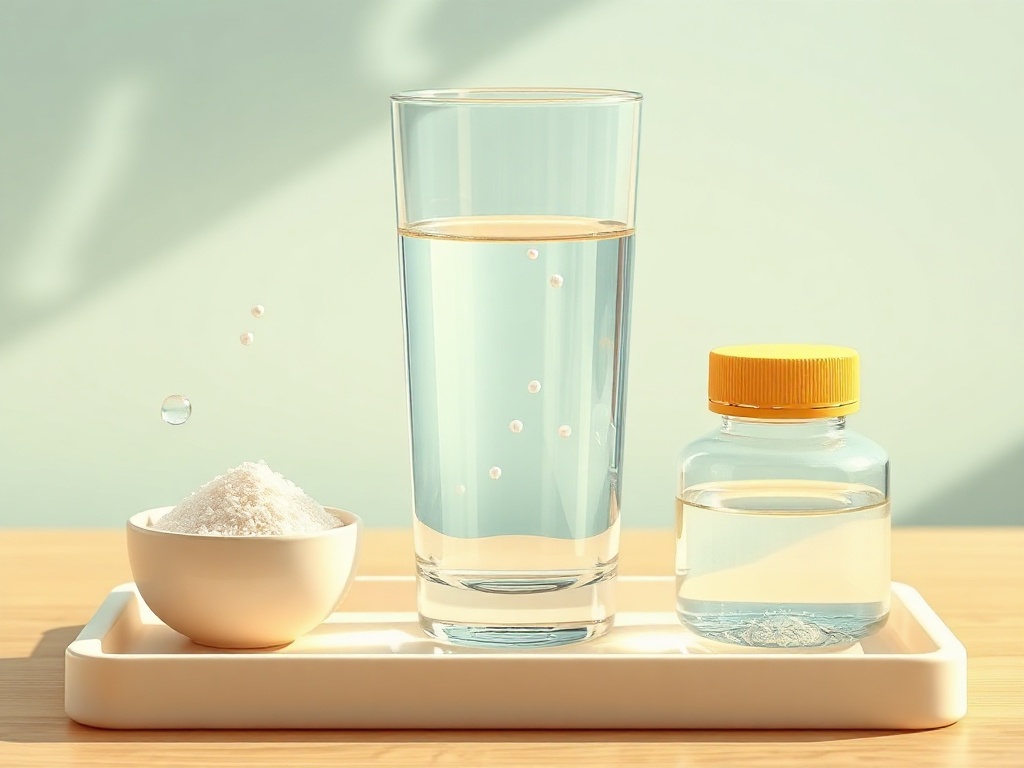
When baking soda meets vinegar, a gas is made — carbon dioxide. The same gas that makes the little holes in bread and the bubbles in fizzy water. The gas takes up more room than the liquid, so it pushes upward and escapes through the neck of the bottle. The foam is simply gas trapped by a little liquid.
The trouble with the volcano is that the answer is seen before the question is asked. The child already knows it's going to erupt. There's no surprise, no thinking involved. That's why each of the experiments below has something that isn't obvious right away: a balloon that inflates itself, a grain of rice that dances, dough that behaves like a liquid and a solid at the same time.
What you'll need for these baking soda and vinegar experiments — and how much it costs
- Baking soda — one pack of about 80 g is enough for all five experiments and costs under €1.
- White vinegar — half a litre is more than enough, about €1.
- Flour — one cup, from what you already have.
- Rice or dried lentils — one tablespoon.
- A balloon, a 0.5 litre plastic bottle, a tall glass, a fine sieve, a tray or a rimmed baking sheet.
- Food colouring or red cabbage juice, if you'd like colour — not required.
Everything is done on a tray or in the sink. Not because it's dangerous, but because vinegar leaves stains on a wooden worktop. And one more thing: vinegar isn't tasted during the experiments, and baking soda isn't touched with wet fingers and then rubbed into the eyes. Those are the only rules.
The balloon that inflates itself
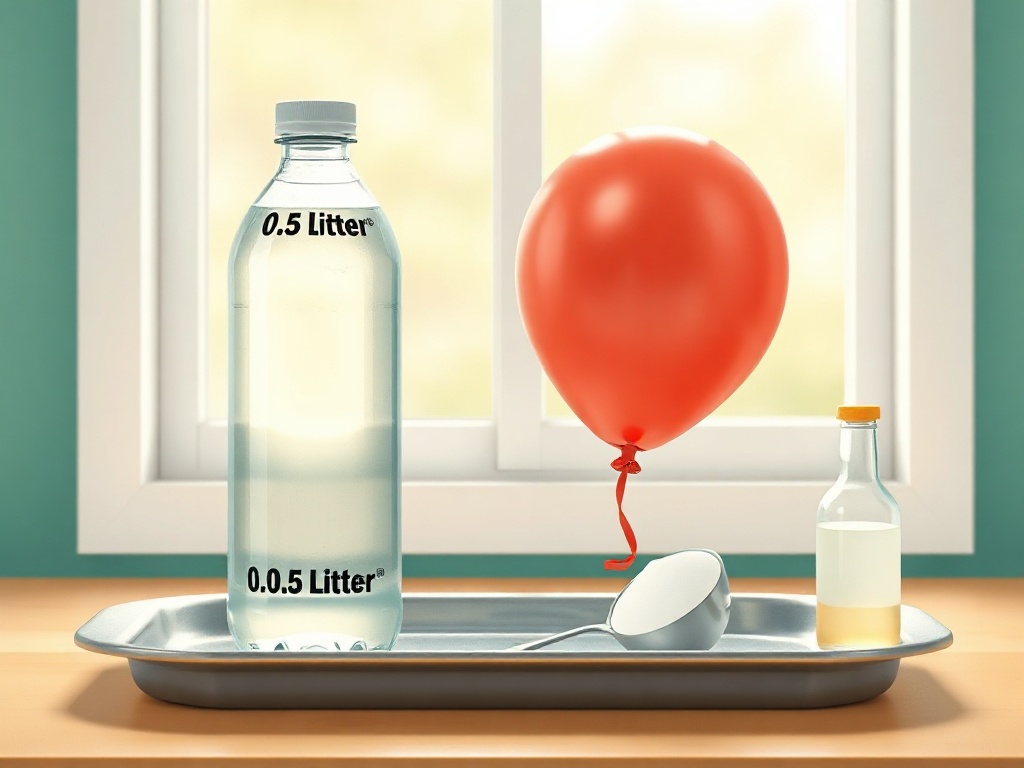
Pour three tablespoons of vinegar into an empty 0.5 litre plastic bottle. Using a funnel or a sheet of paper rolled into a cone, pour one teaspoon of baking soda into an empty balloon. Stretch the balloon over the neck of the bottle without lifting it upright — the soda needs to stay in the drooping part. Before you lift the balloon, ask the child: "How big will it get — as big as an apple, as big as a football, or won't it move at all?" Then lift the balloon upright so the soda falls in. Materials: bottle, balloon, vinegar, baking soda, teaspoon. Time: 10 minutes. Age: 6–9, with an adult holding the bottle. It's worked if the child can give their own guess before the experiment and afterwards explain why the balloon stopped growing — because the soda ran out, not because the vinegar got "tired."
Here's the good part. Do the experiment a second time, but with double the amount of soda. The balloon gets bigger. A third time — with double the vinegar but the same amount of soda: the balloon comes out nearly the same size. From this the child works out on their own that whichever ingredient is smaller runs out first. Don't tell them — let them get there themselves.
The dancing rice
Fill a tall clear glass two-thirds full of water, add two teaspoons of baking soda and stir until the water is clear. Drop in about twenty grains of rice. Now, slowly, down the side of the glass, pour in four tablespoons of vinegar. The grains start rising and sinking — bubbles of gas stick to them and lift them up, the bubble pops at the surface, and the grain sinks back down. Materials: tall glass, water, baking soda, vinegar, rice. Time: 15 minutes, 10 of which is just watching. Age: 6–9. It's worked if the child follows one grain with a finger on the glass and counts out loud how many times it rises in a minute — and then says which grain travels more often, the small one or the large one.
Three shorter experiments with baking soda and flour for the same afternoon
The secret letter
Dissolve one teaspoon of baking soda in two tablespoons of water, write with a cotton bud on white paper and let it dry for 10 minutes. The letters disappear. Brush over it with a cotton pad dipped in red cabbage juice or berry tea — the writing appears in colour.
The clever dough
Mix one cup of flour with about half a cup of water until it's like thick cream. Punch it quickly with a finger and it feels solid. Touch it slowly and your finger sinks in. Let the child find a way to "carry" it from one end of the tray to the other without it dripping.
The sieve and the flour
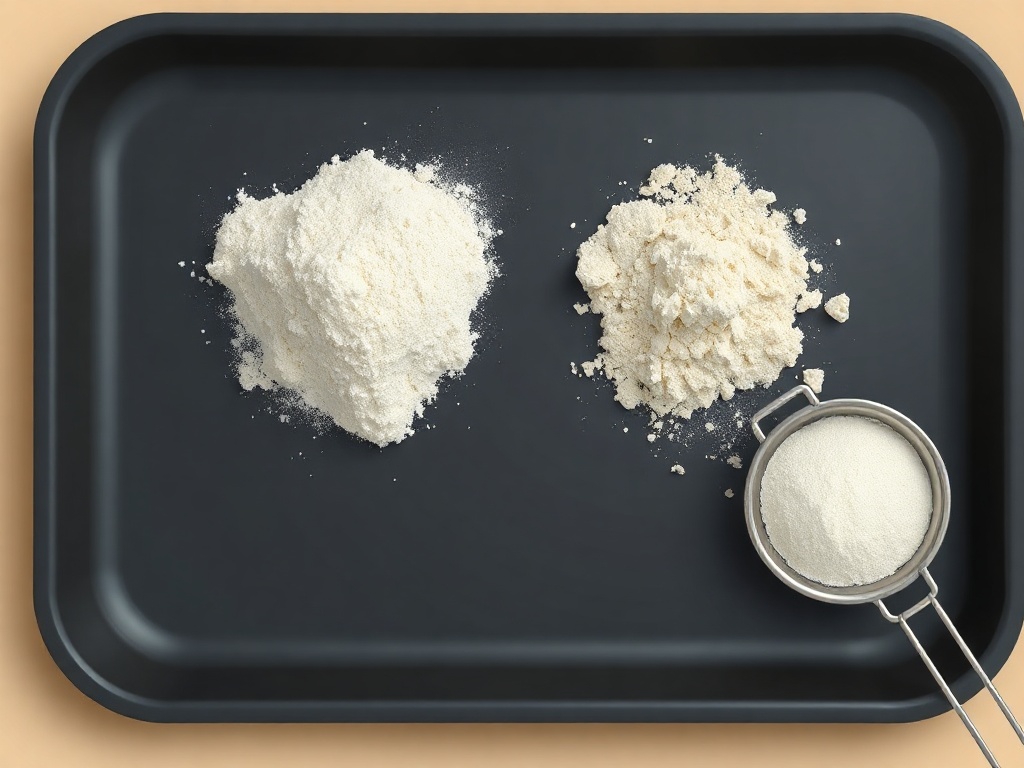
Sift flour through a sieve from 30 cm above onto a dark tray. You'll see thin little "hills." Now drop a handful of flour all at once from the same height. The difference in the pile shows why cooks sift flour — it lets air in between the grains.
The most common mistake: more soda means a bigger effect
Almost every child wants to tip in the whole pack of baking soda. The logic seems flawless: more powder, more foam. But that's not how it works. Gas is only made where a grain of soda meets a drop of vinegar. Once the vinegar runs out, the rest of the soda just sits at the bottom — a wet, useless heap. The result is less spectacular, not more, and the tray needs washing up.
So make the "failure" happen on purpose, as a sixth experiment: in one glass, one teaspoon of soda and four tablespoons of vinegar; in the other, five tablespoons of soda and the same four tablespoons of vinegar. The second glass doesn't make more foam. It leaves a sediment. The child sees with their own eyes that more isn't always better — a lesson that comes in handy later, whether it's sugar in a cake or paint in a cup of water.
"I think the balloon will be as big as an apple, because there's only one teaspoon of soda." — that one sentence is worth more than ten volcanoes.
How to carry on after the experiment
Give the child a sheet of paper folded in two. On the left, they write what they guess will happen; on the right, what actually happened. Three lines are enough. A month later, that little sheet is more interesting than any photo, because you can see where the child guessed right and where they were surprised. And surprise is exactly where learning happens.
One last thing: don't correct a wrong explanation straight away. If the child says the balloon inflates "because the vinegar is hot," ask them to touch the bottle and check. It isn't warm. The child will withdraw their own explanation — and next time, they'll check before they claim.