
Winter Without Snow: A 4-Week Home Weather Journal
When winter passes without snow, weather watching doesn't fall apart — that's exactly when there's the most to see. Here's how to keep a home weather journal for kids aged 7-9, week by week.
It's January, 9 in the morning. The child presses their nose to the window and says, "Still nothing. No snow." And that's that — it's grey outside, yesterday's puddle is still sitting on the path, and the thermometer reads 4 degrees. It looks like nothing at all. In fact, at that very window, at least five things worth recording are happening right now.

This article is for children aged 7 to 9 — an age when they can already read numbers off a thermometer, can write one sentence a day, and can stick with something that lasts four weeks. For younger children the journal drags on too long; for older ones, it's too light.
Why "no snow" doesn't mean "no weather"
The most common mistake when watching the weather with children is waiting for an event. Snow, thunder, strong wind — something you can spot from a mile off. That's exactly why most children's weather journals die out in the second week: nothing has happened that seems "worth writing down."
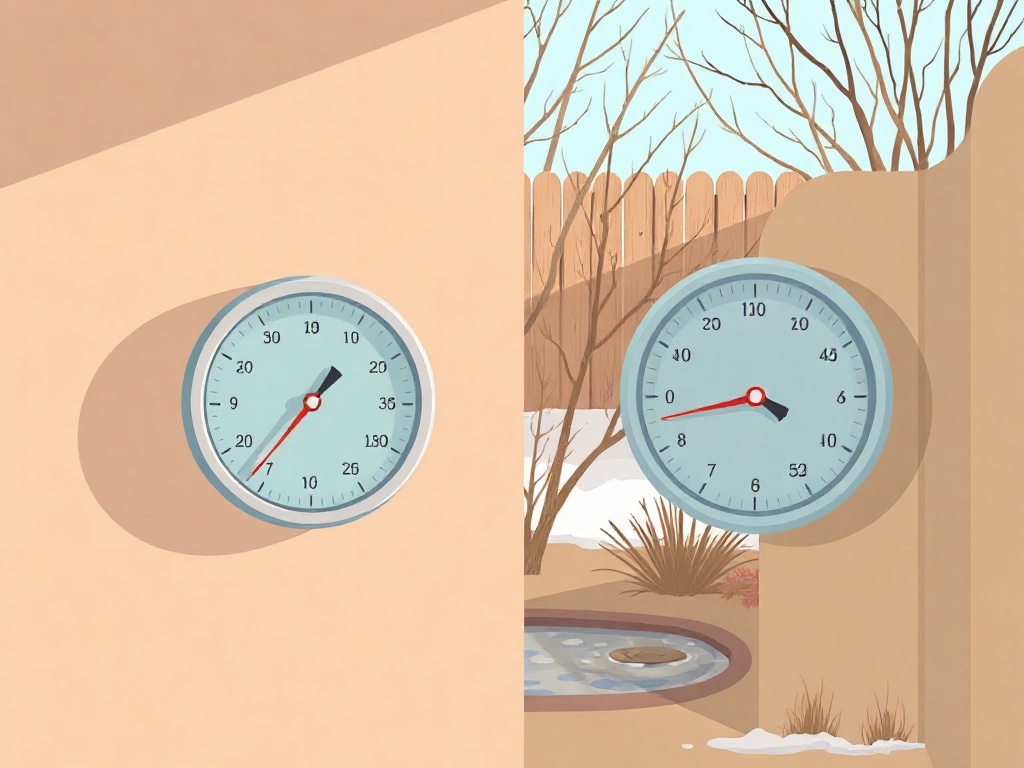
But weather isn't a string of events. It's a string of small changes, and a snowless winter shows them more clearly than any other, because nothing is covering them up. When there's a foot of snow outside, everything is white and every day looks the same. When there's no snow, you can see whether the puddle has frozen over, whether the grass is stiff or soft, whether the cars are frosted, whether you can see your breath. These are five different answers to the same question: how cold does it really feel.
And here's the most useful thing a child can learn from a journal like this: the number on the thermometer and the feeling of cold are not the same thing. A day at 2 degrees with wind can feel worse than a still day at 0 degrees. The child discovers this only by writing down both.
What to record each day in a weather journal for kids
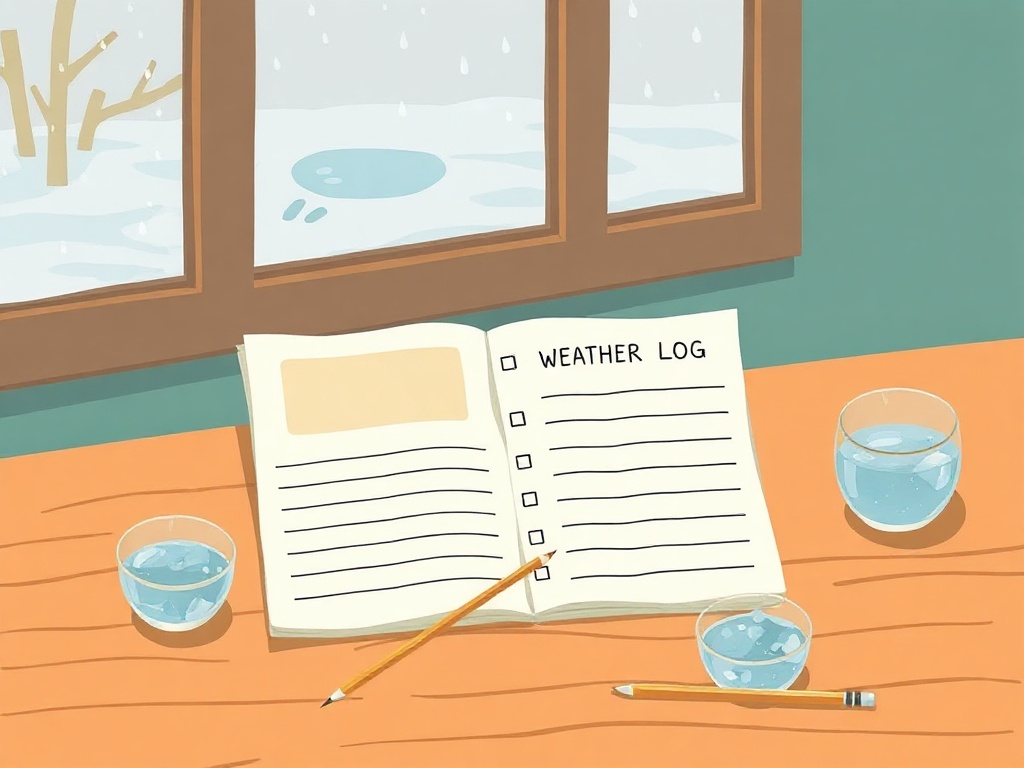
The journal should be short enough to fill in within two minutes. If it takes longer, it gets abandoned. Five lines are enough:
- Date and time of the reading — always the same time, ideally before school.
- Thermometer temperature, with a number and sign: "-1", "+6".
- The sky in one word: clear, cloudy, grey, foggy.
- Wind — yes or no, you can tell by the branches and any flags.
- One sentence about something noticed: "The puddle was frozen on top, but there was water underneath."
The last line is the most important one, and you shouldn't step in here. The child's sentence might be "My breath made a cloud all the way to the bench" — that's a good observation, even if it doesn't sound scientific.
The freezing saucer: how cold was it overnight
Take a shallow saucer or jar lid, pour in about half a centimetre of water, and leave it outside in the evening — on the windowsill, the balcony, or the doorstep. In the morning the child checks: is the water still liquid, has a thin crust of ice formed, or is it frozen solid? They write the answer in the journal next to the temperature. Supplies: a saucer, water, the journal, and a pencil. Takes 2 minutes in the evening and 3 in the morning, every day. Suitable for ages 7-9. Consider it a success when, after a week, the child can say on their own: "When it's below zero, the crust is thin, but at -4 it freezes right through." If the water freezes solid and cracks the saucer, switch to a plastic lid — water expands as it turns to ice, and that's exactly the discovery to be made.
Two thermometers: a sunny spot and a shady spot
If you have two thermometers, hang one in a sunny spot and the other in the shade, at the same height. If you only have one, move it around: take a reading in the shade, wait 10 minutes in the sun, then read it again. The child makes a two-column table for 7 days. Supplies: one or two thermometers — a simple room thermometer is usually inexpensive, and one you already have at home works just as well — and a sheet of paper ruled into two columns. Takes 10 minutes a day, ideally around midday. Age: 7-9, with some help reading below-zero values in the first few days. It's a success when the child can answer the question "Where should the thermometer sit to give a true reading?" — and says "In the shade," because in the sun it measures the sunshine, not the air.
The four weeks of the weather journal: what changes
The journal isn't just 28 identical entries. Each week has a different task, otherwise it turns mechanical.
- Week one — just recording. No questions, no conclusions. The child gets used to the set time and the thermometer.
- Week two — add the water saucer. Now there's something to predict the night before: "Will there be ice tomorrow?"
- Week three — compare. The child ranks the days from coldest to warmest and sees that the thermometer ranking doesn't fully match the "feels like" ranking.
- Week four — the child makes a forecast for the next day and writes it down in advance. Then checks it. Getting three out of seven right is a good result — even meteorologists get it wrong.
The common mistake: turning the journal into homework
Here's what happens in most families by around day ten. The parent asks, "Did you write down the weather?" in the same tone used for homework. The child answers, "In a minute." By day twelve, the journal is forgotten on the hallway table.
The reason isn't laziness. The reason is that "Did you write it down?" checks for discipline, not curiosity. What works instead: you glance outside and say something specific and mildly debatable — "It feels warmer today than yesterday, I think." The child will almost always want to check and prove you wrong. Then they go to the thermometer on their own, not because you reminded them.
The second thing that kills the journal is correcting spelling. If every sentence comes back marked up in red, the sentences shrink to three words: "Cold. Grey. Windy." And the observation disappears.
"The puddle was frozen on top, but when I stepped on it, water splashed out underneath." — that one sentence is worth more than seven perfectly filled-in tables.
What's left after the fourth week
A single sheet with 28 lines that looks modest, but from it the child can pull out three things at once: which day was coldest, whether there's a link between a clear night sky and ice the next morning (there usually is — clear skies mean colder nights), and how many times their own forecast turned out right.
If you'd like the journal to stay useful past February, don't throw it away. In April, do one more week with the same five lines. Comparing a January week with an April week makes a bigger impression on a child than any explanation of the seasons — because the numbers are their own.
Quick answers: three questions about a weather journal for kids
Parents tend to ask more or less the same things when they're figuring out how to start a journal like this.
- "What if we miss a few days?" Nothing breaks. Leave the line blank and carry on the next morning — a gap in the table is itself information, and four weeks with three missed days still shows the trend clearly.
- "Do we need a proper outdoor thermometer?" No. An ordinary room thermometer hung outside the window in the shade is enough at this age; what matters is that it stays in the same place every day, not that it is accurate to a tenth of a degree.
- "My child writes the same sentence every day — is that a problem?" It usually means the question is too broad. Narrow it for a day or two: not "what did you notice?" but "what did the puddle look like?" or "could you see your breath?" The specific question brings the observations back.