
Why Leaves Turn Yellow and Red in Autumn — A Simple Experiment at Home
The yellow in a leaf doesn't appear in autumn — it's been there all summer, just hidden. Here's how to show it to a child aged 6 to 9 with a glass, rubbing alcohol, and half an hour of patience.
A maple leaf falls onto the bench beside you. Half of it is still green, the other half orange, and the line between the two is blurry like a tea stain. Your child picks it up and asks something perfectly logical: "Who painted only half of it?"
The answer most of us give goes something like: "It gets cold, and the leaves turn yellow." It sounds fine, but it's actually backwards. Nobody paints anything. The orange was there all through July — you just couldn't see it.
What's really happening inside the leaf
A leaf holds several different pigments at once. Green is called chlorophyll, and it's the strongest of them — like bright green paint poured over a pale yellow background. The yellow and orange pigments are there too, but the green covers them completely.
Chlorophyll has a job to do: with the sun's help, it makes food for the tree. But it's also high-maintenance — constantly breaking down, and the tree constantly rebuilding it. In autumn, days get shorter, there's less light, and the tree stops replacing it. The old chlorophyll breaks down, the green fades, and underneath, the yellow that's been waiting all summer finally shows through.
Red is a slightly different story for some trees — it's genuinely made in autumn, on cold nights that follow sunny days. That's why a maple might be fiery red one autumn and more brownish the next. But yellow and orange are old tenants, not new arrivals.
How to show it, not just explain it
The nice thing about this question is that the answer becomes visible in about twenty minutes. You'll pull the green out of a leaf and set it aside — and what's left is the colour your child won't actually see on the street for another month.
Experiment 1: Pull the Green Out of a Leaf
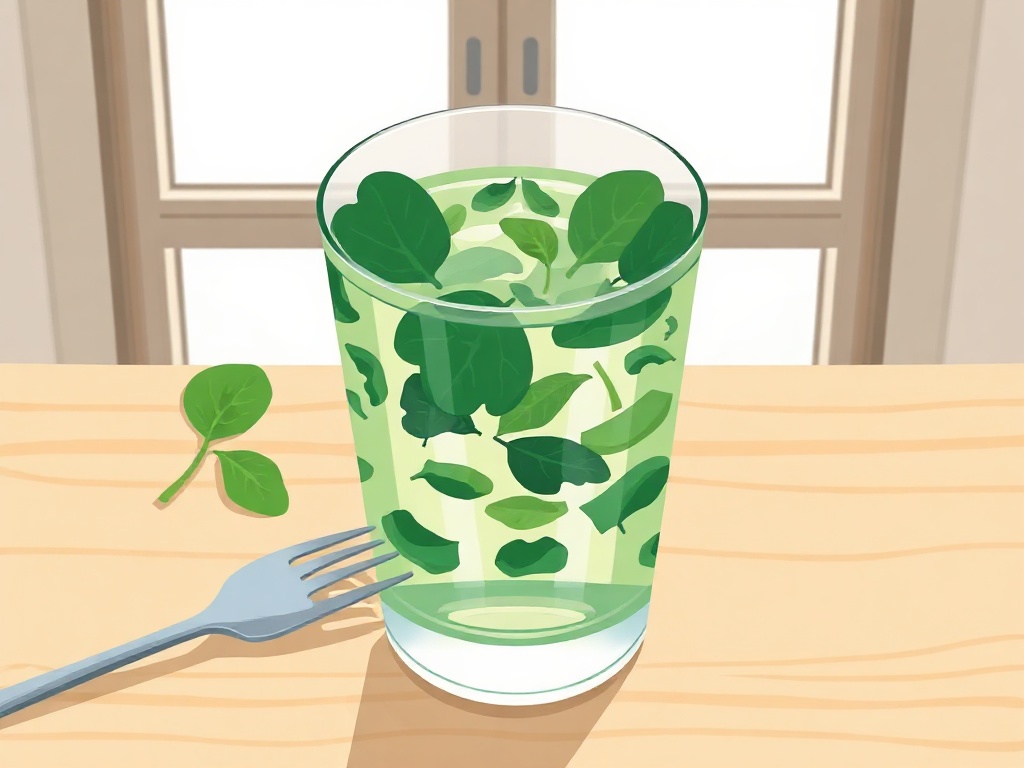
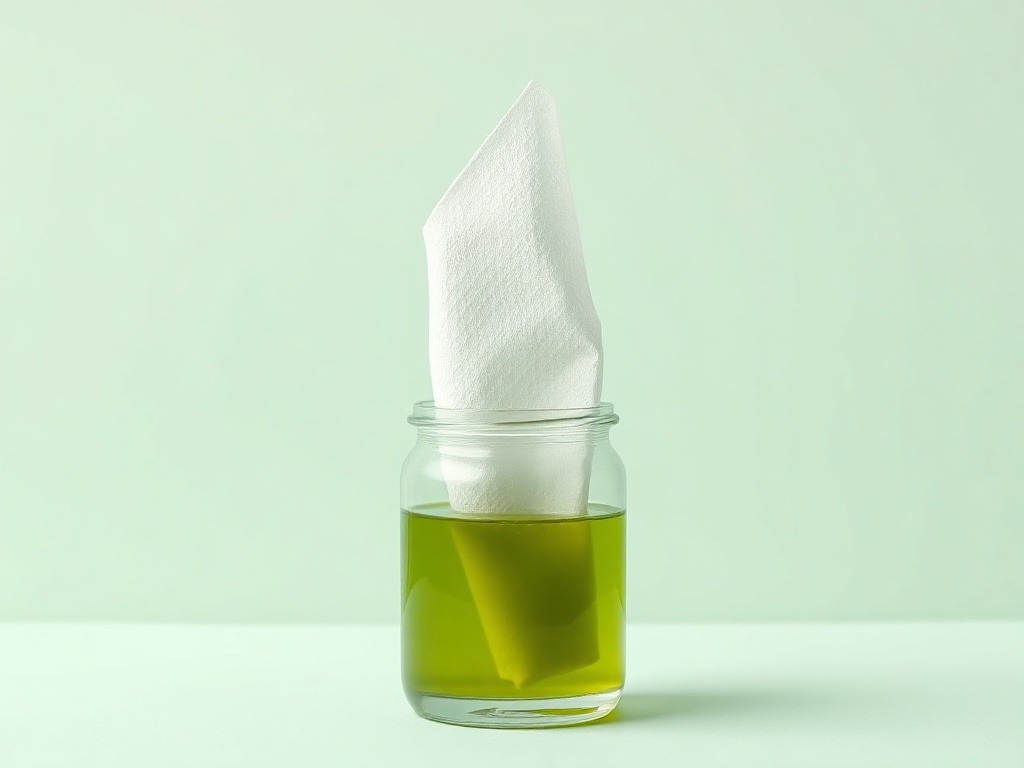
You'll need 2-3 green leaves from the garden or a park (spinach works too), a glass jar, a fork, some rubbing alcohol from the chemist's — about 3 € a bottle — and a white paper coffee filter or napkin. Time: 25 minutes, 15 of which is waiting. Age: 6-9, though the alcohol should only be poured by an adult, and the experiment done by an open window, away from a stove or candle. Tear the leaves into small pieces in the jar, mash them with the fork, pour in just enough alcohol to cover them, and stir. After 15 minutes the alcohol has turned green — that's the chlorophyll that's come out of the leaf. Dip the tip of the paper strip into the liquid, stand it upright, and wait for the liquid to climb up. Above the green band, a pale yellow one appears. You've succeeded if your child can point to the two different bands on the strip and say which one was hidden.
Here's the sentence you're doing all this for. Say it exactly like this: "See — the yellow was already in the leaf before. The green was just sitting on top of it." Then let your child repeat it in their own words. If they can, they've understood it.
Experiment 2: Take the Light Away from a Leaf
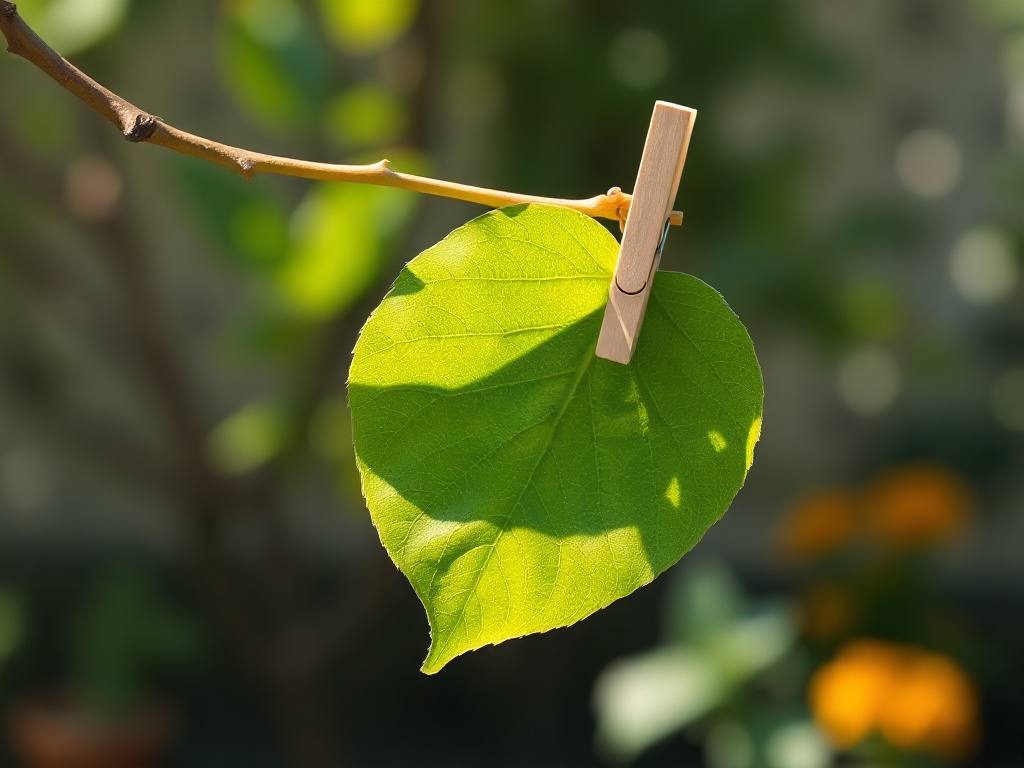
You'll need a piece of aluminium foil or thick black paper, a paperclip or clothespin, and a living leaf on a garden shrub or a large houseplant. The timing is split: 5 minutes today, 5 minutes seven days from now. Age: 7-9, since the wait is long and only makes sense if the child can mark the date themselves. Wrap foil around half a leaf and clip it in place, without tearing it from the branch. Mark the day on a calendar. A week later, unwrap it: the covered half has faded, sometimes already yellowish, while the exposed half has stayed green. You've succeeded if the child works out on their own that without light, the green disappears — and connects that to the short autumn days.
A Common Mistake: Soaking Leaves in Water
Many people try the first experiment with warm water instead of alcohol. The water barely turns yellowish, and everyone ends up disappointed. The reason is simple: chlorophyll doesn't dissolve in water. That's why spinach leaves stay green in soup no matter how long you boil them. You need alcohol — it draws the pigment out of the leaf, and the liquid turns visibly green within minutes.
The second common mistake is trying this in autumn, with a leaf that's already yellow. By then there's nothing left to pull out — the green is already gone. The best time is late August or the first two weeks of September, while the leaves are still deep green.
- Don't use variegated or already-coloured ornamental leaves — the result is hard to read.
- The paper strip should stand upright, touching the liquid only with its very tip, not lying in it.
- If the alcohol is only faintly green after 15 minutes, the leaves weren't mashed enough.
The Walk That Wraps It All Up
A day or two after the experiment, on the way to school, give your child a task: find three leaves — one fully green, one half turned, and one fully yellow. Line them up at home on the windowsill. That's all of autumn on one windowsill, and no more explaining is needed — it's right there to see.
Autumn doesn't paint the leaves. It just pulls back the green curtain.
One more thing many children ask after the experiment: so why do pine trees stay green? Because their needles have a waxy coating that holds up against the cold, so the tree has no reason to shed them all at once. They do get replaced, but gradually, not in a couple of weeks.