
5 Euro Pocket Money: What Your Child Can Buy Around the Corner and Turn Into a Game
A practical guide for children aged 8-10: how to turn a €5 budget from the corner shop into a real game, not just another gadget that's forgotten by tomorrow. Includes two ready-made activities, a success checklist, and answers to the questions parents actually ask.
Martin, age nine, clutches five euros in front of the sweets counter. He picks something up, puts it back, picks it up again. Behind him his mum chips in: "Think it through, there won't be a do-over." He buys a little bouncy ball, plays with it for twenty minutes in the car park, and by evening it's rolled under the sofa. A classic ending. And we almost always blame the choice — as if the child bought something silly. But the ball isn't the problem.
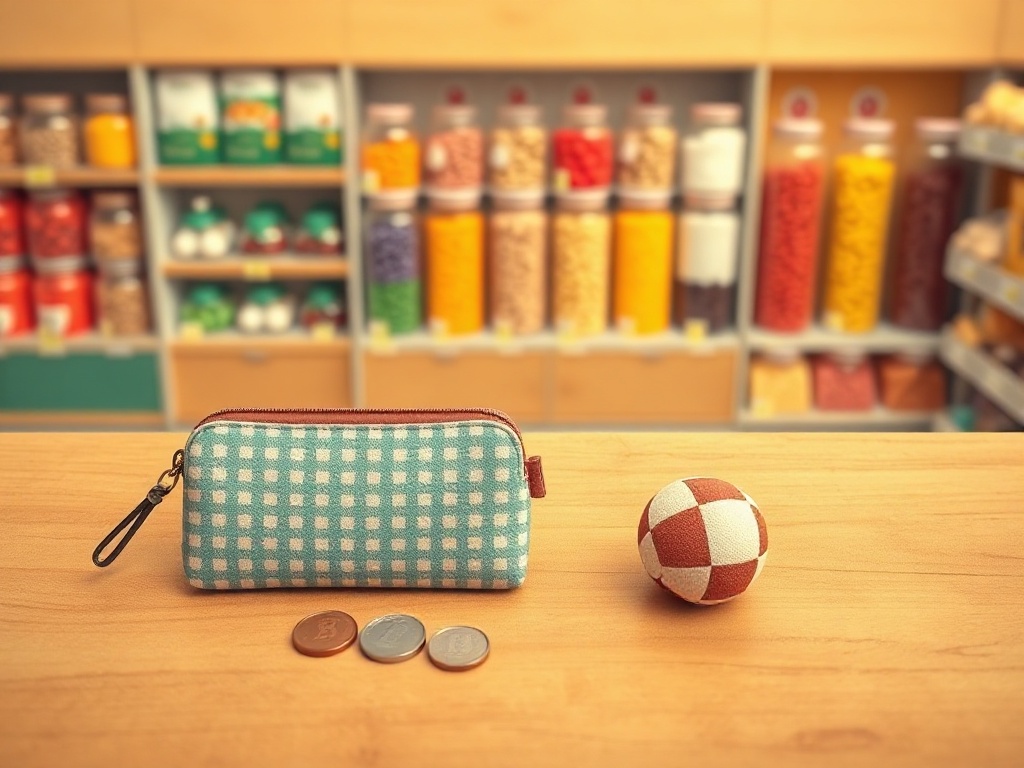
The problem is that nobody gave him the second task. The first one — "pick something to buy" — is easy and ends at the till. The second — "come up with a game someone else can play with this" — is the one that keeps the object alive for weeks. We're talking about children between 8 and 10 here, because that's exactly the age when a child can already work out change from five euros in their head, and can already explain rules to someone else without an adult translating.
Why "save it for something bigger" rarely works
Saving is a great skill, but with five euros it's abstract. To save up for something serious, a nine-year-old has to wait months, and during that time they learn nothing new — they're just waiting. Spending, on the other hand, gives them one day of fun. Between the two sits a third option: purpose-driven buying. The child doesn't ask "what do I want", but "what do I need to make a game". That's a completely different question, and it leads to a completely different trolley.
The difference shows up right away in the shop. Don't ask "is that what you want", ask "what will you play with that, and who'll play it with you". If the answer is "well... I'll just eat it", the decision is clear. If the answer is "we'll have a contest to see who can throw it into the bucket from three metres" — that's a €5 investment in two weeks of play.
What €5 actually buys at the corner shop
Prices vary by shop, but here's what usually fits the budget. The good news is that almost everything on the list can be combined — and it's the combinations that make the game.
- A pack of coloured balloons — enough for dozens of rounds, and they can be filled with water, rice or air.
- A deck of playing cards — the most durable purchase per square inch.
- Pavement chalk — turns a whole street into a playing field.
- A kitchen timer or hourglass — turns any activity into a race.
- A pack of coloured rubber bands and clothes pegs — for sorting, throwing, building.
- A small bag of sweets or nuts — perfect as tokens you get to eat afterwards.
- A roll of coloured tape — for marking out tracks on the hallway floor.
- A large sponge and plastic cups — the basis of dozens of water races.
Notice what's missing from the list: ready-made toys. Not because they're bad, but because with them, the game has already been invented by someone else. We want the child to do that work.
The first purchase: the three-question rule
Before going into the shop, the child answers three questions out loud. Not on paper, not solemnly — just while you're walking.
- Who will I play this with? (a sibling, a neighbour, the whole class at break time)
- Where will it be played? (the kitchen table, the garden, the hallway)
- When does the game end — who wins, and how do we know?
The third question is the most important, and usually the most overlooked. A game without an end isn't a game, it's just moving things around. If the child can say "whoever collects five pegs first wins", they've already built something.
Mission: "Five Euros, Three Things"
All you need is the money, a scrap of paper for the list, and a pencil; take photos of the purchases if you like. The activity takes about 40 minutes altogether — twenty for the shop trip and twenty for inventing the game at home. Suitable for ages 8-10. There's one rule: the child must come out with at least three different items and must not go over five euros, adding up the prices in their head before reaching the till. At home, they lay everything out on the table and explain the game to an adult, who isn't allowed to help — only to ask "and then what happens". The task counts as a success if the adult can play one full round without asking a follow-up question, and the game has a clear winner. If the adult gets stuck halfway through, the rules get rewritten and it's tried again.
How to invent a game out of nothing: the skeleton of every game
Children often get stuck on "I can't think of anything". Give them a skeleton and the block disappears. Every game rests on four things: a goal, an obstacle, a turn order and an ending. What was bought sets the goal; you suggest the obstacle.
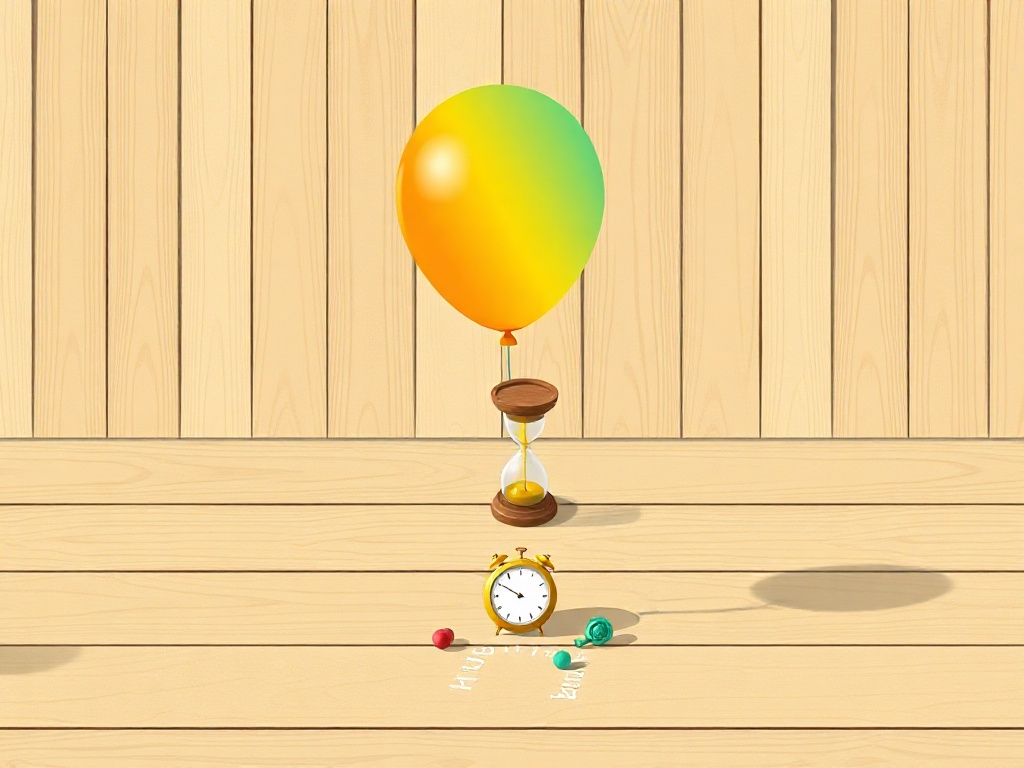
Take a balloon and a timer as an example. The goal: the balloon must not touch the floor. The obstacle: you're only allowed to use one hand, then only your head. Turn order: hit it, pass it on, next player. The ending: when the timer goes off, whoever is keeping the balloon in the air scores a point. Done — in thirty seconds, one balloon has become a game that gets played all week with different rules.
"I made this game up myself" is a sentence with a far longer life than "they bought me this".
Shop on the table: make a game for the neighbour's child
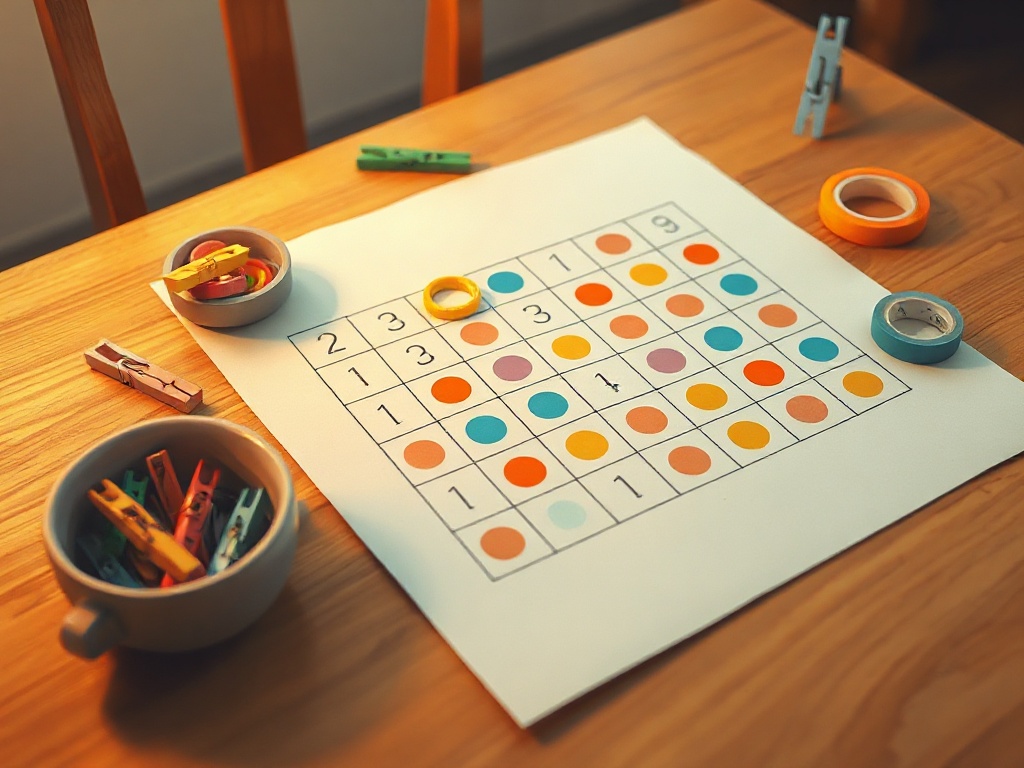
You'll need the purchases from the first activity, an A4 sheet, coloured pencils and a clock. Set aside 30 minutes. Same age range — 8-10. The child draws the game board on the sheet or writes out the rules numbered 1 to 5, then invites a neighbour's child, a cousin or a classmate and runs a real round. During the game, the parent stands to one side and notes down the moments where the players disagree. Afterwards, the two of them fix the disputed rules together. It counts as a success if the other child played all the way through without giving up, and if, at the end, they could say who won without asking. If they asked to play again — even better, that's the most honest review there is.
The common mistake: parents buying "the better option"
The child reaches for a bag of coloured rubber bands for seventy cents, and the parent says: "Hang on, there's a proper set for two euros, it's much nicer." Sounds logical, doesn't it? Except that sentence makes the whole point evaporate. The child is no longer deciding how to spend their own money — they're approving someone else's choice. And when the game doesn't work out, the adult is to blame, which is convenient for both of them but useless.
The second version of the same mistake: "don't buy that, you'll break it by tonight." It's possible they will break it. Five euros is exactly enough for a bad purchase to sting enough to be remembered, and small enough not to be a disaster. If you shield your child from every poor purchase, they'll make their first independent choices at seventeen, with far bigger sums involved.
And there's a third mistake: turning everything into a test. If every purchase is followed by an interrogation about how much change the cashier gave and why they picked exactly that, the child stops wanting the money at all. The maths is part of the game, not an exam that comes after it.
How to keep this going through the school year
It works best if pocket money is handed out on the same day every week — for instance, Friday after school, on the way past the shop. The school year runs from mid-September to mid-June, and those ten months are plenty of time to build up around a dozen homemade games. Keep the rules in one place: a notebook, a shoebox, a folder on the fridge. When a rainy Sunday rolls around, someone opens the box and pulls out the game from October.
And one more small but useful thing: let the child hand over the money and collect the change themselves. Counting small coins after a purchase is the shortest maths lesson there is, and it takes fifteen seconds.