
Winter Games for Kids Ages 5-7: 4-6 PM Home Routine
The two hours between darkness outside and dinner are the hardest stretch of a winter day. Here's what actually works with kids aged 5 to 7, no screens and nothing to buy.
Ten past four. It's already dark outside, the hat is damp, and your child is standing in the hallway with one shoe half off saying, "I'm bored." Twenty minutes later there's been a meltdown over a block that won't stay put, and you've checked your phone more than you'd like. This hour and a half before dinner is the most stressful stretch of a winter day, and everyone knows it — we just rarely admit it.
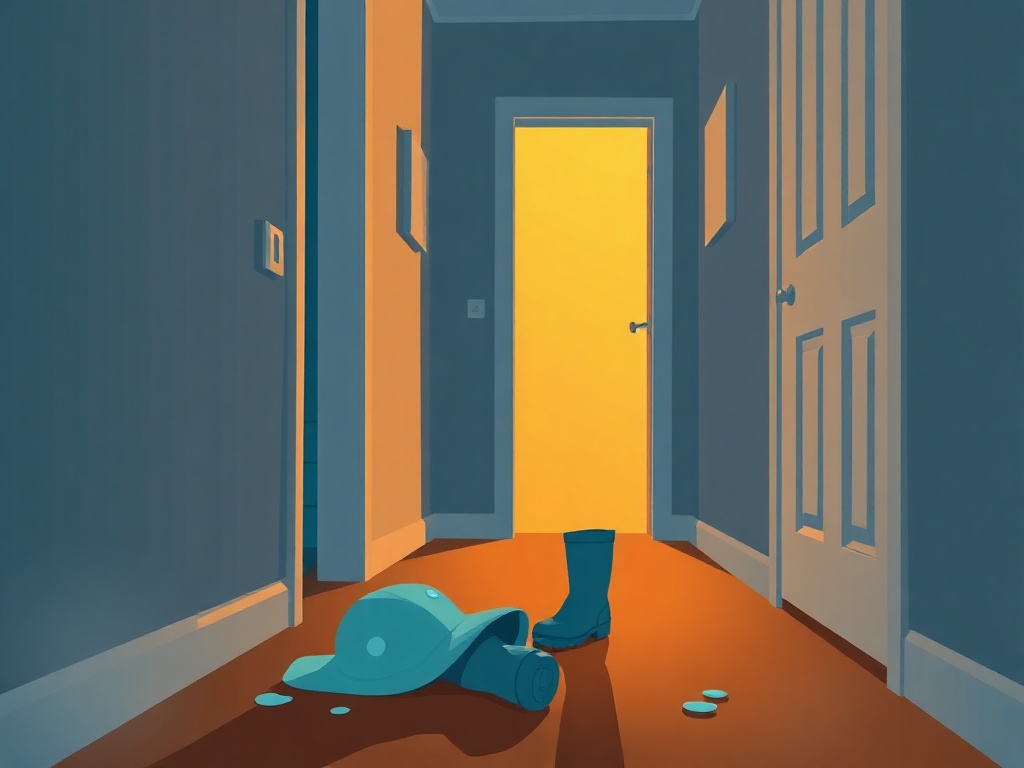
The usual advice is to come up with something interesting. I think that's the wrong approach. A five- or six-year-old who's just come home from nursery or Year 1 isn't short on ideas — they're worn out from a whole day of choosing, waiting their turn, and following rules. If you hand them a box of craft supplies at 4:15 and ask, "What do you want to do?", the most likely answer is a shrug, and the second most likely is tears. Not because they don't want anything, but because one more decision is exactly what they don't have left in them.
So there's no list of thirty ideas here. The games for ages 5-7 that follow come down to two rituals with a clear starting point, two activities explained in full, and a few things I've personally stopped doing because they just didn't work.

Why the first twenty minutes decide the whole afternoon
Between coming home and dinner, most families have somewhere between 90 and 120 minutes. If the first twenty of those go to wandering around the house, the rest usually falls apart. The opposite approach works: the child comes in, takes off their coat, eats something, and starts the same routine every day — no discussion needed.
Choices come later. First the body, then the hands, finally the words. That order sounds overly tidy, but there's a very practical reason for it: a child who's chilled through from the cold can't sit and cut with scissors until they've moved around, and a child who's full of pent-up energy won't sit still for a story until they've burned it off.
- 4:00-4:20 PM — coats off, warm soup or milk, quiet. No "How was your day?" questions — those come later.
- 4:20-4:40 PM — something physical: jumping, a chase down the hallway, rolling around on the rug.
- 4:40-5:20 PM — the day's activity, now at the table or on the floor.
- 5:20-6:00 PM — quiet time: a book, building blocks, music playing while you cook.
It's not a schedule to follow to the minute. It's more the order in which things become possible.
Flashlight tag: how to burn off energy in a small flat
Winter has one advantage we rarely use — it gets dark early. A darkened room turns an ordinary flat into a completely different place, and for a five- or six-year-old, that's more than enough.
Chase the Light Spot
You'll need a flashlight (a phone flashlight works too) and one room where you can turn off the lamp — the hallway works fine too. It runs for about 15 minutes; longer than that and it loses steam. Best for ages 5 to 7; younger kids can be scared of full darkness, so leave a lamp on in the next room. You aim the light spot at the wall, floor, ceiling — your child has to stomp on it or touch it before it darts away. Then swap roles and you become the runner, which usually gets more laughs than the game itself. A trickier version for seven-year-olds: the spot only stops on something blue, or only on something starting with the letter "B." Call it a win if your child is out of breath and has said "Again!" at least once — the goal here is spent energy, not precision.
If you live in a flat with neighbours below, drop the running and keep only the touching — the spot moves slowly along the walls and your child chases it with a hand. It works almost as well, and no one rings your doorbell.
The activity that lasts forty minutes
Most home activities fall apart by the ten-minute mark because they're a single-outcome task: make a paper snowflake, build a little house. Done — and then what? What lasts is anything that can keep growing.
A Cardboard-Box City on the Floor
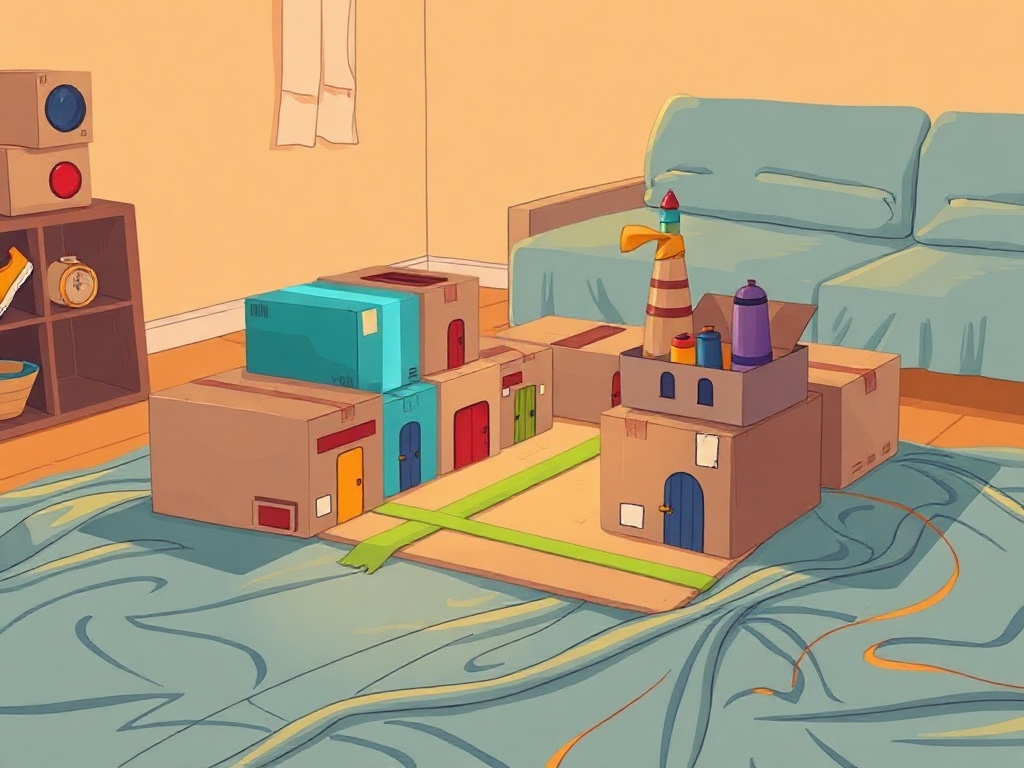
Over a few days, save whatever you've got lying around: shoe boxes, medicine boxes, cereal boxes, toilet-roll tubes, bottle caps. You'll also need tape, blunt-tipped scissors, and a few markers. The first evening takes about 40 minutes, but the city stays in the corner and gets built up another 20 minutes a day for a whole week. Good for ages 5 to 8 — five-year-olds do the building, seven- and eight-year-olds start inventing rules about who lives where. Start with one street: two boxes facing each other with a strip of tape between them for a road. Then instead of asking "What else should we make?", get specific: "What's this building — a bakery or a fire station?" If your child says, "There's nowhere for the cars to park here," they're in the game, and you can slip off to the kitchen. It's a success when your child goes back to the city on their own the next day, without you suggesting it.
If anyone in the house can't stand mess, lay a large sheet of cardboard or an old bedsheet under the city. It lifts up all at once and the problem disappears.
One activity that's still on the floor tomorrow is worth more than three that get thrown out by dinnertime.
The three things that don't work (and we all do them anyway)
First: asking "What do you want to do?" at 4:15. It looks like you're respecting your child's wishes, but really you're handing them a decision they don't have the energy for. The result is "I don't know," then "I'm bored," then a meltdown. Swap it for a choice between two things: "Flashlight or city?" A child can handle two options; ten is too many.
Second: buying something new. A €4 colouring set holds attention for about as long as the first one did — twenty minutes, tops. By the third time, your child is anticipating the novelty, not the activity, and you end up paying for peace and quiet every week. Cardboard boxes don't have that problem.
Third: "Just twenty minutes of screen time so I can catch my breath." The issue isn't a moral one, it's practical — with most kids this age, switching it off at 5:00 PM comes with tears that eat up exactly the break the screen was meant to buy you. If you do use a screen, put it right at the end, just before dinner, so you don't have to transition to anything else afterwards. The time after screens is harder than the time before them.
When you're the one who's exhausted
Some days you can't get down on the floor. On those days, one simple swap works: the child directs, you perform sitting down. "I'm the robot, you tell me what to do" — kids love being in charge, and you just raise an arm and blink on the spot. Five minutes of this does more than half an hour of forced games.
The other thing that helps is bringing them into the kitchen. A six-year-old can peel boiled eggs, tear lettuce, count out spoons, wash potatoes in a bowl of water. It's not about teaching them anything — it's about sharing the time. You make dinner, your child is beside you chatting, and the afternoon ends without a meltdown.
What to take away from this
- The same order every day: food and quiet, then movement, then hands-on activity, then a book.
- Two ready-to-go activities, not thirty ideas — the flashlight for burning off energy, the boxes for sustained focus.
- A choice between two things, never an open-ended question.
- One thing that stays on the floor and carries over to tomorrow.