
Playground Games for Kids Ages 5-7 Who Don't Want to Join the Group
Playground games for kids ages 5-7 who won't join the other children. Instead of pushing your child toward the group, try parallel play the others notice and come over to on their own — start with the two games below at your next playground visit.
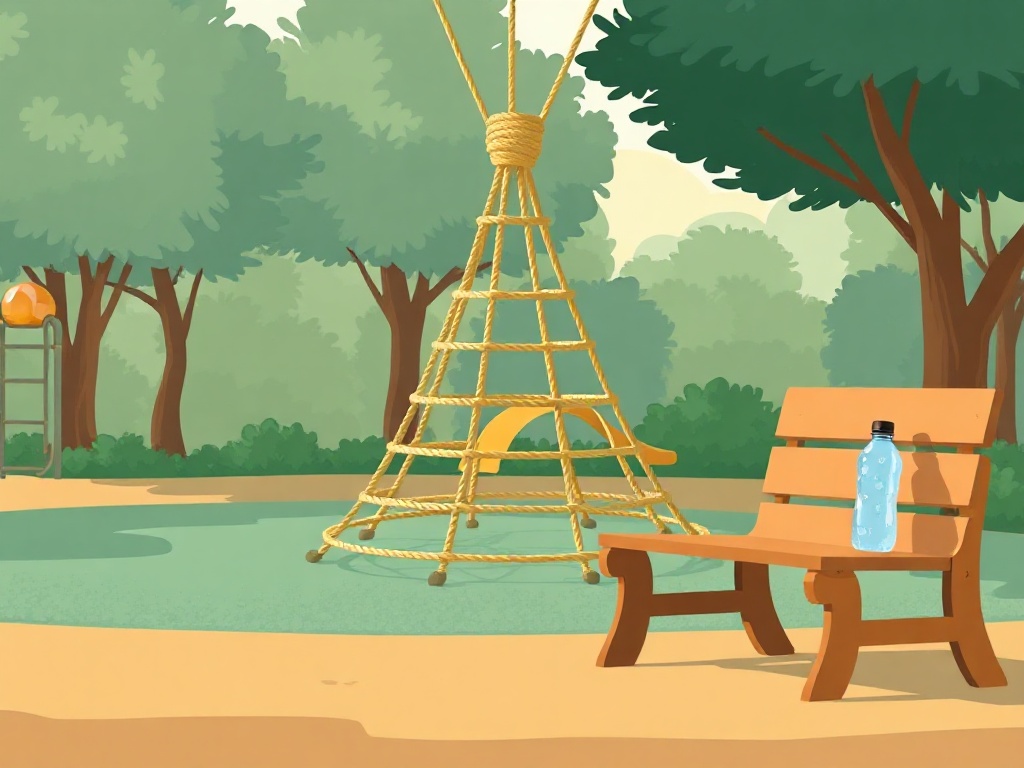
Six children are climbing the rope pyramid, shouting, taking turns. Yours is standing two steps from the sandbox, clutching a water bottle, watching. You say, "Go over there, ask them to let you join." Your child shakes their head. You say it again, a little more firmly. Your child sits down on the bench next to you and stops looking at anyone at all.
This moment repeats itself at every playground in the country, and we parents almost always read it wrong. We assume the child doesn't know how to join in, so we explain how. But in most cases, they know perfectly well — they've simply judged the cost too high. Stepping into a game that's already been going for twenty minutes means not knowing the rules, being last, and risking a public "we don't want you" in front of everyone. An adult at a party full of strangers does exactly the same thing: finds something to do near the drinks table.
Why "go make friends" rarely works at ages 5-7
The instruction "go make friends" shifts the entire risk onto the child. They have to interrupt someone else's game, find the words, and handle rejection — three hard things at once, in public. For children aged 5-7, this usually ends with a quiet standing-still two metres from the group, which the others don't even notice.
The opposite approach is far easier, and it is what the best playground games for kids ages 5-7 are built on. The child starts their own game, visible and interesting enough, and leaves the door open. Children this age are intensely curious about what someone else is doing — if a child is digging a channel in the sand or lining up pebbles in a row, someone will come over to look. At that point, your child isn't asking to be let in. They're already the host.
A playground game for kids ages 5-7 that the others join on their own
The River in the Sandbox
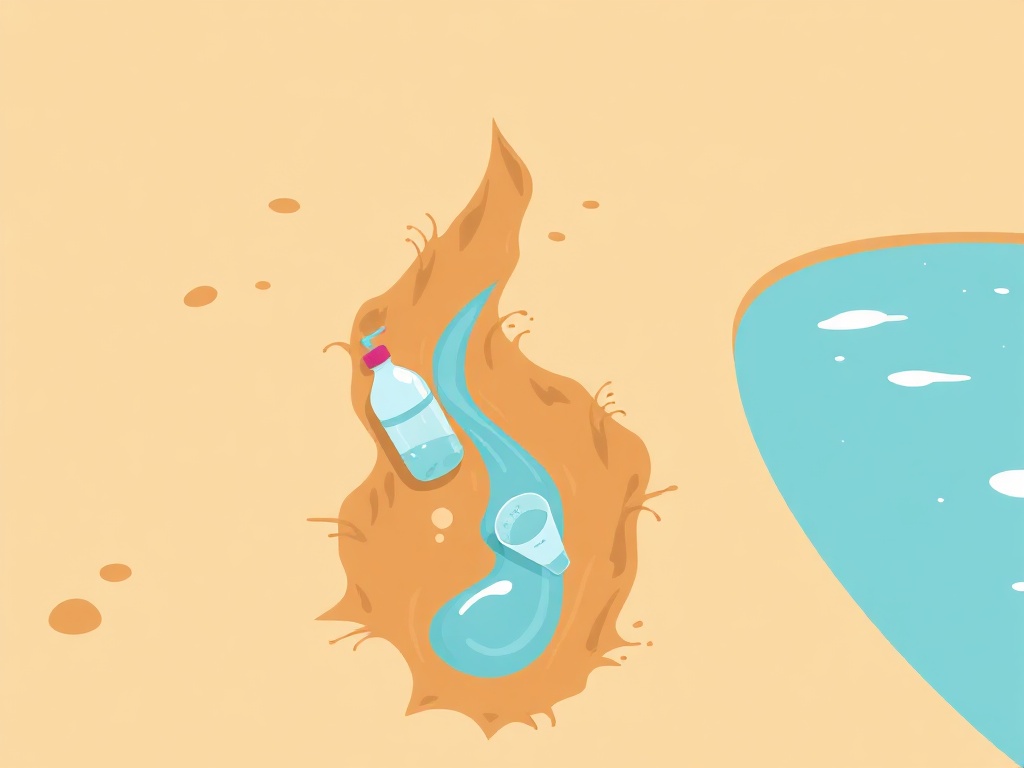
All you need is a bottle of water (even a small 500ml one), a plastic cup or bottle cap, and your child's hands. Sit down at the free end of the sandbox and start digging a narrow channel, about as long as your arm. Then pour in a little water and watch how far it gets. Your child will quickly notice that the water stops where the sand is higher, and will start fixing it. It takes 15 to 25 minutes and suits ages 5-7. You've succeeded if at least one other child comes over and asks, "What are you doing?", and yours answers with a word or two without pulling back. If no one comes over, that counts as success too, as long as your child stayed in the sandbox until the end instead of retreating to the bench. If another child sticks around, give them a specific job rather than a vague "play together": "You make sure the lake doesn't overflow, we'll keep digging upstream."
The key is that you're part of the game at the start and quietly step out of it. After the first five minutes, stop suggesting ideas. If another child comes over, get up and move one bench away — an adult hovering near the sandbox makes bolder children hold back.
A playground game for kids ages 5-7 when the playground is packed and there's no sandpit
The Ten-Thing Hunt
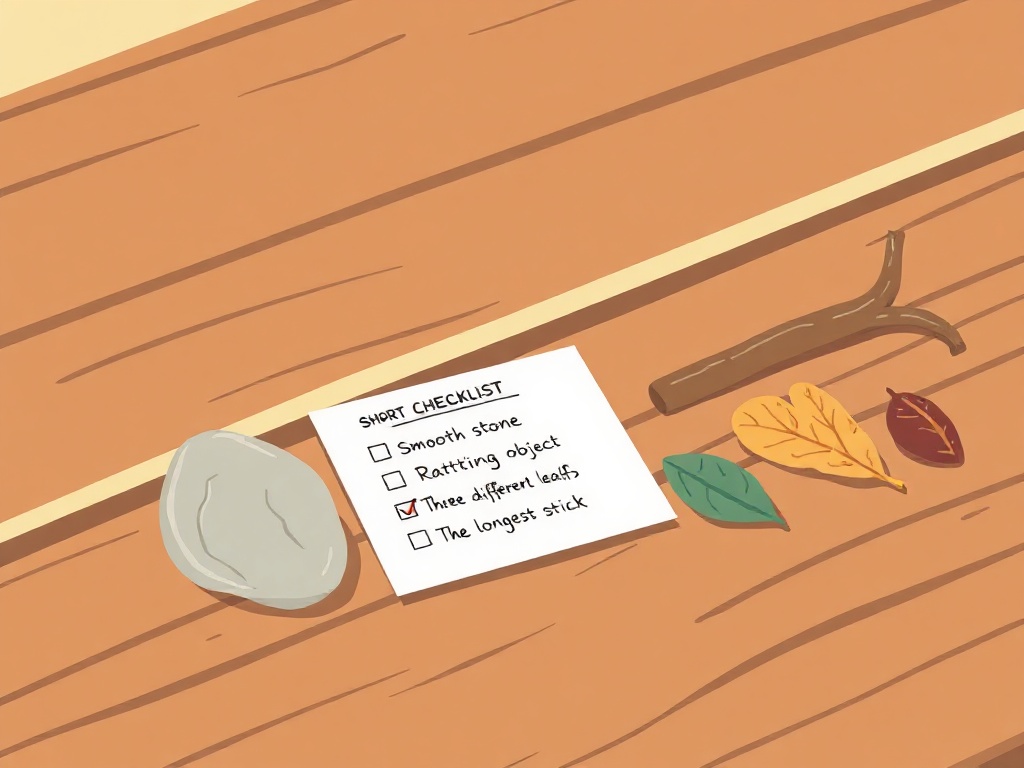
You'll need a sheet of paper and a pencil, or just the fingers of one hand. Put together a short list of things to find right there on the playground: something smooth, something that rattles, three leaves of different shapes, the longest stick, a pebble with a dot on it. Ten items is plenty. The game runs 10-15 minutes and suits children aged 5 to 7. Count it a success if your child circles the playground at least twice and passes by the group of children without clinging to you — they're moving through the same space as the others, but with their own purpose, which takes the pressure off. Very often someone asks, "Wait, what are you looking for?" and joins the hunt, because the list is clear and anyone can jump in at any point. If that happens, add one item especially for the new child: "Ivan, you find something yellow."
Four ready-made sentences your child can carry into any playground game
They don't need a speech. They need three or four ready sentences, rehearsed at home, so they don't have to invent them on the spot when their heart's already racing:
- "Can I play too?" — short, and it works in almost any playground game.
- "I'll keep watch here." — offers a role instead of asking for a spot, and other children rarely turn down help.
- "I'll come later." — this is the answer for when your child wants to say no without feeling bad about it. Teach them explicitly that they're allowed to say it.
- "What are you playing?" — entering through curiosity, not through asking a favour; children love explaining their own game.
Rehearse these at home while playing something else — you're the child who wants to join, and they're the group turning you down. Laughter does more work than a "try to be braver tomorrow" conversation.
The most common mistake parents make at the playground: speaking for the child
We walk up to the group and say, "Hi kids, this is Emma, can she play with you?" It helps in the moment — the children usually nod, because there's an adult standing right there. But two things happen here. First, your child is now marked as "the one their mum brought over," and playgrounds remember that. Second, next time they'll wait for the same thing: standing there watching you, until you go over and sort it out. The skill never gets any practice, and the habit of leaning on you only grows stronger.
The second mistake is comparing out loud: "Look how Daniel just walks right up to everyone." The child doesn't hear advice, they hear a verdict — and next time they'll stand even further away, so as not to be judged again.
And third, bribery. "If you go over to the kids, I'll buy you an ice cream." This turns play into a task with a reward attached, and the child starts wondering why they're being paid for something the others do for free.
A child playing alone but engaged is much closer to the group than a child standing next to the group doing nothing.
How to leave the playground without ruining everything
Give a warning 5 minutes before leaving, and name specifically where the game will end: "Two more channels and then we're off." If another child has joined in, help wrap things up: "We'll be back here after five tomorrow, come along if you like." That one line is the difference between a one-off meeting and an acquaintance — and an acquaintance is what takes the pressure off completely on the next visit, because now there's someone to play with.
And one more thing worth saying plainly to any parent: some children don't want to join in because they're genuinely happy on their own. If your child plays with focus for 20-30 minutes, comes home in a good mood, and has at least one friend somewhere — in the garden, in the building, in the family — the playground isn't a problem that needs solving. It's simply a place where they'd rather dig. Keep these playground games for kids ages 5-7 as an open door, not as homework.