
Five Paper Games for a Rainy Day That Actually Hold Up Till the End
Five games using only paper and pencil, ranked by how long they actually keep a 6- to 9-year-old's attention. With clear rules, timing, and a definite end.
It's been raining since morning, the shoes are drying by the radiator, and your child has already paced the hallway three times. You grab a sheet of paper and a pencil and offer, "let's draw something" — and four minutes later the paper is lying on the floor. It's not that the idea is boring. There's simply no rule telling anyone when it ends.
The usual rainy-day advice goes something like: give the child paper and let the imagination do the work. That works for maybe one child in ten. The rest need something else — a framework. A game with a turn, a score, and a moment when someone says, "done, I won." That's why the five games below are ranked not by how charming they are, but by how many minutes they actually hold the attention of a child between 6 and 9.
Why "just give them paper" rarely works
A six- to nine-year-old already plays by rules — in the playground, in class, on the phone. They're used to there being points and a winner. When you hand them a blank sheet with no structure, you're actually giving them an adult-level task: invent your own goal, invent your own criteria, sustain your own interest on your own. That's hard even for us.
The difference is obvious right away. Compare the two sentences: "Draw something nice" and "You have two minutes to draw a monster with exactly seven legs — I'll count whether there are seven." The second child picks up the pencil instantly. Not because the second task is more fun, but because they know exactly what's wanted and how they'll know they've succeeded.
What you actually need
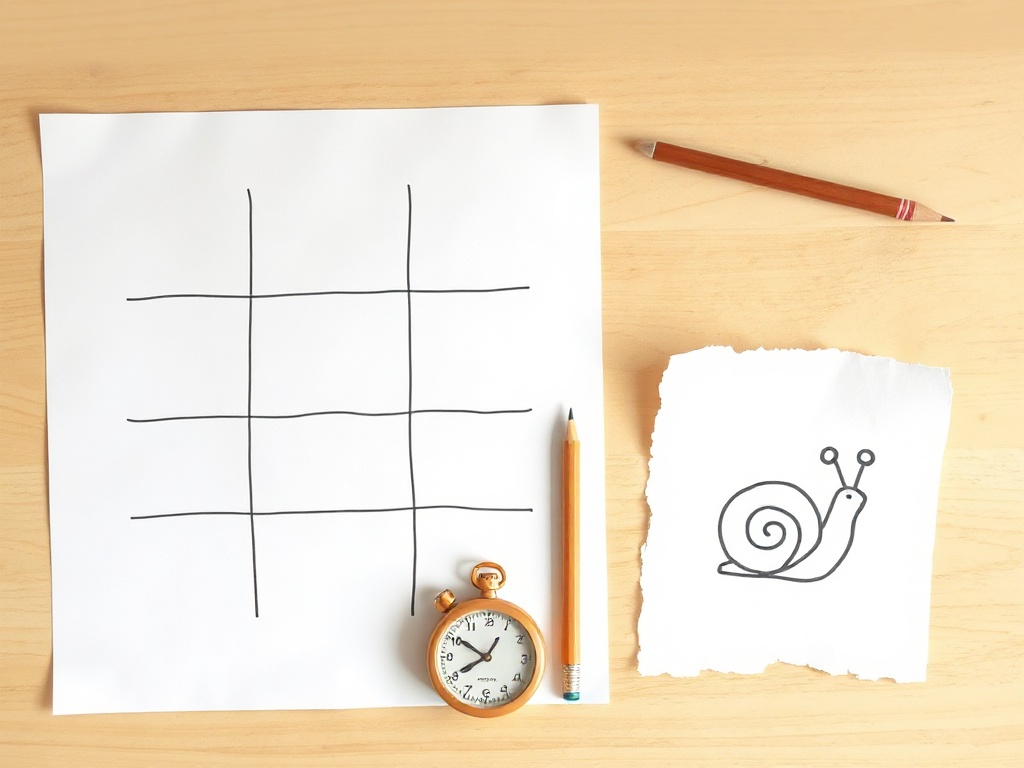
- A few sheets of A4 paper — the backs of old printouts work fine
- A pencil or pen for each player, ideally in different colours
- A clock or a timer on your phone for the timed games
- One spot where the two of you sit facing each other, not side by side — so it's clear whose turn it is
The game that lasts longest: Dots and Boxes
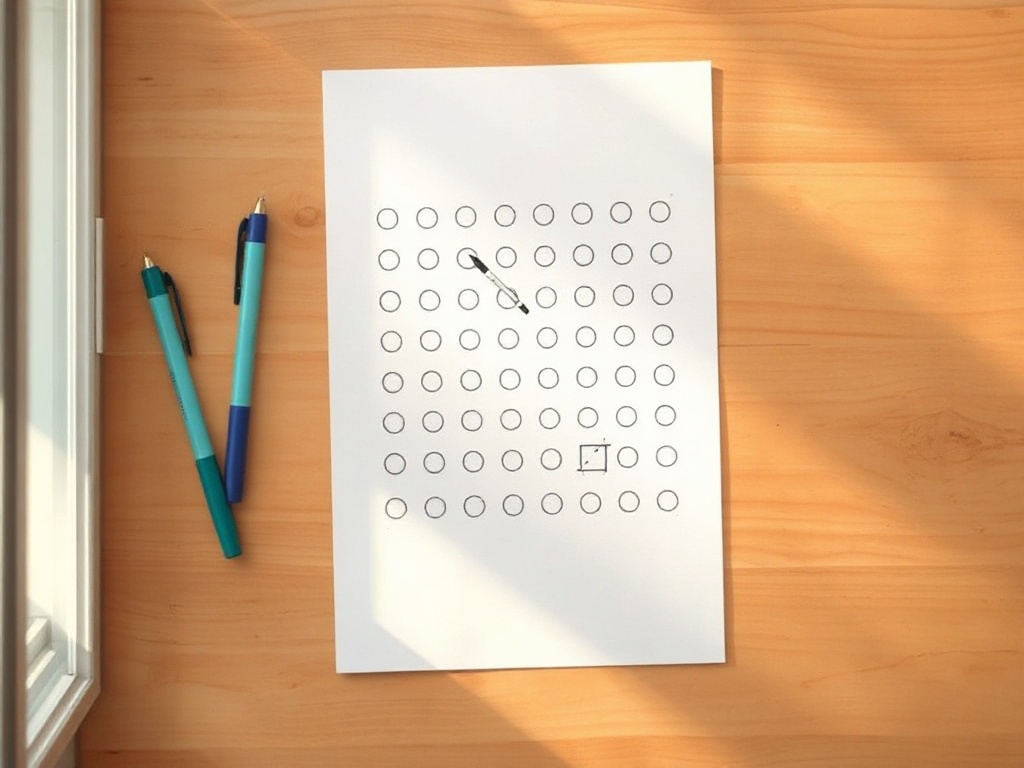
A classic that most parents half-remember and so tend to explain wrong. Draw a grid of dots — start with 6 by 6. Players take turns joining two neighbouring dots with a single line, horizontal or vertical. Whoever draws the fourth side of a box writes their initial inside it and gets another turn. That exact rule — "close a box, go again" — is why the game never gets old, because near the end a single move can hand someone five boxes at once.
Dots and Boxes
You'll need: one sheet of paper, two pencils in different colours, and a ruler if you want the grid perfectly straight. Time: about 15 minutes for a 6-by-6 grid, up to 25 minutes for an 8-by-8. Age: 6 and up — for six-year-olds, start with a 5-by-5 grid. You've succeeded if: the game ran all the way to the last box and you both counted the initials out loud — the winner is whoever has more boxes, not whoever drew more lines.
The game for laughs: The Folded Monster
Fold a sheet of paper into three horizontal strips. The first player draws a head in the top strip, leaving just two small pencil marks poking into the next strip to show where the neck continues. They fold the paper so it can't be seen and pass it on. The second player draws a body and arms, continuing from the marks, folds it over, and passes it on. The third player draws the legs. Then everyone unfolds it all at once.
One thing that's easy to miss but really matters: before you unfold it, everyone says out loud what they think the other person drew. "I bet there's a fish tail at the bottom." That second of anticipation is half the fun. If there are only two of you, just take turns drawing alternate strips — it's just as funny.
The Folded Monster
You'll need: one sheet of paper per round and one pencil per person. Time: 5 to 7 minutes per creature — you'll usually play three or four rounds in a row. Age: 5 to 9 — it works even for the youngest, since no precision is required. You've succeeded if: you unfolded the sheet and somebody laughed out loud, then pinned the creature on the fridge with a name you made up together.
Three shorter ones, for when you've got fifteen minutes left
- Battleships, but bigger: not the usual 3-by-3, but a 10-by-10 grid, and the winner is the first to line up five ships in a row. A round takes about 10 minutes and is far more interesting than the small version, which always ends in a draw.
- Hangman without the gallows: instead of drawing a stick figure, draw a snail — for every wrong letter, add one circle to its shell. Six circles and the word is lost. Pick words from a single theme, like animals only, to keep the guessing fair.
- The Letter List: pick a letter; everyone has three minutes to write down as many words starting with it as they can, but only in three categories — food, animal, city. Any word both of you wrote gets crossed out. Only the unique ones count.
The Letter List
You'll need: one sheet and pencil per player, plus a timer. Time: 3 minutes of writing plus 3 minutes of checking, about 6-8 minutes per round in total. Age: 7 to 9, since confident writing is needed. You've succeeded if: your child wrote at least five words on their own and accepted the crossed-out matches without calling it unfair.
The most common mistake: playing until the child gets bored
The temptation is real. It's going well, the child is laughing, so why not keep going a bit longer. The trouble is the ending then always arrives from the outside — someone gets distracted, someone gets cranky, the game just fizzles out with no winner. And next time you suggest the same game, the answer is "no, that one's boring." The child doesn't remember the fifteen good minutes — they remember the last two.
The opposite approach works. Stop while it's still fun, and say it plainly: "Stop — you won, nine boxes to seven. Rematch tomorrow." The game closes on a high note and turns into something the child asks for on their own.
A second common mistake — the adult plays at half strength and pretends to lose. An eight-year-old can tell. If you want to even the odds, do it openly: "I'll play with my left hand," or "you go first and start two boxes ahead." That way the win actually counts.
A good paper game has three things: a turn worth waiting for, a rule that's kept, and a final sentence that says who won.
What's left after the rain
Keep the sheets in a folder and write the date on top. In two months you'll have a stack that shows how the monsters have grown more detailed and the battleships more cunning. It's also the easiest way to start the next rainy day: pull out the folder, your child spots their old monster, and they'll sit down at the table on their own.