
First-Grader Comes Home Wiped Out: 6 Screen-Free Games to Help Them Reset
Your child comes home from school looking utterly drained, and the first thing they want is the tablet. Here's what they actually need instead — plus two games that bring them back to themselves in 15 minutes.
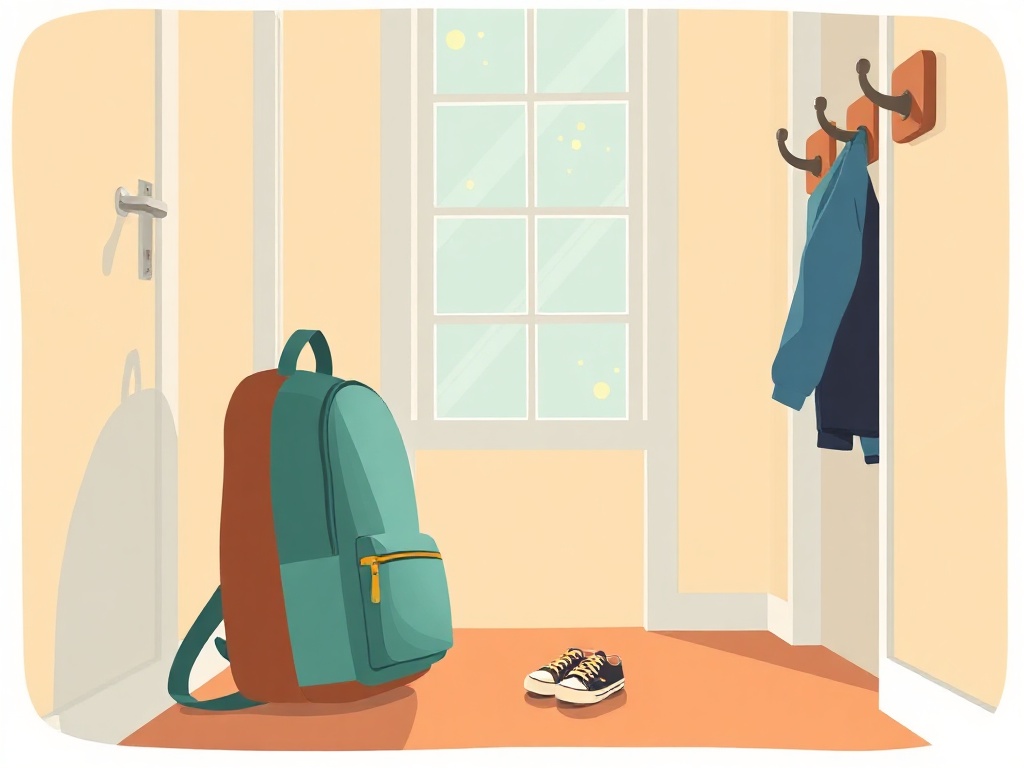
It's 3:40 pm. The backpack drops by the door, the shoes end up in the middle of the hallway, and all you get in response to "how was your day?" is a long, drawn-out "nooothing." Three minutes later they're already begging for the tablet. Say no, and you get a meltdown way out of proportion to the request — and that right there is the tell: this is exhaustion, not defiance.
The most common advice at this point is "just let them rest." The trouble is, we usually picture rest as more sitting still. But a first-grader has already been sitting at a desk from 8 am to 1 pm, with short breaks in between where they often couldn't run around as much as they wanted. Their brain has been working non-stop — letters, lines, bells, instructions, their name called every half hour. Their body hasn't moved. You don't fix that with more stillness.
Why a screen looks like rest — but isn't
The tablet really does calm things down for a moment — your child goes quiet, their face relaxes, and you finally get a breather. The catch is that it doesn't lift the load, it just swaps it for more of the same kind: watching, tracking, reacting. Half an hour later, your child is often more irritable than before you handed it over, and every "okay, that's enough" ends in a meltdown. At six or seven, stopping is the hard part — not the watching itself.
That's why the first 20 minutes after they walk through the door matter so much. Not a lesson, not questions about grades, not "wash your hands and sit down for homework." Instead: movement with no right answer, and quiet where nobody is judging your child.
The first 20 minutes: a sequence that works
- Zero questions until they've finished eating. If you stay quiet, your child usually starts talking on their own around the ten-minute mark.
- Something salty or fruity right away — a slice of bread with cheese, an apple, a handful of nuts. Hunger at 3:30 pm disguises itself brilliantly as a bad mood.
- Twenty minutes of movement or lying on the floor. Not the sofa — the floor, where the body can actually stretch out.
- Homework only after that. A notebook in front of an exhausted mind gets you two lines in forty minutes and one big fight.
Game one: "The Dough"
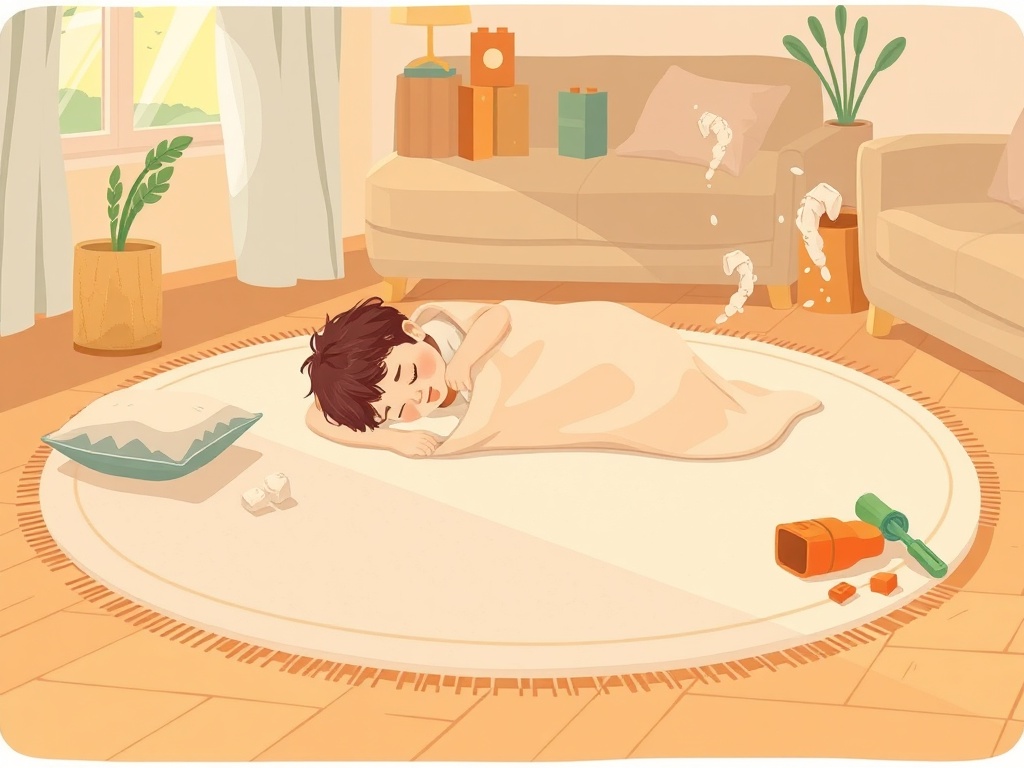
This is a game for children aged 6 to 8: your child lies face-down on the rug and becomes the dough, while you play the baker. Press gently with your palms along the back, shoulders, and legs — slow, even rhythm. Then "roll it out" with your forearm, "dust it with flour" with light taps along the calves, and finally "put it in the oven" — cover them with a blanket and count to thirty. If they want to switch roles, even better — let them knead you. It works because slow pressure and warmth do the exact opposite of the classroom bustle.
"The Dough" — kneading on the floor
All you need is a rug or blanket and your hands — nothing to buy. It takes 8 to 12 minutes and suits children aged 6 to 8. Count out loud, slowly, so your child can latch onto the rhythm. Call it a success if your child asks for "a bit more" at least once, or simply closes their eyes and lies there quietly afterward — their body has come out of tension mode.
Game two: "Five-Thing Hunter"
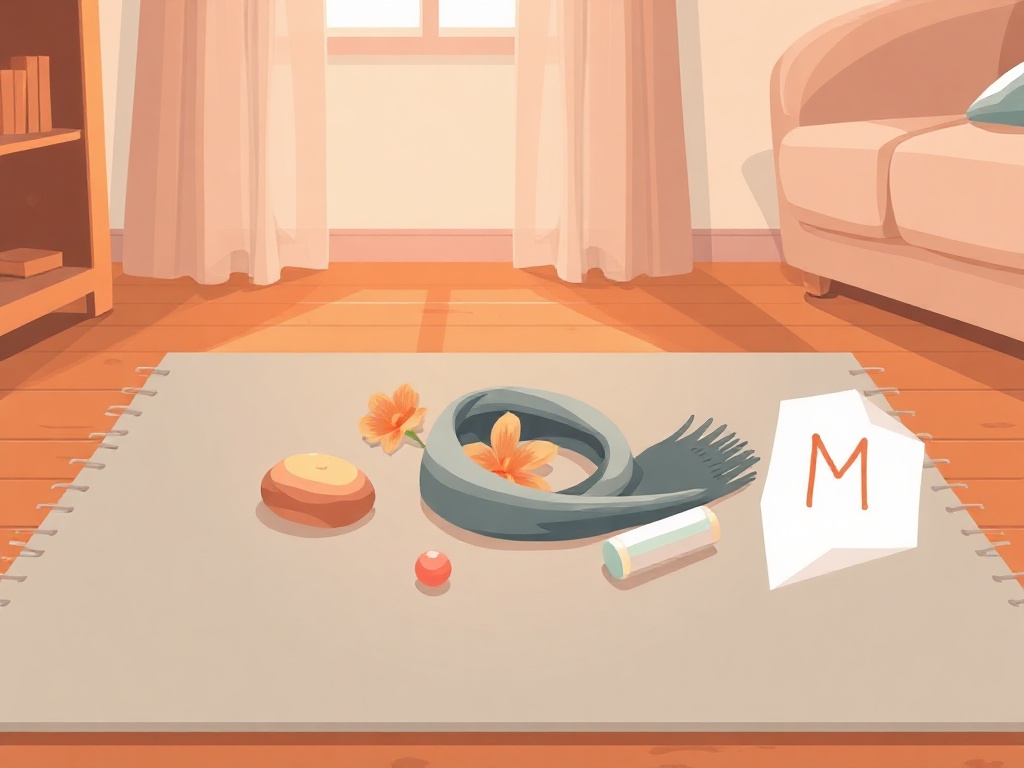
This one uses legs and eyes, no screen involved. You name five things found around the house — "something round, something that smells nice, something softer than a pillow, something that starts with the letter M, and something that made you happy today." Your child dashes off and piles them up in front of you. That last item is the important one: it draws out the story of their day without you asking a single question about school. Many first-graders bring back an eraser or a scrap of paper and start talking on their own from there.
"Five-Thing Hunter"
You need nothing but your house and five made-up tasks; jot them down on paper if you don't want to forget them. The game takes 10 to 15 minutes and suits children aged 6 to 8 — younger ones do better with four items instead of five. Call it a win if your child explains why they picked that last item, even in a single sentence. That sentence is usually what opens up the whole conversation about their day.
Four more options for other days
- Pillow fight with a rule: only below the waist, and everyone stops on the word "freeze." Five minutes is enough to shake the tension out of shoulders and arms.
- Musical statues: running around the room, and when the music stops, everyone freezes. Your child's in charge here — they hit pause, you freeze.
- Laundry duty: hand them the wet socks and the clothespins. It sounds silly, but simple, repetitive hand-work calms a lot of kids better than any game designed on purpose.
- Two-color drawing on a big sheet of paper on the floor. No theme, no "draw something nice." Just scribbling until the page is full.
The most common mistake: quizzing them right at the door
"How was today? What did you write? Did the teacher call on you? Who did you play with?" — four questions in thirty seconds, all asked with the best intentions. But your child has just come out of five hours of answering questions. To them, yours sound like an extension of school — so you get "I don't know" and a closed door.
The other version of the same mistake is filling every afternoon with activities so they're "not stuck in front of a screen." Dance on Monday, English on Tuesday, football on Wednesday — that's not rest, it's a second shift. The tiredness piles up and usually erupts on Thursday evening, in the form of tears over a broken pencil.
If you still feel like buying something, it doesn't need to be expensive. Modeling dough, a stress ball, a box of clothespins — things in the €1–5 range that last for months. But most of the time, whatever's already in the house works just as well.
"Don't ask me anything, just squish me" — the sentence you'll hear most often from a seven-year-old on the floor on a Thursday afternoon.
What changes after two weeks
Don't expect your child to stop asking for the phone — they will still ask. What changes is something else: asking stops being the only thing they can imagine doing after school. Once the afternoon has its own order — a snack, movement, then homework — your child starts asking on their own, "are you going to knead me today?" And the evening becomes noticeably calmer, because homework gets done with a clear head, not with whatever's left of one.
Walk away from this with three things: the first twenty minutes are question-free, movement replaces the screen instead of fighting it, and homework can wait. Everything else is just variations.