
Three Hours in the Car to the Village: Screen-Free Games That Actually Last the Whole Trip
The drive to grandma and grandpa's doesn't have to be time you just "get through" — with a few games that build on themselves, kids aged 7-10 will want to leave the phone in the bag on their own. Here's what actually works between the motorway services and the last turn before the village.
Twenty minutes after leaving the city, the question has already been asked three times: "How much longer?" The boot is packed with bags, two kids are elbowing each other over the middle seat, and you've just announced that phones stay in the backpack until the village. From here you've got about two and a half hours left and very few ideas.
The usual advice is "bring car games" — and some parent hands over a list of twenty titles. The real problem is different. "Spot the yellow car" and "who sees a stork first" last about seven minutes. Then silence, then the time question again. What actually keeps a 7-10 year-old busy for an hour and a half isn't the number of games — it's whether a game has a score that keeps going: points that add up, a story that grows, a map that fills in. So here are just three things — but each one builds all the way to the end of the trip.
Why most car games die after ten minutes
"Spot it" games depend entirely on what's passing the window. Drive through a tunnel or a stretch of nothing between two villages and the game simply stops — there's nothing to spot. Worse, the score resets every round: spot the yellow car, shout, done. No reason to keep going.
A game that lasts has three things: it works even when there's nothing interesting outside, it carries some kind of running total from start to finish, and it lets the older and younger kid play at the same time without the younger one losing every round. Miss any one of the three and the game fizzles out on its own.
The Road Log: one game that runs the whole trip
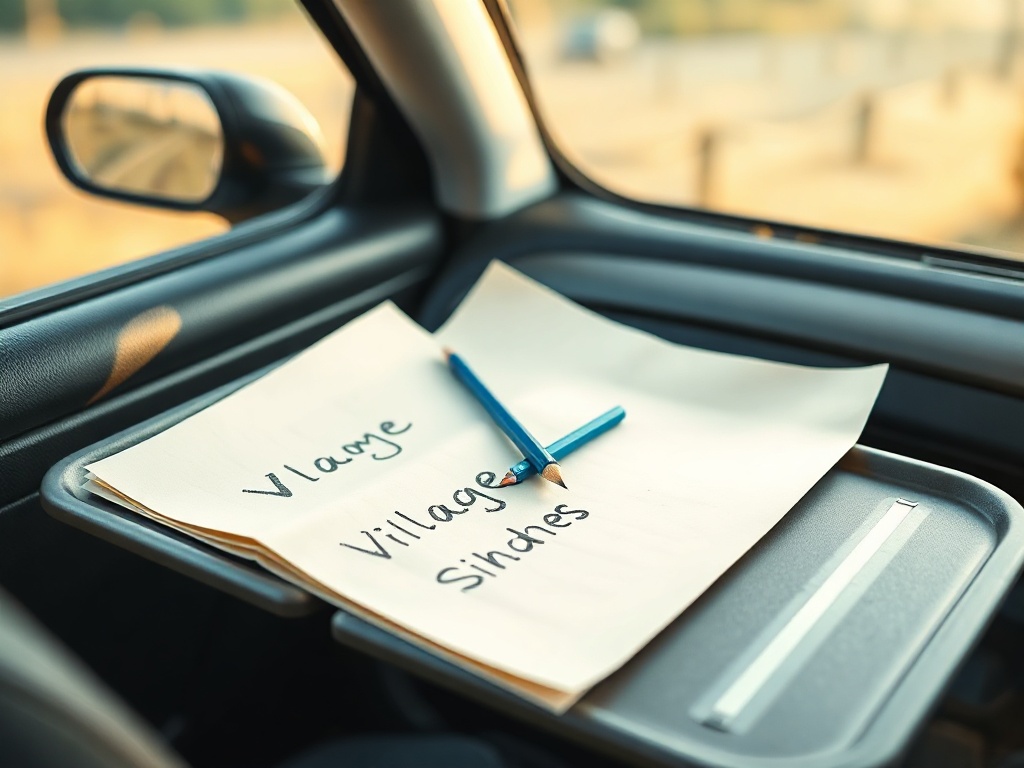
This is the main event. Each child gets a sheet of paper folded into four boxes and keeps their own running record of the journey. It's not a worksheet — the child is collecting and logging, and at the end there's a real tally to show grandma.
The Road Trip Log
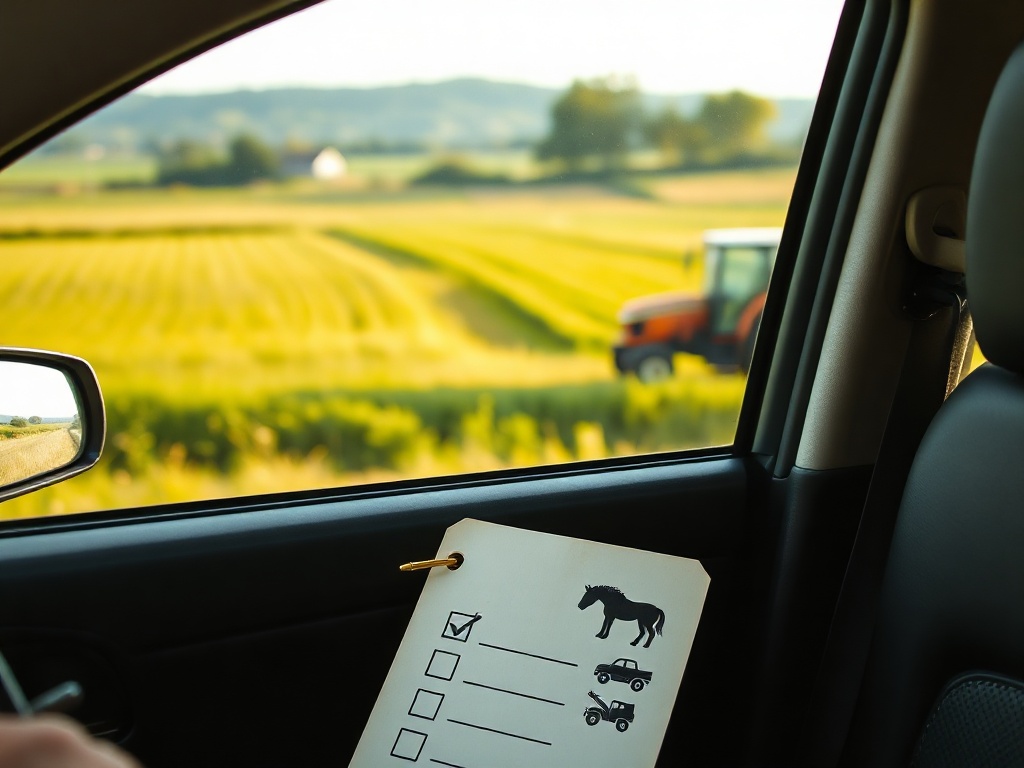
All you need is one A4 sheet per child, folded into four, and a pencil or pen — pack them in the bag the night before so you're not hunting for one at the petrol station. The game starts the moment you pull out of the driveway and runs a solid two to three hours, with breaks in between. Best for ages 7-10; if there's a younger child in the car, they can call out entries while the older one writes. In the first box, the child writes down the name of every town or village you pass through, reading them off the road signs. In the second, they draw one road sign they've never seen before or don't understand, then ask what it means. In the third, they log one "road hero" — a tractor, a horse, a crane, a car transporter — with a tally mark. In the fourth, about half an hour before the village, they write three things they'll tell grandpa the moment they get out of the car. Call it a success if, on arrival, the sheet has at least 8 towns or villages logged and at least 3 road signs — and the child can recite the route backwards, from the village to home, using the names they wrote down.
The trick: the folded sheet makes the game visibly finite. The child can see how much is left to fill in, and that alone answers "how much longer."
The game that saves the boring stretch
Some stretches have nothing outside — just crash barriers and fields. That's where you need a game that doesn't depend on the window. This one runs entirely on voices and memory, and it works best exactly when everyone's started bickering.
Grandma's Suitcase
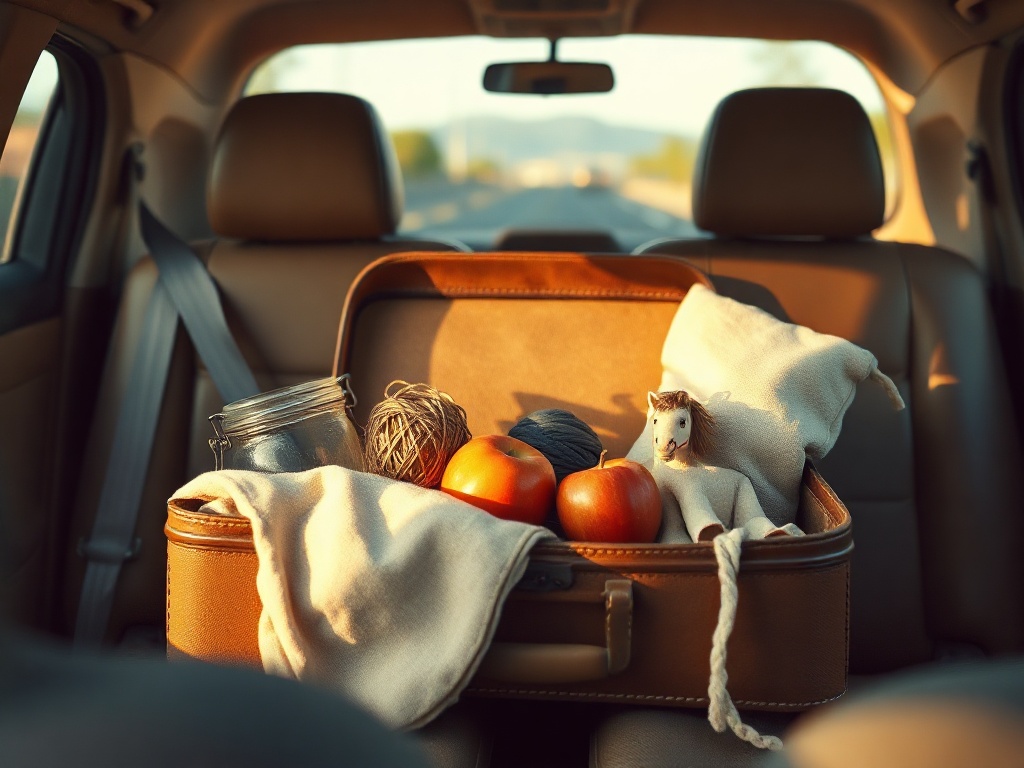
You don't need anything but the voices in the car — which is why it works in a tunnel or stuck in traffic too. One round takes 10 to 20 minutes depending on how many are playing, and you can easily run it two or three times over the trip. Works best at ages 7-10, since it takes reading syllables and remembering the order. The rule: the first player says, "I packed a jar into grandma's suitcase." The second repeats "jar" and adds their own item, but it has to start with the last letter of the previous one — "jar, rope." The third adds something starting with "e," and so on. Whoever breaks the chain doesn't get knocked out — instead they get the job of recalling the whole list backwards, together with the others. Call it a success if the chain reaches 12 items without completely falling apart, and the child can list at least 8 of them from memory when you stop for a break.
If someone gets huffy about losing, switch the goal: it's not about who slips up first, it's about how far the whole car can get together. Then the kids start feeding each other hints, and the argument disappears on its own.
The story told in pieces
The third thing isn't really a game, more a way to fill the last forty minutes when everyone's tired. You start a story about the house in the village — but each person only gets to add one sentence, and it has to include something that just went past the window. "Grandpa opened the gate and saw a white car in the yard." "The white car was full of watermelons." Funny is the goal, not sense. Sentence by sentence, the story arrives at the village right along with you.
The common mistake: screen first, games later
The most common approach is to hand over the tablet from the moment you leave and only bring out the games "once the battery dies" or the child gets bored. This almost never works, and the reason is simple: after an hour of screen time, everything else feels slow by comparison. The Road Log takes effort, Grandma's Suitcase takes listening — both lose the comparison to something that hands you a picture with zero waiting.
Flip the order. The first two hours are screen-free, and the last half hour, if you need it, is screen time — by then the kids are tired anyway and nobody argues. Say it out loud before you even set off, with a clear line: "We play games until the motorway services, after that everyone decides for themselves." A rule announced before departure is far easier for a child to accept than one declared halfway there.
A second mistake, smaller but annoying: leaving the prep for the petrol station. A €1 pencil and a pad of paper can sit in the glovebox all year — bought on the fly, they cost more and are almost always the wrong ones.
How to split up the time
- First 30 minutes: the Road Log starts right away, while everyone's alert and there are plenty of signs.
- Next hour: two rounds of Grandma's Suitcase, with a break in between — the log runs alongside it, with kids jotting down villages as they play.
- Rest stop: everyone out of the car, even for five minutes, and count up what's been logged so far.
- Last 40 minutes: the one-sentence story and the fourth box — the three things for grandpa.
- Last 10 minutes: quiet or music. Don't start anything new this close to the village.
A log with eight villages in it is something a child hands to grandma right at the gate. That's exactly why they guard it the whole way.
On the way back, the same sheets do double duty: the kids tick off the villages in reverse order and check if they missed anything. The second time around, the game starts with no explanation needed — they already know the rules, and you get two quiet hours.