
Games for Two Kids Three Years Apart, Where the Little One Doesn't Always Lose
How to set up family game nights so a 7-year-old actually has a shot against a 10-year-old — no throwing games, no hurt feelings.
The board is set up, the cards are dealt, and by the third turn the younger one is already pushing back their chair: "You again! I'm not playing anymore." The older one shrugs — they honestly haven't done anything wrong. They're simply three years ahead, and it shows in every roll of the dice, every word in Scrabble, every sprint to the door.
The usual advice is to find a game that's "good for both." But hardly any game fits that bill. Between ages 7 and 10, the gap in reading, mental maths and hand control is enormous, and no board game box erases it. So instead of chasing the magic game, let's tweak the rules.
Why "just let him win sometimes" is the worst solution
Almost every older sibling has heard the whispered instruction: "Come on, let him win once." And almost every younger child figures out what's happening — by the second time at the latest. Throwing the game looks kind, but it causes three problems at once.
- The younger one senses the fake. A gifted win doesn't count, and they know it: "You put that there on purpose."
- The older one starts to hate the game. It turns out that when they play well, they're told to stop — and when they play badly, everyone's happy.
- No one learns to lose. If the result is rigged, the other side's loss is rigged too, and losing that way teaches nothing.
A handicap is a different matter, and children accept it far more readily, because it's announced out loud before the game even starts. It's not charity — it's a condition, the same way a stronger chess player might play without a rook. Just say it plainly: "You're three years older, so you start two points down. If you still win, it really counts." Most ten-year-olds like this framing, because it sounds like a challenge, not a punishment.
Four ways to even the odds
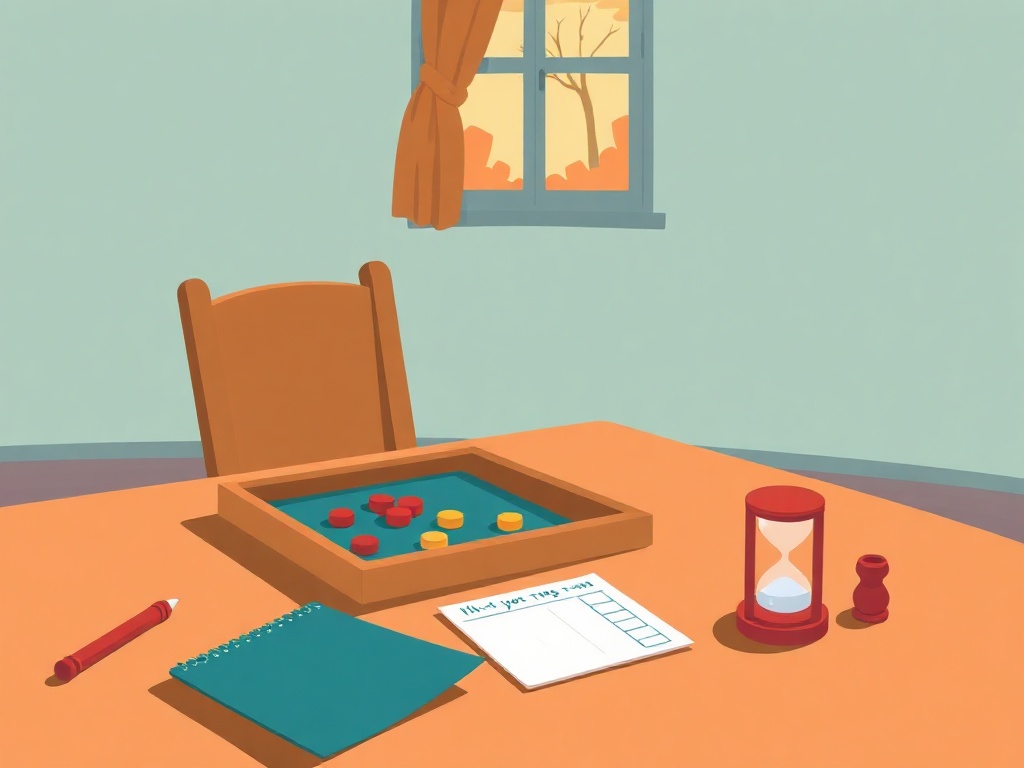
- Different tasks within the same game: in a memory match, the younger one searches through 12 cards, the older one through 20.
- Different starting scores: in a points-based game, the younger one starts at 5, the older one at 0.
- Different time limits: for a puzzle or sorting game, the older one gets 2 minutes, the younger one 3.
- Different roles: one plays while the other referees, keeps time and tracks the score — then they swap for the next round.
Write the handicap down on paper and adjust it after a few rounds. If the younger one wins three times in a row, trim the gap by one point. This is perhaps the most useful part — kids see in black and white that the gap is shrinking, because they're growing.
Balloon Over the String — with a declared handicap
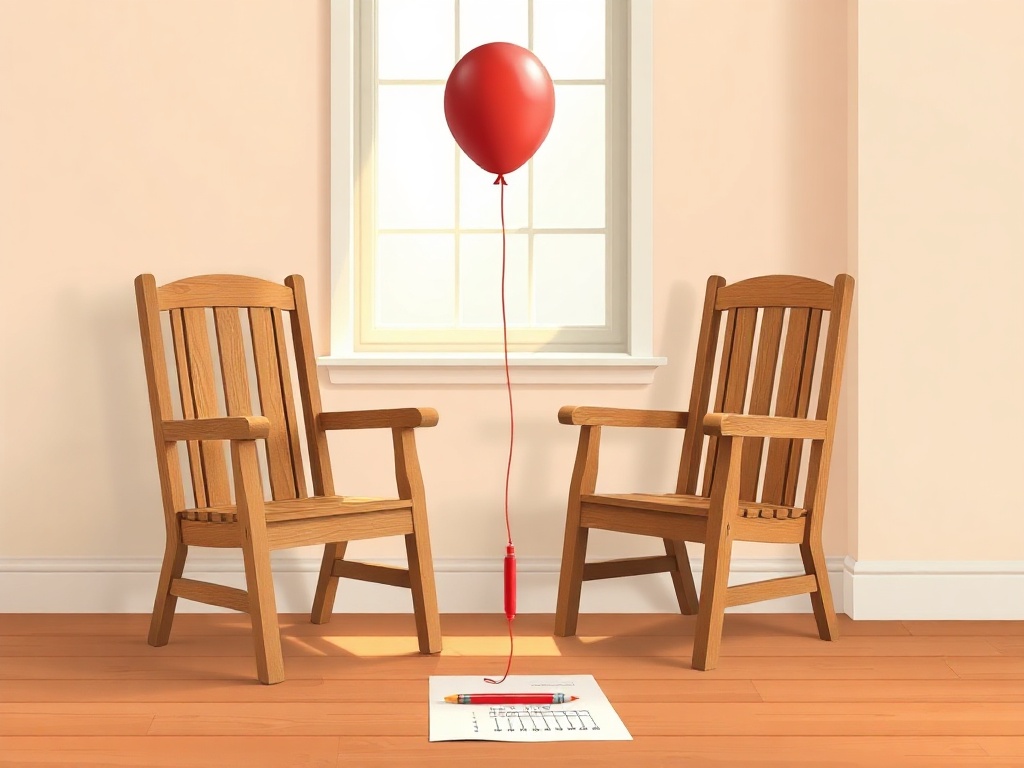
All you need is a balloon and some string or yarn tied between two chairs at about waist height; any sheet of paper and a pencil will do for keeping score. The game takes 15-20 minutes and works well for kids aged 7 to 10. There's one rule: the balloon must not touch the floor on your side. The handicap is simple — the older child plays with only one hand, keeping the other behind their back. If they're especially skilled, add a second condition: they may only hit the balloon with an open palm from below. Play to 11 points. If it gets too easy for the younger one, drop one of the two restrictions for the next round. Call it a success once both have won at least one round out of three and neither has demanded a rule change mid-game.
Games where the age gap matters least
There's a category of games where a three-year gap barely registers — ones where luck plays a big role, or ones where both play together against the game itself. Cooperative games work brilliantly for exactly that reason: there's no one to lose to. The big mistake here is letting the parent assign the roles — that just puts the older one back in charge. Better to roll a die to decide who calls the first move.
Also good: guessing games ("I Spy"), hide-and-seek treasure hunts with hot-and-cold clues, dominoes, and card games where the deal decides a lot. What doesn't work well: Scrabble, chess without a handicap, anything requiring fast reading, and any speed game involving hands, if the older one already has longer fingers and a steadier wrist.
Two Against the Deck
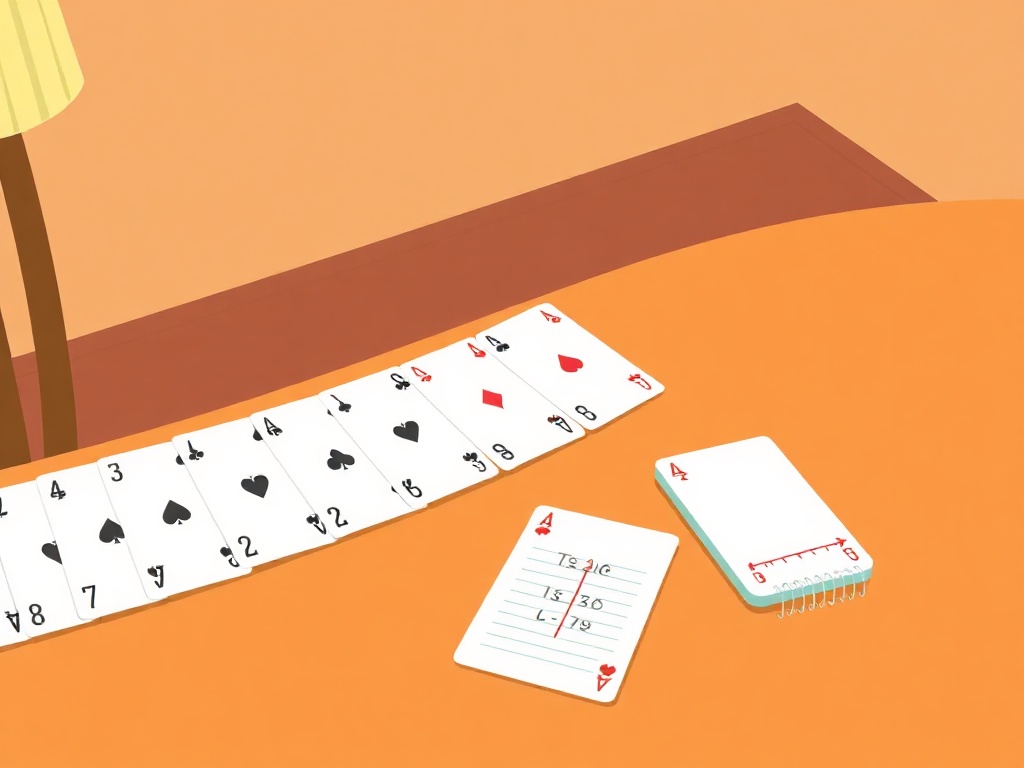
All you need is a deck of playing cards and a bit of table space. Set aside 10 minutes. Suitable for ages 7-10, and the younger one can even be 6 if they can count to 20. Shuffle the cards and lay them face-down in a row. The two players draw in turn and add up the values in their heads — the goal is to land on exactly 50 together, without going over. They can talk it through, calculate out loud, and choose when to stop. The win is shared, and so is the loss. If they succeed twice in a row, raise the target to 75. You'll know it's working when you hear the older one ask, "How much do we have left?" and wait for the younger one to answer, instead of doing the sum themselves.
"I start on five points because I'm younger. You start on zero because you're older. Deal?" — this one sentence, said before the game begins, saves you half the arguments afterwards.
What to do in the middle of a meltdown
You won't stop them arguing altogether — but you can cut the meltdown short. Three things help in the moment. First: pause the game, not the kids. "Time-out. The score stays exactly as it is." Second: ask about the rule, not the culprit — "Which rule isn't clear?" instead of "Who started it?" Third: if one storms off angry, don't call them back straight away. Finish the round with the other, or put the box aside and calmly say the game will be waiting for them.
And one small thing that's easy to overlook: don't announce the overall score for the day. "Three to one for Martin" is a sentence the younger one will carry around until bedtime. Let each round stand on its own.
Three common mistakes
- The parent joins in as a third player to "even things out." It backfires — now the younger one is losing to two people, and the adult's attention is split. Better to referee instead.
- Buying a new game every month, hoping the next one will finally be the right fit. A €15-20 game won't fix an issue that lives in the rules, not in the box. The same old game with a handicap works better than a new one without.
- Playing during the most exhausting hour of the day — right before bed or straight after school, when both are running on empty. A board game at 8:30pm on a school night almost always ends in tears. Save it for the weekend or the afternoon.
What this looks like after a month
The goal isn't for the younger one to win exactly half the time — that's not realistic, and kids can tell. The goal is for them to have won often enough that they sit down at the table without already assuming they'll lose. In practical terms: if they take three or four out of ten rounds, they'll keep playing. If they take zero, they'll refuse — and they'll be right to.
The older one gains something too, though it only shows later. They learn to play under a constraint, to explain a rule to someone who hasn't grasped it yet, and to wait their turn. That's worth a lot more than one more easy win.