
Your child wants a dog, but you live in a small flat: how to decide honestly before you promise anything
Instead of putting it off with "when you're older," run a two-week test with real walks, costs in euros, and a signed list of chores. The flat isn't the obstacle — the real obstacle is not knowing who does what.
A November evening, eighth floor, your child stands in the kitchen doorway phone in hand, showing you a photo of a white puppy. "Mum, this one's from down the road, they're giving it away for free." The first thing most parents say is: "There's nowhere to keep it, the flat's too small." It sounds reasonable. Except it isn't quite true — and children sense it, because they've seen the neighbour's collie on the fourth floor living perfectly happily in a small flat.
Dogs don't need floor space, they need to go outside. A medium-sized dog sleeps for most of the day and couldn't care less whether that nap happens in a flat or a house with a garden. The real issue is a different one: three walks a day, every day, including when it's raining, when you're ill, and when school starts back in mid-September and afternoons suddenly fill up. The conversation needs to shift — from "how big is the flat" to "who takes the dog out, and when."
This piece is written for parents, not for children — specifically for parents of children aged 7 to 10 who are being asked for a dog. At this age a child can already handle real responsibility — checking a calendar, counting money, taking the dog down in the lift — but can't manage the 7am walk entirely alone. That's exactly where the trap lies.
Why "when you're older" is the worst answer when your child wants a dog
"We'll see when you're twelve" is a delay that a child hears as "yes." For three years they live with a promise you never actually made, and when the answer is still no at twelve, it feels like a genuine betrayal. It's more honest to say exactly what's missing right now. For example: "We can't do it at the moment, because we both get home after 6:30pm and the dog would be alone for ten hours. If that changes, we'll think about it again." A sentence like that gives the child a condition, a reason, and a door that isn't locked shut.
One more thing — don't use a dog as a reward for good grades. "If you get top marks this year, we'll get a dog" turns a living creature into a trophy and makes caring for it conditional on a maths test.
What to check before you answer your child's request for a dog
- Time: three walks a day, at least 20 minutes for the afternoon one. Who takes the dog out at 7am on a Monday? What about a Sunday? Write down actual names, not "we'll sort it out."
- Money: food, vet bills, worming and flea treatment, vaccinations, microchipping. Ring two vets near you and ask for real prices in your own currency — the figures in this article are in euros, but swap in whatever you pay in, so you have numbers rather than guesses.
- Holidays and travel: where does the dog go when you're away for a week? "We'll find someone" is not an answer.
- Allergies: if anyone at home sneezes around animals, that gets checked with a doctor, not hoped away.
- Neighbours and building rules: in some places keeping a pet in a block of flats needs the agreement of the residents' association, in others it doesn't. Rules differ from country to country and from building to building, so read your own house rules and, if anything is unclear, ask your building management or a local adviser before you promise anything. Nothing here is legal advice.
The two-week test: playing dog before your child gets a dog
The most useful thing my daughter and I ever did was turn the request into an experiment. Not a refusal, not a promise — a trial with a clear end point.
Two weeks with the invisible dog
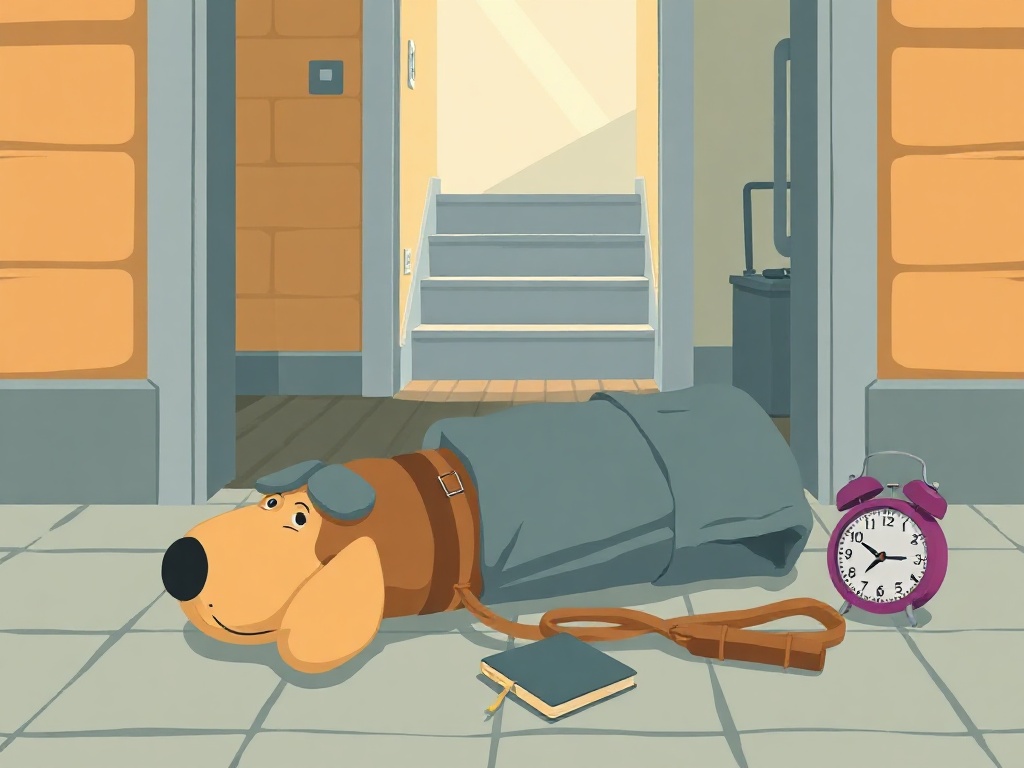
All you need is an alarm clock, a notebook, and an old scarf or rolled-up blanket tied with string — that's the "dog." It works well with children aged 7 to 10, who are old enough to keep the routine but still need an adult nearby. For fourteen days, the child takes it out to the green in front of the building at 7am for 10 minutes, and again in the afternoon for 20 minutes, rain or shine, with an adult tagging along behind and staying quiet. Each evening they jot down, in one word, how it went. It takes about 35 minutes a day. In our house we took it as a good sign when the child got up and went out on their own on most mornings — for us that looked like roughly 11 of the 14 — without being woken twice or arguing at the door. That number is nothing more than the line our own family drew after one fortnight; it isn't a research finding, a survey result or an official standard. If it's only happening on a handful of mornings, that usually points to "not this year" — and it stops being your call, because it's something the child worked out for themselves. Treat our markers as a starting point and adjust them to your child.
The test works because it removes the argument. The parent isn't a judge, and the notebook doesn't row with anyone. I've seen children who sail through it and get a dog a month later, and children who say on day five, all on their own: "I don't think I can do this yet." Both are good outcomes.
What a dog actually costs — a sum the child works out alone
Budget at the kitchen table
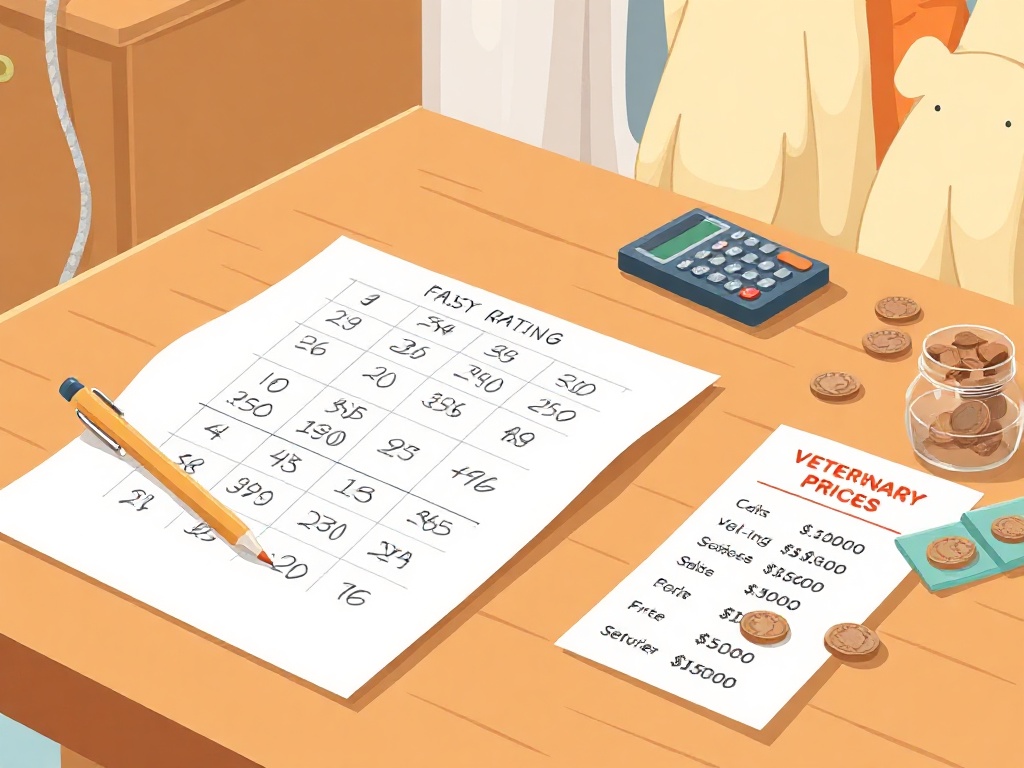
You'll need a sheet of A4 ruled into three columns, a pencil, a calculator (a phone will do), and a list of prices gathered from a vet and a pet shop near you. Set aside 30 minutes on a Saturday morning. Because it involves adding three-digit numbers, it tends to work best from about age 8 upwards. The child fills in an "every month" column (food, treats), a "once a year" column (check-up, vaccinations), and a "one-off" column (bed, lead, bowls). Then they divide the yearly total by 12 to get a monthly figure. Finally they compare: if their pocket money is €3 a week — use the same currency you actually pay in — how many weeks of pocket money does one vaccination cost? You can call it a win if they can say the monthly total out loud and name exactly who in the family will be paying it. The point isn't to scare them off, but to leave the table with a real number instead of a vague feeling.
A common mistake when your child wants a dog: getting one to teach responsibility
That sentence sounds like good parenting and almost always backfires. Responsibility is learned through repetition where mistakes are cheap — a forgotten plant that needed watering, bins not taken out, bread not bought. When the cost of a mistake is a living creature that didn't get walked on time, the child doesn't learn — they feel ashamed and start avoiding the task altogether. The familiar result: by month three the dog has become entirely Mum's, the child flinches at every reminder, and the dog turns into a constant source of arguments at home.
The opposite approach works better. First prove the habit with something small — say, the child feeding the fish or taking out the bins every evening for a month — and only then add the dog. That way it isn't a lesson, it's a reward for a habit that already exists.
A second common mistake: "we'll get a small dog, it suits a flat better." Many small breeds are lively and persistent, bark at every noise on the stairs, and need just as many walks as bigger dogs. A dog's size barely changes the amount of work involved.
If the answer is "not right now"
A no doesn't have to be an empty one. There are in-between steps that do real work and often satisfy the need for a whole year.
- Walking a neighbour's dog twice a week, with the owner's explicit permission and an adult along.
- Volunteering at a rescue shelter — most take children accompanied by a parent; call ahead and ask what age they accept from.
- Looking after a relative's dog during the holidays — a week is enough to find out everything you need to know.
"I can't promise you a dog today. I can promise you we'll look at it honestly and I'll tell you the real reason."
Whatever you decide in the end, say it out loud, with a date and a reason. A child can live with a no; what wears them down is being left in the dark.