
How to Tell a 7-9-Year-Old That a Pet Has Died
Concrete sentences, two exercises, and the common mistakes we make out of good intentions. For children aged 7 to 9 who already understand that death is final.
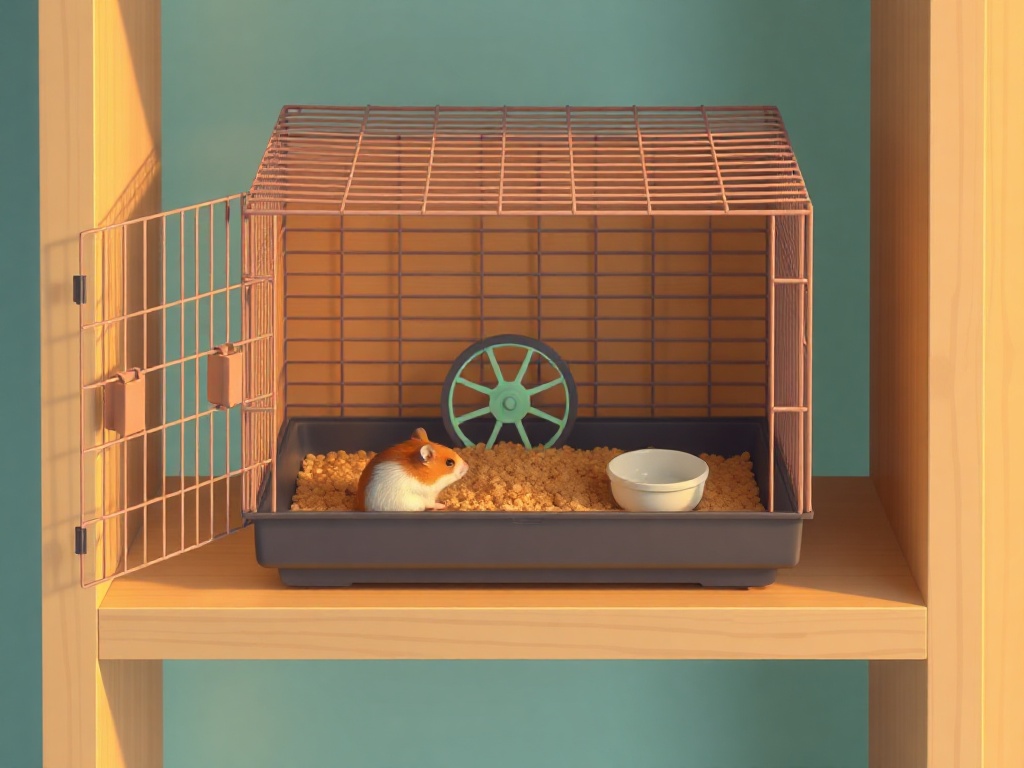
The hamster is lying in its cage, and in twenty minutes your child will be home from school. This is the moment when most adults reach for a softer word. "He went to sleep." "He went to live in the countryside." "He's gone." And that's exactly where the problem begins — one that ends up lasting for months.
Between the ages of seven and nine, a child has already grasped three things about death: that it's final, that it happens to every living creature, and that it has a cause. In other words, they're ready for the truth. What they're not ready to handle is the feeling that something frightening is happening in the house and no one will tell them what. Silence doesn't protect — it leaves a gap that a child's imagination fills with things far worse than the truth.

The exact words to use in the first five minutes
Tell them sitting down, at eye level, with no TV on and no phone in hand. Three sentences are enough: what happened, why it happened, what happens next. For example: "Buster died this morning. He was twelve years old and his heart stopped working. We're going to bury him together in the garden this afternoon, if you'd like to come." Then stop and wait. Your child will ask the question that's really on their mind — and it's rarely the one you expect.
Don't be alarmed if the first reaction is "Will I get a new dog?" or if they simply go off to play. That's not coldness. At this age, grief comes in waves — five minutes of crying, then half an hour of ordinary play, then tears again in the evening when it's feeding time and the bowl sits empty.
Why "he went to sleep" and "he's gone" backfire
- "He went to sleep" — the child starts to fear falling asleep themselves, or fears Grandma falling asleep.
- "He's gone" / "we lost him" — the child sets off looking for him, asks when he's coming back, and waits by the door for months.
- "He went to live in the countryside with a family" — when the truth eventually comes out (and it usually does, often from a cousin), the child is left feeling you lied to them about something huge. Next time, they won't come to you.
- "Don't be sad, he was just a guinea pig" — the child learns that their grief is inconvenient and learns to hide it.
The word "died" sounds harsh to us as adults. To a seven-year-old, it's simply accurate. They've heard it in stories, in cartoons, in conversations at the playground. What unsettles them is the tone, not the word itself.
Answering "was it my fault?"
Many children carry a secret sense of guilt: they forgot to top up the water, they pulled the cat's tail a week ago, they got angry once and said "I hate you." If they don't ask, say it yourself, calmly and just once: "I want you to know that nothing you did or said caused this. The cat was sick, and the illness was stronger." If there was a real cause — say, the cat slipped out through an open door — don't burden the child with blame, but don't invent another story either. It's enough to say: "It was an accident. Even grown-ups sometimes don't notice things in time."
Buster's Box
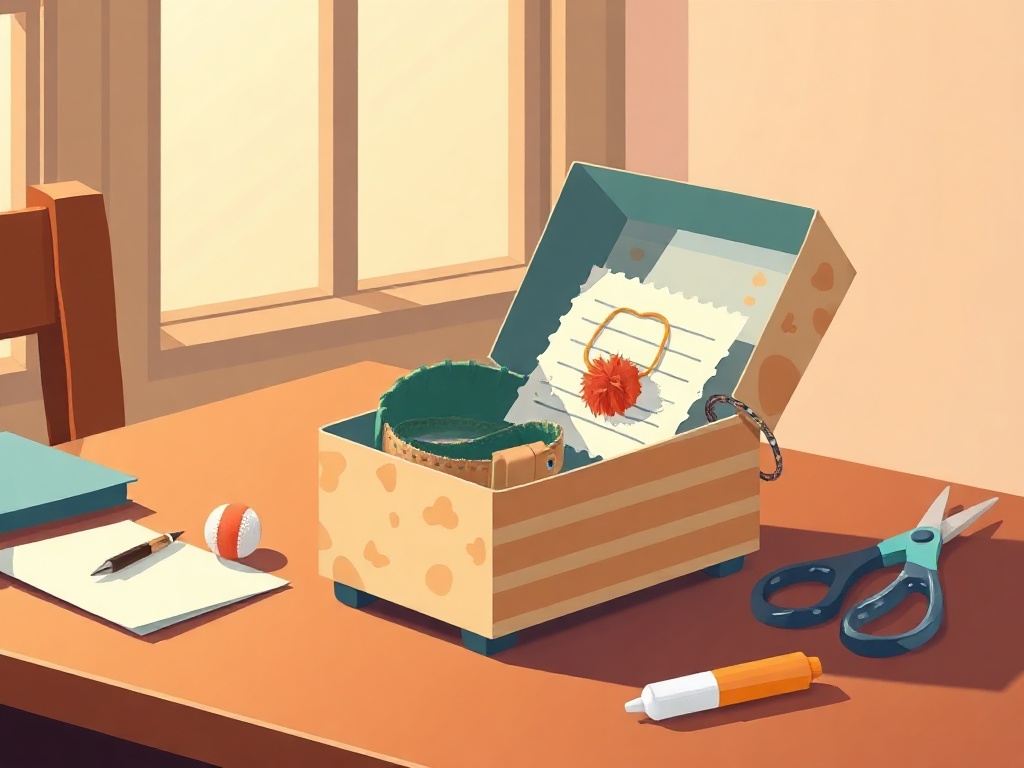
You'll need a shoebox, glue, child-safe scissors, and whatever's left of the animal — the collar, a favourite toy, a photo, even a tuft of fur. Set aside about 40 minutes on an afternoon when no one's in a rush. Suitable for children aged 7 to 9, with an adult by their side the whole time. The child arranges the items and says one sentence about each — you write it on a slip of paper and tuck it inside: "He used to chase this ball down the hallway and bump into the cupboard." The box goes somewhere within reach, not up in the attic. Consider it a success if the child decides on their own where to keep it and comes up with at least three specific memories, rather than general phrases like "he was good."
A Letter That Won't Be Sent
One sheet of paper, a pencil or felt-tip pens, fifteen minutes before bedtime. For children aged 7 to 9; for those who don't yet write quickly, the child dictates and you write it down word for word, without correcting their phrasing. The title is ready-made: "Dear Buster, I want to tell you three things." Usually one thank-you, one sorry, and one promise come out of it. The page gets folded and tucked into the box or under the pillow for the night. Count it a success if the child finishes all three and then falls asleep without returning to the subject — that means the sadness has found a way out instead of circling round and round in their head.
The common mistake: buying a new pet the same day
The temptation is strong, because the tears stop right away. But the child quietly draws a conclusion: living creatures are replaceable, and sadness can be solved with a purchase. Two months later, when the new kitten breaks a vase and tension fills the house, that very child may ask whether they, too, could be replaced. Wait at least a few weeks, and let the decision come as its own separate conversation, not a plaster slapped over the wound.
The other common mistake is the opposite extreme — clearing everything away within the hour while the child is at school. The bowls, the lead, the photos. The child comes home to a house with no trace that the animal ever existed. Leave at least one object, and let the child decide when it's time to put it away.
A child doesn't ask "why did he die" to get a biology lesson. They ask to check whether the subject is allowed with you.
When the grief goes on too long
Bouts of crying in the first two or three weeks are to be expected. Take note if, after a month, your child is still refusing food, waking up every single night, has stopped going to their usual activities, or keeps asking whether you're going to die too. At that point, talk to their teacher and their paediatrician — not because anything is "wrong," but because sometimes behind the grief for a hamster lies another fear the child can't yet put into words on their own.
And one more thing that's rarely said: your child is watching how you grieve. If they see you cry, don't apologise for it. "I'm sad because I loved him" is the shortest lesson in feelings you can ever give them, and it's worth more than any explanation.