
My Child Is Scared of Dogs on the Street: A Step-by-Step Plan (Ages 5-7)
A practical plan for parents of 5- to 7-year-olds who freeze up or burst into tears at the sight of a dog outside. No forcing it — just concrete phrases, distances, and two exercises to practice at home.
A dog on a lead appears on the pavement. Your child grips your hand, ducks behind your leg, and starts pulling backward. The owner smiles and says, "Don't worry, he's friendly." And right then, all you want is one thing — for your child to stop crying so you can get to school.
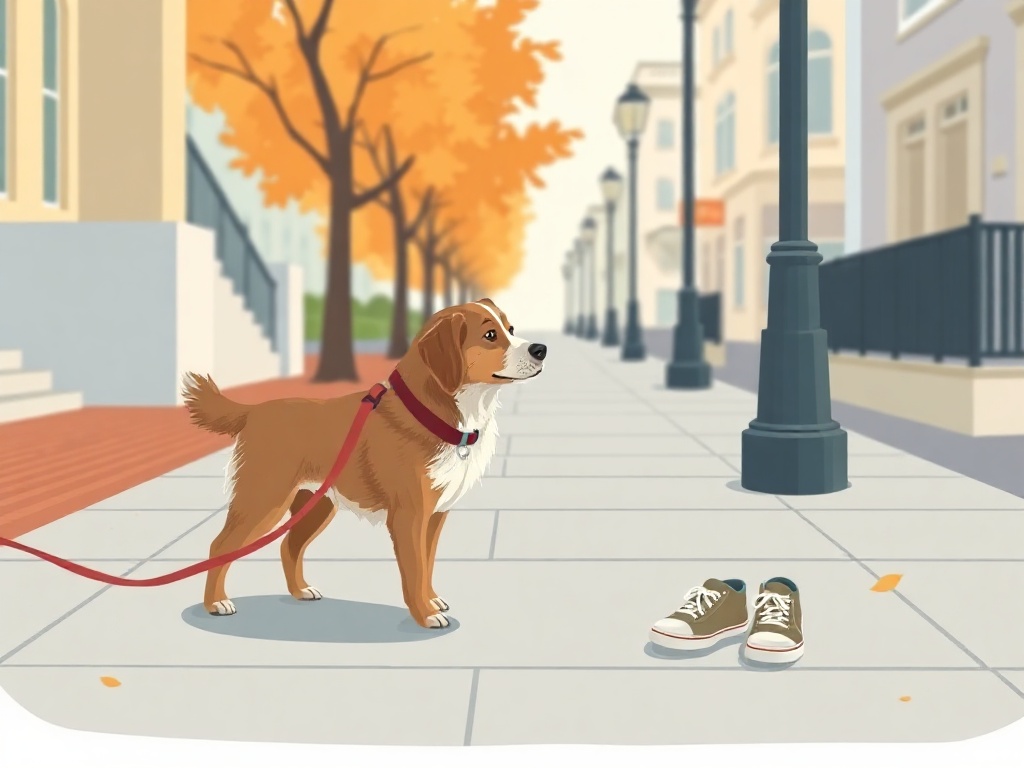
This is exactly where most parents do the opposite of what actually helps. We nudge the little hand toward the dog so they can "see there's nothing to be scared of." The result is usually an even stronger fear next time, because the child has learned that near a dog, someone else makes the decisions for them.
Why "pet him, look how friendly he is" doesn't work
Fear in 5- to 7-year-olds isn't an opinion you can talk them out of. The body reacts first — the heart races, the legs go stiff, the voice disappears. If we force the distance to close at that moment, the child lives out exactly the scenario they're afraid of: the dog is close and they can't get away. The brain doesn't file away "the dog was friendly" — it files away "I couldn't escape."
The opposite approach doesn't work either. If we cross the street and go around every single time, the child gets instant relief — and that very relief is what feeds the fear. There's one middle path: the child controls the distance themselves, and we're the steady back they can lean on.
The street plan: four moves to learn in a week
- Stop in place instead of running. Step to the side of the pavement, with your child on the side furthest from the dog. Say calmly: "We're stopping here. I'm right beside you."
- The child counts the distance themselves. Agree beforehand on a measure they understand — "three paving slabs" or "about one car's length." If the dog is further away than that, you stay put. If it's closer, you both step back two paces. The decision is theirs.
- Hands down, quiet voice. Teach them not to shriek or wave their arms — not because "dogs don't like that," but because a calm body gives them back a sense of control. Practise the phrase: "My hands are down, like a doll's."
- One sentence to the owner. The child (or you, if they're not ready yet) says: "Could you hold your dog while we walk past?" Almost every owner will shorten the lead. The child sees with their own eyes that their words change the situation.
The goal of the first two weeks isn't for the child to pet a dog. The goal is for them to walk past a dog without crying — and to decide for themselves how close is close enough.
Exercises for home, before the street
The Distance Ladder
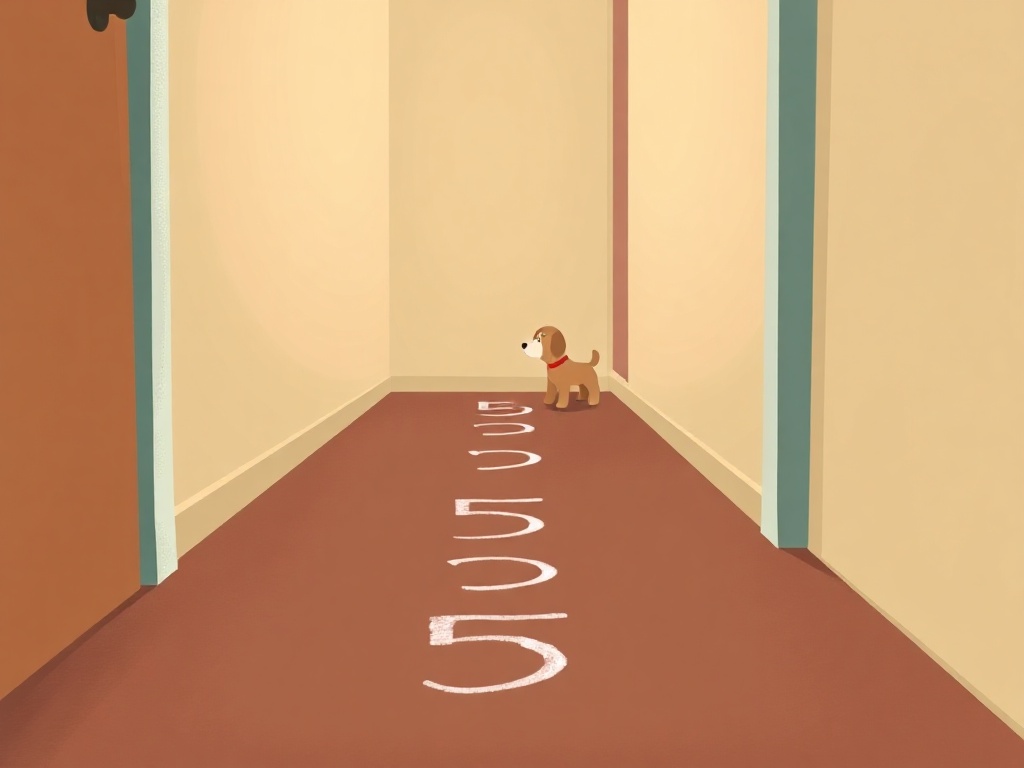
All you need is a stuffed or plastic dog, chalk or masking tape for the floor, and a sheet of paper. It takes about 15 minutes and works well for ages 5 to 7. Place the toy at one end of the hallway and stick down five strips of tape on the floor — step 1 is furthest away, step 5 is right next to the dog. The child stands on step 1 and decides on their own when to move to the next one. You don't push — you just note it: "Today you got to step three." On the paper, draw a ladder and colour in the step they reached. If the child wants to go back, go back without comment. The exercise is complete once the child moves forward one step on their own and says out loud how far they've got.
The Conversation with the Owner
Role-Play: "Could You Hold Him, Please?"
You'll need a belt or scarf to stand in for a lead, a stuffed toy, and a second adult or older child. The game takes 10 minutes and works well with 5- to 7-year-olds. One person holds the toy on the "lead" and plays the passer-by. The child practises three sentences in order: "Could you hold your dog, please?", "I'll walk past on this side, thank you" and "I don't want to pet him today." Then swap roles — the child becomes the owner while you play the frightened one and ask them. Laughter here is a good sign — it loosens the body up. Count the exercise a success once the child says at least one of the sentences clearly, without being prompted.
The most common mistake: promising something that isn't up to us
"He won't touch you" sounds reassuring, but it's the fastest way to lose your child's trust. The dog is a living creature two metres away — it could turn, bark, lunge on the lead. The moment that happens, the child learns that your words can't be relied on, and next time they'll cling to you even harder.
It's more honest — and more useful — to say: "I don't know what the dog will do. I do know what we'll do — we'll stay right here and wait for it to pass." The first part acknowledges reality; the second gives a plan. Kids this age are settled by a plan, not by a promise.
A second, quieter mistake: talking about how scared the child is in front of them. "She's terrified, she can't even walk past a puppy." Said in front of grandparents, neighbours and dog owners, this turns into an identity. The child starts thinking of themselves as "the kid who's scared of dogs." If you need to explain something to a stranger, two words are enough: "We're learning to stay calm."
How you know you're making progress
- Your child no longer switches to the other pavement automatically — they look first, then decide.
- The crying is shorter — instead of five minutes of tears, two sniffles and you carry on.
- They ask on their own: "Is that dog on a lead?" That's a good sign — it means they're thinking, not just reacting.
- They tell you at home what they did: "I stopped, my hands were down, and we walked past."
- They ask for distance themselves, without you having to remind them.
One clarification that will save you months of stress: not every child needs to get to the point of petting a dog. Plenty of perfectly calm adults never touch dogs that aren't theirs, and they're doing just fine. Success here is measured by whether your child can walk down the street without fear running their day.
If the fear started after a bite or a bad scare
When there's a specific event behind it — a dog jumped up, barked up close, or bit — the ladder climbs much more slowly, and sometimes it doesn't move at all. If, after two months of working on it, your child still refuses to go outside, wakes up at night, or avoids places they used to enjoy, see a child psychologist. That's not the plan failing — it's simply a different kind of help.