
Finding a Baby Animal in Spring: Why Your Child Shouldn't Bring It Home
Spring brings out hedgehogs, kittens, and baby birds that have fallen from the nest. How to teach your child (age 7–10) to help without picking the animal up — and how to tell real trouble apart from an ordinary day in a wild animal's life.
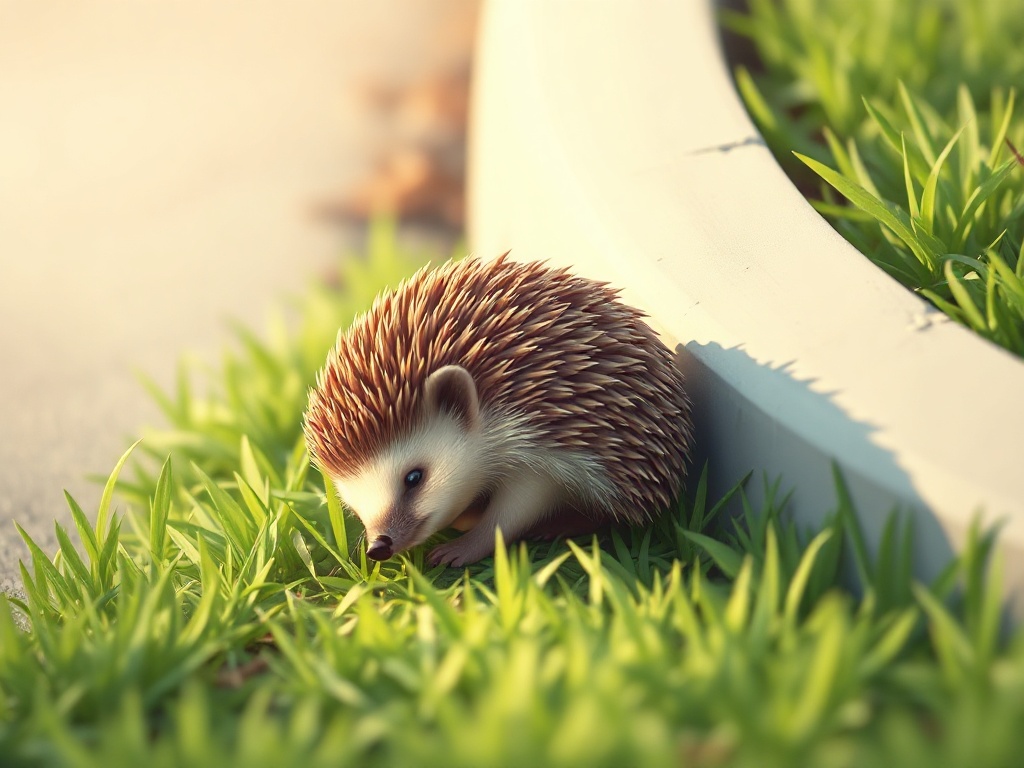
Oliver comes home from football practice and spots a hedgehog by the front door — about the size of a fist, curled into a ball between the grass and the kerb. No mother in sight. His first thought is the one every child has: "It's going to die here. I'll take it home." He's already taken off his cap to pick it up. And it's in that exact second that it's decided whether the hedgehog gets a real chance — or spends the next three days in a shoebox while the family rings round trying to find someone to take it.
Why "I brought it home to save it" almost always works against the animal
Adults tell children two opposite things: "don't touch stray animals" and "be kind to animals." The child is left to work out which one applies when — and usually picks the warmer option, which means picking it up. The trouble is, the baby animal that looks abandoned usually isn't. Hedgehog and cat mothers leave their young alone for hours while they search for food, then find their way back by scent to that exact spot. If a child picks up the baby and moves it two doorways down, the mother comes back, finds nothing, and leaves. Only then is there truly an orphan — but nature didn't make it one.
There's a second side to this too. A wild animal indoors is under constant stress: unfamiliar smells, light, voices, hands. Even if it doesn't show on the outside, this wears it out more than one cool night in the garden would. So the rule worth planting in a child's head is short: watch, call an adult, don't pick it up.

What an animal that genuinely needs help looks like
The difference isn't about how sorry we feel — it's a few things you can spot from a distance. Explain them to your child in words they can repeat:
- There's a visible wound, blood, or a leg or wing hanging at an unnatural angle — that's a case for someone who knows what they're doing, and right away.
- It's lying on its side, limp, eyes open, and doesn't react when you come within two metres — not the same as a hedgehog curled protectively into a ball.
- A hedgehog wandering about in broad daylight, going round in circles, or stumbling — hedgehogs are nocturnal, so being out in daylight is a sign something's wrong.
- A featherless or fluff-covered chick that's fallen from the nest — it genuinely shouldn't be out of the nest yet. If it has feathers and is hopping about, it's likely a fledgling learning to fly, with its parents nearby feeding it.
- A kitten with its eyes still closed, crying non-stop for over an hour with not a single cat turning up at the spot.
Everything else — quiet, uninjured, tucked away somewhere sheltered — is most likely waiting for its mother. And the best help you can give is to walk away and not hover over it, because a person lingering nearby is exactly what keeps the mother from coming back.
The three sentences that let a child handle it alone
The plan needs to be simple enough to work even when a child is excited. Three steps, in this order. First — stop and take three big steps back, so you don't scoop the animal up out of instinct. Second — look at what you see and say it out loud, as if describing it over the phone: "There's a hedgehog by the bins near the side door, it's curled up, no blood." Third — call the nearest adult. Not just any passer-by, but someone from a list you've agreed on beforehand: you, the neighbour from the first floor, the school caretaker, the teacher.
It's worth practising the sentences your child can use to stop another child too. "Don't touch it, its mum's coming back." "I've called my dad, he's on his way." "Let's just watch from here so it doesn't get scared." Children aged 7–10 rarely stand up to a friend with a plain "you shouldn't" — but a ready-made sentence, they can manage.
Watch Post: 10 Minutes, No Hands
All you need is a notebook, a pencil, and a watch or phone for timing — and, of course, an actual baby animal you've found, or, failing that, a neighbourhood cat that's staying put in one spot. Set aside 10 minutes and stand at least five metres away, without moving closer. Your child keeps a log: how many times the animal moves, whether another animal comes near it, whether any passer-by stops. Suited to ages 7–10; for younger children, the adult keeps time. The task is complete when your child can describe what they saw using at least three concrete details ("lifted its head twice," "nobody came," "wasn't limping") and never once tried to touch the animal. That description is exactly what a vet clinic will later want to hear over the phone.
The most common mistake: "at least let me give it some milk and water"
This is the move that looks the most caring and does the most harm. A saucer of cow's milk in front of a hedgehog or kitten isn't food — their stomachs aren't built for it, and instead of getting stronger, the animal gets sick. Bread doesn't help either. Worse still, the saucer turns the spot into a feeding station: the smell draws in other cats and dogs, and the baby animal is left exactly where it's now unsafe, instead of staying hidden.
The second most common mistake is the shoebox with a blanket and a lid. A child who has already put the animal in a box automatically slips into the role of owner — and from there, backing out is much harder, even once it turns out the mother was ten metres away the whole time. That's why "don't pick it up" works better as a rule than "pick it up, but carefully": it's clear-cut and leaves no room for negotiating.
And third: photos and voices. Five children leaning over one chick with their phones out are, from the bird's point of view, more or less a ring of giants. If you're planning to phone someone for advice, one photo taken from a distance is enough.
Pocket Card: "I Found an Animal"
Grab a sturdy sheet of paper or card about the size of a playing card, some coloured pencils, and the phone number of a vet clinic or wildlife rescue centre in your area, already saved in your phone. In about 20 minutes, your child makes a card with the three steps — stop, look, call an adult — and writes on the back the names of two adults they could reach within five minutes from home and from school. Works well for children aged 7 to 10; older kids can write the text themselves. Count it a success if, asked out of the blue three days later, "you find a kitten outside the building, what do you do?", your child answers with the three steps in the right order, without glancing at the card.
Watch from a distance, call an adult, don't pick it up. If the mother comes back and finds her baby in the same spot, then I've helped.
What stays with your child after this conversation
Not a rule against doing something, but a skill: to look closely and describe what they see. That's the difference between a child who brings home every animal they find and a child who, at ten years old, can already say down the phone, "a bird with feathers, hopping about, on the pavement, its parents are perched on the fence" — and because of that description, the animal stays exactly where it belongs. It's worth noting the same skill applies just as well when what's been found is someone else's dog on a lead, or simply a frightened cat under a parked car.