
First Grade After Summer: Which Number Skills Are Worth Checking in the Last Two Weeks of August
A short list of skills that really affect the start of first grade, plus two 15-minute at-home checks. No workbooks, no sitting at a desk.
A child at the table counts out loud: "One, two, three… fourteen, fifteen." Grandma applauds. Then you put seven buttons in front of him and ask how many there are — he starts over again, finger on each button, and on the second count says six. That gap is exactly what decides how September goes for him, not how high he can count.
The first-grade teacher won't ask the child to count to a hundred. She'll show him a picture of apples and tell him to add two more. If the quantity "seven" isn't solid in his head, every problem turns into slow finger-counting from scratch — the child isn't weak at math, his counting is just a recitation, not calculation.

Which skills are worth checking right now
The list below is deliberately short. If you cover only this over the next two weeks, your child will start prepared — the rest is the teacher's job.
- Recognises how many objects there are up to 5-6 at a glance, without counting one by one — sees three forks and says "three."
- Counts objects by touching each one exactly once, and the last word said is the answer. If you ask again "How many are there?", he repeats the number instead of counting again.
- Compares two piles and says which has more and by how much — not just "this one," but "this one, by two more."
- Breaks numbers up to 10 apart: knows that 5 is 4 and 1, but also 3 and 2. This is the foundation of all addition in first grade.
- Knows which number comes after 6 and which comes before 6, without counting from one.
- Recognises the digits 0 to 10 on paper and connects them to quantity — sees an 8 written down and puts out eight macaroni pieces.
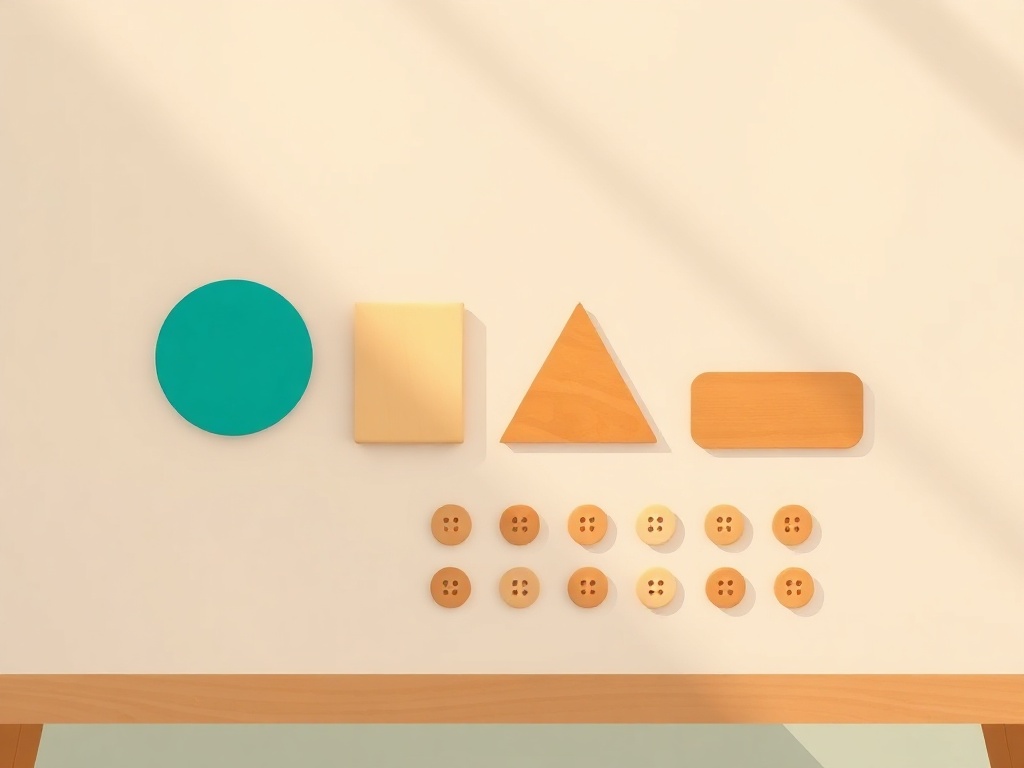
- Tells apart a circle, square, triangle and rectangle, and can find them around the room.
- Arranges three objects by size and uses the words "bigger," "smallest," "longer."
Notice what's missing: writing digits with a pencil, adding up to 20, word problems. Those will be taught in class, and there's no point rushing ahead in August.
Do the check at the kitchen table, not at a desk
The moment you pull out a notebook, the child realises he's being tested and starts guessing what you want to hear. His answers stop being reliable. So check while doing something else — slicing watermelon, sorting shoes, waiting in a queue.
The table with five plates
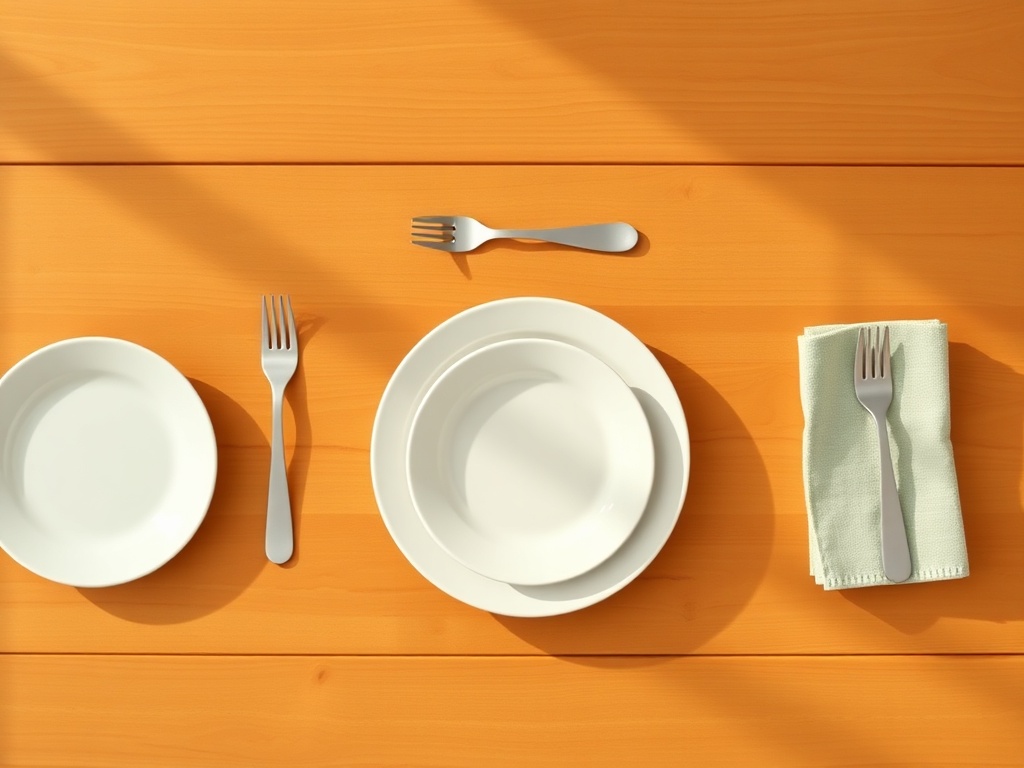
Before lunch, ask your child to set the table for everyone. You only need the plates, forks and napkins you'd be getting out anyway, and the check itself takes about 10 minutes. Suitable for children aged 6 and 7. Say: "There are four of us, and Auntie's coming tonight too. How many plates should we set out?" Then: "How many forks will you need if everyone gets one?" and "I got out three napkins, but we need five — how many more?" Listen not to the answer but to the method: does he count with a finger in the air, does he start over every time, does he know that four and one make five without counting? Count it a success if he names the right number for at least two of the three questions and at least once answers in his head, without counting the objects one by one.
Eight macaroni in two cupped hands
You'll need a handful of raw macaroni or dried beans and two small plates; set aside 15 minutes, best for a child aged 6-7. Count eight macaroni together and split them any way you like between the two plates — say, 5 and 3. Say: "Five here, three here, eight altogether." Then cover one plate with your hand and ask: "There are three here. How many are hiding under my hand?" Change the split: 6 and 2, 4 and 4, 7 and 1. If it's too hard, drop down to five macaroni. Your child has got it when, for a number up to 8, he guesses correctly at least three times out of five without you lifting your hand — that means he's holding the quantity in his head, not just in front of his eyes.
The most common mistake: drilling counting instead of understanding
A parent hears that the child can count to 50 and decides to push him to 100. Two weeks later the child counts to 100 — and still can't say how many spoons there are, six of them, without touching them. The reason is simple: counting to 100 is a verbal sequence, like a song. The brain remembers it as a string of words, not as quantities. So it grows without anything else changing.
A second version of the same mistake: worksheets with twenty exercises. The child solves them by counting on his fingers twenty times over, his skills stay exactly the same, only now he's bored of maths. Five questions a day, asked on the go, are more useful than a whole page at a desk.
And third — correcting on the spot. The child says "six" instead of "seven," you say "no, seven," and he learns that maths is a field where he gets things wrong. Instead say: "Let's check together," and count out loud, moving the objects aside one by one. The difference is that the child sees where the right answer actually comes from.
Numbers are everywhere — until you sit down to teach them
At the shop, give your child €2 and tell him to pick something that costs less. Let him compare the two price tags and say which number is smaller. At the bus stop, count how many people are waiting, then how many are left after three get on. At home, ask how many steps there are up to the front door — and the next day, whether it's the same number as yesterday.
If your child can tell you how many cups to get out for guests before he's counted them, he has number sense. That's the skill that later carries addition.
Two weeks are enough for all of this, at fifteen minutes a day, without a single worksheet. Note down which of the eight skills are shaky — not to cram them in frantically, but so you know what to tell the teacher in September. A sentence like "counts well, but gets muddled breaking numbers up to 10 apart" is far more useful to her than "he practised over the summer."