
5 Quiet End-of-Class Games for the Last 10 Minutes (Ages 8-10)
Quick end-of-class games that need no prep and no props, bringing the class's attention back at the end of the lesson. With exact rules, timing, and a clear sign of when the game has done its job.
The clock reads 12:35, ten minutes remain until the bell, and a class of nine-year-olds has already checked out. One kid turns around, two are whispering, someone asks for the third time if they can go to the bathroom. The teacher starts a new task – and abandons it two minutes later, because nobody's writing.
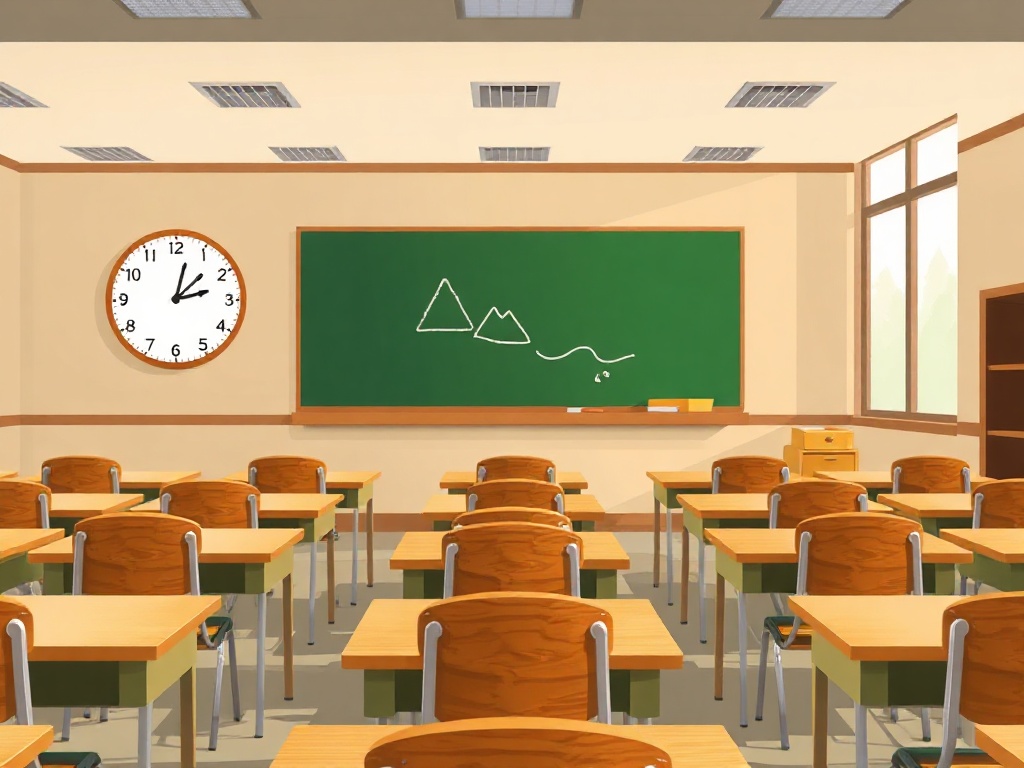
The usual advice in a moment like this is "give them something fun". The trouble is that fun often makes things worse: the game gets rowdy, the kids get loud, the bell catches them mid-game, and the next teacher walks into chaos. So this isn't just about games – it's about end-of-class games with a built-in brake.

Why "something fun" doesn't work as an end-of-class game
End-of-class games have three conditions that rarely get said out loud. First – the game must be explainable in under a minute, or it eats up the very time we're trying to save. Second – it needs a natural ending, not one that finishes with "okay, that's enough". Third – it must build a limit on noise into the rules themselves, not add one after things get loud.
The five end-of-class games below were chosen with exactly these three conditions in mind. All are for children between 8 and 10 – for younger kids the rules should be a notch simpler, while for older ten- and eleven-year-olds you'll need a bit of competition to hook them.
Quiet end-of-class game that uses silence itself as the rule
Silent Count to Twenty
No materials needed, just the class seated at their desks. Four to six minutes, ages 8-10. There's one rule: the class must count out loud to twenty, but no one is assigned a turn and there's no counting by seats. If two people say the same number at the same time, start over from one. No pointing, no arranging things like "I'll go fifth" – if anyone tries to arrange it, you also start over. The first couple of attempts usually stall around 4 or 5 and the kids laugh; by the third try they start actually listening to each other. The game has done its job once the class reaches at least twelve without anyone coordinating out loud – by that point the room has gone quiet on its own, without the teacher saying "quiet" even once.
If there are three minutes left until the bell and the class has reached seventeen, stop there. It's better for them to leave thinking "tomorrow we'll reach twenty" than to drag the game out.
End-of-class game that reviews the lesson without the kids noticing
Three Words from Today
All you need is a board and chalk or a marker, plus the children's notebooks. Give it six to eight minutes; eight- to ten-year-olds handle it comfortably. The teacher writes three words from the lesson that just ended on the board – for example "mountain", "river", "spring" after a science lesson. Each child writes one sentence in their notebook that contains all three words. Then they read one sentence aloud, but only those who raise their hand – no one is called on by force. The sentences turn funny on their own: "The river starts at the spring and flows past the mountain, where my grandpa grazes goats." If someone has written a sentence with the words in an awkward order, don't correct it in front of everyone – just move on to the next one. The task is complete once at least seven children have written a sentence with all three words and at least three have read theirs aloud.
Three shorter end-of-class games for days when only five minutes are left
- Who am I in three sentences. One child picks an object in the room – an eraser, a globe, a key from the cupboard – and gives three sentences about it without naming it: "I'm small. People look for me every day. Sometimes I disappear under the desk." The others get three guesses. If they don't get it, the child reveals the answer and another child takes a turn. Four minutes is usually enough.
- Backwards order. The teacher says five words – "chair, window, bag, water, bell" – and the class repeats them silently, then one student lists them in reverse order. The twist that keeps everyone listening: the child who just listed them chooses who goes next, and the next round the teacher swaps one word for a new one without saying which. For 8-year-olds start with four words; for 10-year-olds you can go up to six. Three to four minutes.
- The number you don't say. Count out loud from 1 upward, but any number that's a multiple of three is replaced not by a clap but by a beat of silence – the child whose turn it is mouths the number without a sound, and the class has to hear the gap. Whoever slips up sits down and just watches. If the class reaches 30 with no more than three mistakes, the game is a success. Budget five minutes for it – it works great after a math lesson.
The most common mistake with end-of-class games: starting without announcing the end
The usual scenario: the teacher says "let's play a game", the kids get excited, and then has to cut them off mid-game because the bell rang. The result is twofold – the class leaves annoyed, and next time there's already distrust: "you'll stop it again right when it gets good". That's why the ending gets announced before the game starts, not in the middle of it. One sentence is enough: "We play through the third round, then we put our notebooks away."
The second common mistake is using the game as a reward – "if you behave, we'll play". That turns the game into a bargaining chip, and on the day the class has been loud, the teacher is forced to take it away. And that's exactly the day it's needed most. It's smarter to make end-of-class games part of the lesson's structure, not a bribe.
If you don't know how the game will end, don't start it.
How to bring back class attention once things have already gotten loud
If the room has already gotten out of hand, a quiet game won't take off – the kids simply won't hear it. In that moment, the opposite move works: thirty seconds of deliberate movement. "Everyone stand up. Reach up three times. Sit down." Only then start the game. Skipping this step is why most quiet end-of-class games fail – not because of the rules, but because of when they're launched.
One more small but important point: the game requires buying nothing. No cards, no $15 kits, no pre-printed worksheets. A board, a notebook, and a voice – that's the entire prop list. If a game asks for more than that, it isn't meant for the last ten minutes.
What's left after the bell
Five end-of-class games, each with an exact time and a clear moment where it stops. Note that in every one of them the stop is a marker inside the game – twelve counted, three sentences read, 30 reached – not the clock on the wall; that's what lets you finish early without it feeling like the game was taken away. The rest you'll pick up the second time around.