
First-Grader Rips Pages When a Letter Comes Out Wrong: Games That Teach Kids to Fix a Mistake
When a child cries and tears up the notebook over one crooked letter, comfort alone doesn't cut it. Here are three games for kids aged 6–7 that practice exactly what to do in the second after a mistake happens.
Tuesday evening, the kitchen table. Emma is writing a whole line of lowercase "a"s. On the fourth one, the tail comes out crooked. A second of silence, then the sound of ripping paper and crying: "I ruined everything!" Her mom says gently, "It's okay, sweetie." The crying gets even louder.
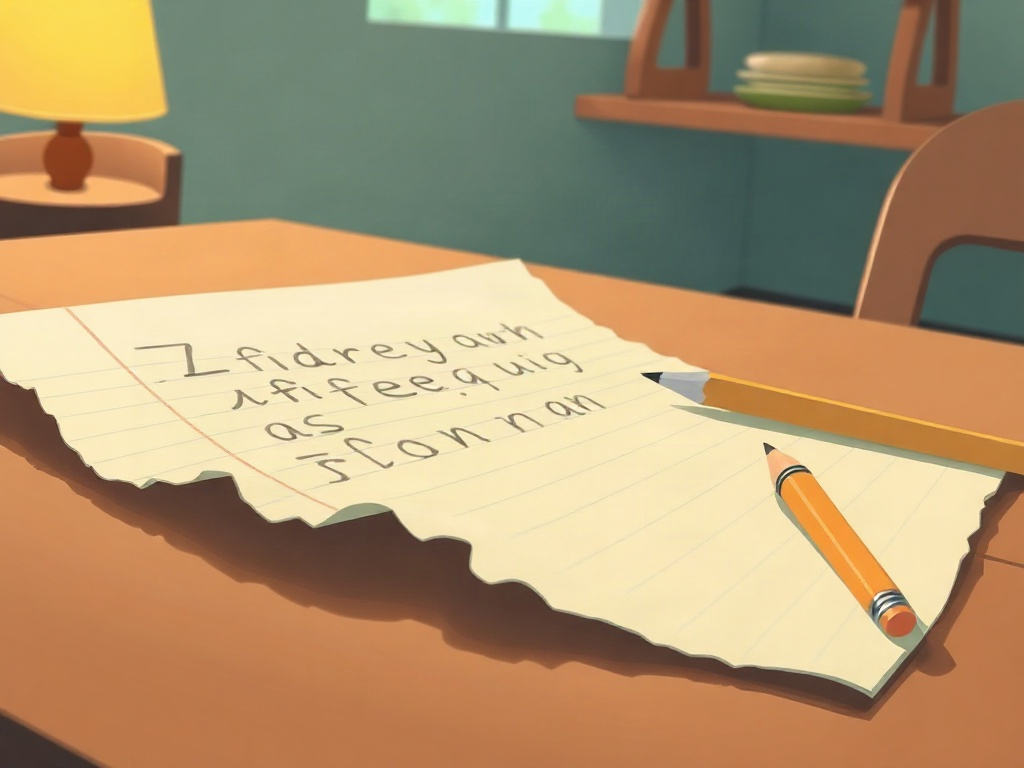
This article is for kids aged 6–7 in the first weeks of first grade. At this stage the notebook is still new, the letters are unfamiliar, and a mistake feels like failure. The usual advice is to reassure the child that it's not a big deal to make a mistake. But they've already heard that. Comfort isn't what's missing. What's missing is a clear sequence of what to do when the pencil strays off the line. That sequence can't just be explained — it has to be practiced. And it's easiest to practice through play, before there's any real homework on the line.

Why one crooked letter can feel like a ruined page
In preschool, a drawing could turn out to be anything and it was still lovely. In first grade, suddenly there's a model letter at the start of the line, lines you have to stay inside, and a blank white page. The child sees the gap between their letter and the model right away — sometimes more clearly than we do. But they don't know how to fix a mistake on that same page. So they reach for the only "repair" they know: get rid of the page. Ripping it up isn't stubbornness. The child is simply trying to make things right.
After reading this, you'll have three short games, one sentence that helps a child pause, and a question to ask the teacher that takes five minutes.
Games where making a mistake is part of the rules
Teacher with the Fix-It Pencil
You'll need a sheet of paper, a regular pencil for you, and a colored pencil for the child. Let the colored pencil be the "fix-it" pencil, used only for corrections. The game takes about 10 minutes and suits kids aged 6–7. Write a line of letters the child has already learned, and deliberately get two or three wrong: an open "o," a "b" with its loop facing the wrong way, an "i" missing its dot. The child is the teacher. When they spot a mistake, they put a small dot above it and write the correct letter beside it, without erasing or crossing out the whole line. When they catch you, always answer with the same calm sentence: "Oops. I'll fix it." Then fix it. After two or three rounds, switch roles: the child writes, and you check using the same sentence. Success looks like the child correcting at least one of their own mistakes with a dot and a new letter beside it, without reaching to tear or erase.
Letters in Salt, Three Tries
You'll need a shallow tray, a cup of salt or flour, and the child's finger. It takes 5–7 minutes and suits kids aged 6–7. The child writes a letter with their finger in the salt. If they don't like it, they smooth it over with their palm, say out loud "wiped it, try again," and have another go. Here, erasing is so easy it can't turn into a drama. Next, they write the same letter three times in a row and circle the best one with their finger. It doesn't matter if all three are good — what matters is picking one. The next day, do the same on scrap paper with a pencil: three tries, one circle. Success looks like the child circling the best of the three letters on their own and leaving the other two alone, without furiously scribbling them out.
Traffic Light by the Notebook
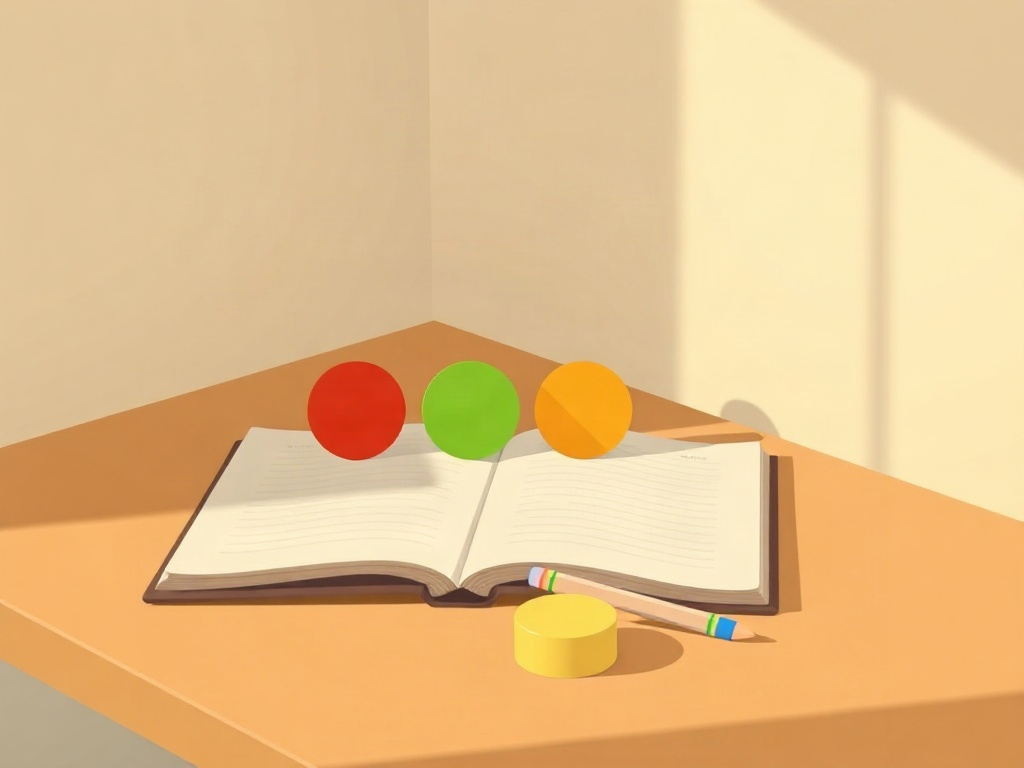
Cut three circles out of cardboard: red, yellow, and green. Three bottle caps work just as well. Practice it as a game for 10 minutes first, so that during actual homework it only takes a few seconds. Suits kids aged 6–7. Red: put the pencil down, hands flat on the table. Yellow: the child touches the circle, counts slowly to five, and says: "I got one letter wrong, not the whole page." Green: fix it the way you've agreed with the teacher. For practice, the child writes whatever they like on scrap paper while you occasionally call out "Mistake!" in a robot voice. The child cycles through the three colors. It's fine if it gets silly. Success looks like the child touching the red circle on their own when a real mistake happens in the notebook, before crying or grabbing the page — even if they're still upset.
"I got one letter wrong, not the whole page."
What to ask the teacher this week
Ask exactly how a mistake should be corrected in the notebook. One teacher wants the wrong letter circled and rewritten beside it, another allows an eraser, a third prefers a light line drawn through it. Whatever she says, practice with that exact same rule at home. If the child learns to add a dot at home but is told to circle mistakes in class, that's two rules — and in these first weeks, two rules just cause confusion. If you'd like, mention in one sentence that your child gets upset over mistakes and that you're practicing correction at home. That way she'll know what to expect too.
Common parenting mistakes and why they don't help
- "It's okay, it's not a big deal." To the child, in that exact moment, it is a big deal. That sentence tells them their feeling is wrong, so they cry louder to be heard. Something like this works better: "You're upset because you wanted it to look nice. Come on, let's use the red circle."
- Rewriting the whole page for them. The crying stops, but the child learns exactly the opposite of what you want: that one mistake ruins everything and you have to start over.
- Fixing it for them to get it over with faster. The evening goes more smoothly, but next time the child will wait for you again, because they never practiced fixing it themselves.
- A brand-new notebook after every rough evening. A notebook costs about 1–2 €, so it seems like no big deal. But the message it sends is that a mistake can only be solved with a fresh start.
- "Perfect!" for every flawless page. The more you praise being mistake-free, the higher the stakes get. Praise the correction instead: "I saw how you fixed that 'd' without tearing the page."
- Playing the game right after the tears. An upset child doesn't absorb anything new. Play during a calm moment — Saturday morning, say, or before dinner — not over the torn-up page.
What progress looks like in the first month
Don't expect the tears to vanish in a week. Watch for smaller shifts instead: the crying gets shorter, the child says the sentence about the letter and the page, the page gets crumpled instead of torn, and eventually even that stops. One practical trick: stick a sheet on the fridge and track not the tears but the corrections. For every letter fixed with the fix-it pencil or by the teacher's rule, the child gets a tally mark. By the end of September, you'll have something in front of you that the child can count for themselves.
If a few weeks from now Emma makes the same mistake on the same line again, she'll probably still let out a loud sigh. But this time, she'll reach for the red circle.