
The First Sleepover at a Friend's: How to Make It Go Smoothly (The Story of the Hedgehog and His Pillow)
A story about Spike the hedgehog, who brought his own pillow from home, plus two hands-on activities, a packed backpack checklist with prices, the mistakes parents make at goodbye, and exact phrases your child can use to ask for help in the night.
At quarter to eight, Spike stood at the door of Teddy's house with a backpack on his back, ready for his first sleepover. Inside: pajamas, a toothbrush, a flashlight, and a pillow poking out the top like a little white cloud. On the front path, Mom had asked him, "Are you sure about the pillow? Teddy has pillows, you know." Spike nodded very slowly. "This one smells like our sofa."
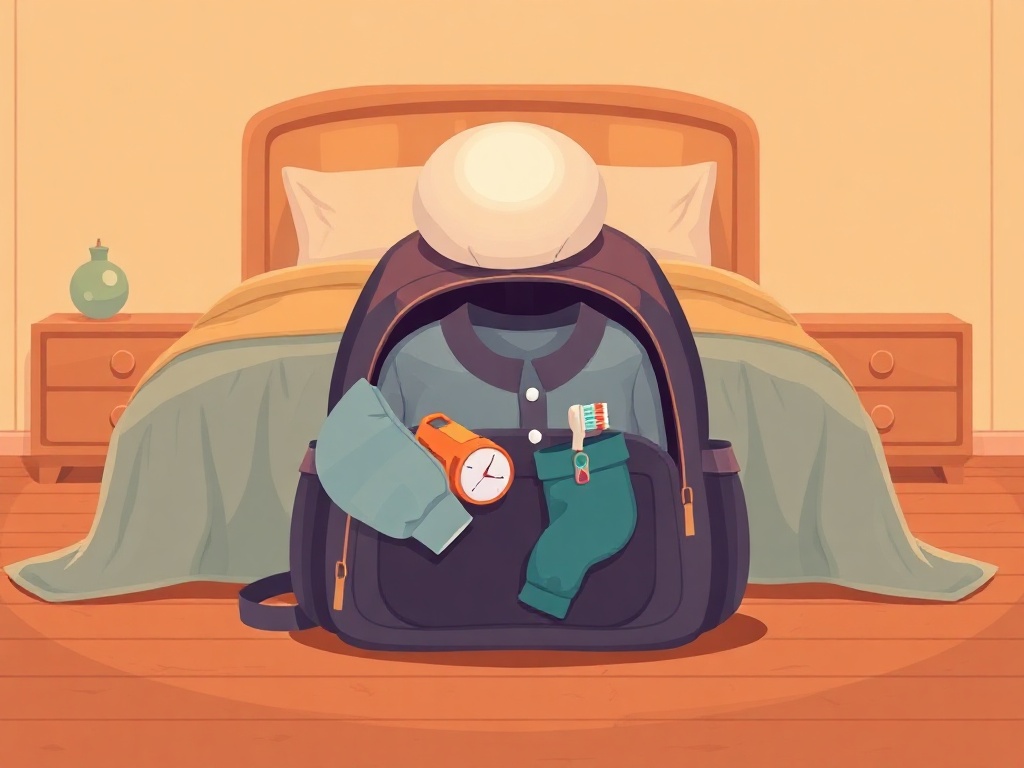
The first three hours were easy. They ate pancakes, built a blanket fort, and Teddy showed off his box of shiny pebbles. Then the light went out, and the room turned into somewhere else — somewhere unfamiliar. Spike lay on his back, listening to the fridge in the kitchen humming in a way that wasn't like the one at home. Then he pressed his cheek against his own pillow and silently repeated the sentence he'd practiced with Mom: "If I wake up and get scared, I'll tell Aunt Bear: Could I have a glass of water, please?" He never actually needed to say it. But just knowing it was enough to do the trick.
Why "Bring Your Favorite Toy" Isn't Enough for a First Sleepover
The advice everyone gives before a first sleepover is only half the advice. A stuffed animal or a pillow helps with falling asleep — the familiar smell, the familiar height under the head. But children don't wake up because they're missing a plush toy. They wake up at 2:30 a.m. in a dark hallway they don't recognize, with no idea which way to go. That's why the item from home needs to come paired with information: where the bathroom is, which door belongs to their friend's parents, whether the light switch is on the left or the right. And one small detail makes the item itself work harder — don't wash the pillowcase or the teddy the week before. It's the unwashed smell of home that does the calming, not the object.
Walk the house together before bedtime — literally, with the friend, like a game. Three doors, three stops, and at each one a single concrete question out loud: at the bathroom, "which side is the switch on, and does the door click shut or stay open?"; at the hosts' bedroom, "how many doors from ours — one or two?"; in the kitchen, "which cupboard has the glasses, and is the tap the loud kind?" It takes four minutes and saves a lot of trouble later in the night of a first sleepover.
Three Sentences Every Child Should Know Before a First Sleepover
Young children rarely say "I'm scared," least of all at a first sleepover. They stay quiet, lie awake, and wait for morning. That's why it helps to give them ready-made, short lines — ones that aren't embarrassing and sound perfectly normal even in front of a friend.
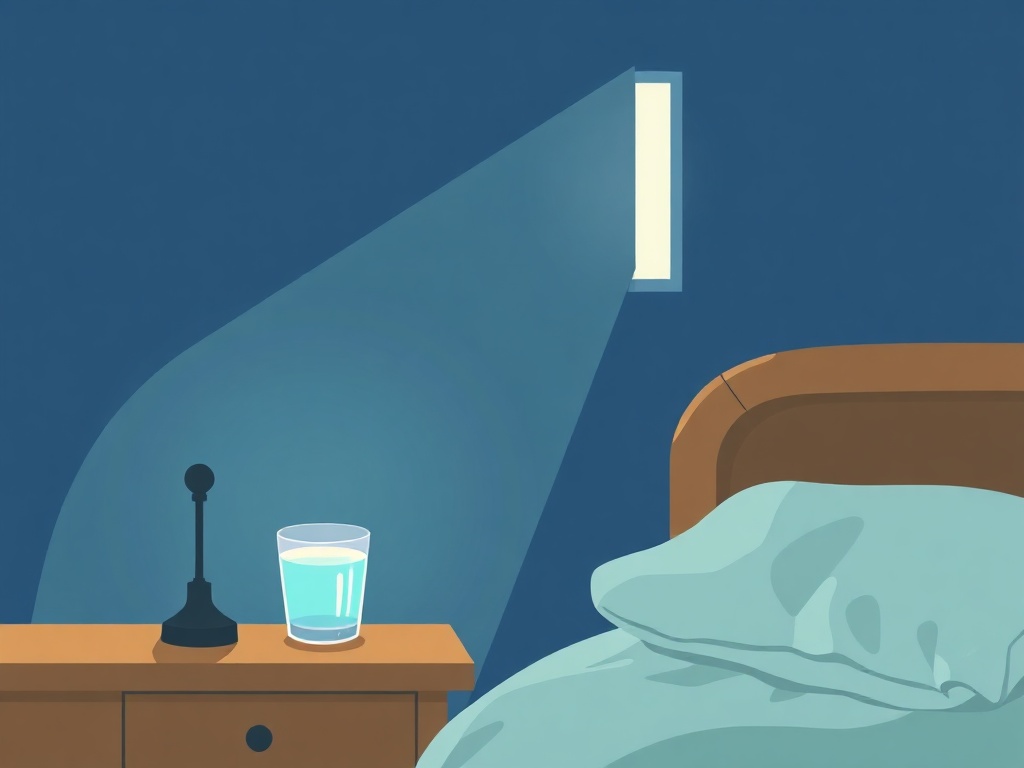
- "Could I have a glass of water, please?" — the all-purpose sentence. It leads straight to an adult, a lit lamp, and half a minute of company.
- "Can we leave the door open a crack?" — said before bedtime, not in the dark.
- "I'd like to call Mom for a minute." — the child should know this is always allowed and nobody will laugh.
If a child knows exactly what to say by heart, the fear doesn't disappear — but it stops being a trap.
Sleepover Dress Rehearsal at Home
Run a full dress rehearsal for the first sleepover two or three days ahead. All you need is the backpack, pajamas, toothbrush, and the item your child will bring — a pillow, a teddy bear, a scarf. It takes about 20 minutes before bedtime and works well for children ages 6 to 8. Let your child pack the backpack alone and say out loud what they're putting in; don't hand them anything — just count the items aloud together at the end. Then act out two scenes: "waking up in the middle of the night" and "not sleepy while everyone else is asleep." You'll know the rehearsal did its job when the backpack stops being a mystery: your child can name what's inside with the zip still closed, and the water sentence comes out on its own, without you mouthing the first word.
Map of the Unfamiliar House
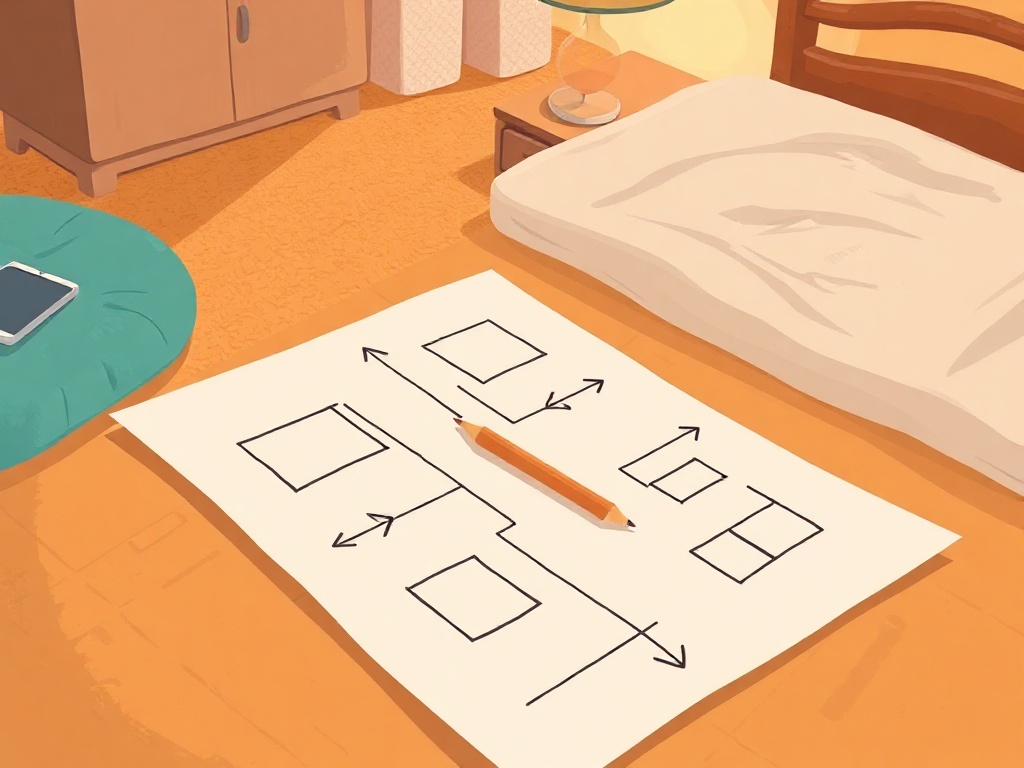
Do this on location, in the first few minutes after arriving. You'll need a sheet of paper and a pencil or marker, five to seven minutes, and it works for children ages 6 to 9. The two children draw a rough map together: where they'll sleep, where the bathroom is, where the hosts sleep, where the kitchen with the water is. It doesn't need to be neat — rectangles and arrows do the job. Leave the map on the floor by the bed, folded corner pointing toward the door. The real test comes at bedtime: if your child gets up and walks to the bathroom without asking anyone which way it is, the map has already done everything it needed to do.
The Most Common First Sleepover Mistake: "Call Me If Anything Happens"
It sounds caring, but it's a trap. That sentence puts the whole burden on the child to decide what counts as "something" — and a six-year-old can't make that call while half asleep. The result is a child lying awake, wondering whether a knot in their stomach is a big enough "something" to wake Aunt Bear over.
A better version is specific and time-stamped: "I'll call you at half past nine to say goodnight. After that, if you wake up, go ahead and wake Aunt Bear — she already knows, and she won't mind." Arrange this with the hosts in advance, in a quick two-minute chat, and make it concrete on their side too: tell them which side of the bed your child sleeps on at home, that a night light stays on until they're asleep, and that if your child asks for water twice in ten minutes it usually means something else. Another common mistake is promising "I'll come get you right away" with a wobbly chin — the child doesn't hear comfort, they hear that Mom is worried too, which must mean there's something to worry about.
If They Call You at Half Past Eleven on the First Sleepover
Don't start with questions. "Why," "what happened," "were you crying" — these make the child go looking for a reason and blow it out of proportion. Speak quietly, briefly, and a little boringly — a boring voice is a sleepy voice. "I'm here. Everything's fine. Lie back down, I'll stay on a little longer." Then suggest one concrete action: flip the pillow to the cool side, count out loud to twenty, or feel for the three pebbles in the pajama pocket.
If, after two tries, the crying continues — go pick them up. Coming home isn't a failure and it doesn't ruin anything; the second attempt is almost always easier, because now they know what the house looks like from the inside. Spike, by the way, made it all the way to morning of his first sleepover. At breakfast, he announced with a full mouth that Teddy's fridge hummed "more musically."
The First Sleepover Backpack: What Goes In and What It Costs
- Pajamas, clean underwear and socks for the morning — packed in a separate pouch so there's no fumbling around in the dark.
- Toothbrush and toothpaste. The same brand as at home, if possible.
- The sleep item: a pillow, a teddy bear, a scarf. One is enough.
- A small flashlight or a clip-on light — around $2–4 at any home goods shop. Not essential, but more useful than a nightlight, since the child decides on their own when to switch it on.
- A note with your phone number, written in large digits and tucked under the pillow.
One more word about the pillow: if your child insists on bringing it to the first sleepover, let them — even if it's bulky, even if it feels awkward in front of the hosts. It isn't a whim; it's an anchor: the same height, the same smell, the same sound when they turn over. Carrying a pillow is a lot easier than picking up a crying child at midnight.