
The "My Favorite Animal" Project: How to Help Your Child Without Doing It For Them
A practical plan for parents of children aged 7 to 9: how to turn the favorite-animal project into the child's own work, instead of another one of your evening chores.
It's half past eight in the evening. The page is still blank, your child is drawing the elephant's tail for the third time, and tomorrow the project is due. At this point almost every parent does the same thing: sits down, picks up the pencil, and says "okay, I'll write, you dictate." Twenty minutes later the project looks lovely, the sentences flow smoothly — and none of it is the child's own. The teacher spots it instantly, and the child learns something quite different from what was intended: that when things get hard, someone else will finish the job.
This piece is for children between 7 and 9 — kids who can already write a few sentences on their own but still lose their footing when they have to put together a whole page. For them, the project isn't a test of animal facts. It's their first real encounter with gathering information, organizing it, and presenting it. Those three skills are what matter, not how many facts they know about giraffes.
Why "I'll just tidy it up a bit" wrecks the whole project
The most common advice is: "help, but don't write it for your child." It sounds fine, except it doesn't actually tell you anything — the line falls exactly where no one draws it. Here it is in practice: anything that can be said as a question is your job. Anything written down as a sentence is theirs.
The difference is obvious at a glance. When a child says "a dolphin is a mammal because it breathes with lungs," that's their sentence — simple, sturdy, true. When the page reads "the dolphin is a highly intelligent marine mammal inhabiting warm ocean waters," everyone in the room knows who wrote it. The teacher isn't grading vocabulary. She's checking whether the child can explain their own text when asked in front of the class.
Split the project into four evenings instead of one
Panic sets in because everything happens at once. An eight-year-old can't choose a topic, find information, organize it, and lay it out in two hours. Break the task down like this:
- First evening, 20 minutes: choose the animal and three questions the child actually wants answered. Nothing more. Don't start writing yet.
- Second evening, 30 minutes: hunt for the answers — a children's encyclopedia, a library book, a nature documentary. The child jots down 3-4 words per question, not full sentences.
- Third evening, 30 minutes: turn the notes into sentences. This is where you stay quietest.
- Fourth evening, 30 minutes: drawing, title, laying out the page. This is the part kids love — save it for last as a reward.
If only two days are left before the deadline, merge the first and second evenings. But don't merge the writing with the layout — a child who's tired and has to both think and cut paper will burst into tears by the second scissor snip.
Three questions taped to the wall
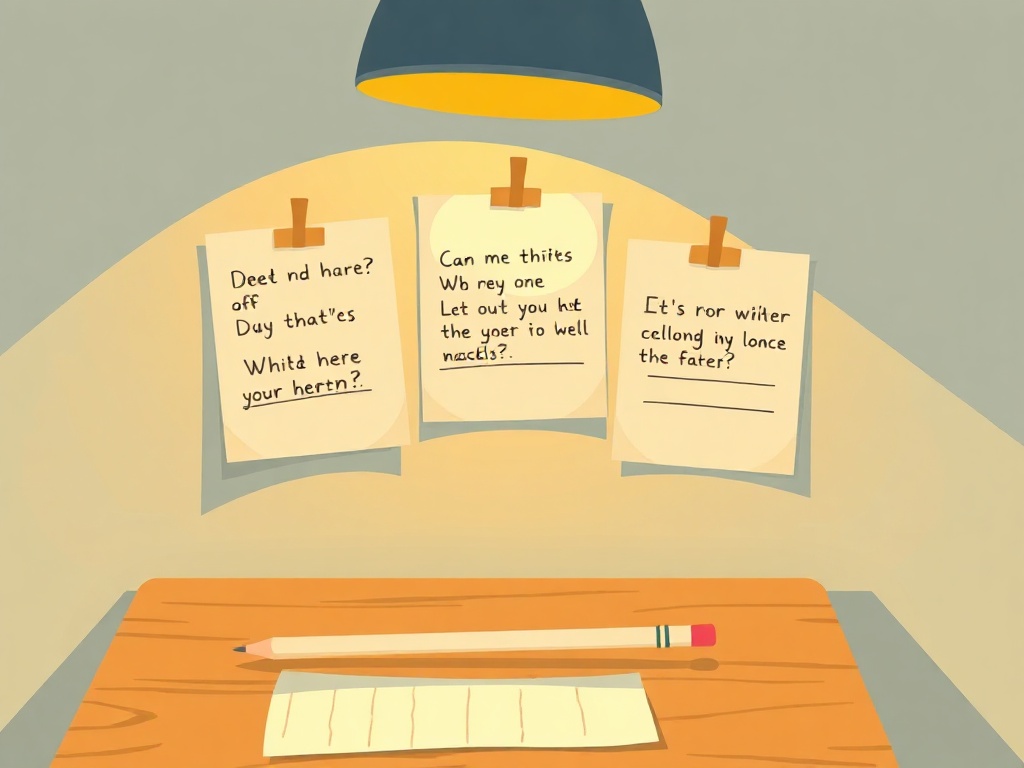
All you need is three slips of paper and a pencil, and it takes 20 minutes on the first evening. Great for ages 7-9. Ask your child to come up with three questions about the animal that genuinely interest them — not an automatic "what does it eat," but things like "why don't penguins freeze" or "how deep can a turtle dive." They write each one in big letters on its own slip and tape them above the desk. Every search from then on runs through those three slips. If your child asks a question and you catch yourself not knowing the answer either — that's a good sign. The task is done when the three questions are written in the child's own handwriting and they can read them aloud without looking, because they came up with them.
What exactly to say while your child is writing
This is where parents trip up most, because the silence feels heavy and every piece of advice sounds like dictation. Short, plain questions work best — the kind that don't hint at the answer:
- "How would you tell this to your little brother?" — the child instantly says a normal sentence out loud and then simply writes it down.
- "Do you know this, or did you just read it?" — teaches them to tell their own thoughts apart from copied text.
- "Which of the three slips does this sentence answer?" — brings them back to the structure without imposing it.
- "Read it out loud to me." — kids catch and fix half their mistakes just by hearing them.
- "That's enough for today." — yes, this counts as help too.
Your job is to hold the clock and ask the questions. The pencil stays in the child's hand — that's the whole boundary.
A common mistake: looking up the information for the child
It seems harmless. You open the page, find the panda facts, read them out loud, and the child writes them down. You save twenty minutes and everyone's happy. The trouble is you've just taken away the very part the project exists for — the searching. The child walks away with a few sentences about pandas and zero ability to find anything on their own.
Do it the other way round: you open the book or the page, but the child reads and decides what matters. If the text is difficult, read the paragraph aloud, close the book, and ask: "Which part of that is worth putting in the project?" If the child gets a fact wrong, don't correct it outright — send them back to the source: "Go check that line again."
A second common mistake: printing out a ready-made photo because the child's drawing "doesn't look like anything." It doesn't have to. The teacher sees hundreds of printouts and a handful of drawings — and it's the drawings she remembers.
Tell the story out loud before writing anything down
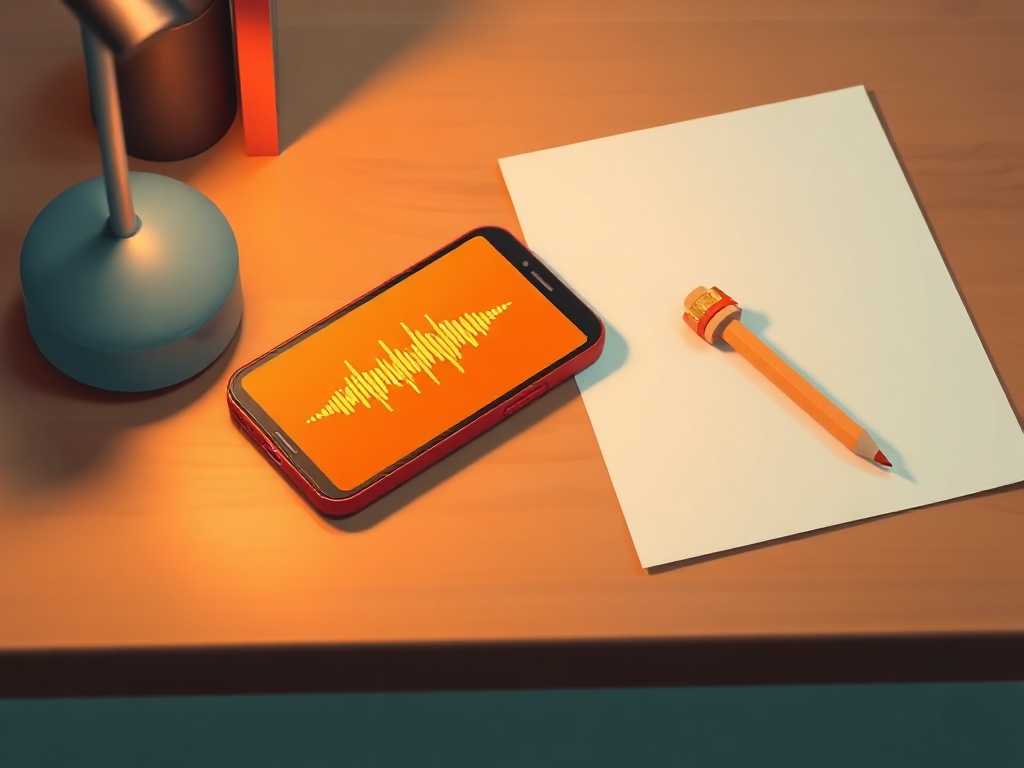
All you need is a phone with a voice recorder and five quiet minutes; the whole activity takes 15 minutes before the third evening. Works beautifully for ages 7-9. Ask your child to tell you about their animal as if you'd never heard of it before — record it without interrupting. Then play the recording back so they can hear their own sentences. From there, writing becomes copying down their own words instead of wrestling with a blank page. Plenty of kids who insist "I don't know what to write" will talk for three minutes straight without a pause. Count it a success when, after hearing the recording, the child repeats at least one sentence almost word for word and writes it down without your help.
What actually stays with the child after this project
Not the facts about whales — those will be forgotten by Christmas. What stays is the pattern: question, search, note, sentence, presentation. That pattern carries them through every report, every class presentation, every assignment in secondary school. Walk through it together once this way, and next time the child starts on their own — while you just watch the clock.
And one more thing rarely said out loud: a project a child wrote entirely on their own, with a slightly crooked title and one spelling mistake, gives them a kind of confidence no perfectly polished, parent-made project ever could. The child knows the difference. They always do.