
Saturday Morning Market: 6 Counting Tasks Between the Stalls, the Scale, and the Change
How to turn an ordinary Saturday grocery run into half an hour of hands-on math — with real kilograms, real euros, and change your child checks themselves. For kids aged 7-9.
It's ten past eight, you're carrying both bags, your child is trailing half a step behind you kicking a bottle cap. At the tomato stall you ask "how much per kilo?", the seller says "two twenty", you hand over a five-euro note, pocket the change, and move on. The whole scene takes forty seconds. Your child hasn't taken part in any of it.
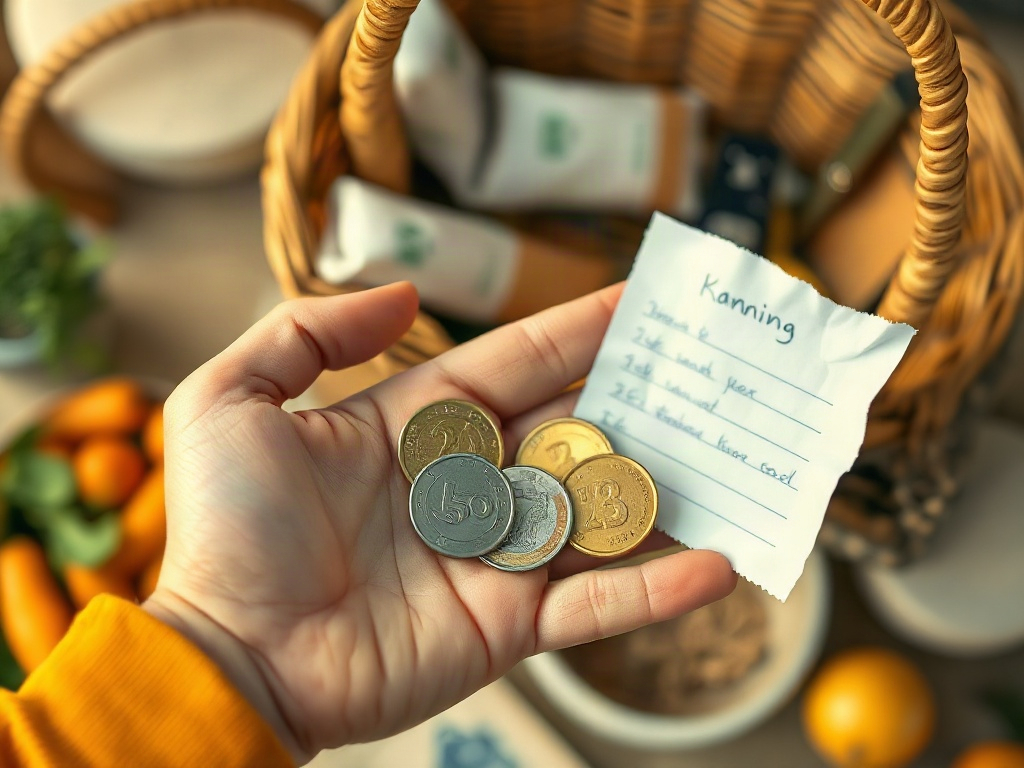
And that's exactly the problem. There's a common belief that the market "teaches kids numbers on its own" — that just being around scales and prices is enough to make something sink in. It isn't. A child walking beside you hears numbers the way they hear traffic noise. The sum only becomes theirs once they're holding the note in their own hand and someone is waiting for their answer. The six counting tasks for kids below are built around exactly that moment.
Why watching doesn't work, but holding the money does
The difference is simple: when you pay, your child has nothing at stake. When they pay, they do. If they hand over two euros instead of three, the seller will look at them and say "that's not quite enough, sweetheart." It's just uncomfortable enough to stick — and it's remembered far longer than ten sums in a workbook.
So the whole idea here rests on one decision you make before you even leave the house: your child gets 2-3 € of their own in their pocket and one specific job. Not "help out", but "you're buying the carrots." Everything else — the scale, the change, comparing prices — follows naturally from there.
What to prepare at home before you head out
- Coins, not notes. Give them 2-3 € in small change — 50-cent, 20-cent, 10-cent coins. Counting coins is the whole point of the exercise; a single 5 € note removes it.
- One order, written by hand. Three lines, in big letters: "1 kg carrots", "half a kg lemons", "a bunch of parsley". Your child carries the note.
- An agreement about the change. Say it in advance: "whatever's left, we count together on the bench." That way the change is part of the task, not a treat.
- A small bag just for them. If they're carrying your shopping too, they'll lose track of their own.
Task 1. The Carrot Buyer
Head towards the vegetable stall with your child walking ahead, note and coins in hand. All you need is 2-3 € in small coins, a note with one item written on it, and a small bag. Takes about 10 minutes on the spot. Works best with kids aged 7-9. Before you get there, ask: "how much money do you have?" — have them count it out loud. Then step back two paces and stay quiet. Your child says only: "Could I have a kilogram of carrots, please?", waits for the price, counts out the coins, and hands them over. If it's not enough, they come back to you — that's part of the exercise too. The task is complete once your child has paid on their own, put the change in their pocket, and can tell you how much they have left without looking at the coins again.
The scale is the market's most underrated toy
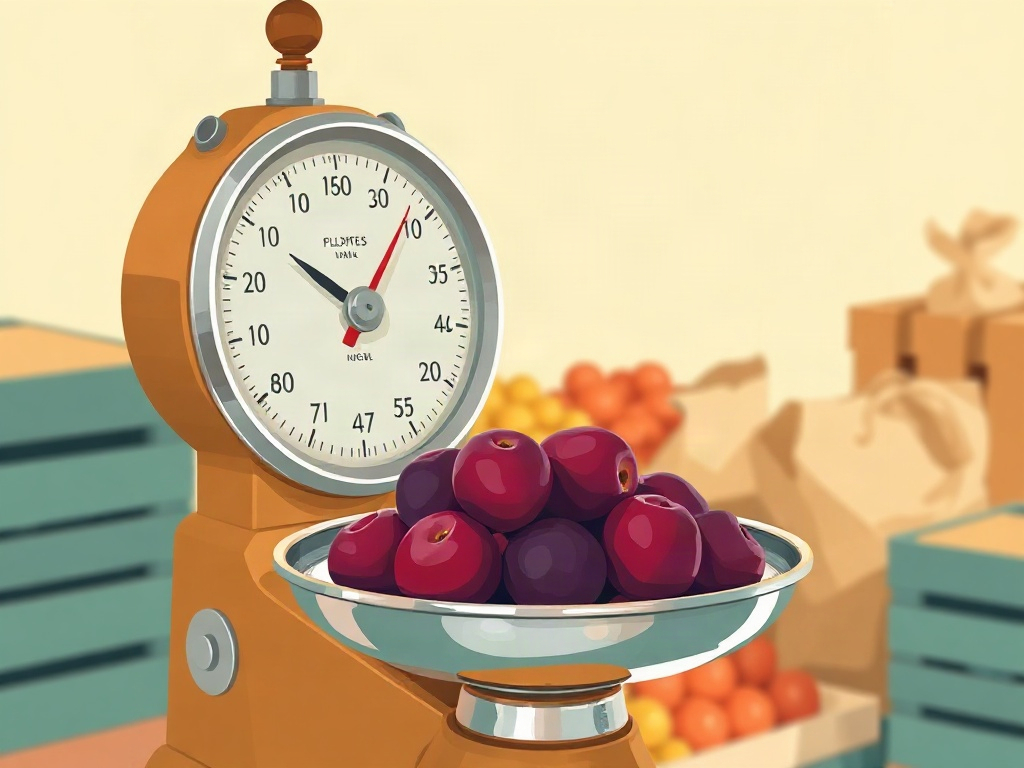
The digital scale shows numbers that move. For a seven- or eight-year-old, that's almost hypnotic — and it's the one place where "half a kilogram" stops being an abstraction and becomes something that has weight in your hand.
The game is guess-before-you-see. Your child scoops up six or seven plums and calls out a number: "four hundred grams." Then the seller weighs them and it reads 310. The difference gets worked out in their head. Same thing at the next stall. After five or six tries, most kids start landing within a hundred grams — and that's when they feel they've learned something, without you having to tell them.
Task 2. Guess the Weight
All you need is the stall's scale and the seller's go-ahead — usually a simple "would it be okay if my child guessed the weight?" does the trick. Five to eight minutes, two or three stalls. Suited to ages 7-9; younger kids aren't yet comfortable with three-digit numbers. Your child scoops up a handful of fruit, calls out a guess in grams, then compares it with the reading and works out how far off they were: "I said 400, it was 310, so I was 90 over." Count it a success once, on the last weigh-in, the error is under 100 grams and your child did the subtraction themselves.
Change: the most common parenting mistake
Here's what almost all of us do. The child pays, the seller counts out the change, we reach out and pocket the coins — because we're in a hurry, because there's a queue, because it's easier that way. With that one gesture, we wipe out half the exercise.
The other version of the same mistake is asking in advance: "how much change will you get back?" It sounds like good maths practice, but with a queue and three people behind them, your child isn't calculating — they're guessing. They blurt out a number just to get it over with, and we correct them. Nothing has actually happened.
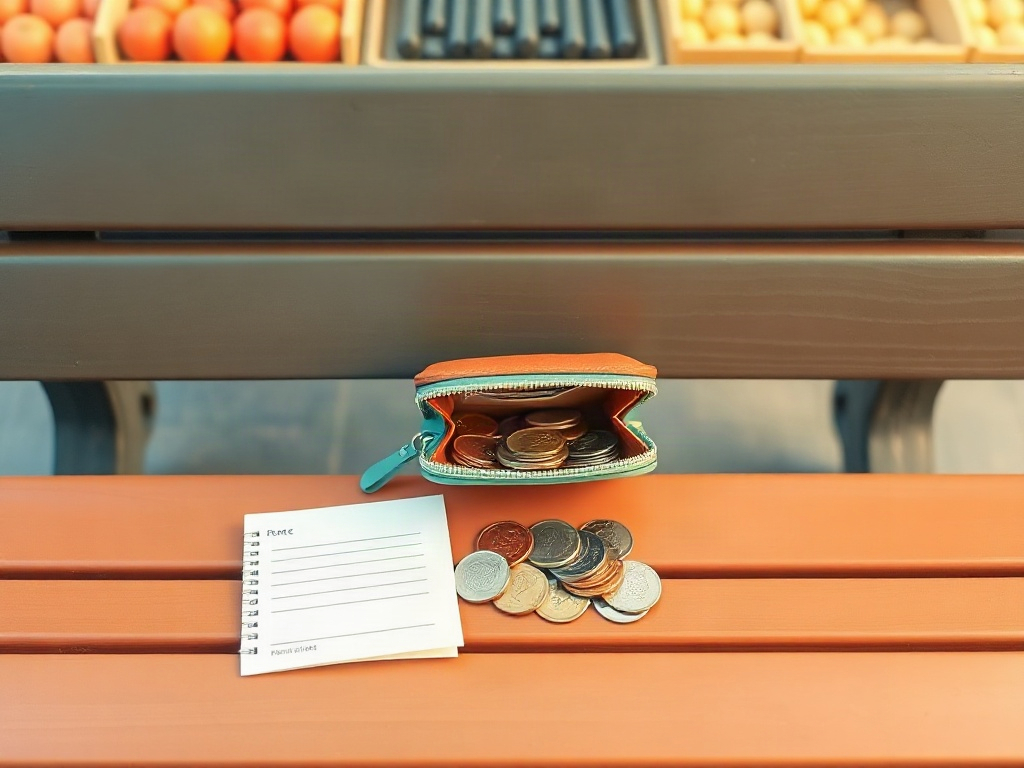
What works is the reverse order: first you get the change, then you check it. Step two paces back from the stall, have your child count the coins in their palm and say how much it is. Only then comes the question: "and how much should it have been?" Now they have the coins right in front of them and the question is actually solvable.
"I gave three euros, the carrots were two ten, so I should have gotten ninety cents back. I've got fifty, twenty, twenty — that's right."
Task 3. Counting the Change
All you need is the change from the purchase your child just made and a quiet spot two paces away from the stall — a bench works best. Three to five minutes, straight after paying. Ages 7-9. Your child lays the coins out in their palm, counts them out loud and says the total. Only then do you ask: "and how much should it have been?" They work back from the price they paid and what they handed over. The task is complete once your child has named the total of the change, said what it ought to have been, and can tell you whether the two match — without you counting a single coin for them.
Three shorter games for when time's tight
- Task 4. Which one's cheaper. What you need: two neighbouring stalls selling the same item. Two to three minutes, ages 7-9. Compare the price of the same item — cucumbers at 2.40 € versus 2.80 €. Your child says the difference, and how much you'd save buying two kilos. Success: the difference and the two-kilo saving, both worked out without a pen.
- Task 5. How many stalls to the exit. What you need: nothing but the walk out. Two to three minutes, ages 7-9. Your child counts the fruit stalls on the left and the vegetable stalls on the right, then says which side has more and by how many. Good for the tired last five minutes. Success: two counts and the difference between them, said out loud before you reach the exit.
- Task 6. Bag monitor. What you need: the lightest bag. One to two minutes, ages 7-9. They carry the bag and, in the car, say how many items are inside without looking. Success: the number is right when you check it together.
What to actually expect
The first Saturday will be slow and probably a bit awkward — your child will mumble their order so quietly the seller has to ask twice. The second goes more smoothly. By the fourth or fifth, they'll usually just walk ahead on their own and ask "am I buying the apples today?" That's your cue to raise the bar: two items instead of one, or 4 € with an agreement that there'll be change left over.
And one more thing worth saying plainly: don't turn every shopping trip into a test. Two of these counting tasks for kids per visit is plenty. A child who knows six questions are waiting for them at the market will choose to stay home next Saturday.