
The School Run as a Game: Bus Window Spotting and a Bus Pass
The daily school run is a ready-made playground for games of observation, counting, and memory. Here are two games you can play standing up, with no phone and nothing in your hands, plus what to do once your child is old enough to hold the bus pass alone.
7:12 a.m. The bus pulls up, the doors hiss open, you pull out the pass, your child climbs on behind you and immediately asks, "Can I have the phone?" Twenty minutes later you get off and neither of you remembers a thing about the ride. Same twenty minutes, same route, same stops — and tomorrow, all over again.
That repetition is exactly the resource you have. An eight-year-old rides the same route roughly 180 times over a school year, from mid-September to mid-June. There's no other place where a child sees the same scene that many times, each time slightly changed — the autumn leaves, the pavement being dug up, the new sign on the shop. Teach a child to actually look, and the route starts talking back.
Why "keep the kid entertained on the bus" is the wrong goal
Most advice starts from the idea that the commute is boring and has to be gotten through. That's where the usual fixes come from: phone, headphones, an audiobook. They work, sure — the child goes quiet. But the ride stays empty, and you lose the one regular, predictable stretch of shared time you get outside the house.
Flip it round: don't fill the time, give it a job to do. Observation isn't a "filler activity" — it's a skill that only trains through repetition in the same place. And here the bus beats any board game, because the scene changes on its own, without you lifting a finger.
The bus pass in your child's own hand is the first game
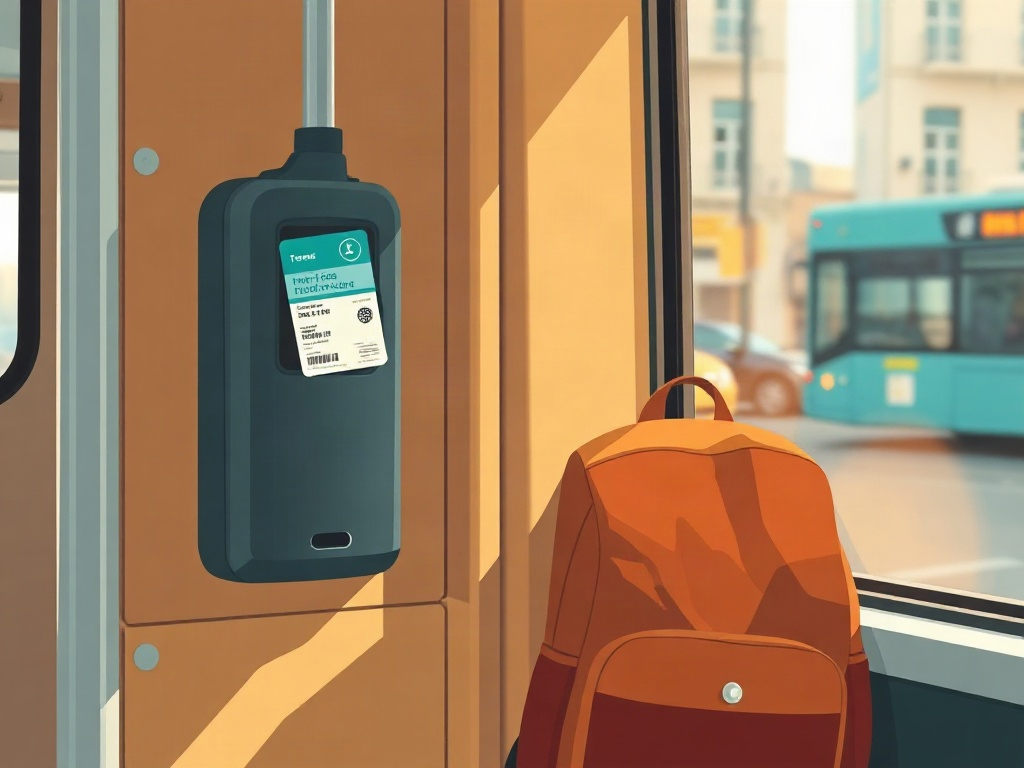
Plenty of parents hold onto the bus pass until the last second and hand it over their shoulder. Give it to your child two stops early instead. Not because "that's how you teach responsibility" — but because a pass is an object with its own rules: it has an expiry date, a name on it, it can get lost, and it's tapped at a specific spot at a specific moment. A seven- or eight-year-old can track all of that once someone shows them how, just once.
- Show them how long the pass is valid for and ask them to tell you every Monday how many days are left.
- Agree on one fixed spot for the pass — the same pocket of the backpack, always that one.
- Let them tap it on the reader themselves, even if it takes a moment and there's a queue behind you.
- If it gets lost — and sooner or later it will — treat it as a problem to solve, not a failure: where was it last, who was holding it, do we need to go back to school.
Five things that weren't there yesterday
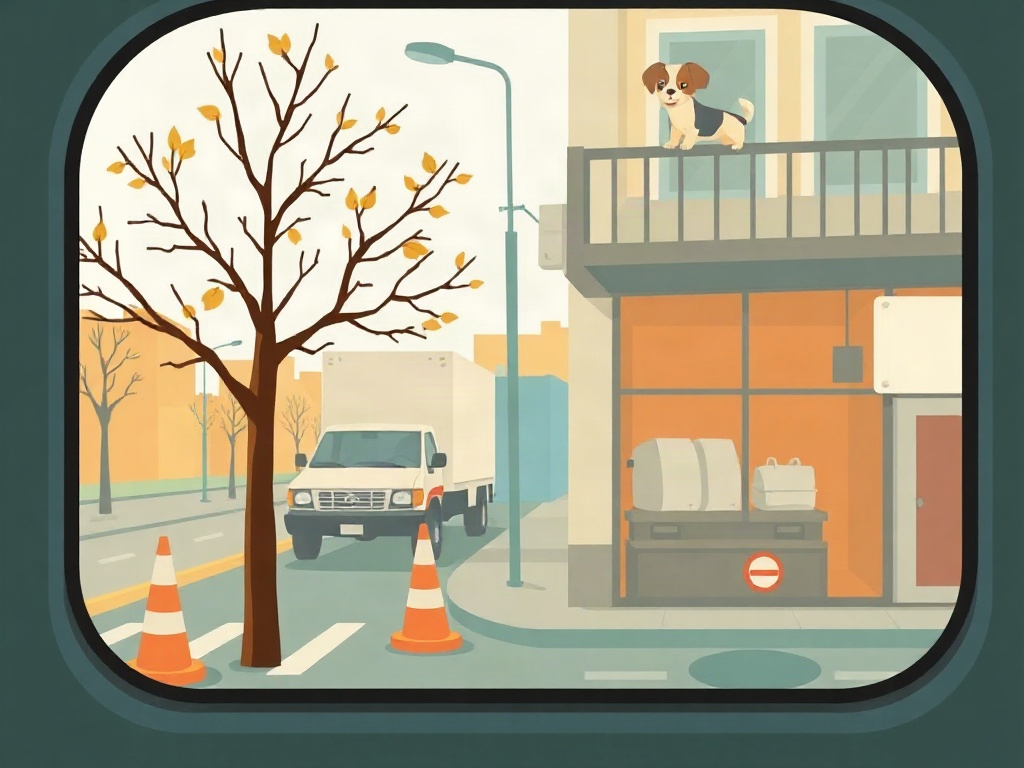
Played at the window, with no props at all — just two eyes, and if you want to keep score, a small notebook in the backpack that just stays there all week. Takes about 10 minutes of the ride and suits children aged 7 to 9. There's one rule: before you get off, each of you has to spot five things that weren't there yesterday — a parked lorry, an open manhole cover, a new notice at the bus stop, a tree that's lost its leaves, a dog on a balcony. No arguing over who's right, just describe what you see. If your child says, "Yesterday there was a car parked on the kerb by the third stop, today it's gone" — that's a point. The game has worked once your child starts noticing changes on their own, before you've even asked — usually by the third or fourth week.
One thing to watch for: don't turn this into a quiz. If every observation gets followed by "and why do you think that is?", it starts to feel like school and the child stops playing. Just note it: "Oh, you're right, I missed that one."
Counting that's actually maths
The second game comes straight from the bus itself — from the stops, from the people getting on and off. It looks like simple counting, but underneath it's addition and subtraction in a real, live situation, which does a lot more good than one more worksheet at home.
How many people are riding with us
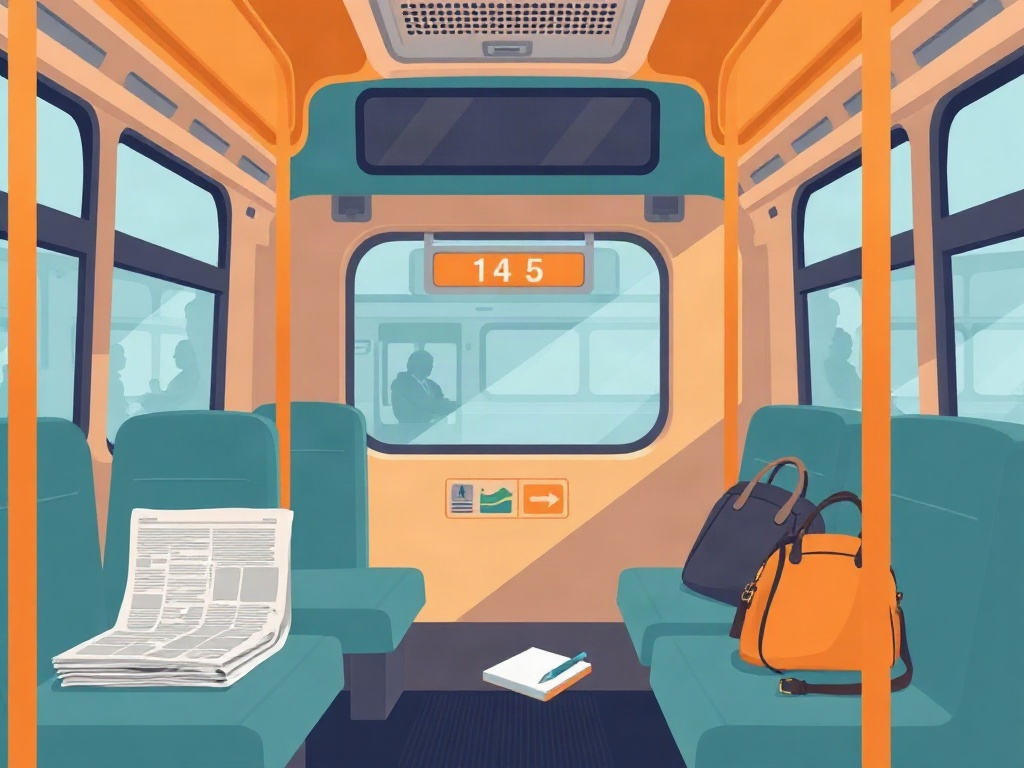
All you need is the school run and, if your child fancies it, a pen and paper to jot things down. Played for 8–12 minutes, for children aged 7 to 9. At the start, your child counts how many people are at the front of the bus — say, nine. At every stop they track who gets on and who gets off and quietly update the number in their head. When you get off, they announce the result: "We started with nine, four got on, six got off, so that's seven." For younger children, just have them count the ones getting on. It's worked if your child can explain how they got the number, not just blurt it out — the working, not the answer.
If you travel by car instead, play it with car colours: how many red cars did we count on the way there, how many on the way back, which trip had more. Same principle — a number that keeps changing, and a child tracking the change.
The most common mistake: making the game too big
A parent gets carried away and announces: from tomorrow we play every single morning, we keep a notebook of everything we spot, at the end of the month we draw a map of the route. Day three it's raining, the child's half asleep, nobody's in the mood, the notebook stays in the backpack. Day four, nobody even mentions it.
It doesn't work because these games run on lightness. The moment they turn into an obligation with props and record-keeping, they land in the same mental drawer as homework — and your child will file them right alongside it. Play every other day. Play only on the way there, and let the way back be quiet if that's how it falls. One skipped day ruins nothing; one "we're not playing today, right?" ruins everything.
A second common mistake — the parent counts faster and wins every time. At seven years old, that's more than enough reason to swear off a game for good. Count out loud slower than you actually can.
What's left after twenty minutes on the bus
After a month of rides like this, your child can tell you how many stops there are before school, which stretch between two stops takes longest, and which stop the most people get on at. They know exactly where they keep their pass and how many days are left on it. They can count forwards and backwards while their body sways with a moving bus — which is harder than it sounds.
And most importantly: they've learned that the city around them is something you can actually look at, not just background you pass through.
We started with nine, four got on, six got off — so that's seven. And that blue pram that was at the second stop yesterday? Gone today.