
The Family Budget After New Year: Two Games With €5 and a Grocery List at the Kitchen Table
How to turn January's money-counting into two concrete games for kids aged 8 to 10 — with real €5, a real grocery list, and a clear way to know when your child has got it.
January. The kitchen table is covered with holiday receipts, a sheet of expenses, and a calculator. Your eight-year-old son hovers nearby and asks why he can't buy the new game he wants. The usual answer is "because we don't have spare money this month" — and he wanders off having understood nothing. You've just missed the best teaching moment of the whole year.
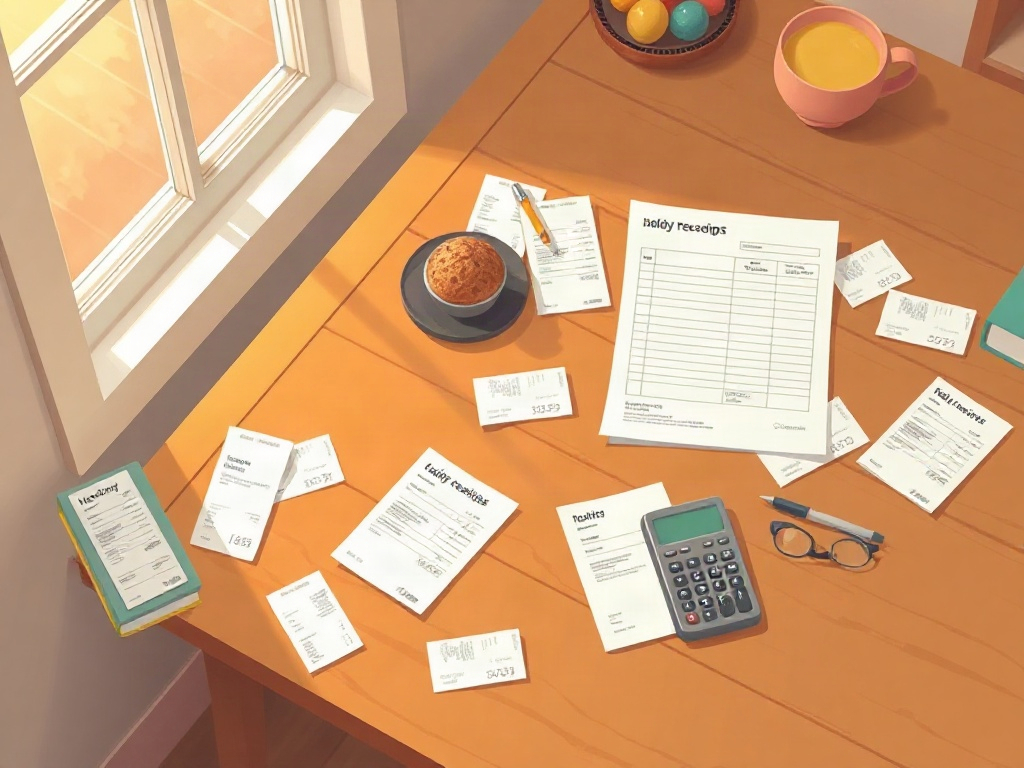
That very table, with those very receipts, is the best learning material you'll have until next New Year. Not because you need to show your child how hard things are — but because, for the first time, he can actually see one choice eat into another.
Why "money doesn't grow on trees" doesn't work
Between the ages of 8 and 10, children can already do sums up to a hundred in their heads and understand "more expensive" versus "cheaper" — but the abstract idea of a "budget" is foreign to them. To them, family money is a bottomless well that the parent, for some reason, refuses to open. The explanation "we don't have it" sounds exactly like "I don't want to."
The shift happens the moment a child holds real money of their own and has to choose. Not hypothetical money, not tokens, not "imagine you had." A real €5 note that can actually run out. From that point on, the sentence "we can't afford it" finally makes sense, because the child has lived it firsthand — through the sweets they didn't get to buy.
And one more thing: don't rescue your child from a bad choice. If they spend everything on the first two items and are left with nothing for the third thing they wanted more — that's the lesson. If you top them up, the lesson disappears, and another one takes its place instead: "there's always more where that came from."
Game one: €5 on the table
Five euros, three wishes
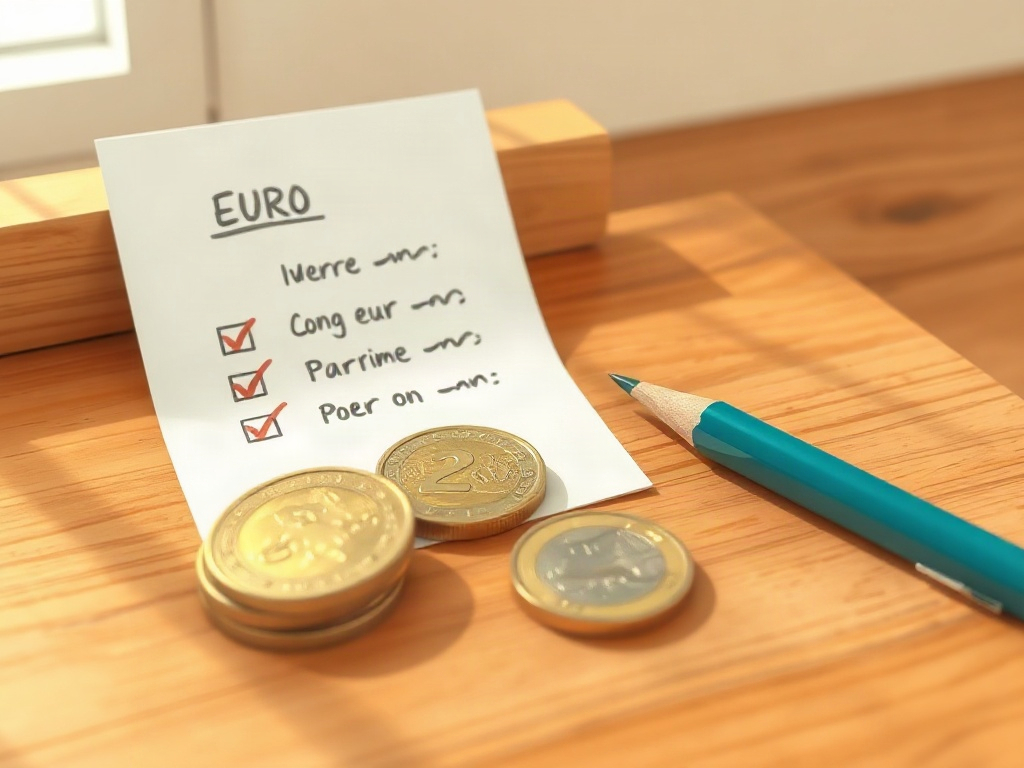
All you need is five euros in small change — ideally one €2 coin, two €1 coins and some cents, so it's easy to count by hand — plus a sheet of paper and a pencil. Set aside about 25 minutes, ideally on a Saturday before you go shopping. This game is for children aged 8 to 10. Put the coins on the table and say: "This money is yours for today. First, write down three things you want." Your child writes them down — say, sweets, a small toy from the shop, a carton of juice. Then comes the hard part: together you look up the prices, in a shop flyer or last week's receipt, and write them next to each wish. The total almost always comes to more than €5. Then you ask the one question that matters: "Which one are you dropping?" The child has to cross one out themselves, pencil in their own hand, and say out loud a sentence like: "I'm dropping the toy, because it costs €3 and then I won't have enough for the juice." They've got it once they're left with a combination that adds up to under €5, and can explain in their own words why exactly that item was cut. If they just shrug and wait for you to decide, the game isn't over yet — go back to the prices.
One parent told me her nine-year-old daughter sat in silence over the sheet for five minutes, then said: "So this is what you do every month?" That's the exact moment that makes it worth doing.
Game two: the grocery list becomes a mission
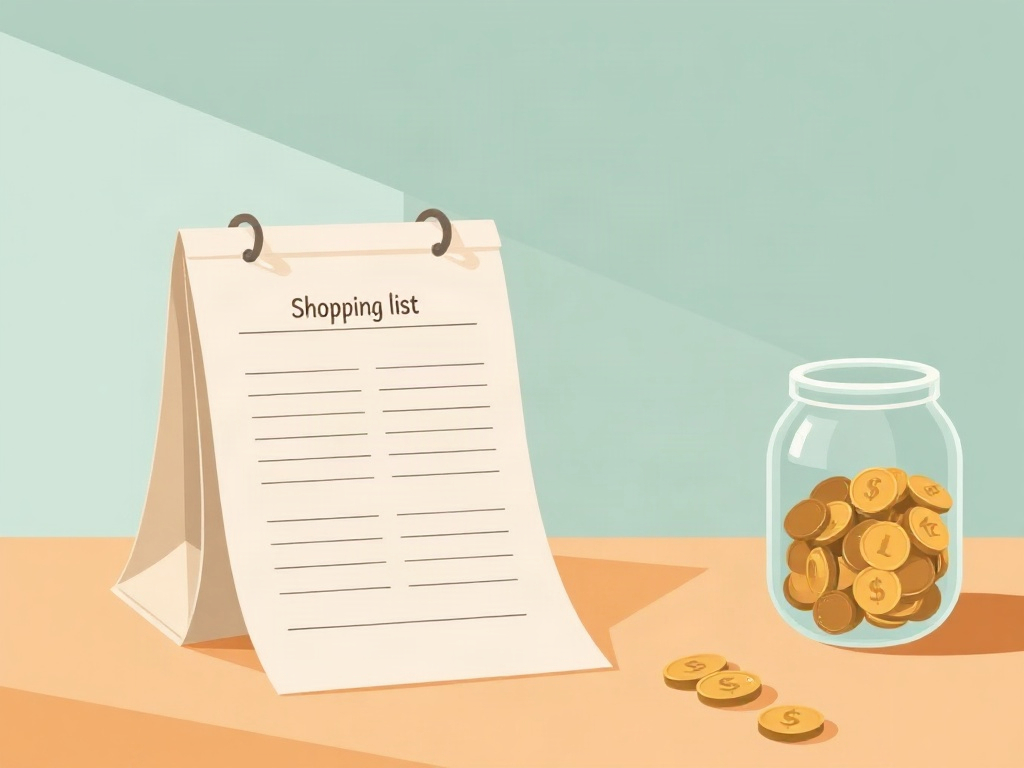
The grocery list with a spending cap
You'll need your usual weekly shopping list, a sheet of paper split into two columns, a pencil, and a calculator — your phone will do. Set aside 15 minutes at the table before you leave, and another 15 in the shop. Best suited to ages 9-10; for younger kids, trim the list down to five items. Pick eight items from your list and give your child a spending cap set slightly below the real total — for example, €20 when you expect the bill to come to €23. In the left-hand column the child writes the item, in the right-hand column their guess at the price. In the shop, they compare their guess with the actual price and correct it. If the total goes over the cap, they decide what gets swapped for something cheaper: the other brand of yoghurt, the smaller loaf of bread, pasta from the bottom shelf. They've got it if they guessed the price of at least three of the eight items within 50 cents, and suggested at least one specific swap out loud — "let's get this one for €1.20 instead of that one for €1.90." Note that success here isn't precise arithmetic — it's noticing that similar-looking items cost different amounts.
The most common mistake: turning the game into an exam
The parent sits down with the child, sets sums to solve, corrects every addition mistake, and announces a final score. The child walks away feeling like they've just sat a maths test on a Saturday morning, and next time they run from the table.
- Don't correct the sum straight away. Let the mistake show up in the shop instead — it's far more convincing there than your "no, that comes to €4.70."
- Don't give advice before the child has decided. The question "which one are you dropping?" is worth more than ten explanations of why the toy is too expensive.
- Don't show a child under ten the real family bills for rent and electricity. The numbers are too big to mean anything, and all they leave behind is worry.
- Don't overrule their decision. If they chose the juice over the sweets, that stands for the rest of the day, even if they regret it an hour later.
A child understands the value of €5 not by hearing how hard it is to earn, but by watching it disappear from their own hand.
How to keep it going for the rest of January
These two games aren't a one-off. Turn them into a short January ritual: once a week, ten minutes, the same table. Give your child a small, regular allowance — €2 or €3 a week works well at this age — and a jar to save it in. If they want something that costs €8, they'll work out for themselves that it takes three weeks. That realisation carries more weight than any lecture.
After two or three months, some time around spring, you'll hear something like: "I won't get that, I'm saving up for something else." That's when you'll know it's worked. And the school year runs until mid-June — there's plenty of time between now and then.
From this article, you're walking away with two things you can do today: the five-euro, three-wishes game, and the grocery list with a spending cap. Both take under half an hour, and neither requires anything you don't already have at home.