
The First Days of September: 6 Games to Ease Your Child Back into the School Routine
Not with lectures about responsibility, but with games that bring back three specific skills after summer: listening to an instruction all the way through, sitting focused for 15 minutes, and packing their own school bag. For children aged 6-8.
September 8th, half past nine in the morning. You tell your seven-year-old son, "Go get your socks from the bathroom, put them on, and come to the kitchen." He sets off, stops to pet the cat, comes back barefoot and asks, "What was I supposed to do?" Three months ago, this same child could follow three-step instructions without blinking.
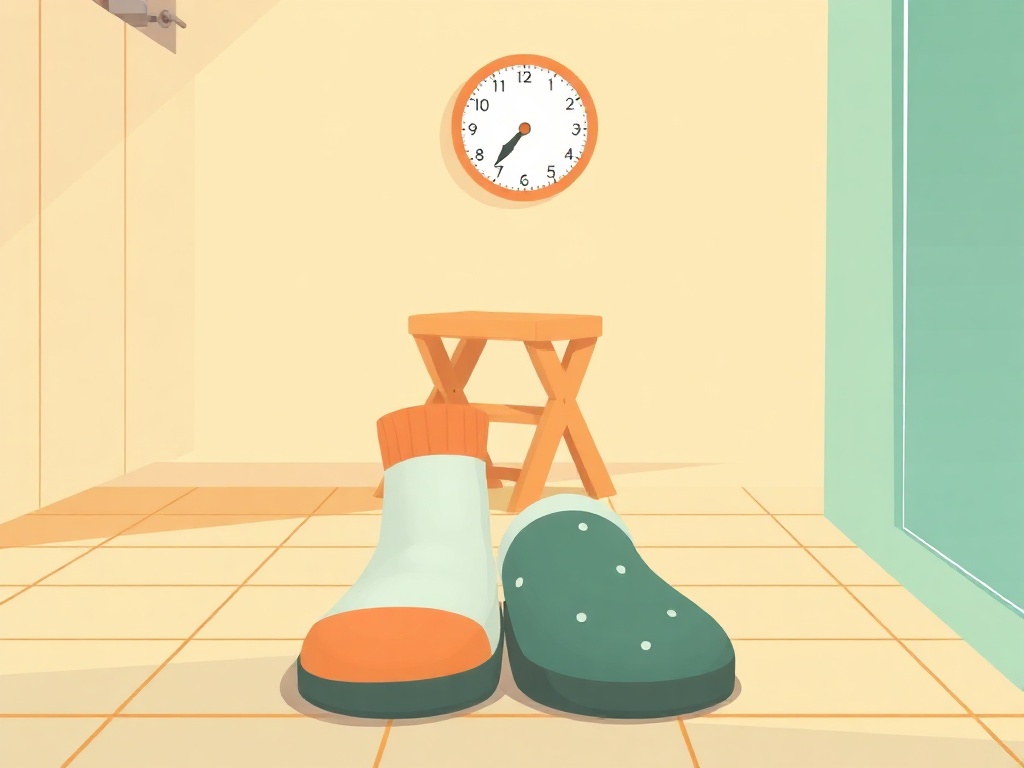
This has nothing to do with forgotten maths. Over the summer, no one told him "finish this, then that" — the day just flowed on its own. And the first week of school hits exactly there: the teacher gives an instruction once, out loud, to the whole class, and doesn't repeat it individually.
What actually falls apart over the summer holidays
Parents overwhelmingly react the same way — they dig out last year's textbooks and make the child read a page a day "so they don't forget." That treats the wrong problem. Reading rarely disappears in two months. What disappears is something far more everyday:
- Listening to an instruction all the way through, without interrupting or setting off after the first word.
- Sticking with one activity for 15-20 minutes, without getting up for water three times.
- Getting things ready for tomorrow without an adult listing out what to pack.
All three are trained better through play than through a worksheet. The reason is simple: in a game, the child wants to succeed; with a worksheet, they just want to be done.
A listening game: "Three Things and a Trap"
Three Things and a Trap
All you need are things already lying around the house and a sheet of paper to keep score. The game takes about 10 minutes and suits children aged 6-8. You give three tasks at once — "bring a spoon, put it on the table, sit in the chair on the right" — and the child only sets off once you've finished the sentence. Every fourth round or so, slip in a "trap": a task that's physically impossible or silly ("put the fridge in your school bag"). The child earns a point both for completing the three steps in the order given, and for catching the trap and saying, "That can't be done, because the fridge won't fit." Start with three steps, and by the third day move up to four. Consider it working once the child gets through three rounds in a row without asking, "What was the second one again?"
Swapping roles is a must — the child gives the instructions, you follow them. And make deliberate mistakes: set off before they've finished the sentence. They'll catch you instantly, and that's exactly when it clicks what's being asked of them.
A stamina game: "Beat the Clock"
Beat the Clock
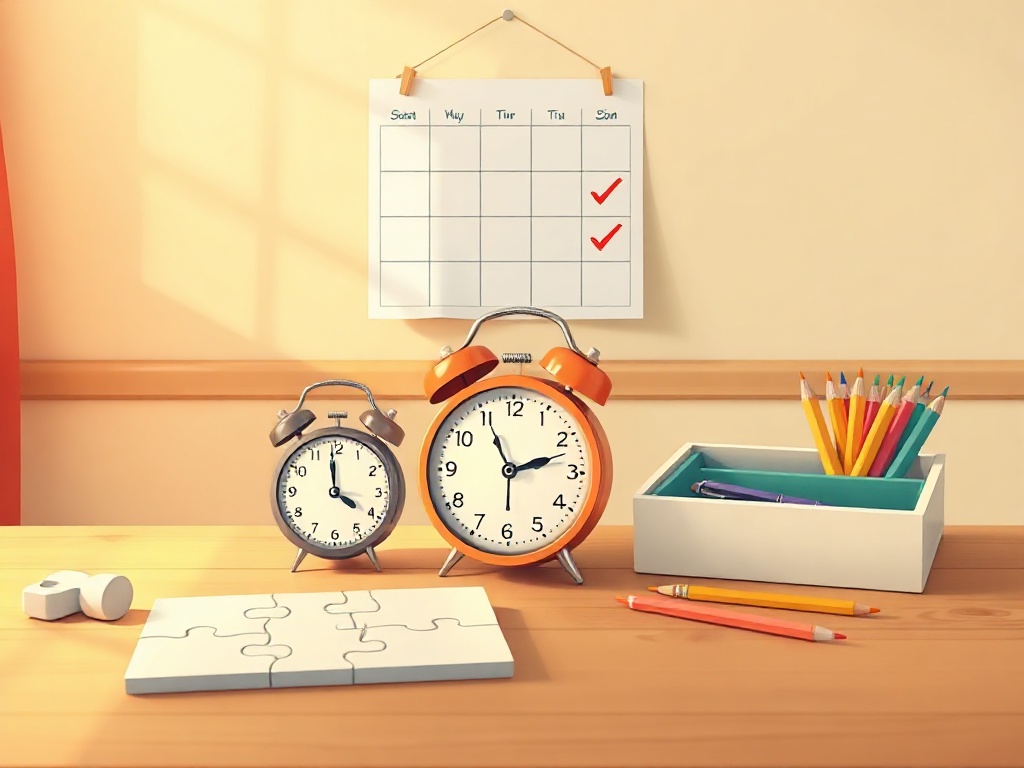
You'll need a kitchen timer or a phone with a timer, paper and a pencil, and a small weekly calendar to tick off. One session lasts 12 to 20 minutes, and the game suits children aged 6-8. The child picks an activity they enjoy but that requires staying in one place — drawing, a jigsaw puzzle, building Lego from instructions, or copying out the lyrics of a favourite song. Set the timer for 12 minutes on day one and add two minutes each following day. There's one rule: while the timer's running, no getting up — not for water, not for the toilet, not "just to check something." So water and requests get sorted before the start. Every successful day gets a tick on the calendar. It's done when the child holds out for 20 minutes two days in a row and says on their own, "It hasn't rung yet, I'll finish."
Why 20 minutes exactly? Because that's roughly how long one task lasts in class before the teacher shifts pace. You're not training "concentration" in general — you're training the specific stretch the child will actually need to work through.
A school-bag game: "Six-Second Check"
Six-Second Check
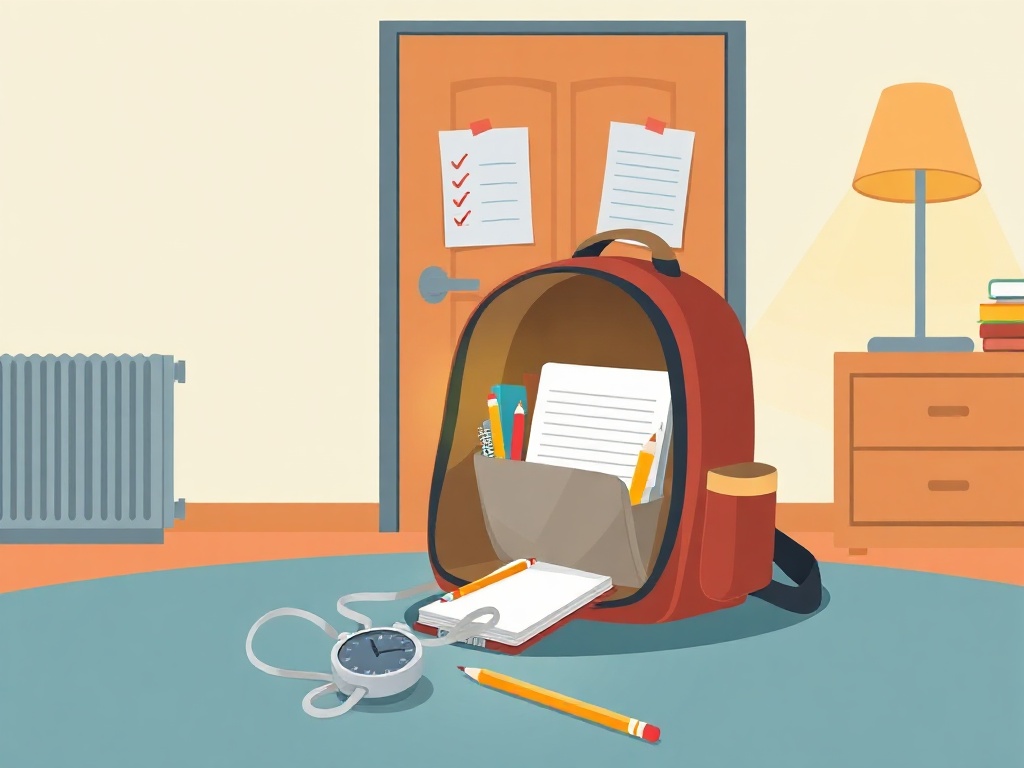
You'll need the school bag, everything from the teacher's list, and a stopwatch. It takes 5-7 minutes each evening and works best with children aged 7-8 who already read on their own. In the evening, the child packs their bag alone, following the weekly timetable taped to the bedroom door. Then you take the bag, turn your back, remove one item, and hand it back. The child has six seconds to open it, look inside, and say what's missing. Guess right — a point for them. Guess wrong — a point for you, but don't put the item back: in the morning it's simply not there, and they have to remember it on their own. Count it a success once the bag is packed three evenings running before you've even asked.
The goal isn't a packed school bag. The goal is for the child to remember, on their own, that the school bag exists.
The most common mistake: starting a week before the first day of school
The school year starts in mid-September, and most families only remember "routine" around the 10th. Then everything happens at once: bedtime at nine, wake-up at seven, textbooks, dinner an hour earlier. The child responds with tears and resistance, and the parent concludes the method doesn't work.
The problem isn't the methods — it's the pile-up. Three changes in one day feel like punishment for summer ending. So space it out: the first few days, just the listening games, since they don't demand any sacrifice. After a day or two, add the timer. Bedtime shifts last, and by just 15 minutes a night, not two hours at once.
The other typical mistake is letting the game turn into a test. If, after "Three Things and a Trap," you say "see how easily distracted you are," the game dies on the spot, and next time the child refuses to play. Keep score, skip the commentary.
What's left after the first week
If you play all three games over seven days, the child walks into class with three concrete skills, not just a vague "school mood": they can follow a three- or four-step instruction, hold focus on one thing for 20 minutes, and know what's in their school bag without asking. That's enough for the first two weeks. The classroom itself takes care of the rest.
One more small but useful thing: go to the shop together and, once you're there, hand the child €1-2 and let them choose a notebook or pencils themselves, telling them exactly how much they can spend. You stay a step back and let them do the talking at the till; counting the change and deciding what to buy are part of the same habit — taking responsibility for their own things.