
Three Hours in the Church Courtyard: What to Do With Your Kid While the Grown-Ups Celebrate
A practical plan for parents of 5- to 8-year-olds for the long hours of a christening or wedding — with games that use nothing but what's already in the courtyard and on the table.
It's half past twelve on a Saturday in May, the godparents are still taking photos outside the church, and your six-year-old has already tugged your sleeve three times. No cartoons, no playground, not a single kid they know. Ahead of you lie at least three hours — the ceremony, photos, the reception, the toasts — during which the grown-ups will talk among themselves while your child stands between the chairs like a spare part.
The usual advice is "bring something to keep them busy." A phone, a book, a toy car for the collection. And it works — for about fourteen minutes. Then the child is back at your side, because the problem was never the lack of an object. The problem is that at this celebration, they're the only person without a job.
Why the bag of toys never makes it to dessert
A toy from home carries the context of home with it — and the child can see with their own eyes that something else, something big, with music and unfamiliar people, is happening here. Colouring a dragon in the corner of the restaurant isn't part of that. It's a side activity that runs out and leaves the child exactly where they started.
The difference comes when the game uses the event itself as material. The courtyard, the candles, the tablecloth, the glasses, the relatives in their hats — all of it is already there, and it never runs out. A child counting how many women in hats are in the courtyard isn't doing something instead of taking part. They're taking part.
Hand out the job before the ceremony, not halfway through
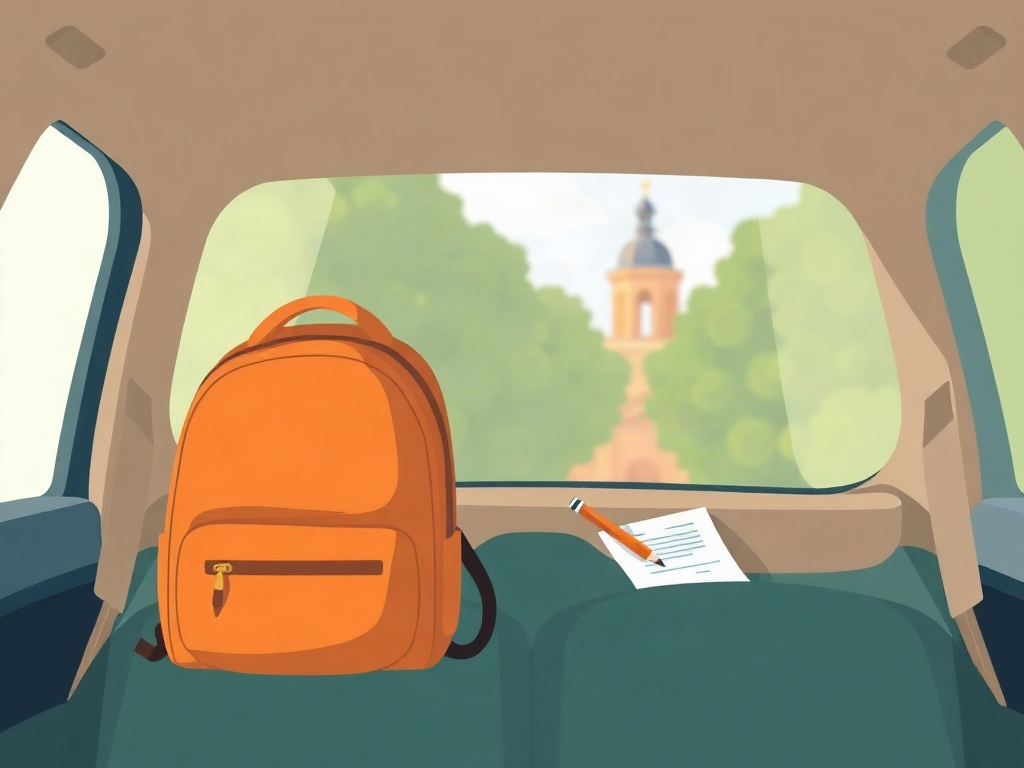
Two minutes in the car before you get out are worth more than a whole hour of putting out fires afterwards. Say something specific, like: "You're my flower photographer today. Keep an eye on which flowers are in the courtyard, then describe them to me." Or: "Your job is to remember what kind of music they play, so we can tell Grandma about it."
- Give one job, not three — a child only remembers the first one.
- Hand it out before you go in, while they're still calm and curious.
- Ask about it at least twice during the day, or it fades away.
- If the job involves running around, save it for after the ceremony — inside the church, give a quiet job (counting, watching, remembering).
The Quiet Courtyard Detective
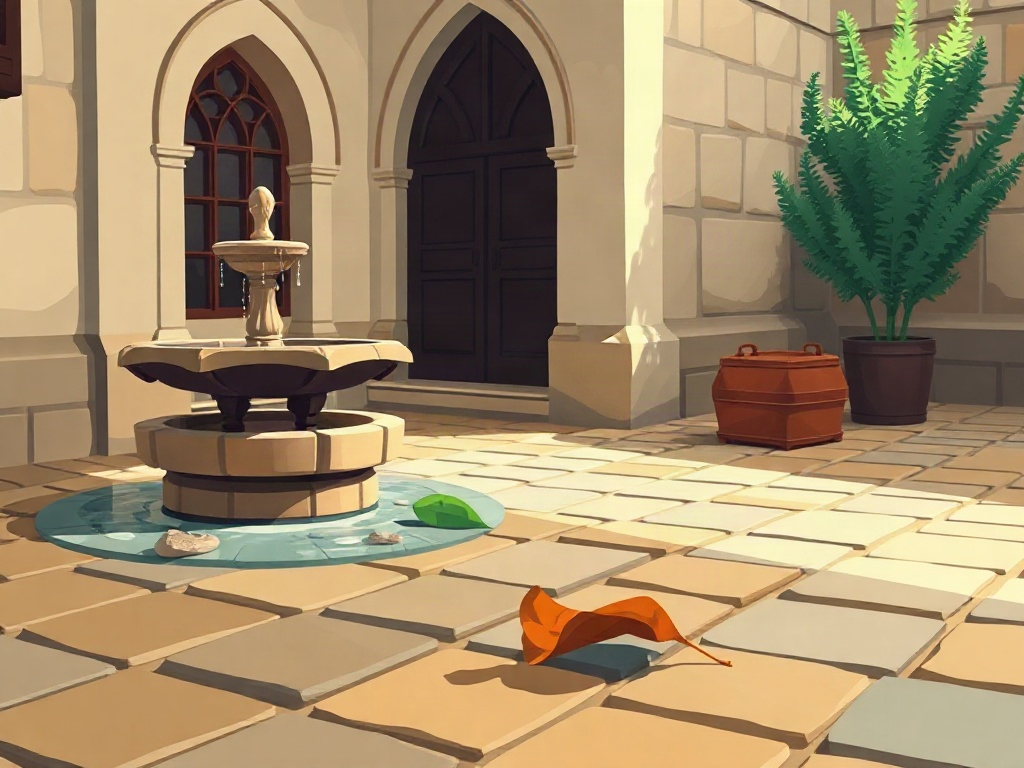
Played outside, before or after the ceremony, and needs nothing but your own eyes and, if the child can already write, maybe one sheet of paper. It takes 15 to 25 minutes and suits kids aged 5 to 8 perfectly. Tell the child: "Find me something round, something that sways in the wind, something older than Grandpa, and something that makes a sound." The child wanders the courtyard and comes back with the answers — a pebble, a twig, a stone slab, gravel crunching underfoot. Don't rush: the real fun is in arguing over whether the fountain is really older than Grandpa. Then swap roles and let the child set the tasks for you. The round is complete once the child has brought back four different answers and thought up at least one task of their own for the grown-up.
At the table, the rules change. There the child is seated, surrounded by plates and glasses, with about a foot and a half of room to move. So the next game is built to be played sitting down, using your voice instead of your legs.
Who's Who at the Table
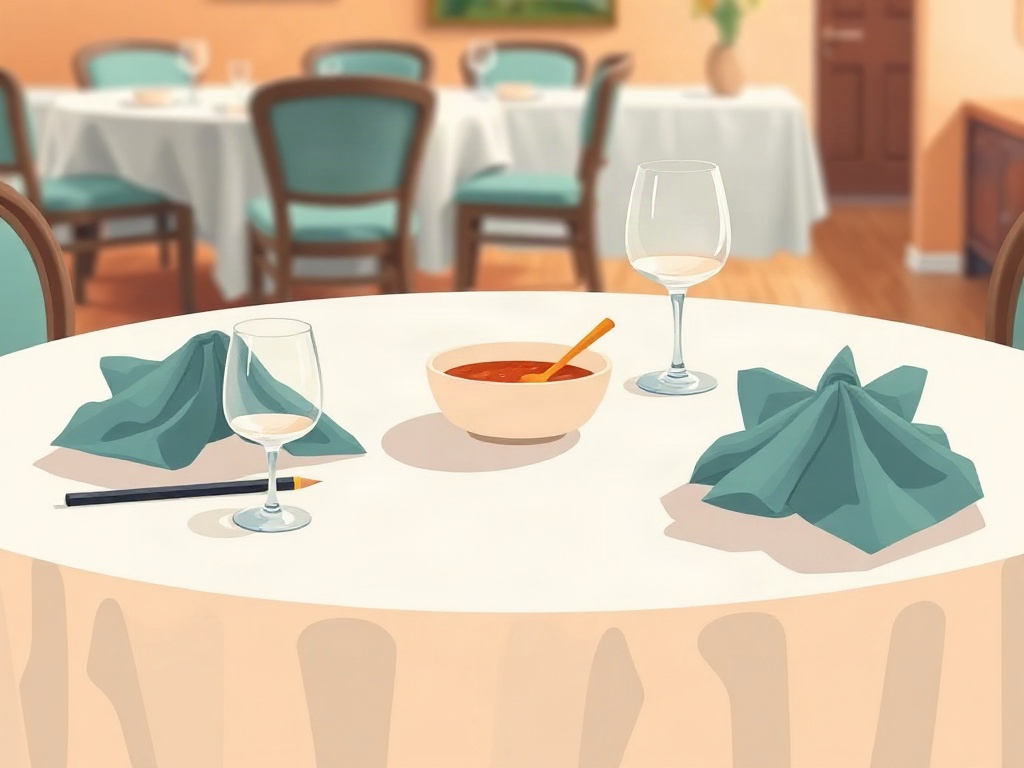
Materials: a napkin and a pen, or just a whisper if you've got nothing else. It takes 10–15 minutes but comes back around several times between courses, and works well for children aged 6 to 8. Pick someone at a nearby table — without pointing — and describe just three things about them: "He's wearing a blue tie, he laughs the loudest, and he's sitting next to the woman with the red handbag." The child has to spot them, then describe someone back to you. Only kind descriptions allowed — agree on that rule beforehand; it's part of the game. For older kids, add: "Guess what job you think they do," then check the guess against the truth if the person happens to be a relative. It's a win once the child has spotted three people and described two, without pointing or shouting.
Between the two games: the three-hour plan
- First 40 minutes (ceremony): a quiet job — counting candles, remembering a hymn, looking at the icons.
- Break outside, 20–25 minutes: "The Quiet Courtyard Detective," running around, a drink of water.
- First courses: "Who's Who at the Table" between the soup and the main course.
- Middle of the reception, about 20 minutes: take the child outside even without a reason. That walk saves you from the next meltdown.
- The final hour: give them a real job — handing out napkins, carrying a glass to their aunt, counting how many cakes there are.
"Mum, what am I even doing here?" — that's the question you answer before you walk in, not after the third toast.
The most common mistake: the "just a bit longer" promise
Every parent has said it: "Just a bit longer and we'll go." The trouble is, to a six-year-old, "a bit longer" has no length at all — they hear it as "soon," wait ten minutes, and ask again. They'll ask every ten minutes for two hours straight, until eventually they stop believing you at all.
What actually works is something countable: "We're leaving once we've had cake and once Uncle's given his speech. Two things left." The child can count it down. They might even tug your sleeve and say "one thing left" — and that's a good sign, because now the waiting has a shape. If you give a number, stick to it; it won't work a second time.
The second common mistake is handing over the phone in the first twenty minutes. Given too early, it becomes a home base the child keeps returning to after every other activity, and everything else starts to feel dull by comparison. If you're going to hand it over, save it for the hardest stretch, usually sometime after the main course, and set a clear end point: "Until this episode's over."
What to pack in your bag
- A spare t-shirt — something always gets spilled at the table.
- A small bottle of water, separate from the table, so you don't have to flag down a waiter.
- One pencil and a few sheets of paper — napkins tear.
- A snack that doesn't leave a mess: crackers, an apple. Save the sweets for when you really need them.
- If you're buying the child something on the spot — a balloon, a ball from a stall — 2–3 € is plenty; spending more doesn't buy you more patience.
And one more thing rarely said out loud: your child isn't going to make it through three hours flawlessly. No child does. The goal isn't zero complaints — it's avoiding that one moment where they burst into tears in the middle of a toast and the two of you storm out to the car park. A clear job, a countable promise, and one walk outside in the middle do almost all the work.