
For Parents — Two Weeks Before September 1st: 5 Evening and Weekend Routines That Rebuild the School Morning Routine Without a Fight
A guide for parents and caregivers, not for children: a workable school morning routine isn't rebuilt by the alarm clock — it's built by the evening sequence. Five activities you can run with your 7- to 9-year-old — three on weekday evenings, two at the weekend — with the materials, the timing, and a clear sign of when it's done.
Note for readers: this article is written for parents and caregivers. The activities below are meant to be set up and supervised by an adult, and carried out together with the child. Every family and every child is different — treat the suggestions here as general ideas, not as prescriptions.
Mid-August. It's 10:40 p.m., the child is still wide awake and explains very convincingly that "I'm honestly not sleepy at all." A brand-new name tag hangs on the backpack, and one thought keeps ticking in the parent's head: two weeks left. The usual reaction is to set the alarm half an hour earlier starting tomorrow. On its own, that rarely fixes anything.

The reasoning behind it is simple: a child who fell asleep at 11:00 p.m. may well struggle to wake up rested at 7:00 a.m. — many children get up tired and crankier, and some then find it harder to fall asleep that evening after an afternoon nap. The circle can close itself, and mornings are usually the first thing to break. For many families the more useful point of leverage is the other end of the day. If the evening has a clear, short, repeatable sequence, mornings often start to settle within a few days. Every child is different, so adjust the pace to yours.
Below are five activities you can set up for children between 7 and 9 years old to rebuild the school morning routine step by step: three that run on ordinary weekday evenings, and two you do at the weekend to test what the evenings have built. These aren't time-fillers — each one has a specific purpose, uses materials you probably already have at home, and a clear moment where you can say: done, that's finished.
Why getting up earlier alone doesn't fix the school morning routine
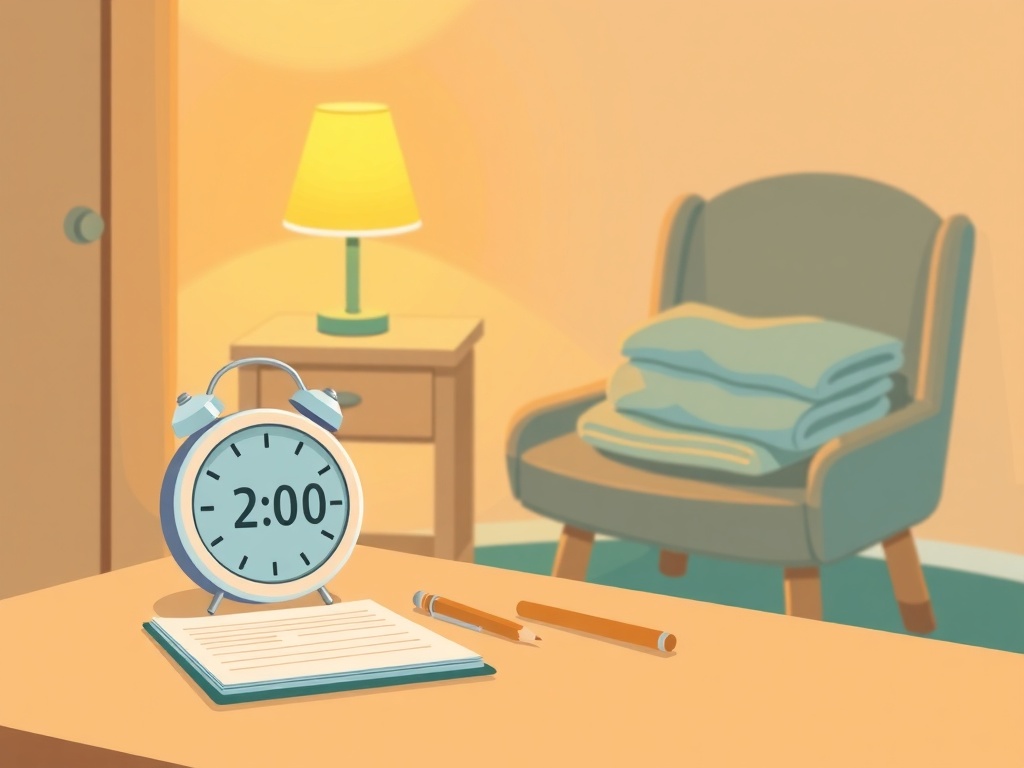
When you only move the alarm clock, the child loses sleep but gains no habit. And mornings don't fall apart because the child got up at 7:20 instead of 7:00. They usually fall apart because of two things: something can't be found (a sock, a notebook, a water bottle), and nobody knows what comes next. Both can be handled the evening before, while everyone is calm.
That's why the first three activities below are evening ones, and the two weekend ones come only after the evening sequence is already running smoothly.
Activity 1: Last Night's Box
Grab a shoebox or an empty drawer, a sheet of paper, a thick marker, and last year's leftover backpack items. With you nearby, the child packs into the box everything that leaves with them tomorrow: water bottle, key, hat, folder. Then, on the paper, they draw or write what's inside — one line per item, six lines max, taped to the bedroom door. The first evening takes about twenty minutes; after that it's four or five. Most children in the 7-to-9 range can manage it, as long as an adult sets it up the first time. You'll know it has taken hold when the child starts packing the box without being told — you just ask "the box?" and they answer "it's ready."
Activity 2: The 20-Minute Countdown
You'll need a kitchen timer or a plain clock with a second hand — not a phone, because a phone always opens something else. The child sets 20 minutes themselves and writes down on a scrap of paper three things that must be done before it rings: teeth brushed, tomorrow's clothes on the chair, reading lamp on. You don't suggest the order, but stay within earshot. Twenty minutes, every evening, and by the early primary years most children can run the whole countdown themselves. It's working when the timer rings and the child is already lying in bed with a book — not perfect, just finished before the bell.
How to move bedtime earlier without it turning into a battle
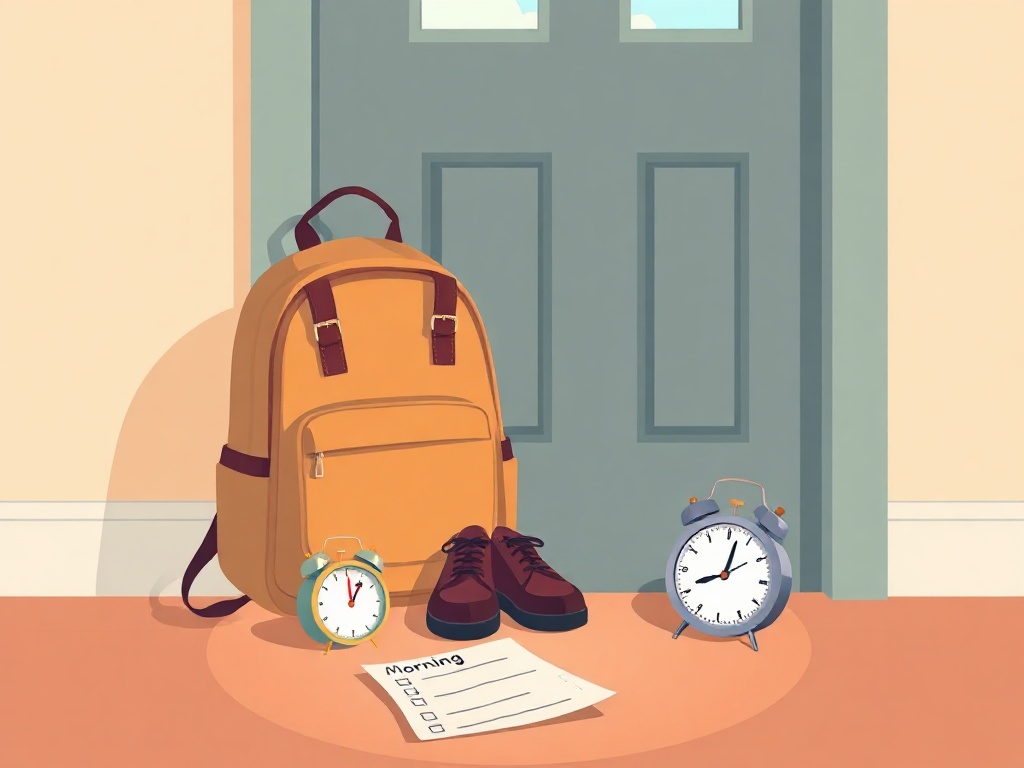
Shift it by 15 minutes every two evenings — not a full hour all at once. If the child currently falls asleep at 10:45 p.m. and the goal is 9:15 p.m., that's six steps — roughly two weeks if you start now. What matters is that you move the start of the evening sequence, not the moment the light goes off. If dinner happens at 7:00 p.m. instead of 8:15 p.m., everything else — including the next morning — tends to slide earlier on its own.
- Dinner at the table with the screens face-down in another room, and a 25-minute cap you say out loud when you sit down — with a screen on, mealtime tends to stretch past 40 minutes and the evening slips away.
- The afternoon nap goes first, if your child no longer needs one, even if it means one cranky child around 6:30 p.m. Give it a couple of days.
- The last screen turns off before bath time, not after — otherwise bath time can become a stalling tactic.
- The same seven-word sentence every evening, written on the same sheet as the evening sequence: "After teeth, we read, then lights out." Predictability tends to work better than persuasion.
- Weekends aren't skipped. Two days off can undo a lot of the progress.
Activity 3: Three Lines About the Day
A plain notebook with wide-ruled lines and a pencil. Every evening the child writes exactly three lines: what they did today, what was the funniest thing, and one thing for tomorrow. Spelling doesn't get corrected — this isn't homework, it's a calm way to close the day. If the child doesn't want to write, they dictate and you write. It takes about seven minutes and works nicely for a second- or third-grader. Five entries in seven days is plenty; missed days don't carry over.
Activity 4: The Weekend Practice Run-Through
On a Saturday or Sunday morning, act out a school morning as a game — a rehearsal for the evening routine you've been building all week. All you need is a clock, a sheet of paper and the backpack, and about half an hour. Announce the time, and the child does everything exactly as it will happen on Monday — gets dressed, eats, puts on shoes — while you count the minutes out loud and write them down: getting dressed 6 minutes, breakfast 11, shoes 4. Then you both look at the list together and find what could be cut in half. It lands best once a child can read a clock on their own, and it has worked when the child says where the most time is lost — for example, "shoes, because I have to hunt for them."
Activity 5: The Small School-Supplies Budget
This is the second weekend one, and it happens in a real shop, with a real (small) budget. You choose the shop and the moment; you keep the rest of the money and stay at your child's side the whole time. Hand the child $3 in coins and a short list of three things they keep reaching for in the morning and never find — an eraser, a pencil sharpener, a glue stick, say. In the stationery aisle they compare the price tags themselves and decide what fits into the three dollars while you stand beside them; you don't step in unless they ask. At the till they hand over the money and count the change — with you there, never alone. Back home, the three items go straight into the box from Activity 1, so the next morning the missing glue stick simply isn't missing any more. Half an hour is enough, and an adult stays present from the front door to the front door. It's done when all three items are in the box and the child can tell you what was left over.
The most common mistake: the big last-Sunday prep
The temptation is obvious — cram everything into one day. A shopping run, covering notebooks, bedtime at 8:30 p.m., a serious talk about the new school year. It looks like good planning, but it often backfires for two reasons.
First, the child spends the whole day working through a long queue of tasks they didn't choose, and by evening they're more likely to be overloaded than prepared — which is often exactly when falling asleep gets hard. Second, nothing that was done gets repeated, and habits tend to be built on repetition, not intensity. One evening box-packing routine, done eight times for five minutes each, tends to do more than a four-hour prep session.
A second common mistake: promising a reward for an outcome the child doesn't control — "if you're good at school, then..." It's usually more useful to praise the action that's actually theirs: they packed the box by themselves, so they got their job done.
*Illustrative example, not a real quote: once the evening sequence is running, the Monday-morning question often sounds something like "Mom, I already packed the water bottle and the folder — I just can't find the glue stick." We made this line up to show the shape of a working routine, not to report anyone's words.*
What you're left holding at the end
After the two weeks, you should have three concrete things: a box or drawer with a fixed spot for tomorrow's items, a sheet with the evening sequence taped up somewhere visible, and a bedtime that's shifted about an hour and a half earlier in 15-minute steps. That's it. Not a calm child every single evening, but a school morning routine that has a good chance of holding up even when the evening goes badly.
And if you're starting late — say, only six days are left — don't try to catch up on everything. Pick just the first activity and the 15-minute bedtime shift. The rest can come together during the first week of school.