
The Road Trip to the Seaside with Kids: What to Do in the Car Besides "Are We There Yet?"
Practical games and activities for kids aged 7 to 10 during a long car ride — no screen every five minutes and no chaos in the back seat.
Seventy miles past the last big town, somewhere between two tunnels, a question comes from the back seat: "How much longer?". You answer "two hours" and four minutes later the question comes again. This isn't just fussiness. A seven- or eight-year-old genuinely can't sense two hours — for them, time is measured in things that happen, not numbers on the dashboard clock.
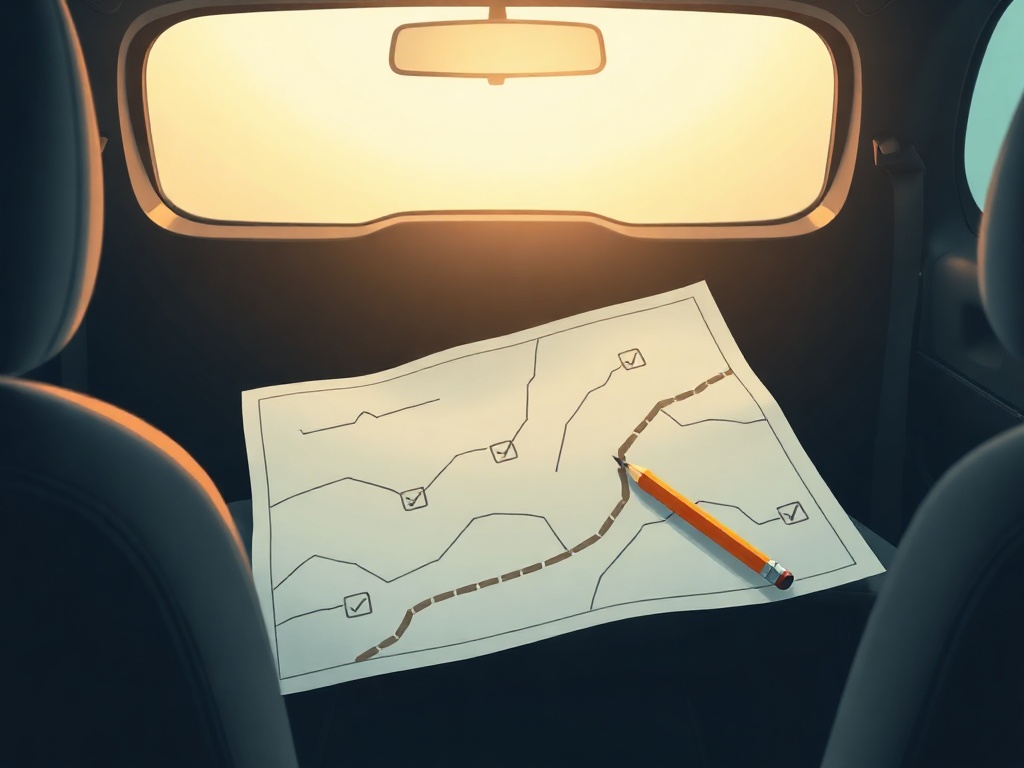
That's why the first thing that actually works isn't a bag of toys, but a map of the trip. It doesn't have to be a real map — a sheet of paper works just as well.
Why "just grab your tablet" falls apart after the first hour
A screen really does quiet a child down. The problem comes later: after an hour and a half of staring at a screen while the car is moving, plenty of kids get cranky, hungry, or carsick — and you've just burned your one big trick right when three hours of driving remain. It's smarter to make the screen a single, defined block — say, one film after you pass the halfway town — rather than background noise from departure to arrival.
The other thing that falls apart is "just entertain yourself." To a child who's already been sitting for two hours with a seatbelt across their chest, that sounds like "leave me alone." Give them a role instead of empty time.
The navigator's job: the child tracks the road, not the clock
Before you set off, write down six or seven route points together — a town, a petrol station, a bridge, a tunnel, a turn-off. The child gets the sheet and a pencil and crosses off each point as you pass it. Suddenly "how much longer" turns into "three things left until the coffee stop," which is far easier to grasp.
The Road Map
You'll need a sheet of paper, a pencil, and three minutes before setting off to write the points together. The writing itself takes about 10 minutes, and then the game runs for the whole trip. It works for kids aged 7 to 10, though younger ones prefer drawing the points rather than writing them. Consider it a win if the child announces out loud at least once, "we passed the tunnel, four to go" — that means they're tracking the road on their own.
Games played with your mouth, not your hands
In a car, anything that requires looking down — a picture book, a maze, small figurines — is risky for the stomach and ends up on the floor at the first bend. That's why the games that hold up best are the spoken ones.
- "I spy…" — one person names a colour or a letter, the others guess what they saw. Works best in traffic or on a slow stretch.
- Counting something specific: white cars, caravans, round road signs. Agree in advance on the counting limit — up to the next turn-off, not "until we reach the sea," or the game never ends.
- One-word story: everyone adds a sentence to a shared story. The rule that makes it funny — every sentence must include the word the previous player just said.
- Yes-or-no riddles: one person thinks of an object from the car, the others ask only yes-or-no questions. Twenty questions max.
- Radio game: whoever names the song first from its first three seconds wins a point.
The Every-Hour-On-The-Hour Box
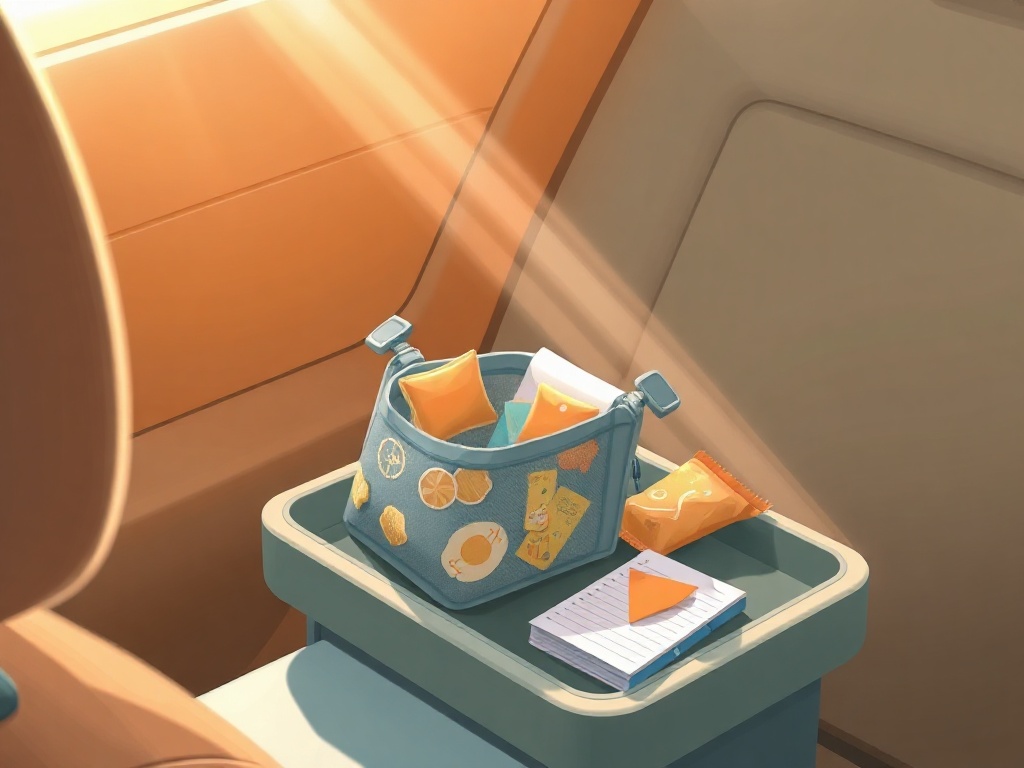
Prepare a small box or a plastic bag containing four or five sealed little pouches — one for each hour of driving. In each pouch, put one small surprise: stickers, a mini drawing pad, a card with a challenge ("make up a name for the next five cars that overtake us"), a small snack. Preparing it the evening before takes about 20 minutes, and opening each pouch takes about 5 minutes per hour. Suitable for ages 7 to 10. If you're buying anything new, €3-5 total is plenty; most things, though, you'll already have at home. It's a success if the child waits their turn without asking for the pouch early — that's patience training disguised as a game.
Stops are part of the plan, not an emergency measure
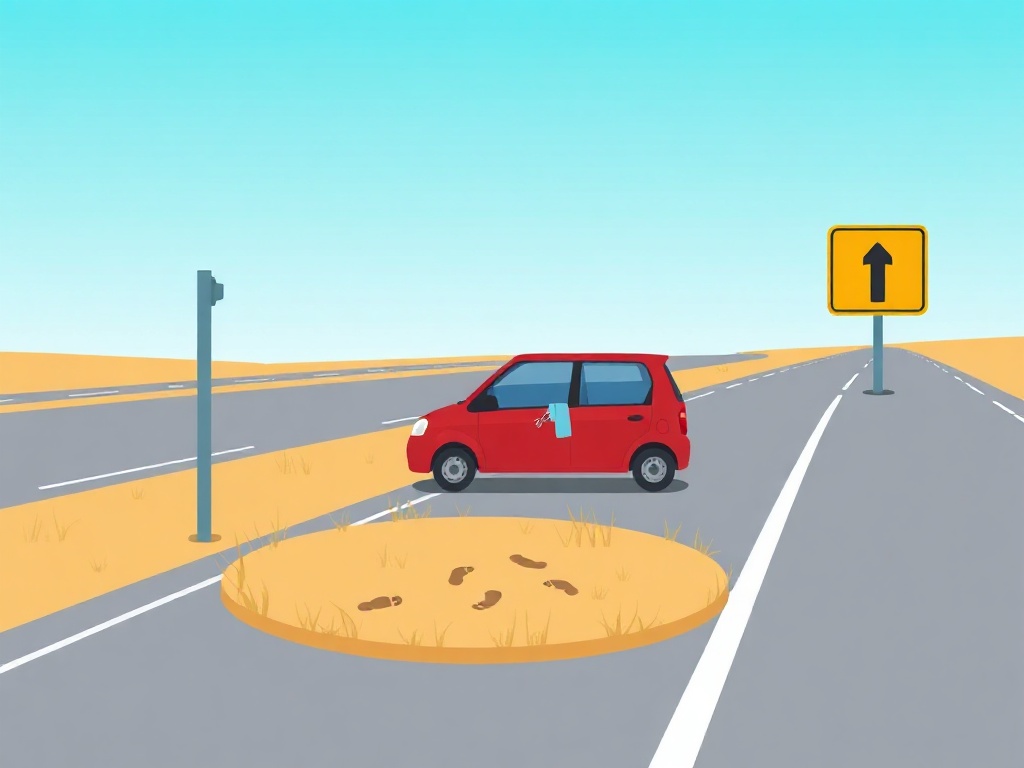
If you only stop once shouting has already broken out in the back seat, the stop won't help — the child is too worked up to actually rest. Plan a break every two hours and make it physical: ten squats, a lap around the car, hopping to the road sign and back. Five minutes of moving around is worth an hour of new games.
On the way to visit grandma, there's another trick that works wonders — give the child responsibility for the arrival. For example, they carry the bag with grandma's gift and they get to hand it over. That gives them something to look forward to, not just a journey to sit through.
The most common mistake: everything at once
A parent pulls out the picture books, the stickers, the tablet, and the snacks in the first twenty minutes. The child is thrilled. An hour later there's nothing left to bring out, and four more hours remain. From then on, every new suggestion sounds like a consolation prize and gets met with "I don't want to."
The second most common mistake is setting off at the worst possible time. If you can choose, leave either very early in the morning, while the child naps through the first hour, or right after lunch. A hungry child in a car isn't interested in games — they're busy being hungry.
A child who knows what's coming next holds up far better than a child who's just waiting.
What to pack, without overloading the boot
- Wet wipes and a plastic bag — just in case someone feels carsick.
- A bottle of water and a dry snack: pretzels, an apple, nuts. Chocolate in a warm car is a mistake that takes ages to clean up.
- A light jacket or scarf — the air conditioning blows stronger in the back than you'd think.
- A pencil and a few sheets of paper clipped to a hard board, so nothing gets written on a bouncing lap.
- Headphones, in case there is a film after all — that way the front of the car stays quiet.
And the most important thing in practice: the child should know the plan before you even set off. "We're driving for five hours, we'll stop twice, the film is after the second stop." A ten-second sentence that saves you half the questions along the way.