
A €3 Weekly Pocket-Money Calendar: Teaching a 7–9-Year-Old to Plan Spending and Saving
A practical guide for parents of 7–9-year-olds: it's not the amount that teaches a child about money — it's the calendar that shows them where it goes. Here's how to build one in 20 minutes and how to play it every week.
Monday, €3 in hand. By Tuesday lunchtime, 40 cents is left — a bag of crisps, one gumball, and a shiny eraser that's already under the bed by day three. Friday brings the question: "Can I have a bit more?" And here most parents do the same thing — they say "no" and explain that money doesn't grow on trees. The child nods. The following Monday, the story repeats itself almost exactly.
The reason isn't that the amount is too small or that the child is careless. At 7 to 9 years old, most children still live largely in the "now" — what can't be seen tends not to feel real. That's why a pocket-money calendar often works where conversation fails: it turns the future into something you can touch, colour in, and count on your fingers.
What a pocket-money calendar actually is
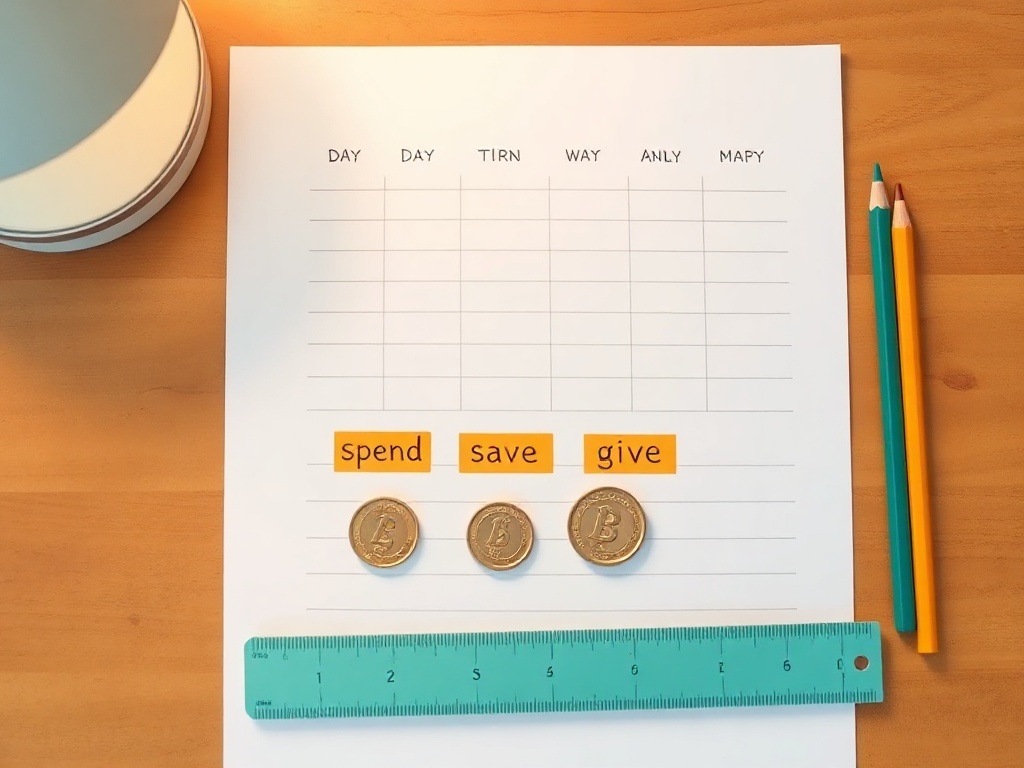
One A4 sheet, ruled into seven columns — one for each day of the week. The weekly amount goes at the top; below it are three boxes: "spend", "save", "give or help". The child doesn't write down what they've spent. They write down what they PLAN to spend — on Sunday evening, before they've even got the money.
The difference is huge. A list made after spending is a report, and it usually comes with guilt. A list made before spending is a choice, and it comes with power. And 7-year-olds love having power over something.
How to split €3 without a calculator
Three euros divide beautifully, because they're three €1 coins. Give each coin its own job:
- €1 — for now. It's allowed to vanish as early as Monday, and that's completely fine.
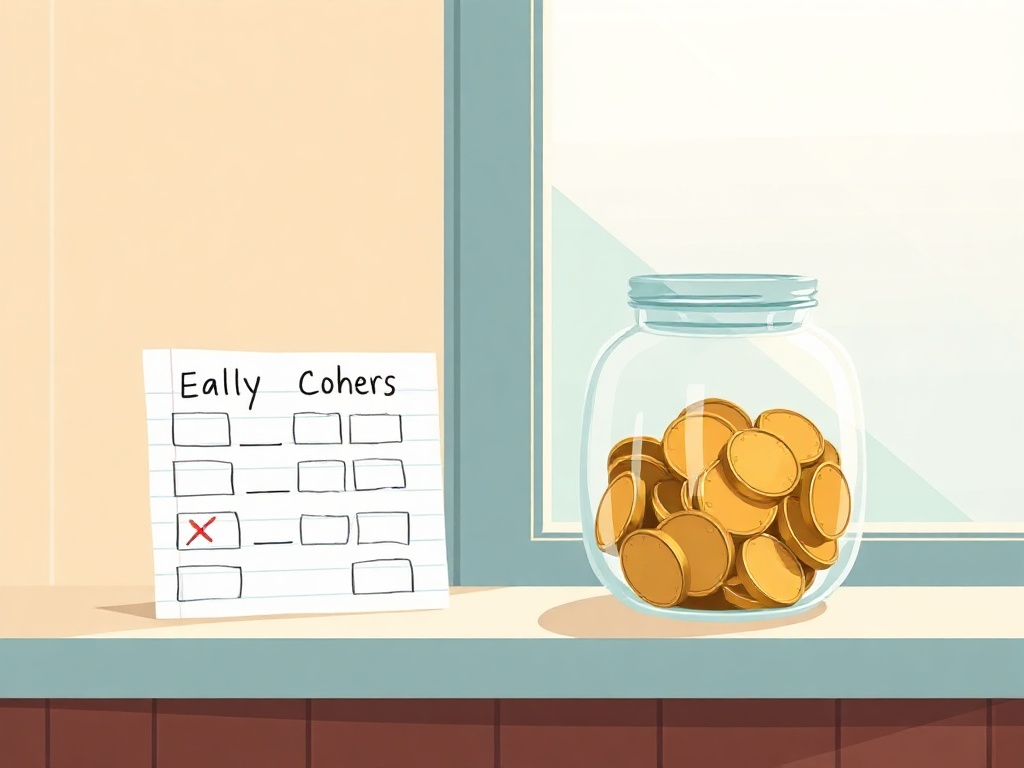
- €1.50 — for the goal. It goes into a jar or envelope that doesn't get opened until Saturday.
- €0.50 — for someone else. A birthday present, food for stray cats, coins for Grandma's flowers.
If the child wants something that costs €12, the maths is simple and worth doing together, out loud: 12 divided by 1.50 is 8 weeks. Eight weeks is two months. Draw eight little squares and tick one off every Saturday. The moment the child sees the squares, saving stops being a punishment and becomes a game with a clear finish line.
Make the calendar on Sunday evening
All you need is an A4 sheet, a ruler, three different coloured pencils, and a small envelope or jar with a lid. Set aside 20 minutes — ideally on Sunday, before dinner. Draw seven vertical lines and write in the days; underneath, draw the three boxes and let the child colour them in however they like, including naming them ("Right Now", "My Goal", "For Others"). Then fill in just the first week together. This suits ages 7–9, though 7-year-olds will need help writing the amounts. You've succeeded if, by the end, the child can point to which day they plan to spend their first euro — and explain why then.
The "Table-Top Shop" game — so the real shop isn't the first attempt
Children learn to choose through repetition, and a supermarket offers none — just lights, rushing, and a queue behind you. So the rehearsal happens at home.
Table-Top Shop
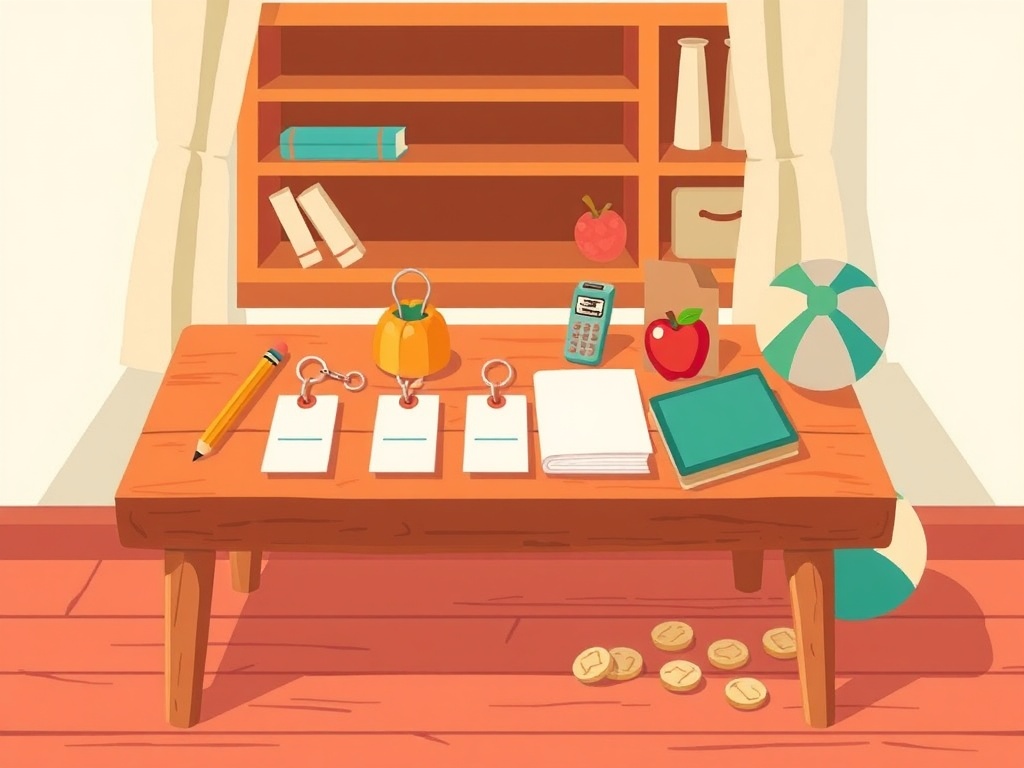
Gather 8–10 household objects — a pencil, an apple, an old keyring, a book, a ball — and stick price tags on them ranging from €0.50 to €4. Give the child real coins totalling €3 (or cardboard circles cut out, if you prefer). The game takes 15 minutes and suits ages 7–9. There's one rule: the child walks around the table, picks whatever they like, but at the end must pay the exact amount. If they're short, they put something back on the shelf — no comment from you. Play three rounds in a row, and on the second round raise the price of their favourite item by €1. You've succeeded if, on the third round, the child voluntarily leaves something on the table and says something like: "I won't get this today, I'll leave it for next time."
"I don't have the money for that" is a sentence a child needs to be able to say calmly, without shame. It's learned at the living-room table, not at the till.
The most common mistake: the parent loan
On Thursday the money runs out, the child is upset, and you hand over €2 "as a loan, we'll take it off next week's amount." It sounds like a lesson in responsibility. It isn't.
The problem is that this removes the one real consequence. The child learns that running out of money isn't really the end — just a reason to feel a bit sad — and that being sad works better than planning. The following week they spend even faster, because the system has now been tested and proven to work. The opposite is also a mistake: don't turn running out of money into a lecture. One calm sentence is enough — "That money was for through Sunday. On Sunday we make the new calendar." That's it. The silence afterwards is part of the lesson.
The other common mistake is handing out the money in bits — €1 each time the child asks. Then there's nothing to plan, because there's no whole amount. Even €3 given all at once teaches more than €6 given five times over.
When to link pocket money to chores
Split things into two categories. Tidying their own room, taking out the rubbish, and setting the table are part of being in a family — no payment for those. But you can have a separate list of "extra" tasks with a fixed price: washing the car €1, folding the laundry for the whole family €0.50, watering the neighbours' plants during the holidays. This way the child sees that, besides dividing money up, money can also grow — and that's the other half of pocket-money maths.
How to keep it going through the school year
The calendar works as long as it's quick. If filling it in takes more than ten minutes, the child will start avoiding it by the third week. So make ten blank sheets at once in September and stick them to the fridge with a magnet. In June, when school finishes, change up the game — summer is a good time for a "big goal", since there are more weeks in a row and fewer small temptations from the corner shop.
One more thing: don't fix their bad decisions. If the child decides to spend their whole weekly amount on something they'll be bored of by Friday, let them. One wasted euro at age 8 is the cheapest lesson they'll ever get.