
What to Do With Your Child in the Waiting Room, No Phone Required
Three games you can play with empty hands, plus a two-minute prep before you leave the house. For kids aged 5-7 and the adult beside them.
Eighteen minutes outside the doctor's office. Your child has already slid off the chair, climbed back up, tugged your sleeve twice, and now asks in that voice every parent knows: "When are we going in?" You reach into your bag. There's the phone, and it works like a charm — for nine minutes, until it's time to take it back, and that's when the real trouble starts.
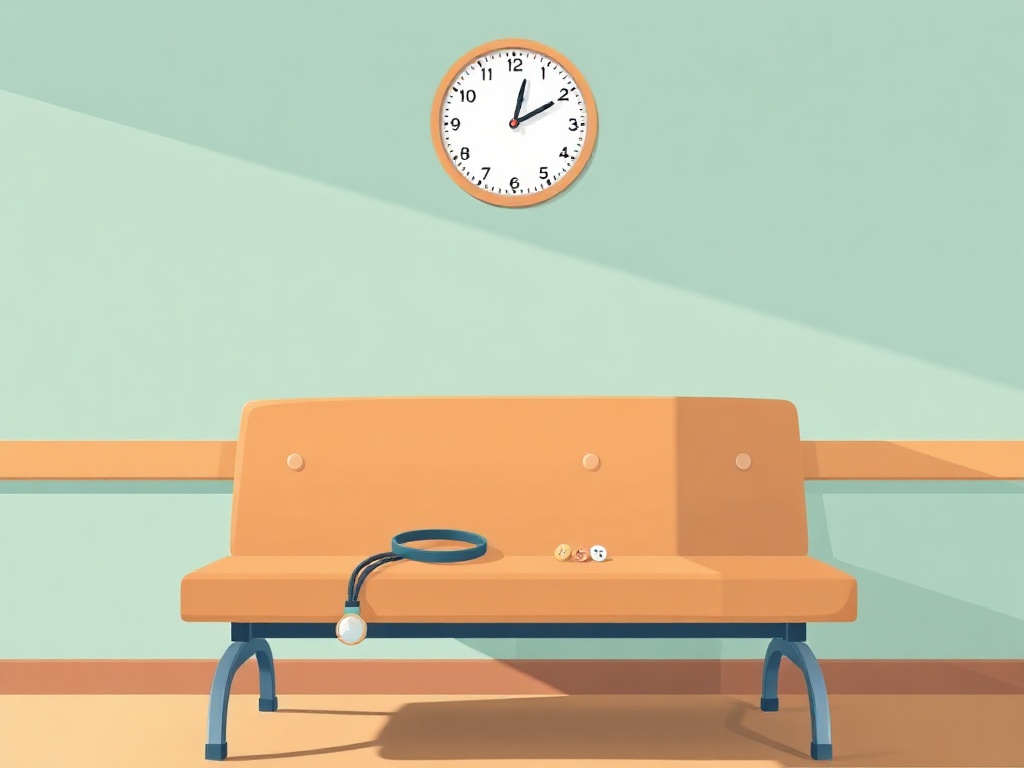
The usual advice is "bring a picture book and some crayons." Sounds sensible, but it falls apart in practice: there's no table in a waiting room, the child draws on their knee, the crayon rolls under the next chair, and within three minutes you're right back where you started. What you need is something else — games that require nothing but the two of you and the walls around you.

Why the phone in the waiting room costs more than it seems
It's not about screen time itself. It's about how it ends. A game you play together ends softly — you say "last round" and it's over. The phone ends abruptly, because the adult takes it away, and that's exactly when, right outside the office door, you get the scene you were trying to avoid. Besides, a waiting room is one of the few places where a child has nothing to do and is forced to invent something. That boredom is useful, and it's worth not filling it every single time.

The two minutes before you leave the house
The most important part doesn't happen in the waiting room. It happens at the front door. Before you leave, tell your child: "We'll be waiting today. Shall we bring 'I Spy' or 'The Story of the Person Across From Us'?" The child chooses. A choice made ahead of time does twice the work of even the best game pulled out mid-whine — because by the time the whining starts, the child doesn't want a game anymore, they want the phone.
- Ask which game you'll play while you're still at home, and give it a name.
- Tell them how long you'll wait using something they understand: "about two songs long" or "about as long as it takes to eat an apple slowly."
- Give them one small job for when you go in: "You get to say hello to the nurse." A child with a job waits more calmly.
- If you bring something in your bag, keep it small and non-rolling — a hair tie or three buttons, for instance.
Who Am I (No Props Needed)
This game needs absolutely nothing — just the two of you and a few minutes. It takes 5 to 10 minutes and works best with kids aged 5-7. You think of something visible from where you're sitting: the clock on the wall, the shoes of the man across from you, the green sign. Then you describe it in the first person, as if you were that thing: "I'm round. I'm as tall as Daddy. Everyone looks at me when they're in a hurry." The child guesses. If they get it wrong, you give one more clue — but no more than three total. Then you switch roles, and that's where the real value lies, because now the child has to describe something without naming it. Call it a win once the child manages two sentences about their object without giving away the name.
The Story of the Person Who Just Walked In
Again, no props, about 7 minutes, best for 6-7-year-olds who already love spinning long stories. Together, pick someone in the room — quietly, no pointing — and invent where they're headed next. "That man is carrying a big bag. Inside are fourteen sandwiches, because he's travelling to visit his grandmother." The child adds the next sentence, you add the one after that. One rule keeps the game on safe ground: we only make up nice and funny things, nothing about how the person looks. If your child says something too loudly, gently steer them back to a whisper: "This story is ours, just between the two of us." You've succeeded once the child adds three twists to the story on their own, without you having to prompt with questions.
Fingers as a Scoreboard
A short gap-filler game — 3-4 minutes, for 5-6-year-olds who are starting to get restless. All you use are your hands. Hold up five fingers and say: "Find five things in the room made of wood." Then four blue things, then three things that spin. The child counts by folding down one of your fingers for each thing they find. If the room is sparse, switch to sounds: "Three sounds you can hear right now." It works because the child has to get up, turn around, and look, instead of sitting and waiting. Count it a success when the child completes one full round of five without asking "how much longer."
The most common mistake: starting the game only once the whining has begun
The parent holds out for the first ten minutes, the child starts squirming, and only then comes: "Let's play something!" It's almost always too late. A child who's already reached the whining stage isn't bored — they're worn out from sitting still and have no patience left for rules. Every suggestion you make now sounds to them like just more waiting.
Flip the order. Start the game in the first three minutes, while your child is still calm and curious, and stop it before it gets stale. If you notice attention slipping, say "we'll count to ten and stop" — the game ends on your terms, not because it fell apart. The second most common mistake is a parent playing half-heartedly while glancing at their own phone. The child notices within seconds and immediately wants their own screen, because yours is clearly more interesting than you are.
When the wait is long and hard
- If you're waiting more than half an hour, break up the time: a game, then a walk to the end of the hallway and back, then a second game. Movement matters more than the game itself.
- A hungry child won't play. A dry biscuit or an apple in your bag solves more than any idea on this list.
- When queuing at a shop, give your child a specific job: "You count how many yellow things are on the conveyor belt."
- If you do end up reaching for the phone, announce the limit beforehand: "You watch until the song ends." An announced ending is always easier to accept than one that's simply taken away.
A child doesn't wait better because they have more to do. They wait better when they know how long the wait will last and what comes next.
One last thing that saves a lot of nerves: don't promise a reward for good waiting every single time. If every wait is followed by something bought for 2-3 €, you'll very quickly end up with a child who walks into the waiting room asking "so what are you getting me?" Let the reward come from you instead — the game, the walk, the story on the way back.