
June 1st at Home: A Party for 5-7 Year Olds for Under €10
No entertainer, no rented hall needed. With eight or nine euros (about 16-18 lv), a bit of paper and one clear plan, the afternoon of June 1st becomes a day your child will talk about for weeks.
Eight in the morning on June 1st. Your child sits down at the table and asks, "Today's my special day, right? What are we doing?" And you still haven't come up with anything, the shops are full of balloons priced way too high, and somewhere inside you there's that pinch of guilt that once again you'll skip the shop-bought cake and the trip to the swings.
Here you'll find a plan for children between 5 and 7 — the age when a child can already cut with safety scissors, understands rules explained in two sentences, and desperately wants to "help." It all fits into a budget of under €10 (roughly 20 lv) and a single afternoon. By the end you'll have a written shopping list, two ready-made activities with a clear beginning and end, and one simple day plan you can repeat next year too.
Why a store-bought party rarely works for 5-7 year olds
The most common advice for June 1st goes like this: take your child somewhere, buy them a present, take a photo. The trouble is, at this age children remember best whatever they made with their own hands. A ready-made balloon is pretty for five minutes. The balloon your child blew up themselves and drew a face on with a marker gets dragged around the house for three days and given a name.
There's a second, very practical reason too. A store-bought party ends the moment the slice of cake is finished — after that comes an empty afternoon and the question "now what?" A party you've made together has a natural structure: preparation, the main event, showing it off to dad or grandma in the evening. Three parts, three separate bursts of excitement.
The shopping list: what fits into €10
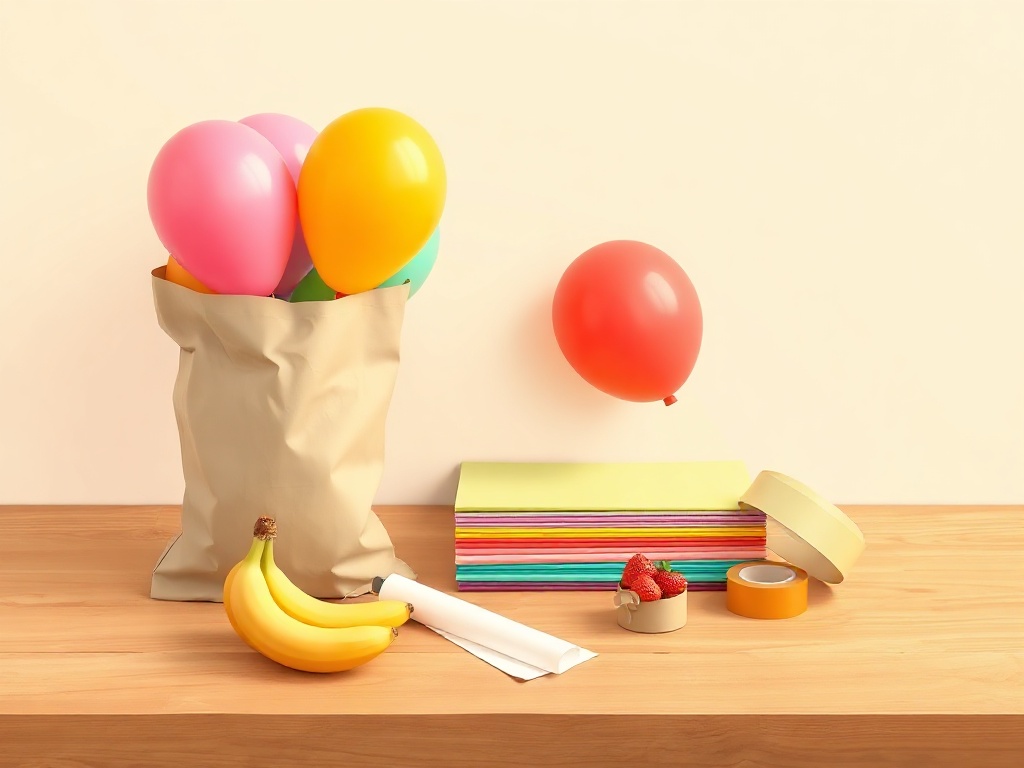
Here's what you actually need. Prices are approximate, from an ordinary supermarket or stationery shop, and you almost certainly already have something on this list at home — which leaves more money for the fruit.
- A pack of coloured balloons, 10-15 pieces — about €1.50 (3 lv)
- A pack of coloured card or a coloured paper pad — about €1.50 (3 lv)
- Tape and a glue stick, if you don't already have some — about €1.50 (3 lv)
- A few rolls of crepe paper for garlands — about €1 (2 lv)
- Fruit for the "cake": banana, strawberries or grapes, depending on the season — about €3 (6 lv)
- A packet of biscuits or ready-made sponge bases — about €1 (2 lv)
That comes to between €8 and €10 in total (roughly 16 to 20 lv). If you start adding candles, table decorations and figurines, the budget balloons within minutes — so it's best to shop with a ready list and skip the party aisle altogether.
What the day looks like: three time blocks
Don't pack the whole day. Two activities and one shared dinner are plenty for a 5-7 year old, who's usually falling apart from tiredness by six o'clock anyway. Three blocks, roughly 40, 25 and 15 minutes long, with free time in between.
- Before lunch, about 40 minutes: decorating the room — this is the prep, and your child does the main part
- After the afternoon nap/rest, about 25 minutes: making the fruit "cake" on plates
- In the evening, about 15 minutes: showing off the decorations to whoever gets home last, and a photo
The room turns into a party hall
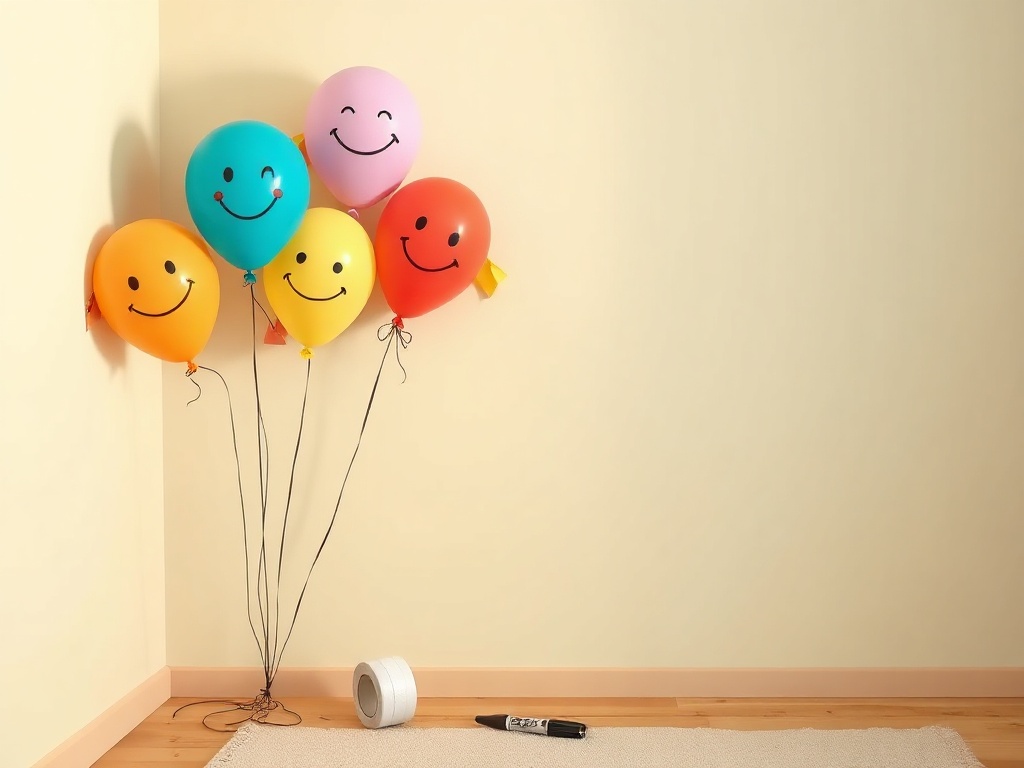
You'll need the balloons, crepe paper, tape and a black marker. Set aside 40 minutes and start with an agreement: your child picks which wall is the "party wall." You blow up the balloons, they draw a face on each one — a smile, eyes, whatever comes to mind — and then decide where to stick them. Twist the crepe paper into long streamers and stretch them from one corner of the wall to the other; your child hands you the streamers and presses the tape down with a finger. It's a good idea to agree beforehand which surfaces are off-limits, so nothing sticks to the wallpaper. Age: 5-7, though for five-year-olds you hold the chair and handle the high spots. You've succeeded when your child can stand in front of the wall and tell you exactly which balloon they drew — that means the decorations are now theirs, not yours.
No-bake fruit cake
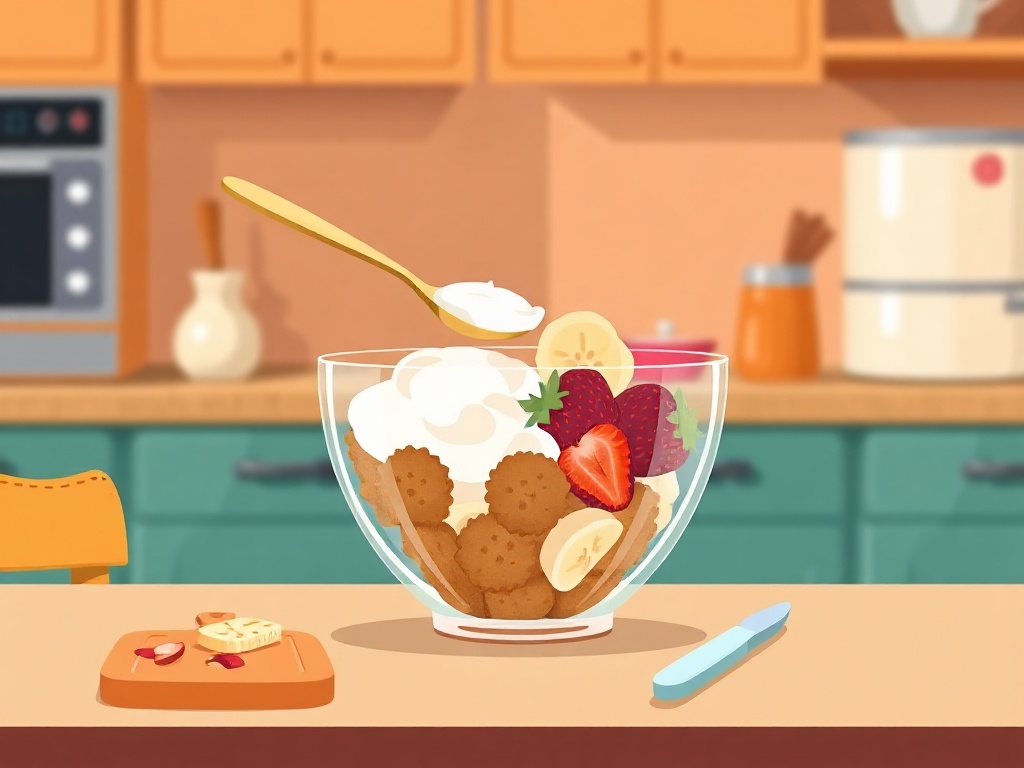
You'll need biscuits or ready-made sponge bases, yoghurt or cream cheese, fruit, and one deep bowl per person. It takes about 25 minutes, plus half an hour in the fridge. Your child layers crushed biscuits at the bottom, a spoonful of yoghurt on top, then the chopped fruit — repeating two or three times. Banana gets sliced with a table knife with no sharp edge; strawberries are torn apart by hand, which is plenty for a five-year-old. Leave the bowls in the fridge while you set the table. Age: 5-7. You've succeeded when your child carries their own bowl to the table and announces out loud what's in it: "This one's mine, with strawberries and three layers of biscuit." If you say it for them, the magic is lost.
The most common mistake: the parent does it, the child watches
The temptation is huge. You fold faster, you glue straighter, your cake turns out nicer — and little by little your child ends up on the sofa with a tablet while you finish their party for them. That's exactly when the day turns into just another chore, and by evening the disappointment sets in: "We didn't do anything."
The reason this doesn't work is simple. A 5-7 year old experiences the party as their own achievement — "I made it," "I thought of it." If everything's handed to them ready-made, all that's left is to consume it, and consuming runs out fast. Swap the roles: you're the assistant, handing over the scissors and holding things steady. A crooked garland stuck up by a six-year-old does the job far better than a perfect one made by you.
A second mistake of the same kind is a surprise list that's too long. Five activities for one afternoon means none of them actually gets finished, and your child ends up in tears right before dinner.
Look, I made this wall. The balloon with the two eyes is mine.
If the day goes off the rails
Balloons pop, the cake spills, and around three in the afternoon your child announces that this is all silly. Three in the afternoon is simply when a six-year-old runs out of patience, not a sign the plan was wrong. Stop the activity wherever it is, put things aside on the table, and head outside for twenty minutes. Most of the time your child comes back to the unfinished thing on their own, because they started it and want to see it done.
If they don't come back to it — let it go. The decorated wall stays on the wall, the fruit stays in the fridge, and dinner is still festive. A half-finished garland and one bowl of fruit are still a party your child built.
What's left after June 1st
Take the garlands down the next day, but keep two or three balloons with the drawn-on faces, plus one photo of the wall. Next year, pull out the photo before June 1st and ask your child what they want to do again. By six or seven, they'll remember and have opinions — and that's how a family tradition is born, one that costs nothing and builds on last year's.
One more thing: don't decorate the room before your child gets out of bed in the morning — quite the opposite, actually. Wait for them. The whole point is for them to see the empty wall first, and then transform it themselves.