
20 Minutes for the Kids' Room: Tidying That Feels Like a Game (Ages 5-7)
Spring cleaning in the kids' room falls apart not because your child is lazy, but because the task is framed too big. Here are two timer games that get it done in 20 minutes.
Saturday morning, window open, the winter clothes are already in the laundry bag. You say, "Come on, we're tidying up today — start with your room." Your child walks in, sits down on the rug, and four minutes later you find them building a garage out of the very blocks they were supposed to put away. They weren't trying to annoy you. They just heard a sentence that has no shape to it: no obvious starting point, no way to know when it's done.
That's the difference between an adult and a six-year-old in the same room. You see a system — toys with toys, books on the shelf, dirty clothes in the hamper. Your child sees two hundred separate objects with no order between them at all. That's why "learn to be responsible" doesn't help. What does help is giving the mess rules, a timer, and a point where someone wins.
Why "tidy your room" is the wrong instruction
At ages 5-7, a child can hold one, maybe two, sequential tasks in their head at once. "Tidy your room" contains at least seven — put away the toys, fold the clothes, return the books, make the bed, take out the trash, wipe the desk, line up the shoes. To a child, that sounds a lot like someone telling you to "sort your life out" on a Saturday before lunch.
Swap it for an instruction with a number and an end point. Compare how the two sound:
- "Tidy your room." → the child doesn't know where to start and loses focus within two minutes.
- "Pick up ten things off the floor and put them in the blue box." → there's a number, a box, a finish line.
- "Sort out the desk." → fog.
- "Only the lamp and the pencil cup stay on the desk. Everything else finds a home." → the child can picture what "done" looks like.
- "We're cleaning until lunchtime." → endless.
- "We're cleaning until the timer goes off — 20 minutes, then we go outside." → there's an end, and something to look forward to.
The "Secret Object" game
The Secret Object
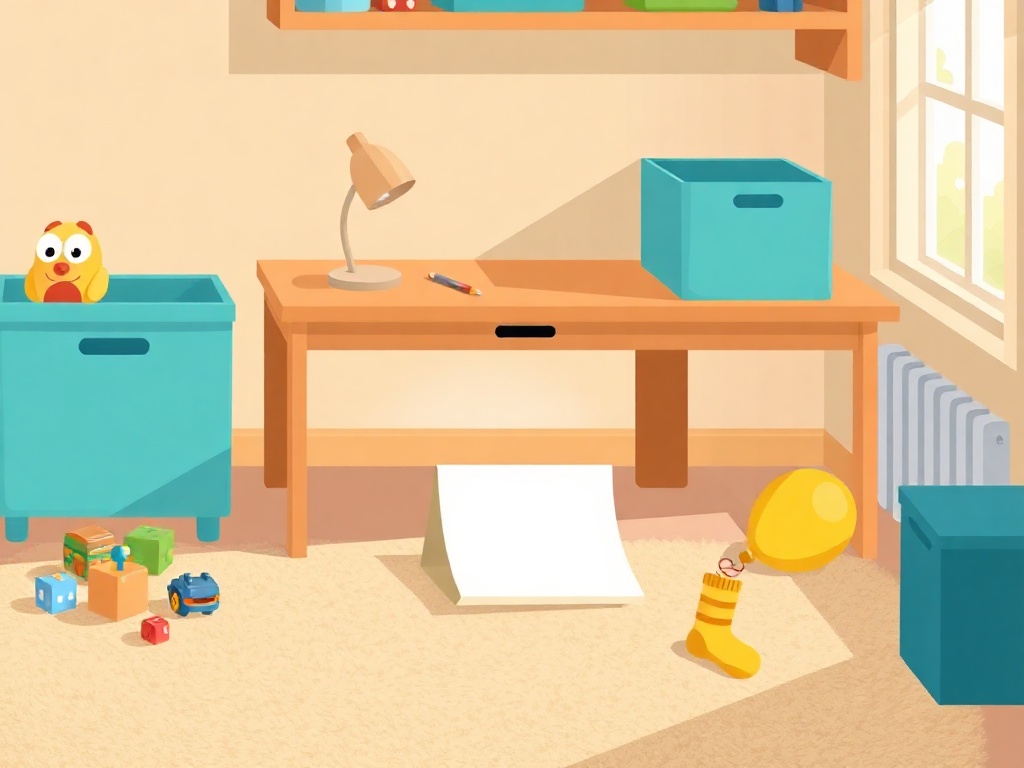
Before you start, scan the room and silently pick one item lying on the floor — say, the yellow balloon or the sock under the bed. Write it on a slip of paper and place it face-down on the table without your child seeing. Say, "There's one secret object hiding in this room. If you put it back where it belongs, you win." Your child starts tidying, and after each item asks, "Was it this one?" — and you answer only "not yet" or "yes!" The trick is that while searching for it, they end up putting everything else away too. When they find it, flip the paper over — proof you didn't just make up the answer on the spot. Five-year-olds especially love that part. Supplies: one slip of paper, a pen, and a box or toy bin; Time: 8-10 minutes; Ages: 5-7 — with five-year-olds, count out loud together, while seven-year-olds can run the next round themselves and hide an object for you; Success: the floor is clear enough to walk from the door to the window without stepping around anything, and the secret object is back in its place.
The "Three Houses" game
Three Houses
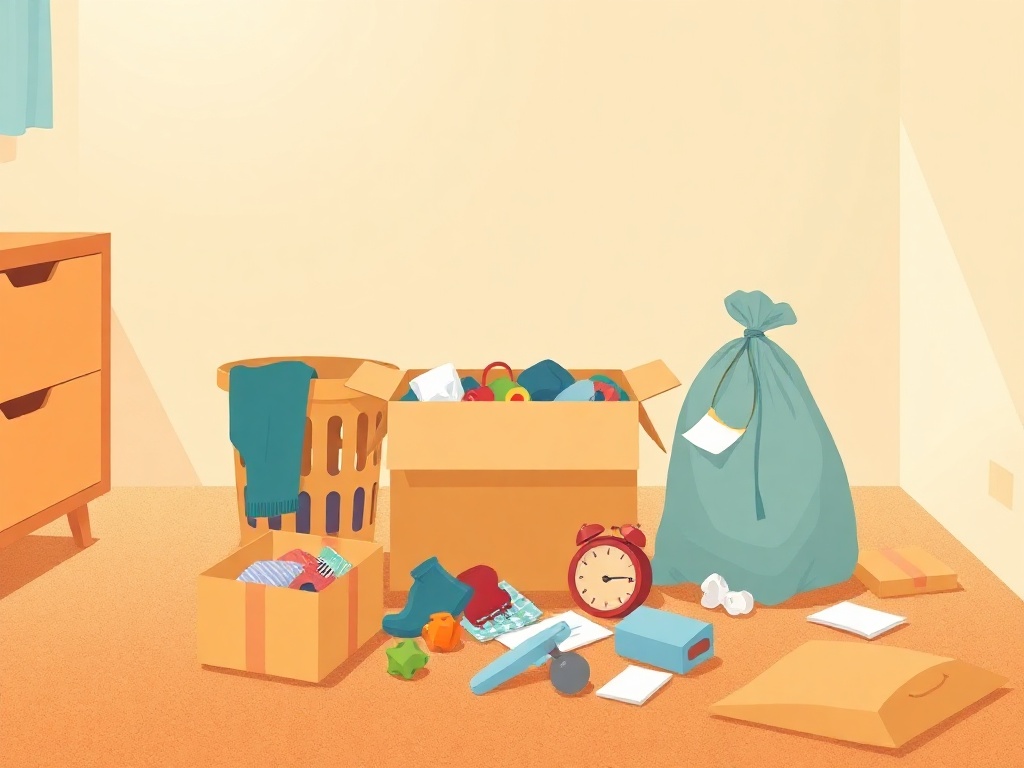
Place three different containers in the middle of the room — a laundry hamper, a cardboard box, and a bin bag — and name them out loud: "This one's the clothes house, this one's the toy house, and this one's the trash house, where nothing ever comes back from." Set a timer for seven minutes, and every item on the floor has to go to its house. If your child gets it wrong and stuffs a sock in with the blocks, don't fix it yourself — say "only toys live in this house" and let them move it. At the end, empty the toy bin into the cupboard, the clothes go into the wash, and the bin bag gets carried out by your child themselves. That act of carrying it out is the moment they see their work is finished. Supplies: a laundry hamper, an empty cardboard box, and a bin bag, plus a phone or kitchen timer; Time: 7 minutes for sorting plus 5 more for putting away; Ages: 5-7; Success: all three containers are empty at the end — nothing is left sitting in the middle of the room waiting for "later."
What the 20 minutes look like in practice
- Minutes 0-2: decide together what happens after the cleanup — the playground, pancakes, an episode of a cartoon. Say it out loud, so your child has something to race toward.
- Minutes 2-9: "Secret Object" — the floor gets cleared almost entirely.
- Minutes 9-16: "Three Houses" — sort what's left and put it away.
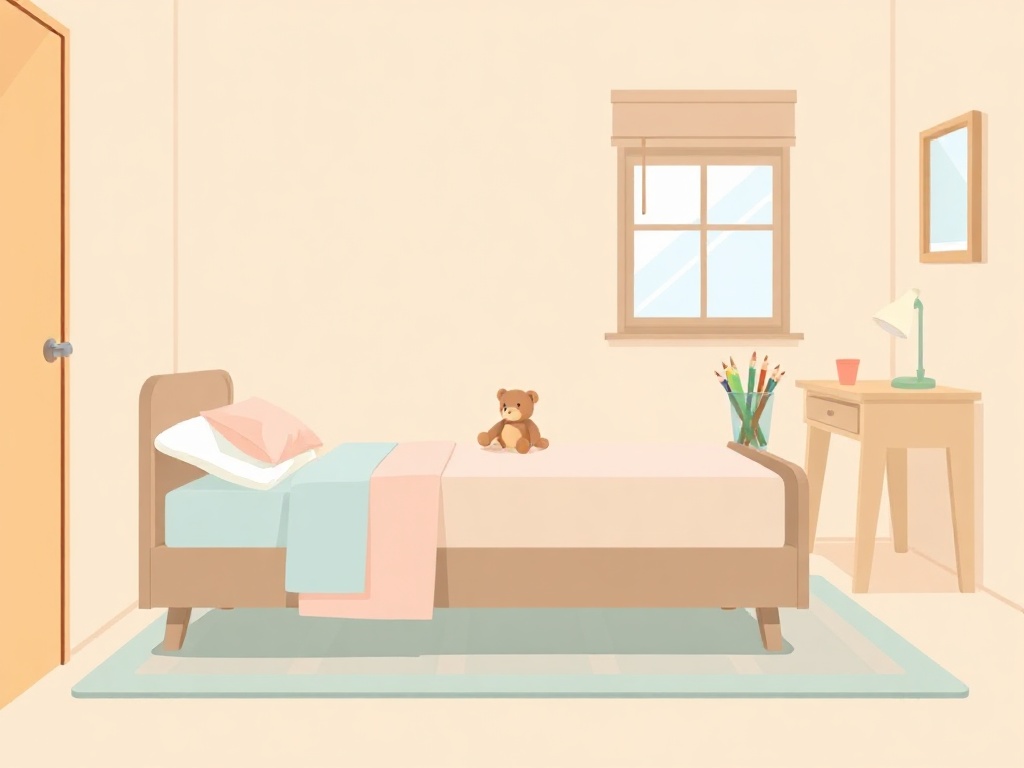
- Minutes 16-18: the bed. Don't aim for hospital corners — just: pillow up top, duvet pulled straight, the bedtime toy on top.
- Minutes 18-20: the walkthrough. Your child walks through the room and names out loud what they see: "The floor is clear. The desk only has the lamp. The bin is empty." This walkthrough matters as much as the cleaning itself.
"I found the secret object, and I tidied the whole room while I was looking for it." — that one sentence does more than ten reminders.
The most common mistake: cleaning together, but really cleaning instead of your child
It looks harmless. Your child is dawdling over the building set, you crouch down beside them and "just help a little" — and in three minutes you've put away two-thirds of the room. The result is a clean room and a child who's learned nothing. Next time they'll stall even more deliberately, because they've figured out the unwritten rule: if I drag my feet long enough, Mom finishes it.
Flip the roles. You clean the same room, but your own part of it — the window, the curtains, the pile of books on the floor that are yours. Your child sees that everyone is working, but no one is working for them. If you really do need to help, help with words, not hands: "Which house do the blocks live in?" instead of putting them away yourself.
A second common mistake: promising money. One euro for a tidy room works exactly three times, then the price goes up, and your child starts asking "so what do I get?" before lifting a finger. If you do want to link tidying to pocket money, keep them separate: pocket money is weekly and fixed — say, €2 for a seven-year-old — and the room gets tidied because people live in it, not because someone's getting paid.
What's left after the 20 minutes
Not spotless order — that's unrealistic, and it's not the goal. What's left is something else: your child now knows where to start. Next Saturday, if you just say "okay, three houses," they'll understand exactly what that means without another word of explanation. From there, the game gradually fades away and what remains is the habit — usually somewhere around week eight to ten. Until then, keep setting the timer.