
April Terrace Watering: Watering Can, Cup, and Seed Games for Kids Ages 6 to 8
Three times a week your child grabs the watering can and vanishes two minutes later. Here's how watering becomes a game with rules, measuring, and a visible payoff — without drowning the seedlings.
It's Saturday morning, the sun has already reached the railing, and the soil in the terrace pots is pale and cracked. You hand your seven-year-old the watering can — he drenches the first two pots until they overflow, skips the third, sets the can down on the tiles, and heads back to the tablet. Total time on the terrace: three minutes.
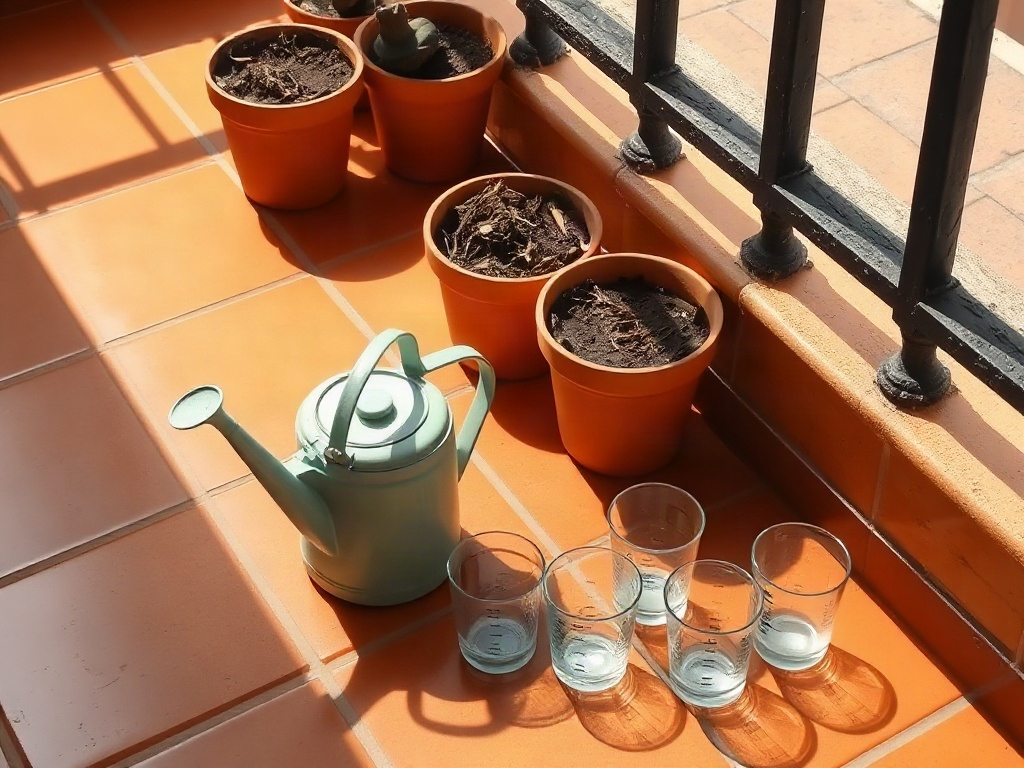
The usual advice is to involve your child in plant care so they build a sense of responsibility. But responsibility doesn't come from repeating one dull motion. It comes from seeing that your action changed something. A watered geranium doesn't look any different from an unwatered one — the result only shows up days later. So the child gets bored: the task has no feedback.
The fix isn't nagging — it's putting things on the terrace that can be counted and compared. Cups with measurement lines. A matchstick pushed into the soil. A notebook with dates. Suddenly watering stops being a chore for Mum and becomes a check-up — and kids this age love a check-up.
Why April is the perfect month for this
In April, seedlings in cups grow at a visible pace — a tomato or basil plant puts out a new leaf within days, not weeks. That speed is exactly what makes it a teaching tool. Start in July with fully grown potted flowers and there's nothing left for your child to observe. Start in April and there is.
The second advantage is the weather. April days on the terrace swing between hot and rainy, which makes the question "do we even need to water today" a real question, not a formality. A child who has learned to poke a finger into the soil and say "no, it's still damp, let's wait till tomorrow" has grasped something many adults never do.

The finger test: how your child decides whether to water, solo
Before any games — one rule that does more work than the rest of this article combined. Your child pushes their index finger into the soil up to the first knuckle. If the finger comes out damp with soil clinging to it, no watering today. If the soil is dry and brushes off, water it. That's it.
Have them say it out loud: "I checked pot three — it's dry, I'm watering it." A spoken check gets remembered; a silent one gets skipped. And once your child can refuse to water with a reason, they're no longer following an order — they're making a decision.
The measuring cup: exactly how much each pot drinks
You'll need four or five clear plastic cups, a permanent marker, the watering can, and some label stickers. Use the marker to draw three lines around the outside of each cup and number them 1, 2, 3 — these are the measures. Together, decide how much each pot gets: the big geranium — three cups, the basil pot — half a cup, the corner cactus — nothing this week. Your child sticks a labelled number on each pot, and every watering session means filling the cup and counting out loud. It takes about 20 minutes the first time, then about 10 a week after that. Suitable for kids aged 6 to 8, though six-year-olds will need help drawing the lines. Call it a success once, during a later watering round, your child can say from memory how many cups each pot needs without checking the labels — and there are no puddles under the pots.
This game solves the terrace's most common problem in one move: overwatering. Once the water is portioned into cups, a child can't dump half a watering can onto one seedling.
The matchstick ruler: the seedling's weekly growth
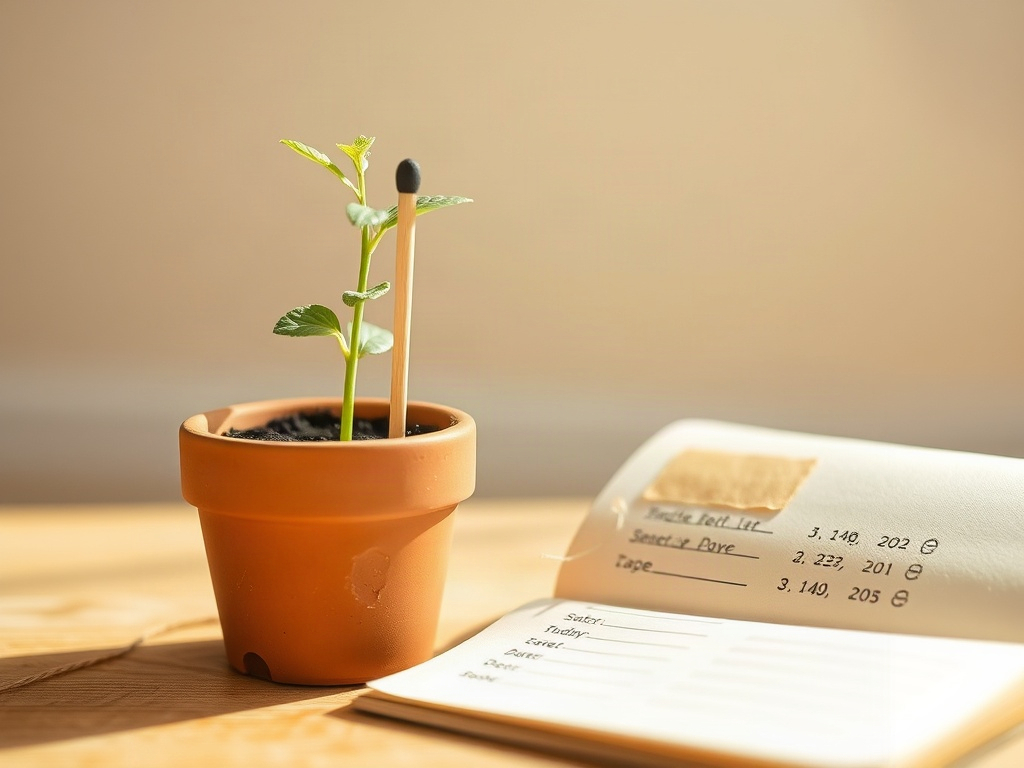
You'll need matchsticks or toothpicks, thin string, a ruler, and a small notebook with a pencil. On watering day, your child sticks a matchstick next to a chosen plant and stretches a piece of string from the soil to the highest leaf. They cut the string, tape it into the notebook next to the date, and note how many centimetres it measures. The following week, they repeat the process and tape the new string below the old one — the difference is visible at a glance, no real maths required. Five minutes a week, best suited to 7-8-year-olds, since it involves reading a ruler. It's a success if, after three weeks, your child can point to the notebook and say which week the seedling grew the most, and why — more sun, moved somewhere warmer, a new leaf.
Something less obvious happens here: your child starts linking care today with a result that only shows up weeks later. That's exactly the skill they'll need for schoolwork down the line.
The most common mistake: turning watering into a chore-for-reward system
The classic move is a star chart on the fridge — five watered pots, one star, ten stars, some treat. It works for about two weeks. Then the child waters on autopilot just to bank the star, stops actually checking the soil, and starts asking "is that enough" instead of finding out.
The problem is that the reward shifts what you're actually watching for. Once the goal is the star, the plant becomes an obstacle on the way to it. Replace the reward with a role instead: your child isn't "helping Mum" — they're in charge of the terrace. They decide which pot gets water today, and they report if a leaf has drooped. The change in behaviour is visible by the third week.
Second most common mistake: handing over a can that's too big. A full two-litre watering can weighs over two kilograms, and a six-year-old can't tilt it with any control. So the water sloshes onto the leaves instead of the soil. Switch to a small can filled halfway, or even a bottle with holes poked in the cap — and the problem disappears.
"I'm not watering the tomato today. I checked with my finger, the soil's wet, it rained yesterday." — that one sentence from a seven-year-old is worth more than a month of watered pots.
What to set up on the terrace to make all of this work
- A small watering can, up to one litre — anything bigger guarantees spilled water and wet socks.
- Four or five clear cups marked with measurement lines; yoghurt pots work too, as long as they're transparent.
- A packet of large seeds — beans, courgettes, sunflowers. Small seeds (parsley, savory) are a poor choice to start with, since they're hard to see and slow to sprout.
- A soft-cover notebook for the strings and dates; not a digital file, since the string needs to be taped down.
- Plastic sheeting or old newspaper under the pots for repotting day.
- If you're buying anything new, a packet of seeds and a small watering can together cost around €3-5; you don't need more than that.
How to keep it going after April
By mid-May, the seedlings move from their cups into large pots, and the game changes: instead of measuring growth every week, you start counting flowers and later fruit. The notebook stays the same — your child keeps writing in it, just under a new heading. If they started in April, by the end of the school year in mid-June they'll have three full months of notes, and they'll usually want to show them off at school.
One more thing not to skip: let one plant die. Not on purpose — just don't rescue it in your child's place. A wilted basil plant that went two weeks without water explains cause and effect better than any lecture could. Plant a new seed in its place and start again — this time, your child will remember.