
Quiet Birthday Party Games for a Small Flat: 8 Kids, 2 Hours
Quiet birthday party games for eight six-year-olds in a small flat: no running, no shouting, plus the one mistake that wrecks every party around minute forty.
It's 3:40pm. Eight six-year-olds have just finished the cake, the sugar has kicked in, and the biggest boy has started jumping off the sofa. Downstairs lives a woman who works night shifts. You're standing in the hallway with a bag of balloons and one thought: "an hour and a half to go."
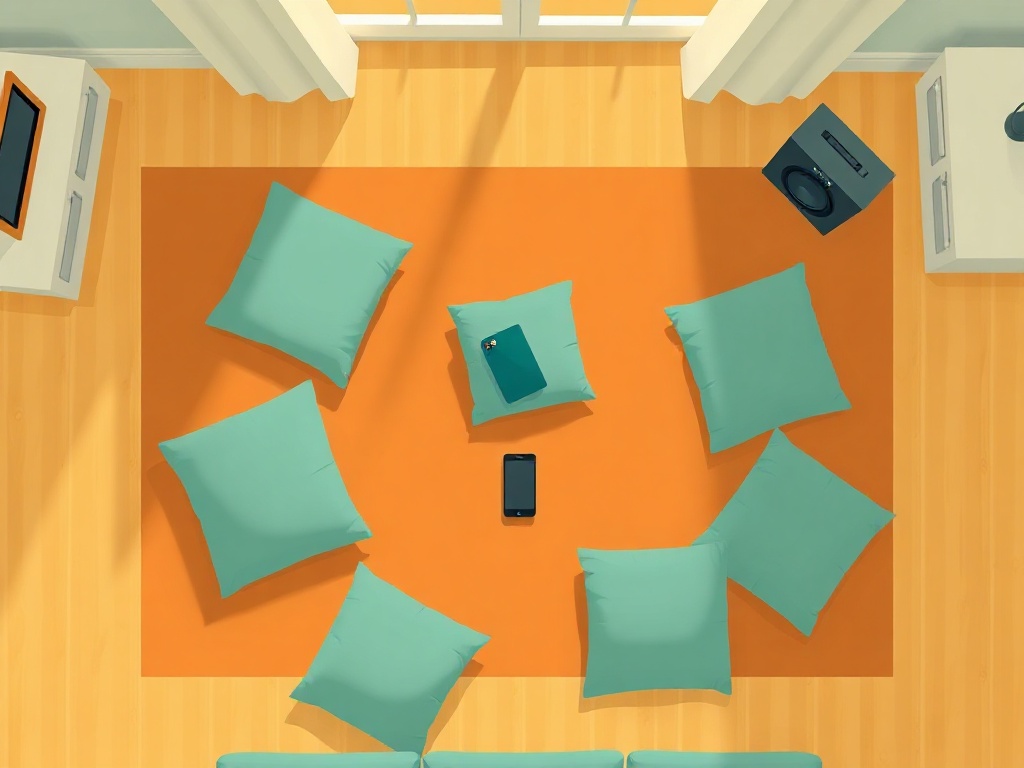
The usual advice in this moment is "tell them not to run." That lasts about ninety seconds. A ban doesn't use up any energy — and kids this age tend to have plenty of it. So this isn't about how to calm them down. It's about how to give them something to do that keeps them on the floor, sitting or crouching, hands busy. That's exactly what the quiet birthday party games below are built around. In many homes the stomping stops not because you banned it, but because their bodies are occupied elsewhere.
Why ages 5-7 specifically — and why that changes which games work
This guide is for children roughly age five to seven — nursery to Year 2. In this age range, many kids can wait their turn, but often not for long; a rule explained in one sentence usually lands better than one explained in three; and quite a few take it hard when they're knocked out of a game. Every child is different, of course. If you've got an eight-year-old at the party too, give them a helper role — handing things out, counting, calling turns. That often works better than having them compete with the younger ones.
The practical upshot: every game here takes under ten minutes, nobody is out for good, and the rules fit in one sentence. A game that needs a long explanation tends to fall apart before it even starts.
Setting up the room before the guests arrive
- Push the coffee table against the wall and cover the floor with a blanket or rug — it doubles as soundproofing and marks out the play area.
- Clear one corner for a "quiet station": two cushions, a pile of stickers, a sheet of paper. Any child who's had enough goes there.
- Put away the wheeled desk chair and anything else that rolls. Rolling objects make the worst noise for the flat below.
- Have everyone swap into slippers or thick socks at the door. The difference in noise is usually noticeable straight away.
- Keep a small bowl of water and a cloth by the table — with eight kids, something will spill; it's only a question of when.
Freeze Dance (seated version)
All you need is a phone or speaker with music and a bit of floor space. The game takes 8 to 10 minutes and tends to work well for ages 5 to 7. Play the music quietly — just loud enough to hear, no more — and have the kids dance, but only from the waist up, sitting cross-legged on the floor. Arms, shoulders, head, funny faces: all allowed. Legs: not allowed. Stop the music and everyone freezes. Anyone who moves isn't out — they become the "spotter" for the next round, going around to catch who's wiggling. The game's done once you get through three full rounds with nobody standing up and nobody crying about losing. If sitting still gets boring, switch it up: "now we only dance with our eyebrows."
This game does double duty. It burns off energy through the upper body, and the stop-and-start rhythm gives everyone practice at waiting for a signal — which usually makes the rest of the afternoon's games run more smoothly.
The game that buys you the most time
The Mystery Feely Box
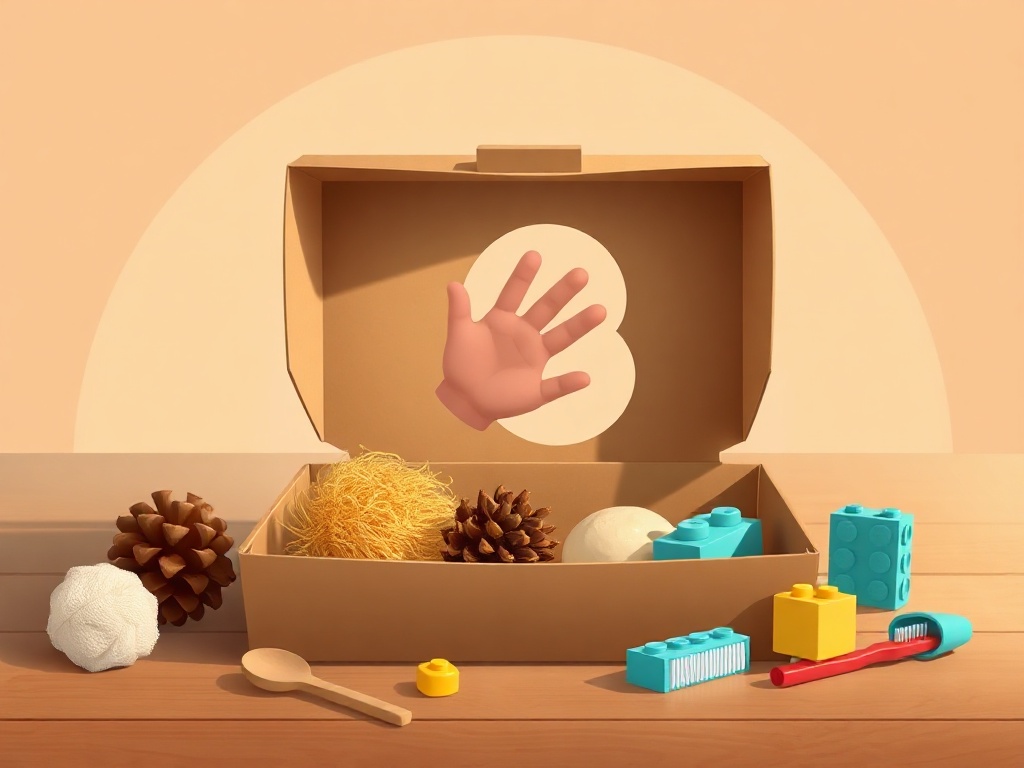
Prepare a shoebox with a hole cut in the side big enough for a child's hand, and 10-12 household items: a bath sponge, a spoon, a pine cone, a ball of playdough, a piece of fleece from a slipper, a Lego brick, a toothbrush. It takes 15 to 20 minutes with eight kids and suits ages 5-7 well. They sit in a circle, the box gets passed round, and each child reaches in and describes out loud what they feel — without naming it: "it's cold and bumpy." The others guess in whispers — that's part of the rule; whispering is the whole point. Whoever guesses right pulls out the item and the next one goes in. You'll know it has worked when every child has had at least two turns and the room has been nothing but whispers for five minutes straight. If there's an older kid around, let them hold the box and run the turns.
This is where you win the most minutes, because the game often carries on by itself — kids start bringing their own objects from their bags and off the shelves. Let them. One of the best things that can happen at a party is when the kids take the game over from you.
One-Handed Tower Building
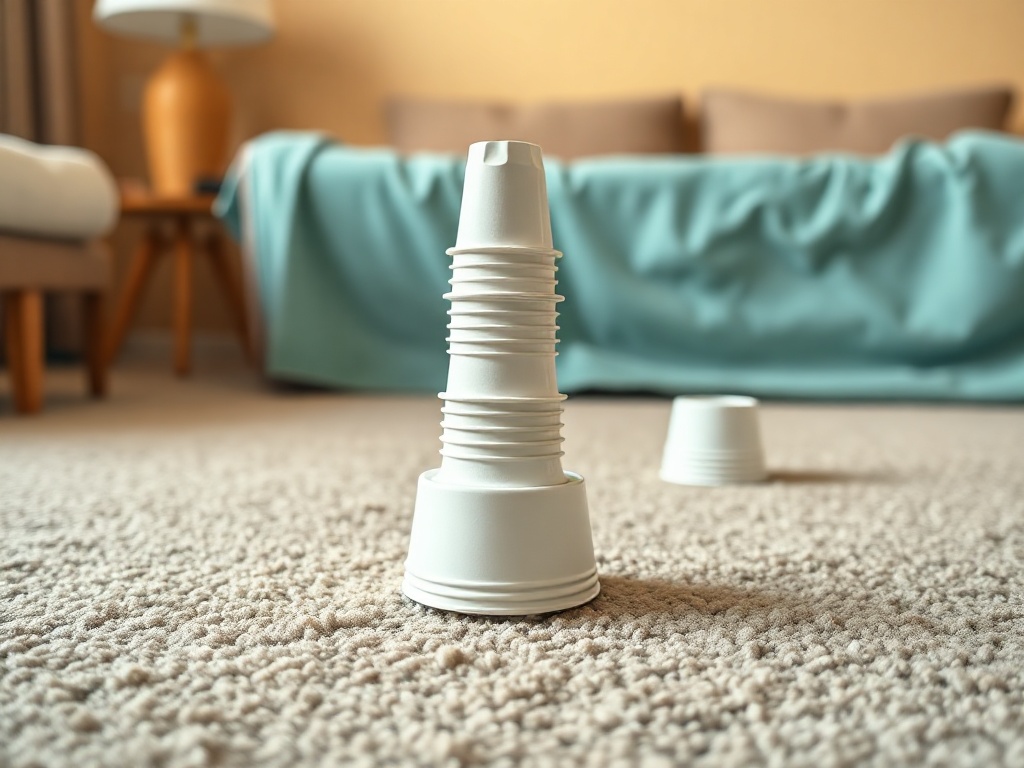
You'll need disposable cups — thirty is plenty — or building blocks. The game runs 10-12 minutes and suits ages 6-7 (five-year-olds usually manage fine paired with an older child). Split into four pairs. Each pair builds a tower, but each child may use only one hand, keeping the other behind their back. Crouching or sitting is required — the rule is "the tower can't be taller than a seated child." Count it a win when all four pairs have a standing tower and you hear someone tell their partner, "hold the bottom, I'll put this one on." That sentence, rather than the tower itself, is the nice moment to listen out for.
The most common mistake: pacing the party as a build-up
Most parents structure the afternoon like a climb — calm things first, then the cake, then the "big game" at the end. It sounds logical, but it's often the opposite of what works in a flat.
After the cake, the kids are usually at their most wound-up, and you're at your most tired. If the loudest game lands right then, you've got no reserves left. That's often when the running down the hallway starts, the neighbour's doorbell rings, and the day ends the way everyone will remember it. Flip the order: the most active game within the first half hour of arrival, cake in the middle, and the last forty minutes packed with hands-on, seated activities. Parents arriving to pick up their kids find them calm — and that's the impression that tends to stick for the whole day.
A second, related mistake: elimination games. With eight kids, the first one out can sit on the sidelines for a full ten minutes, and by minute three they're often already causing the mischief you didn't plan for. Every game here gives the "loser" a new role instead of a chair on the sidelines.
If nobody's asked "when are we playing something" by the fifteen-minute mark, you've got it right.
If it does get loud
- Don't shout "quiet" — that's just one more loud sound in the room. Instead, start whispering; kids often lean in to hear and quiet down on their own.
- Bring in the "talk like mice" rule for two minutes and frame it as a game, not a punishment.
- If a child is overwhelmed, take them to the quiet station and sit with them for sixty seconds. That's often enough.
- Give the downstairs neighbour a heads-up the day before — one sentence at their door saves more trouble than any blanket on the floor.
What it all costs
Disposable cups run around €2, and stickers for the quiet station under €3. Everything else you already have at home: a shoebox, a bath sponge, an old slipper, some Lego. One bag of balloons covers the decorations. Lay it all out on the table Friday evening, and on Saturday you won't be hunting for anything at the last minute — and it's exactly that last-minute scramble when eight kids end up unsupervised.