
A Classroom Birthday Without the Chaos (or an Empty Wallet): The Plan for Ages 7-9
It's not the cake or the goodie bags that make the party memorable — it's the 20 minutes when your child is the center of attention. Here's how to throw a classroom birthday party for under €20.
Monday morning, 7:40 a.m. You're carrying two boxes of cupcakes, a bag of balloons, and a plastic sack with 24 party favor bags you were up filling until midnight. At 10:15, the teacher hands out the cupcakes, the kids scarf them down in four minutes, the favor bags get torn open on the stairs, and that evening your child tells you: "It was... fine." You've spent close to €40, slept five hours, and the verdict is a shrug.
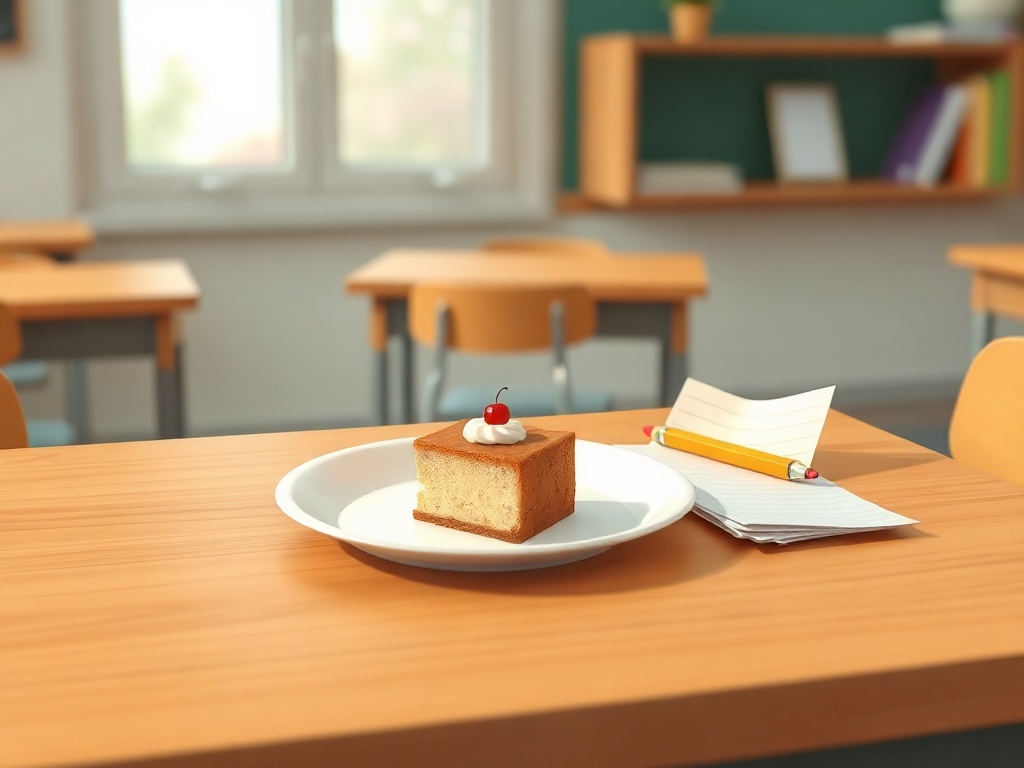
The problem isn't the money. The problem is that nobody planned what would actually happen during those twenty minutes between the bell and cleanup. The cupcakes are props, not a script.
Why at 7-9, a party runs on attention, not on sugar
In first grade, it's enough for the class to sing "Happy Birthday." By second or third grade, things shift — friendships have formed, some kids feel left out, and the birthday child can absolutely tell who showed up to wish them well and who's just there for the cupcake. That's why, at this age, anything that gives the birthday child a role works: handing things out, choosing, leading something. And anything that gives the other kids a reason to say something specific about them works too.
One eight-year-old girl told me the best classroom birthday she ever had had no cake at all — the teacher passed out slips of paper and everyone wrote one sentence about her. She went home with twenty-two slips of paper. Total cost: zero.
Script first, shopping list second
Sit down with your child the evening before, grab a sheet of paper, and map out the twenty minutes minute by minute. Literally like this:
- 0-3 min: handing out the treats — the birthday child does it themselves, not the parent
- 3-8 min: one game that doesn't require leaving the desks
- 8-15 min: the "wall of words" or whatever you've picked as the second activity
- 15-18 min: the birthday child says thank you and collects the slips of paper
- 18-20 min: cleanup — every child tosses their own napkin
This plan goes to the teacher the day before, not the morning of the party. The teacher has a lesson plan, and the birthday celebration needs to fit into it — not the other way around. A message along the lines of "Tomorrow is Martin's birthday, I'll bring cupcakes, I have an idea for a 15-minute game, let me know what time works for you" solves ninety percent of the stress.
The Wall of Words
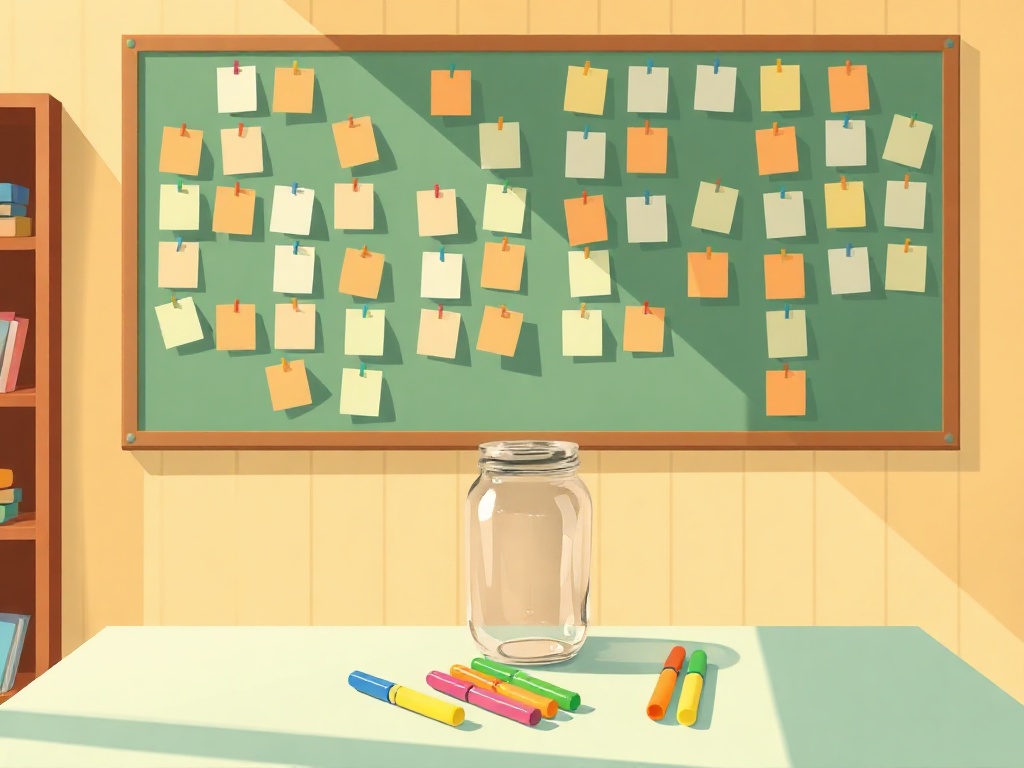
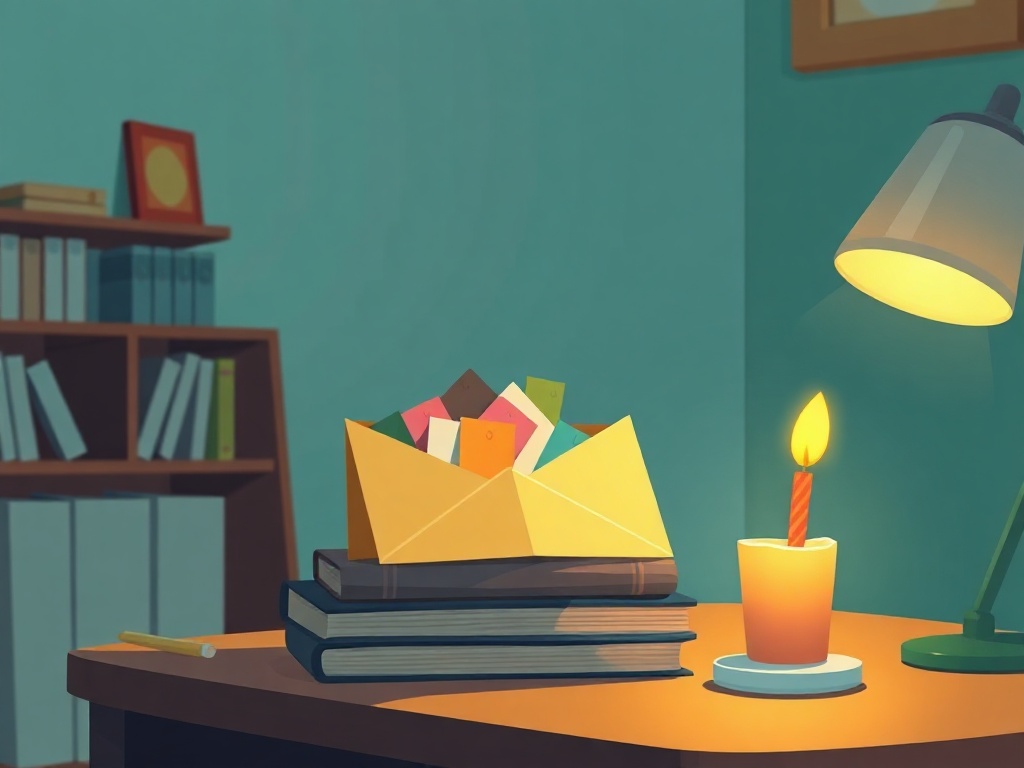
All you need is colored paper cut into slips — one for each child in the class — and a few markers that are probably already in the backpack. It takes about 10 minutes and works well for children aged 7 to 9 who can already write on their own. Each child writes one sentence starting with "I like that you..." — not "happy birthday," but something specific: "I like that you waited for me at the bus stop." The birthday child collects them in an envelope and takes them home. Call it a success if at least two-thirds of the sentences describe a specific moment rather than a generic wish. If you get six identical "stay healthy" notes, next time read three examples out loud before the kids start writing.
Twenty Questions for the Birthday Kid
You'll need paper, a pen, and the timer on your phone — nothing else. The game takes 8-10 minutes and works best with children between 7 and 9. The birthday child stands in front of the class and answers yes-or-no questions from classmates: "Do you like spinach?", "Are you afraid of heights?", "Have you seen this movie?". There's one rule — only yes-or-no questions, and nothing about home, family, or money. Eight questions, then the next child asks. It's worked if, afterward, at least three kids mention something they didn't know before: "I didn't know he plays guitar." If the questions start turning into teasing, the teacher steps in with "next question has to be about something you like" — that resets the tone in seconds.
What this actually costs
A homemade cake cut into 25 slices runs about €5-6 in ingredients. A pack of napkins — under €1. Colored paper and markers you likely already have at home. If you want to buy one thing, get one big thing rather than twenty-five small ones: a €4-5 pack of wafers or cookies does the same job as the €30 worth of favor bags that end up in the trash by the end of the day.
If your child insists on party favor bags, make them yourselves and limit each one to a single item — for example, one pencil per child with their name handwritten on it. That comes out to about €6-8 for the whole class.
The most common mistake: throwing the party for the parents
Themed decorations, a photographer, a costumed entertainer, three kinds of cake. It looks lovely in photos, and that's exactly the trap — it's organized for the picture, not for the child. At 7-9, kids don't remember the decor. They remember whether they got picked for a team, whether someone said something nice to them, and whether the birthday child seemed happy.
There's a practical side to this too. The bigger the production, the more time goes into setup and teardown, the more frazzled the parent gets, and the shorter their fuse when something goes wrong. And something always goes wrong — juice spills, two kids fight over the last cupcake, someone cries because they weren't picked. A party with two moving parts can absorb surprises like that. A party with twenty moving parts falls apart.
The second most common mistake is a frosted cake with candles in the classroom. It's slow to cut, it's messy, it requires plates and forks, and some kids have dietary restrictions and end up just watching. Individually portioned cupcakes solve all of this at once — just ask the teacher beforehand whether anyone in class avoids certain ingredients, and bring two or three alternative pieces.
If you strip away everything at the party that costs money, something should still be left. If nothing's left — you didn't throw a birthday party, you went shopping.
What's left after the party
That evening, take five minutes and ask your child which moment they liked best. Not "did you have fun" — the answer to that is always "yes." Ask "which moment." The answer will tell you what to repeat next year and what to cross off. Usually, it turns out the expensive thing doesn't even get mentioned.
And keep the envelope of slips of paper. In two years, it'll be worth more than any favor bag.