
Elastic, Chalk, and Jump Rope: How to Remember Playground Game Rules
The parent remembers playing elastics but can't quite recall where you're supposed to step. Here's how to turn that gap into an advantage and let kids aged 7 to 10 write the playground game rules themselves.
It's May, half past six in the evening, the pavement still warm through their shoes. Three kids stand with an elastic band stretched between two chairs, looking up at the balcony. "Mum, how did you play this?" The mother comes down, grabs the elastic, takes two steps — and stops. She remembers the rhythm, remembers the rhyme, even remembers the smell of that particular summer. She doesn't remember which jump changes the level.
This is exactly where most parents apologise and head back inside. A shame, because half-remembered playground game rules are the most interesting part of the evening.
Why "I don't remember the playground game rules" is a better start than "here's how it's played"
When an adult dictates the rules, children just follow them. When an adult says "I remember up to here, you decide the rest," children start negotiating. And negotiation is the game itself — kids between 7 and 10 are right at the age where "that's not fair" can be settled with words instead of someone storming off the playground.
There's a practical side too. Playground game rules for elastics and hopscotch have dozens of local variants. In one neighbourhood you jump with your feet together, in the next, feet apart. There's no single "correct" version. So the only rule that actually matters is this: rules get agreed before the first jump and don't change halfway through.
"I remember up to here. From here on, you make it up — but say it out loud before we start."
Three playground games and what you actually need
- Elastic band — about 3 metres of elastic, tied into a loop. If you don't have one, two old tights knotted together work just as well. A new one costs around €2.
- Chalk — the thick coloured sticks made for pavement hold up far better than classroom chalk and won't snap on the first line. A box of eight colours: €3–4.
- Jump rope — 2.5 to 3 metres of soft rope for two turners and one jumper. A stiff plastic rope stings the shins, and kids give up after the third jump.
- A bucket of water — not for washing up, but for wiping out a wrongly drawn hopscotch grid. Saves a lot of arguments.
And one small thing that changes everything: agree where the playing area ends. The corner of the electricity box, the third tree, the kerb. Without a boundary, kids drift toward the car park and the evening ends in shouting.
Writing the elastic playground game rules down in chalk
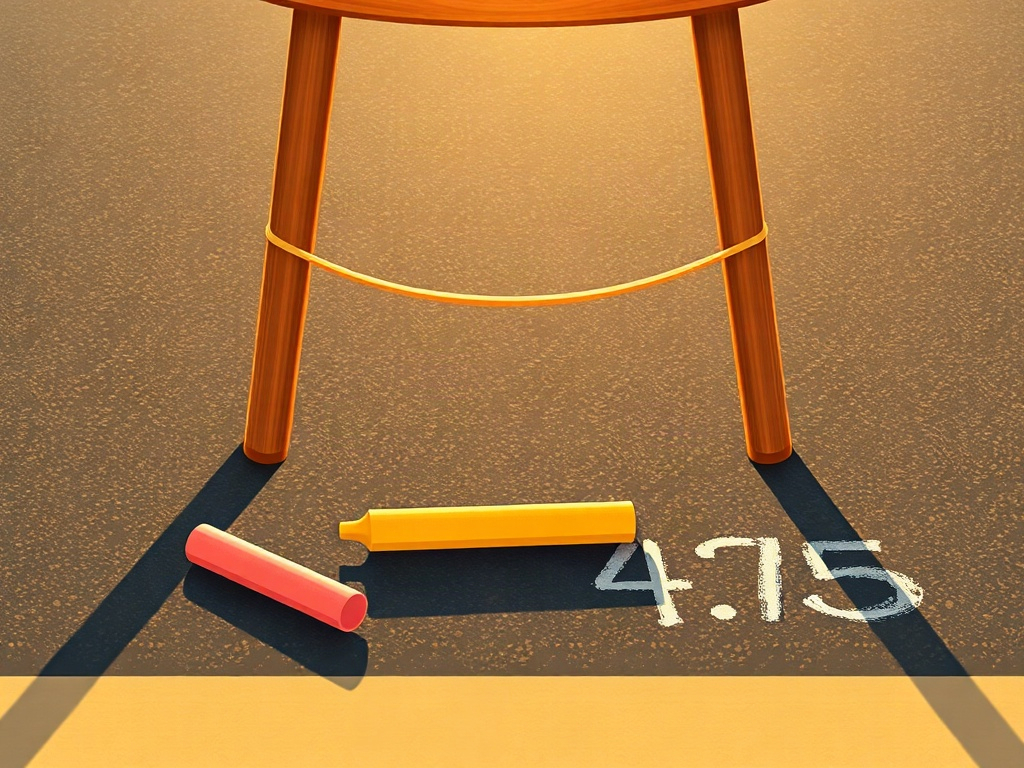
For this game all you need is the elastic, some chalk, and a bit of pavement by the front door. Set aside about 25 minutes. It suits kids aged 7 to 10, with the younger ones in the group writing just numbers and the older ones writing words. Start like this: two children hold the elastic at ankle height, the third jumps once, and everyone watches. Then together decide what to call that level — "ankles," "one," whatever they come up with — and write it on the pavement as a list from top to bottom: ankles, calves, knees, thighs, waist. Next to each level, add how you jump it. For example: "at calf height — jump in, then out, land on both elastics." If someone says "but we play it differently," write both versions one under the other and settle it with a show of hands. The parent writes down only what they're sure they remember; the children dictate the rest. The activity is done once there are five lines on the pavement, everyone has jumped at least one level without an argument, and someone has managed to explain a rule to a new kid without the adult stepping in.
Hopscotch with house numbers
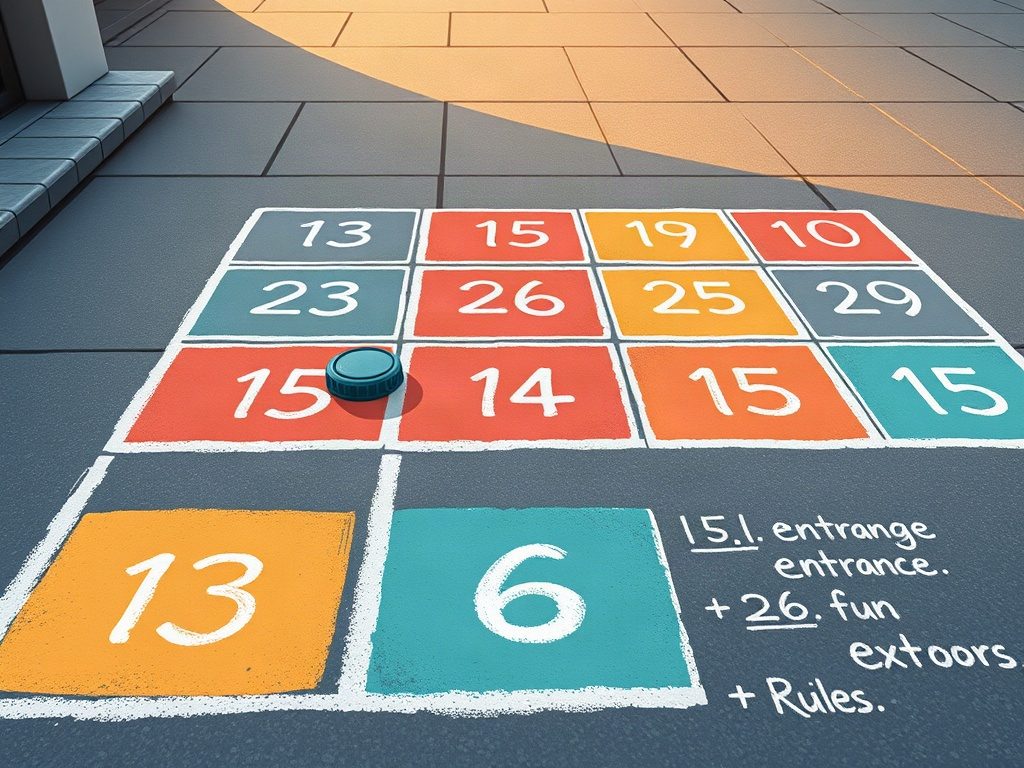
You'll need chalk, a flat stone or a bottle cap, and a strip of pavement about a metre and a half by half a metre. The game takes 20–30 minutes and works best for 7–9-year-olds. Draw the classic eight-square hopscotch grid, but instead of numbers, use the building's entrance and floor numbers — or the days of the week. Toss the cap, hop to it, scoop it up without stopping, and hop back. Familiar so far. Here's the new part: each player adds one rule of their own before their round begins, and it applies to everyone. "Square number 4 must be hopped on one foot." "Whoever steps on a line counts to five out loud before continuing." Write the rules beside the grid so there's no arguing over what was said. You've succeeded if, after three rounds, there are at least three extra rules chalked next to the grid, each one invented by a different child, and no one tried to change a rule mid-turn.
Jump rope: the simplest playground game, the one whose rules fall apart most often
Parents usually remember jump rope best, and children give up on it fastest. There's one reason: the two turners get swapped too rarely. A kid who turns the rope for a quarter of an hour while everyone else jumps will walk off. Keep the rule simple — after ten jumps, the turner comes in and the jumper goes out to turn. No one stands on the sidelines for more than two minutes.
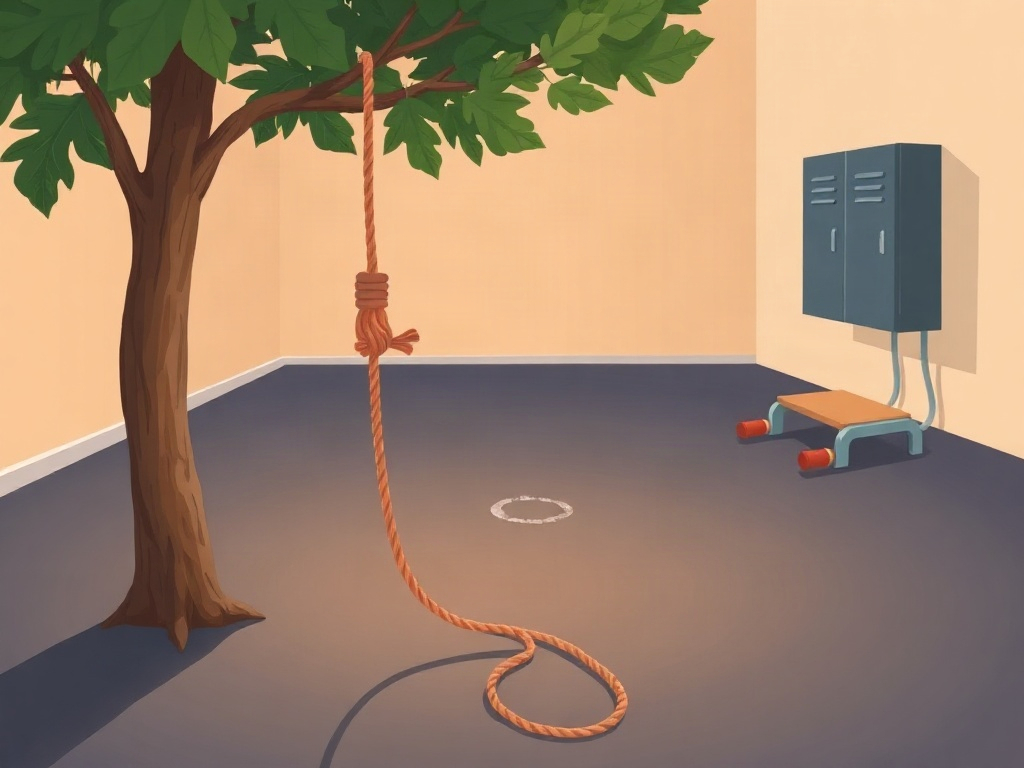
If there are only two of you, tie one end to a railing or a low tree branch. It works almost as well as a second pair of hands.
The most common mistake: the parent tries to remember every rule
The scene repeats every summer. The adult stands there with their phone, searches "how to play elastics rules," reads off the screen, and tries to reconstruct the version from 1994. The kids wait. Six or seven minutes pass. One sits down on the kerb, another opens a bag of crisps, a third asks if they can watch something on the phone. The game ends before it starts.
It doesn't work, for two reasons. First, while you're reading, the kids have nothing to do — and at this age, a five-minute pause is enough for the group to scatter. Second, even if you do find the "correct" rules, they won't match what you remember, and you'll end up arguing with your own memory in front of four children.
The other version of the same mistake sounds generous: "Play however you like." With no framework at all, the kids argue for three minutes, then split into two groups and play separately. The difference between the two outcomes is one spoken boundary. Say what you remember — even if it's just one level — and leave the rest to them.
How to keep playground game rules from vanishing by next time
- Take a photo of the chalked-out hopscotch grid and the list of levels before the rain gets to it. The next day, the kids can rebuild everything in two minutes.
- Keep the elastic and chalk in one bag by the door. If they have to be hunted for, the evening's game gets skipped.
- Let one child be "rule keeper" for the day — they answer the "wait, how did that go?" question. Rotate the role every time.
- Write new rules in a different colour of chalk. That way you can see which ones are old and which were made up today.
After two or three evenings, you'll notice something. No one asks the adult how to play anymore. They ask each other — and that's the moment you can head back inside with a clear conscience.