
Lost the Teddy Bear Outside: Games for the First Three Days
Practical games and conversations for 5- to 7-year-olds when a favorite toy or blanket has been left behind somewhere outside. No empty reassurances — just concrete activities that give the child something to do with the sadness.
You get off the bus, reach the front door, and that's when it becomes clear: the backpack is open, and the teddy bear is gone. You retrace your steps on foot, check the bench, ask at the store. It's nowhere. And the child has already read it on your face and sits down on the steps. From here, the next three days matter more than they seem to — not because the loss is a tragedy, but because this is the first loss the child feels in their body, and the way you help them say goodbye to it will stick as a template.
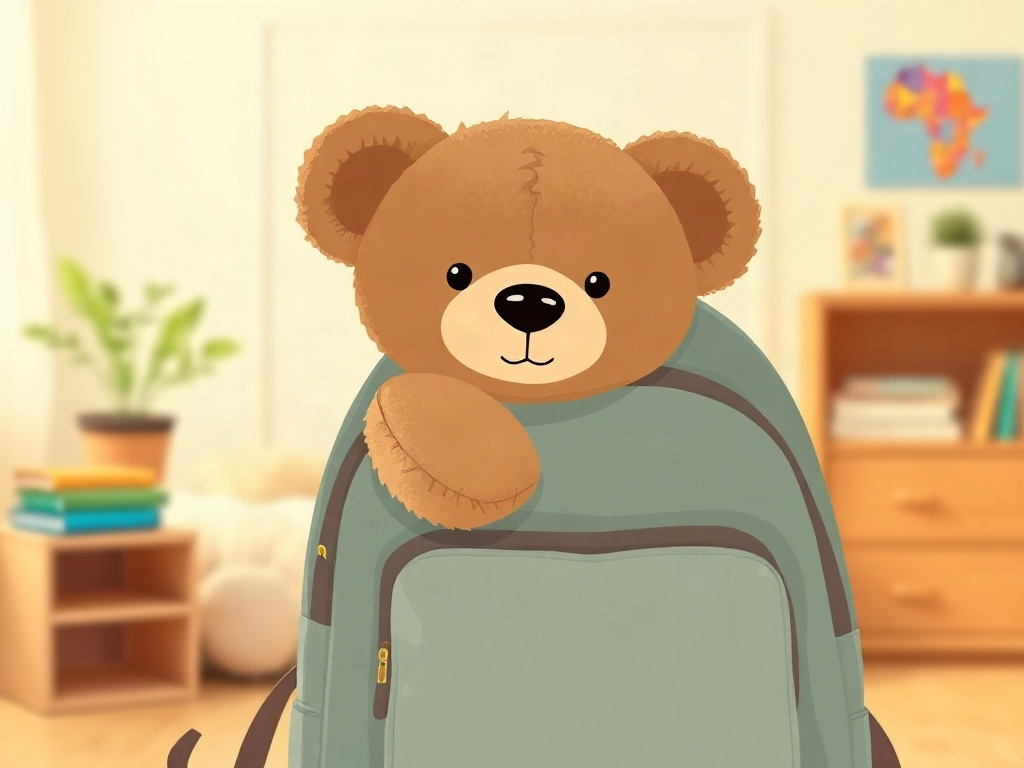
The first thing most parents do is order the exact same toy. It's understandable. And it almost never works.
Why the identical replacement usually falls flat
Because a five- or six-year-old isn't attached to the shape — they're attached to the story. The teddy bear smells like their bed, its ear is worn thin from chewing, there's a juice stain on its paw from two winters ago. When you put a new one in front of them, tags still on and fur too stiff, they sense the trick — and sometimes react worse than if you'd done nothing at all. I've heard children say this exact sentence: "That's not mine, that's a different one, take it away."
There's something more important going on, too. If you buy a replacement that very evening, the message the child hears is: sadness is a problem you solve by shopping. That's a poor trade. A loss needs an ending — a proper goodbye, not a swap. And the best way for a five-year-old to reach that ending is through play, because play is their native language for hard things.
The first two hours: what to say while you're still out on the street
Don't promise you'll find it. Plenty of parents say "we'll go back and look for it tomorrow" just to stop the crying now — and the next day the bill comes due twice over. State what's certain: "We checked three places. It's not there. I'm sad about it too." If the child asks where it is, don't invent a story about another child who found it and is now cuddling it — that sounds fine to an adult, but to a five-year-old it can land as "my teddy bear loves someone else now."
- Say exactly how many times you looked and where — specific numbers reassure more than vague reassurance.
- Name the feeling out loud: sad, angry, empty. The child often doesn't know what to call what they're feeling.
- Don't rush to offer another toy that same day. Let the evening pass without a fix.
- If the child goes quiet and doesn't cry, that doesn't mean they're over it. The reaction often shows up on the second or third day, usually in the evening before sleep.
The Road Map: where the teddy bear was before it got lost
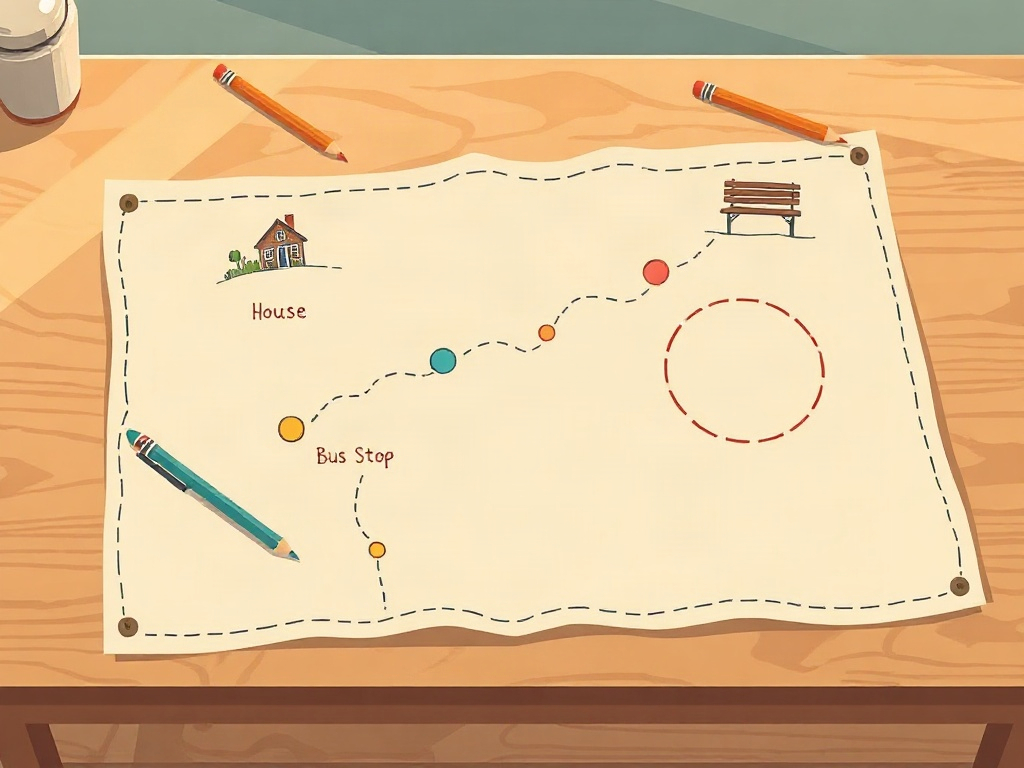
You'll need an A4 sheet or two sheets taped together, colored pencils, and something round to trace. It takes 20 to 30 minutes and works best with children aged 5 to 7. Sit side by side and draw yesterday's route — the house, the bus stop, the park, the shop. The child puts a little circle everywhere they remember the teddy bear being, and you ask what it was doing there: "What was it doing on the swing?" — "Swinging, and then it felt sick." At the end, the child draws one big circle at the last place and you ask what they want to write inside it. Don't correct the spelling. The point isn't a tidy map — it's for the child to tell the loss as a story with a beginning, not as a hole. Count it a success if the child adds at least one detail on their own that you didn't prompt — a color, a word, an event. That means they've stepped into the story instead of just completing a task.
The Send-Off Ritual — the game that closes the story
Children this age need an ending they can actually see. That's why the send-off should be something physical: a letter, a box, placing it on a shelf. Not a conversation.
A letter to the teddy bear and the memory box
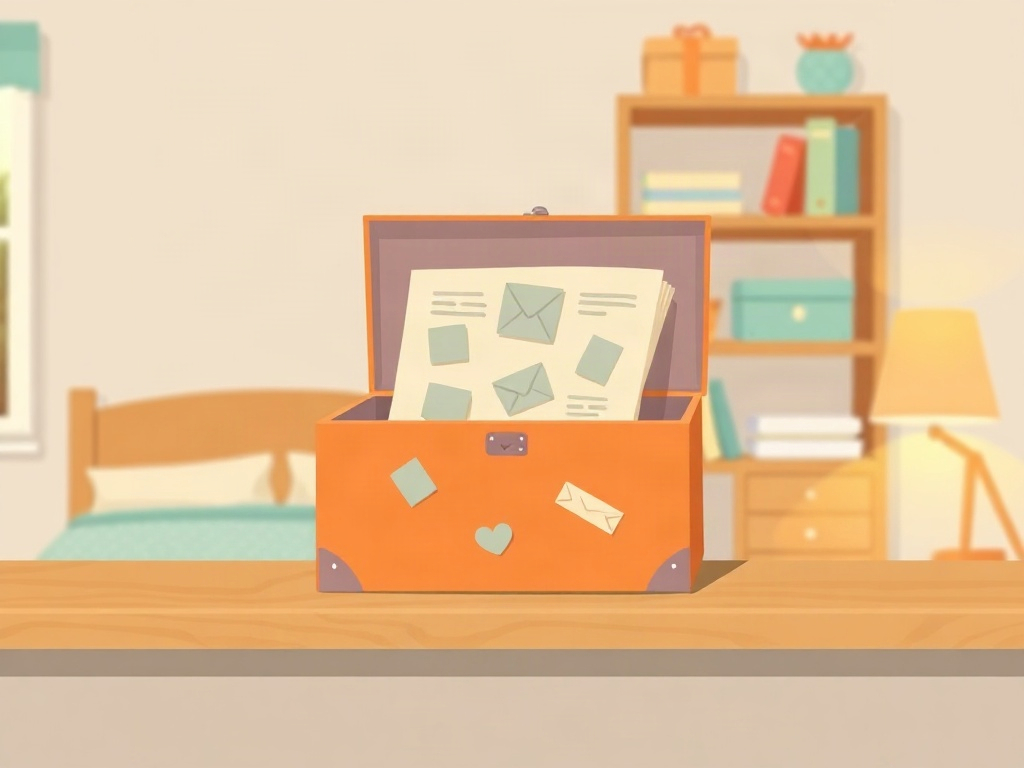
You'll need a shoebox, glue, old magazines to cut up, and a sheet of paper for the letter. About 40 minutes, split into two parts — half an hour of crafting and ten minutes of "sending off" in the evening. Suitable for ages 5 to 8; with younger children you write as they dictate, while seven- and eight-year-olds can write it themselves, mistakes and all. The child dictates a letter that opens with three things they loved doing with the toy and ends with one sentence about the journey: "Teddy, you're off on an adventure now, and I'm staying here." Then decorate the box together, tuck the letter inside, and add a photo of the child with the teddy bear if you have one. Put the box on a shelf — not under the bed, not in the basement — it needs to stay visible. It's worked if, a couple of days later, the child walks over to the box on their own, looks at it, and goes back to playing without crying. That's the sign the sadness now has an address.
Teddy, you're off on an adventure, and I'm staying here. Sometimes I'll be a little cross with you for leaving.
The "new job for the old bed spot" game
A lot of the evening sadness comes from the mechanics, not the feeling itself: a hand searches for something in the bed and doesn't find it. So by the third night, it helps to give that spot a new resident — but one the child chooses, not one you buy.
Casting call for the night watchman
All you need is what's already in the house — three or four toys, an old scarf or T-shirt that smells like you. Fifteen minutes, in the evening, before teeth-brushing. Suitable for ages 5 to 7. Line up the candidates on the bed and let the child run an "interview": ask each one a question — "Do you stay awake until morning?", "Are you scared of the hallway?" — and answer for them in different voices. They pick one and wrap it in the scarf so it smells right. If the child says none of them will do, don't push — accept it, and suggest the scarf sleeps there on its own tonight. Success means the child falls asleep holding something, without you having to convince them more than once.
The most common mistake: pretending the toy is alive and well somewhere
The "the teddy bear decided to go help other children" story sounds sweet and gets suggested a lot in parenting groups. The trouble shows up a week later, when the child asks when it's coming back. At that point you either have to keep patching the story with new details, or come clean — and the second option is far more painful than an honest conversation on day one would have been. On top of that, six-year-olds fact-check: they'll ask the neighbor, ask grandma, compare versions. When the versions don't match, the child ends up with two losses instead of one.
The other mistake is a rushed "you're a big kid now." That doesn't speed anything up — it just teaches the child to hide their sadness from you. Then, when they lose something at school, they won't tell you.
If you do decide to buy something new
Wait at least a week, and don't buy the same one. If the child asks for something themselves, go together and let them choose — a plush animal at a neighborhood shop usually runs €5 to €15, and something quite small at €2–3 can do the job just as well. What matters is that the new toy gets its own name and its own story from day one, rather than being called "the new teddy bear." And don't put it in the memory box — the two things live separately.
After about ten days, most children this age stop asking every day. If, after a month, the child still refuses to sleep without the missing item and the evenings keep getting harder instead of easier, that's worth a conversation with the pediatrician or the kindergarten psychologist — not because something is wrong with the child, but because sometimes a loss latches onto some other worry and needs a second pair of eyes.