
Line-Waiting Games for the Library Checkout Desk (Ages 5-7)
Practical games for waiting in line for a library card or book returns in September, with clear rules, timing, and a way to know when your child has succeeded.
Monday morning, mid-September. There are six people ahead of you at the library checkout desk, two of them with trolleys full of books, and the librarian is just explaining to someone why their card expired. The child beside you has already tugged your sleeve twice and asked "when is it going to be our turn." You haven't even reached the middle of the line yet.
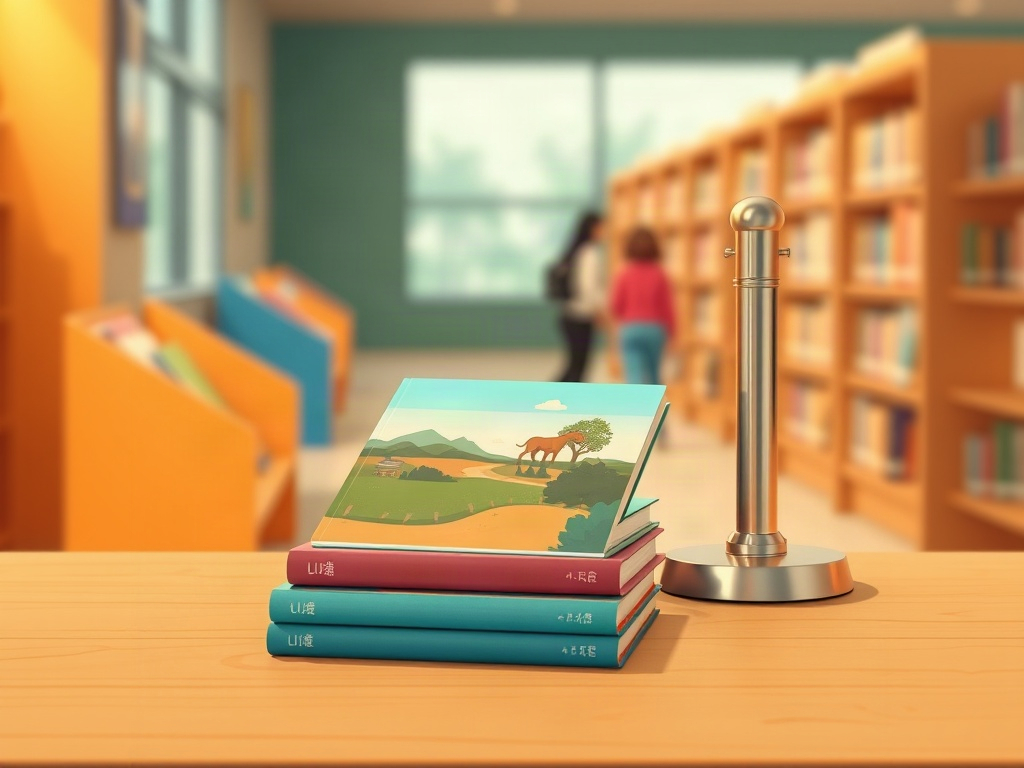
The usual advice is "just hand over the phone, fifteen minutes won't hurt." It's not that fifteen minutes of screen time is a disaster. The real issue is different: those exact fifteen minutes are the only moment your child stands still in the middle of a library and can actually look around it. Once you're inside, everything moves fast — find the book, check it out, go. In the line, there's nowhere to rush to.
What your child is actually learning while waiting
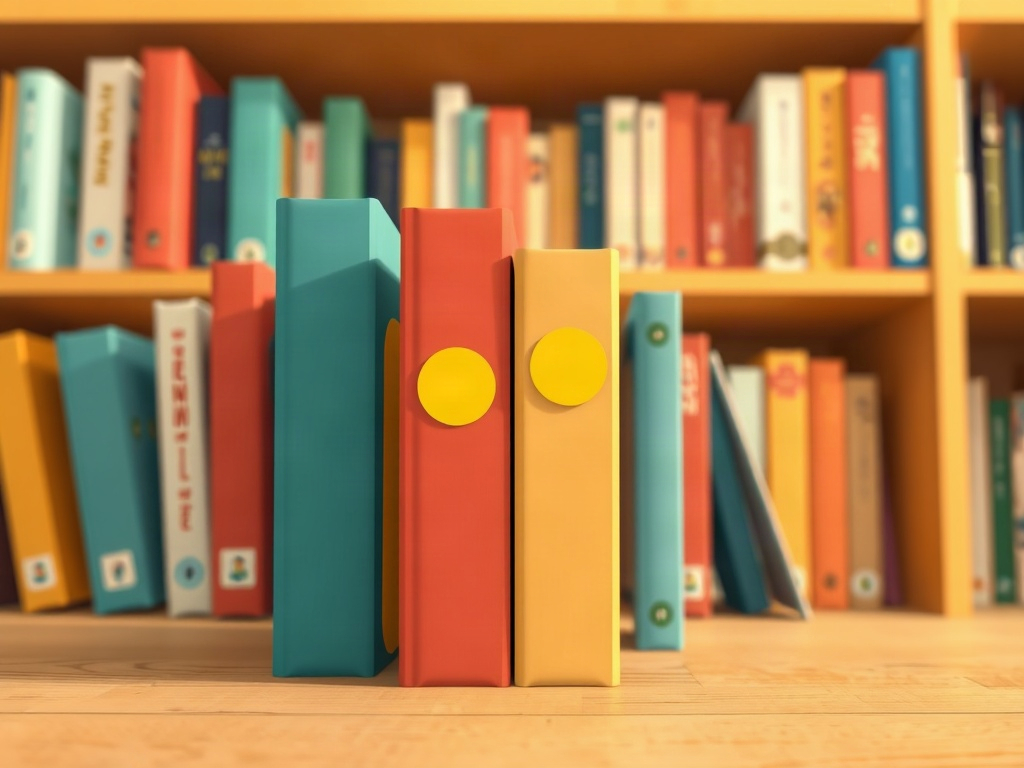
A library is organised by rules that are invisible to adults, because we absorbed them long ago. Colour-coded stickers on the spines, numbers on the shelves, alphabetical order, signs reading "Children's Section" and "Periodicals" — all of it is one big code. A 5-7-year-old doesn't read fluently yet, but is excellent at spotting shapes, colours, and repeating symbols. Show them once that the yellow sticker means one thing and the blue sticker means another, and next time they'll notice it themselves.
That's why the games below aren't "time-fillers." Each one uses exactly what's visible from where you're standing in line.
Spot the Matching Spines
All you need are your eyes and the shelves visible from the line — nothing to bring from home. The game takes 5 to 10 minutes and works best with children aged 5-7. Say quietly: "Look at the bottom shelf on the right. Find two books that have something the same on their spine." The child searches — usually noticing colour first, then a sticker, then a matching number. When they point one out, ask: "Why do you think they're next to each other?" The game has succeeded if they find three matching pairs and, for at least one, say something like "because they both have a yellow square" or "because they start with the same letter." The explanation doesn't need to be technically correct — what matters is that they've noticed a pattern, not the exact rule.
The whisper game that works even in the quietest room
The main constraint of a library queue is noise. Any game that requires shouting, running, or clapping is out before it even starts. So the second game is built to be played in a whisper, using nothing but a fingertip.
Guess the Letter on My Back
No materials needed — just a finger and a back. It takes 3-7 minutes and suits children aged 5 to 7, including those who aren't confident writers yet. The child stands with their back to you in the line. Using your finger, slowly trace a capital letter between their shoulder blades — start with simple shapes like O, T, or L. They have to guess the letter in a whisper. Then swap roles: they trace a letter on your back, you guess, and deliberately get it wrong once or twice so they get to correct you. It's a success if they guess at least four letters out of six, and if they can trace a letter you recognise without any hints. With children who already read more confidently, move on to short words — "CAT," "DOG," "SUN."
Three more quick options if the line isn't moving
- "How many books is that person carrying?" — the child estimates from a distance, then checks once the person reaches the desk. This builds quantity estimation, not just counting.
- "What sound do you hear now?" — take turns naming one sound: a stamp, footsteps, a page turning, a door, a cough. No repeats allowed. Whoever runs out of new sounds loses.
- "I am a book" — you're the book and give three clues: "I'm thin, I have pictures, there's a wolf inside." The child guesses whether you're a fairy tale, an encyclopaedia, or a comic book.
Give them a real job, not a made-up one
There's a difference between "just wait a bit" and "you're in charge of the returns." The second works far better, because children this age love having a job. Before you go in, stack the books to be returned into a pile and let them carry it. At the desk, they hand the books over and say the line you practised outside: "Hello, I'm returning three books." That's it. Don't give them a longer line to say — under pressure they'll forget the middle of it and freeze up.
If you're getting a new library card, give them a different job: they keep track of how many people are left ahead of you and whisper the updated number to you each time it changes. It sounds like a dull task, but it keeps their attention on the line itself rather than on how bored they are.
Children aren't bothered by waiting itself. They're bothered by having no idea how much longer it will be.
A common mistake: promising "just two more minutes"
Nearly every parent has said it, and nearly every time it turns out to be false. The line at the checkout desk in September is unpredictable — one person with an expired card and three overdue fines takes as long as five people with straightforward returns. When the promised two minutes turn into eight, the child draws the entirely logical conclusion that the numbers you give don't mean anything. Next time, "just a bit longer" no longer reassures them, and they start asking every thirty seconds.
A more reliable approach is to measure in people, not minutes: "There are four people ahead of us. I'll tell you when it's three." This is verifiable — the child watches the number of people shrink with their own eyes and doesn't have to take your word for it. It works even with children who can't count well yet, as long as you let them count out loud themselves.
Small costs worth knowing about
At most public libraries here, a children's library card is free or costs a token amount — usually between €1 and €3. Late fees for overdue books are also small but real, so it's worth showing them to your child rather than quietly paying them yourself. If a book sat forgotten under the bed for two weeks, let them see that this comes with a cost. One sentence is enough: "We're paying €1 because the book was late. Next time we'll set a reminder." No lecture, no scolding — just a fact with a number attached.
How not to turn the game into a test
The fastest way to ruin "Spot the Matching Spines" is to correct your child. They say "because they're red," you reply "no, that's actually the classification number" — and the game is over. The goal isn't precise knowledge, it's the habit of looking closely. Precise knowledge comes after two or three visits, usually on its own, when the child asks why.
One more thing: stop the game while it's still fun. If you notice attention slipping, end it yourself with "okay, that was the last one." It's far better for your child to leave the library feeling the game ended too soon than to be dragged through it to the bitter end.
In other words — from this page you're walking away with two ready-made games, three backups, one line for the front desk, and a more honest way to answer "how much longer." The line in September won't get any shorter, but at least there will be something to do in it.