
Pogača, Survaknitsa, and One Baking Tray: Measuring Games for Kids Aged 6 to 9
How to turn kneading the pogača for St. Ignatius' Day and tying the survaknitsa into short games of counting, measuring, and crumbs — with clear rules and a way to tell when your child has nailed it.
Six in the morning on St. Ignatius' Day, December 20th. The flour is already on the table, the baking tray is out, and the child is standing at your elbow asking if they can "stir" too. Usually what follows is always the same: you hand them a spoon, they stir for thirty seconds, get bored, and head back to the phone. The flour stays your job. So do the crumbs.
The problem isn't the child. The problem is that "helping in the kitchen" is a task with no clear start or finish. No one knows when it's done, or when it's done well. And between St. Ignatius' Day on December 20th and survakane on January 1st, there are at least four days at home spent measuring, counting, cutting, and tying — which is exactly what kids in grades one through three learn on paper and hate on paper.
Why "let them help" doesn't work, but "you're in charge of the flour" does
The difference is ownership. When you say "help out," the child performs motions. When you say "you're in charge of the flour — I won't touch it," the child takes on risk. And it's exactly that risk that makes them double-check.
Pick one measurement from the recipe and hand it over completely. For kids aged 6-7, that's counting cups. For 8-9, it's weighing grams on a kitchen scale and figuring out half a measure. You do the rest, without comment.
- Instead of "careful not to spill" — "pour it over the tray, that way the crumbs land in it."
- Instead of "stir it" — "your job is the four cups of flour, I'm not touching them."
- Instead of "good job, very nice" — "four cups, I counted them too, exactly right."
- Instead of "you'll clean up after" — "the tray under your hands is the crumb bin."
The crumb game: the tray as a counting field
Crumbs are free material that most parents rush to wipe away. Before you sweep them up, they do a job no workbook can — they're visible, they move, and they come in uneven numbers.
Tray of Crumbs: Groups of Five
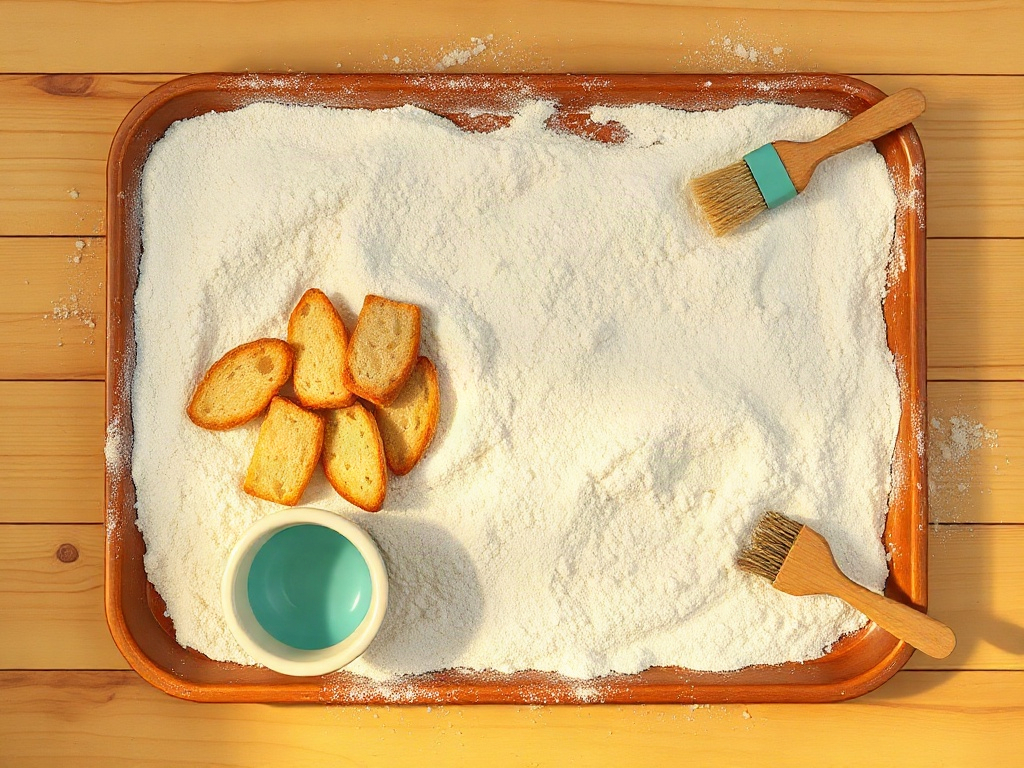
On the large tray you kneaded on, leave the crumbs and set out three small saucers. The child's job is to gather the crumbs into piles of five and move each full pile onto a saucer. If they're 6, count out loud together; if they're 8-9, leave them to it and afterward ask how many piles there are and how many crumbs that makes, without recounting one by one. It doesn't take much: the tray, three saucers, a crumb brush, and about 15 minutes, usually toward the end of kneading while the dough rests. The game works for ages 6-9 — with younger kids, stop at piles of five; with older ones, also ask "if you have 7 piles, how many crumbs is that?" They've succeeded when they can say on their own how many piles they made and multiply or add to reach the total — and the tray is left clean, without you having to remind them to wipe it.
If the child miscounts, don't correct it silently in your head. Say: "Count that pile again," pointing to one specific pile. The difference between "you got it wrong" and "check the third pile" is the difference between a child who stops and a child who keeps going.
What counts as "a cup" when you don't have a scale
Most homemade pogača recipes are measured in cups, tablespoons, and "as much as it takes." For a child, that's a goldmine, because the measurements are imprecise and have to be agreed on. This is exactly where the difference between a measure and a count gets learned.
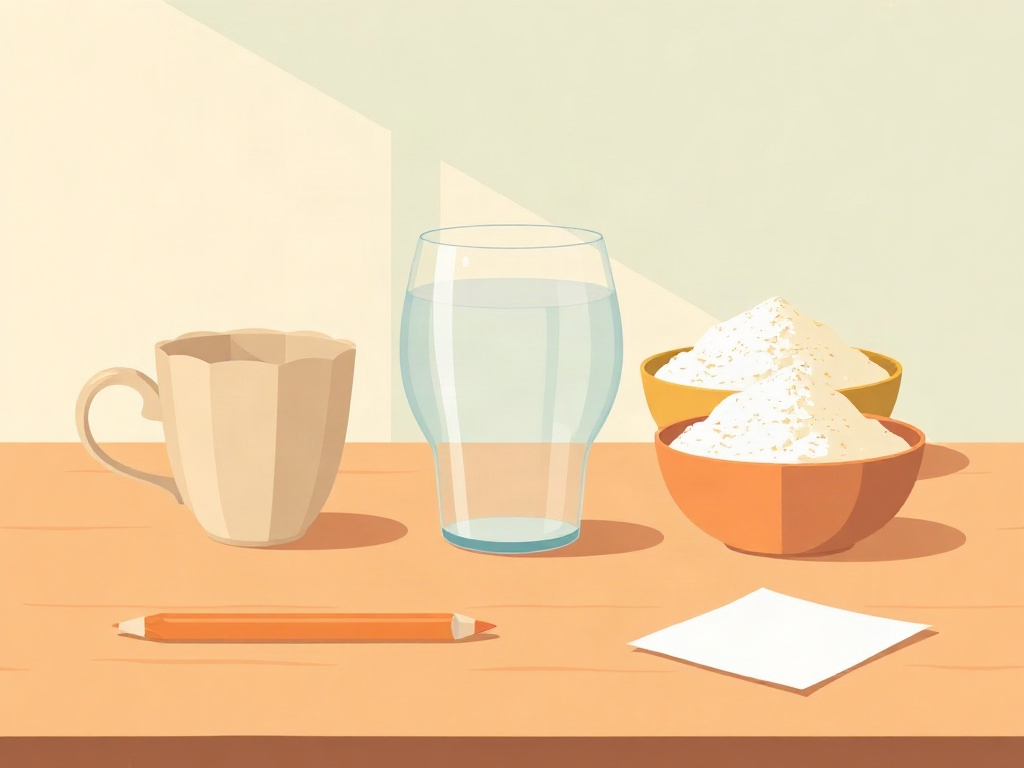
Put three different cups on the table — a teacup, a large water glass, and a small bowl. Ask: "Which one should we measure with?" Almost every child says "the biggest one, it'll go faster." Let them try it. By the second cup, they can already see the dough is different. Then comes the sentence you want to hear: "We need to use the same cup every time." That's the definition of a unit of measurement, spoken by an eight-year-old.
Three Cups, One Dough
You'll need three cups of different sizes, a bit of flour in a bowl, a sheet of paper, and a pencil. The child measures four cups of flour with the biggest cup, then separately four with the smallest, and pours each into its own bowl. The difference is obvious right away. They write down which cup they'd choose for the recipe and why, in one sentence. It takes about 10 minutes and suits ages 7-9 — for six-year-olds, just do the comparison of the two bowls, skip the writing. They've succeeded when they can point to the cup they'd measure with and explain that every measurement has to use that same cup, not different containers.
"We measure with the same cup every time, otherwise it doesn't count." — a sentence an eight-year-old will say on their own only if we let them get it wrong once.
The survaknitsa: measuring with string, not a cup
The dogwood branch gets cut and decorated, and every decoration needs a piece of woolen string. If the adult cuts the strings, the child becomes just a pair of hands. If the child cuts them, they step into the world of lengths.
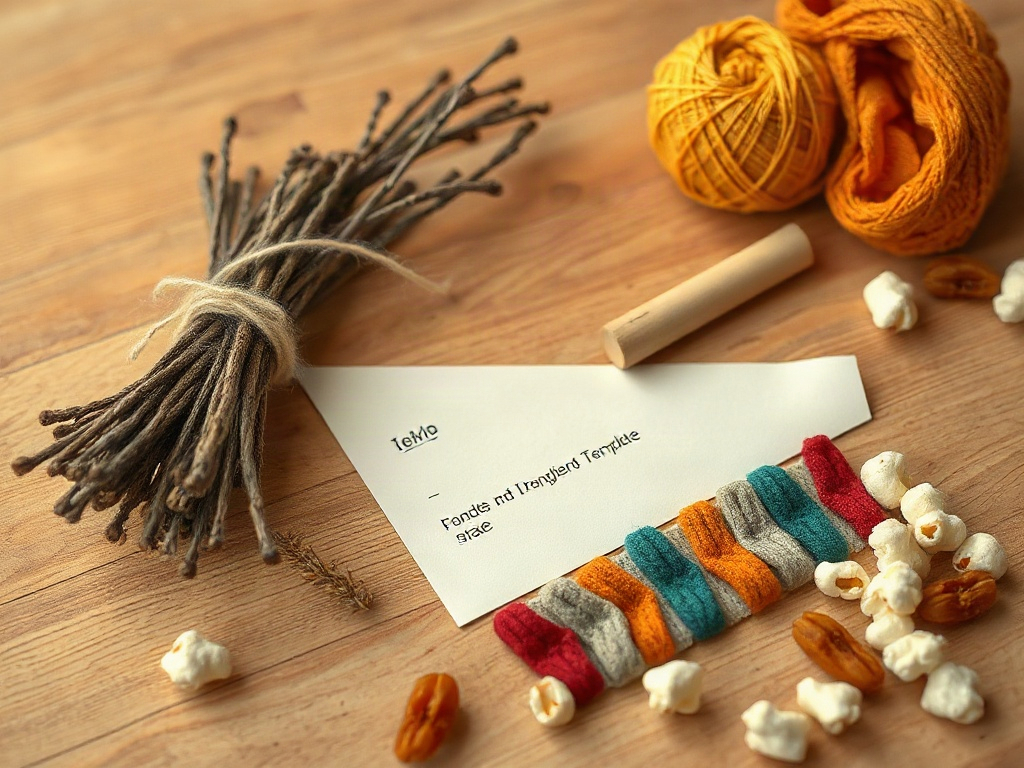
Give them a strip of paper as long as you want the string to be — say, one hand-span. That's the template. Every new piece gets compared against the strip, not eyeballed. For kids aged 8-9, add a ruler and ask for strings that are 20 centimeters — then counting becomes measuring with numbers.
- Count the twigs ahead of time and say how many strings are needed — say, 12.
- Let the child cut 12 and line them up in a row.
- Ask: "How many will be left if we tie on 5 decorations?"
- If a string breaks, don't cut a new one yourself — they cut it, using the template.
Dried fruit, popcorn, ribbons — whatever you've got. There's no need to buy anything special; if you do pick up a ball of woolen yarn, it costs around 2-3 €, enough for several years of survaknitsi, and it's a great excuse for the child to count money at the checkout.
The most common mistake: the adult corrects while the child measures
It looks harmless. The child pours the cup, and your hand automatically pulls back a bit of flour or levels it off with a knife. You do it in a second and don't count it as interference.
Except the child sees it. And from then on, they measure carelessly, because they know someone will fix it after them. Precision is learned from consequences — if the dough turns out a bit stiffer, that's information. If you silently correct every measurement, the child learns nothing except that their measuring doesn't count.
The other common mistake is handing over seven tasks at once: "knead, count, cut, clean up." A seven-year-old can hold one task in their head with a clear finish line. Give them the flour. The rest is yours.
What's left after the holidays
Not the recipe. What stays is the habit of asking "what are we measuring with" before starting — and that carries over into math class and into buying bread, too. If by January 1st the child has said just once, on their own, "wait, that cup is different," you've accomplished more than a whole workbook.