
Quince Jam and Stewed Fruit: What to Do with the Peels, Cores, and Seeds (Games for Ages 6-8)
While quince jam simmers on the stove, there's a whole pile of "waste" next to the table that's actually the best play material around. Here's what to hand a 6-8 year old so they stop hovering around the hot pan.
It's mid-November, the window is fogged up, a big pot of quince jam is simmering, and the whole house smells of it all the way from the stairwell. On the counter there's a pile: thick peels, hard cores, a handful of dark seeds sticking to your fingers. Normally that pile goes straight into the bin in two seconds. And that's exactly when the child wanders into the kitchen, climbs onto the stool by the hot pan, and asks, "What can I do?"
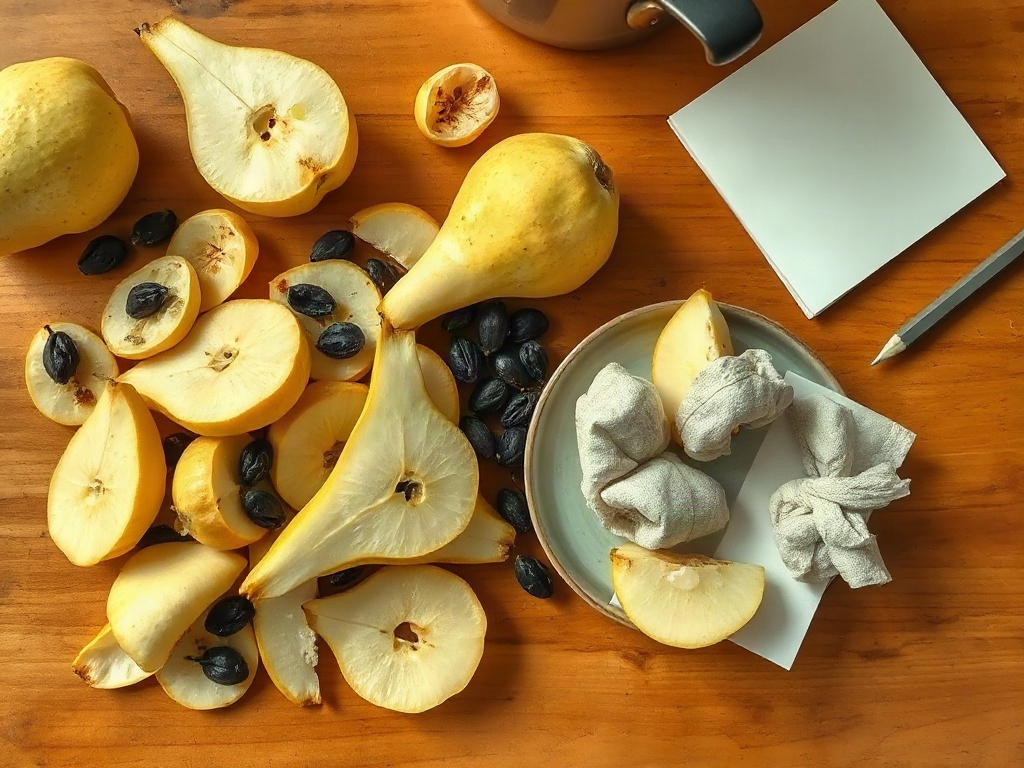
The answer isn't "go play in your room." The answer is: give them the pile.
Why peels beat most store-bought toys
Quince is a strange fruit — hard and fuzzy on the outside, and once you peel it, the flesh darkens within minutes. That very darkening is the game. Quince peel isn't like a banana skin that turns to mush instantly: it holds its shape, can be cut, rolled, dried on the radiator, and after three days it's as stiff as cardboard. The seeds, meanwhile, are smooth, chunky, and glossy — perfect for counting, sorting, and hide-and-seek games.
And here's the most practical part: the child sits on the other side of the table, well away from the stove. While you're turning the quince pieces in the sugar syrup, they're busy with something that genuinely interests them, not something you handed over just to keep them out of the way. The difference is real — kids notice it instantly.
The darkening game: which slice turns brownest
Peeled quince flesh darkens in the air. If you dab a little lemon juice on one piece, it stays lighter for longer. That alone is enough for a whole experiment the child can run on their own — you just hand over the pieces.
The Great Browning Race
You'll need three or four pieces of peel or quince core, a small plate, a bit of lemon juice in a bottle cap, paper and a pencil. It takes about 10 minutes to set up, then one minute every half hour while the jam cooks. Suitable for children aged 6 to 8. The child places the first piece on the plate as is, the second gets a finger-dab of lemon juice, and the third goes wrapped in a damp tissue. Then they draw all three pieces straight away, and again after thirty minutes, and once more after an hour. The task is a success if the child can tell you which piece is darkest and which stayed lightest, and shows their drawings as proof: "The lemon one is still yellow, but the plain one turned brown."
Don't explain in advance what will happen. If you give away the answer, the game is over — it becomes just following instructions. If the child guesses wrong, that's even better: "I thought the damp one would go brownest."
Seeds: the most underrated material in the kitchen
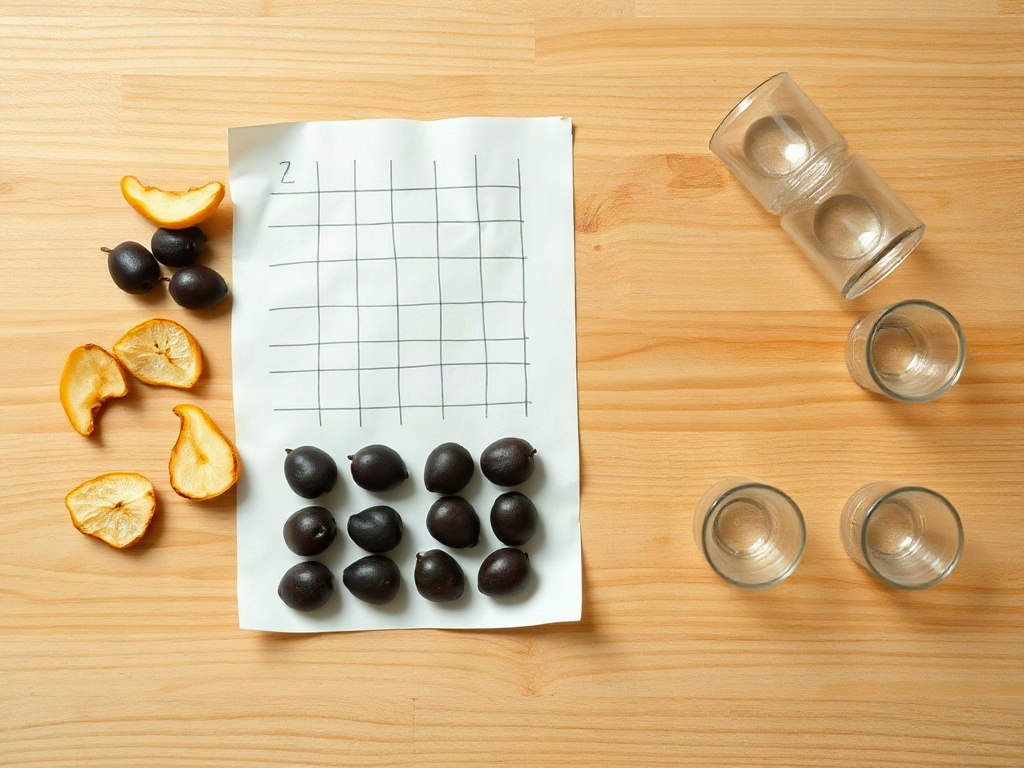
An average quince yields about ten seeds. If you're making stewed fruit from two or three kilos, you'll end up with a little pile on the plate that's a toy all on its own. Rinse them and leave them to dry a bit on some kitchen paper — they turn glossy and pleasant to touch.
- Counting in groups of five and ten — how many seeds each quince gave up, and which one was the "most generous"
- Hopscotch or checkers drawn out on paper in pencil: seeds are one set of pieces, bits of peel the other
- A memory game: hide a few seeds under three upturned cups and have the child track which cup you move
- A mosaic on a sheet of paper with glue paste — seeds arranged like tiles to form a house, a sun, or a face
The Quince-Coin Shop
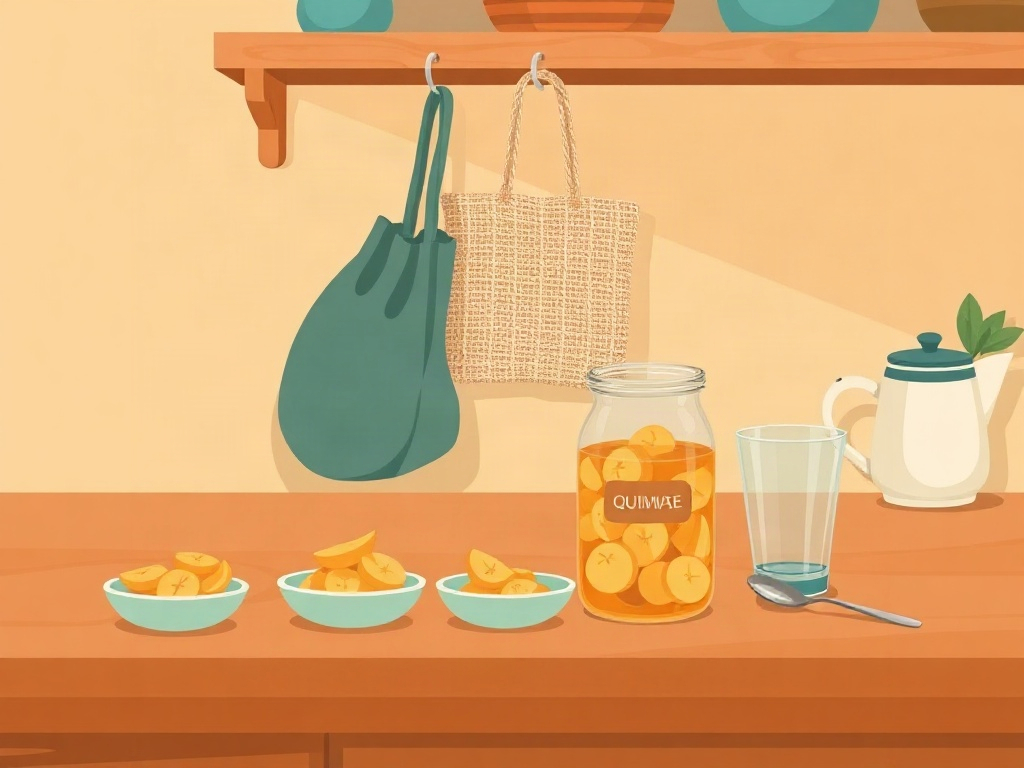
You'll need dried seeds, two or three small plates, and bits of dried peel. The game runs 20-25 minutes and suits children aged 6 to 8. Agree on an exchange rate: one seed is worth one euro, one piece of peel two euros. The child is the shopkeeper, you're the customer, and you buy "jam" (an empty jar), "stewed fruit" (a glass of water), and a "stirring spoon." You pay in seeds and ask for change. Then swap roles. Count out loud together: "I gave you five euros, this costs three, how much change do I get?" The task is complete once the child gives correct change three times in a row without you doing the maths for them. If they're struggling, lower the prices to under five euros — don't hand them the answer.
This game works best right there in the kitchen, because the jars, lids, and spoons are already on hand and you don't need to hunt for props. Plus the child loves "selling" something you're actually making at that very moment.
The most common mistake: turning the game into a lesson
Here's what happens almost every time. The child is arranging seeds, we sit down next to them and start in: "Do you know why quince turns brown? It's called oxidation. Now let's count them in tens. Can you sort them by size?" Four minutes later, the child gets up and walks off.
It doesn't work because the game needs an owner. The moment we start firing off questions and setting tasks one after another, ownership shifts — it becomes our activity, and the child is just carrying it out. And carrying out instructions is boring.
The other version of the same mistake: arranging the materials for the child instead of letting them do it. We rinse the seeds, dry them, put them in a tidy little bowl, rule lines on the paper. We do everything except play the actual game. Leave something unfinished — let the pile of peels stay jumbled, let the seeds still be a bit sticky. Give the child something to actually do.
If after five minutes the child has invented their own rule that you never suggested, the game is working. If they're still waiting for you to tell them the next step, you've given them a task, not a game.
What's left once the jam is done
Dried quince peel smells lovely for weeks. Tuck a few pieces into a cloth pouch in the wardrobe, or string them on thread as decoration. Store the seeds in a small glass jar with a label the child writes themselves: "quince seeds, November." Next year, when jam-making season rolls around again, the jar comes back out of the cupboard and the child counts — how many were there last year.
And one practical note: quince seeds aren't for eating, and raw quince is hard and sour — not something to nibble on absentmindedly. The rule is simple and only needs saying once: "These are for playing, not for putting in your mouth." For children who still put everything in their mouths, skip the seed games for now and stick to the peels.
How to fit it into a November afternoon
- While you wash and peel the quince, the child arranges the peels on the table — that's the first ten minutes, and they're occupied while you're free to work
- Once the pot's on the stove, the Great Browning Race begins — it has natural pauses that fit perfectly with the simmering time
- While the jam cools, play shop — that one doesn't need you standing by the stove at all
- At the end, the child picks three seeds for the jar and tips the rest into the compost or bin — that's part of the game, not a punishment tacked on afterward
One pot of jam buys you two hours in which the child isn't in front of a screen, isn't hovering near the hot stove, and isn't asking every five minutes what to do next. The pile that would otherwise go straight in the bin ends up doing more work than half the stuff in the toy cupboard.